


Executive Summary
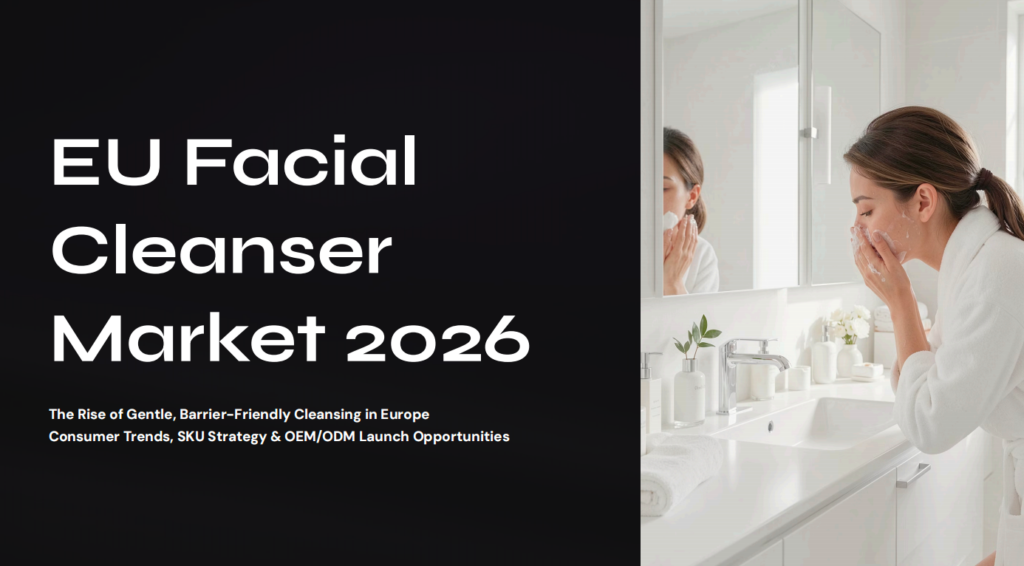
This report explores the EU facial cleanser market in 2026, including sensitive skin demand, barrier-friendly formulation trends, cleanser format strategy, pricing, compliance, and OEM launch planning. It is designed to help brands, importers, distributors, private label buyers, and e-commerce sellers turn market insight into a more practical cleanser launch strategy.
EU Facial Cleanser Market 2026: Sensitive Skin Trends, Barrier-Friendly Formulas, and Launch Strategy
The EU facial cleanser market in 2026 is being shaped less by aggressive cleansing and more by comfort, tolerance, and routine compatibility. Consumers are no longer looking only for products that remove impurities. They are looking for cleansers that feel gentle, respect skin balance, fit barrier-conscious skincare routines, and work well for everyday use.
For brands, importers, distributors, private label buyers, and e-commerce sellers, the biggest opportunity is not to launch a harsh “deep clean” formula. The strongest commercial route is to develop facial cleansers that combine effective cleansing with skin comfort, lower irritation risk, and clearer sensitive-skin positioning.
This report turns that market direction into a practical launch guide. It covers consumer demand, cleanser format trends, pricing structure, channel fit, compliance priorities, and an OEM-ready strategy for entering the EU facial cleanser market in 2026.
Executive Summary
The EU facial cleanser market is commercially strongest where cleansing is repositioned as part of skin comfort and barrier support rather than oil stripping or high-foam intensity. In practical terms, this means gentle gel cleansers, hydrating cream cleansers, micellar waters, and comfort-focused cleansing systems are better aligned with current demand than harsh “deep cleansing” products.
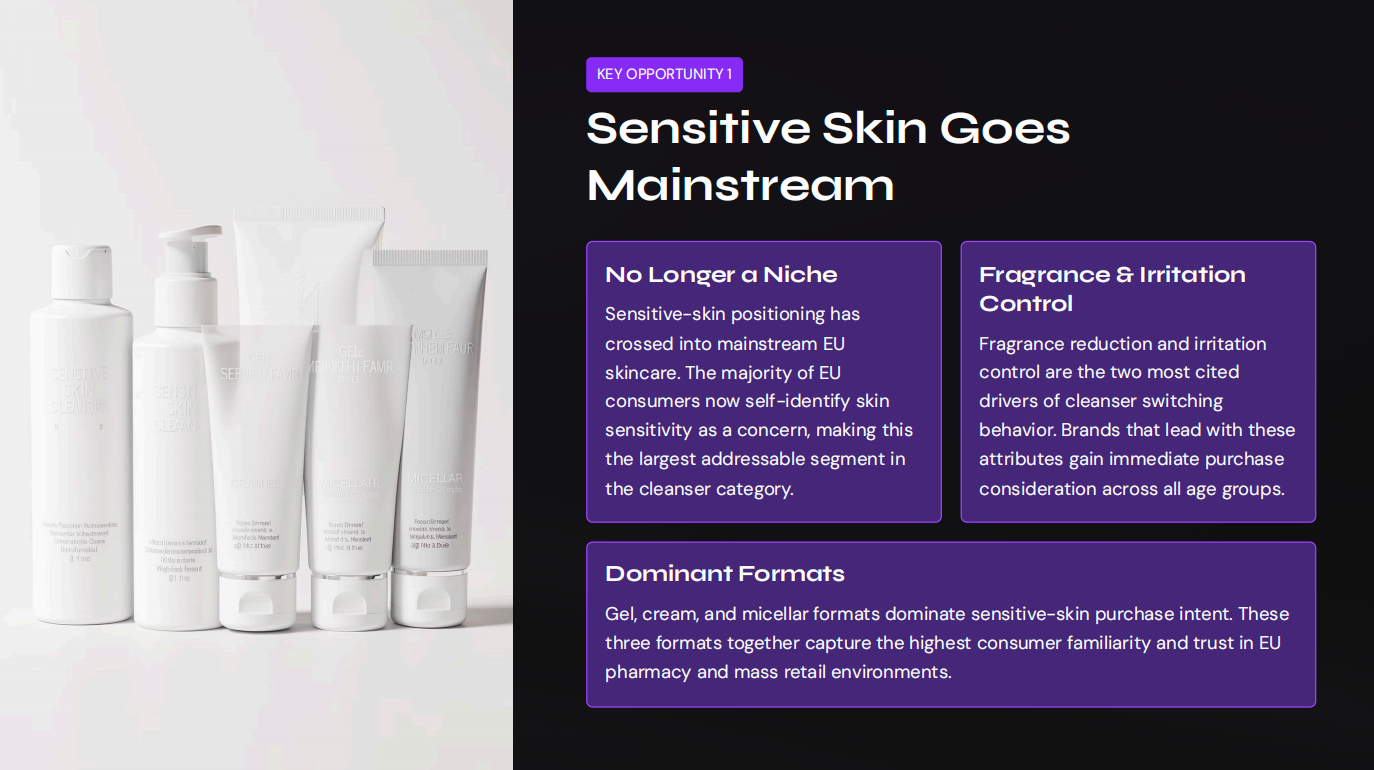
Sensitive skin is no longer a niche positioning in Europe. It is a mainstream purchase filter. Consumers increasingly want cleansers that leave skin feeling balanced, soft, and comfortable rather than tight or over-cleansed. This shift creates strong opportunities for fragrance-free or low-fragrance cleansers, barrier-friendly ingredient systems, and mid-priced products that sit between pharmacy trust and modern cosmetic usability.
For most new entrants, the most effective strategy is a focused 3-SKU cleanser system:
- one hero daily gel cleanser
- one hydrating cream cleanser for sensitive or dry skin
- one routine-building format such as micellar water or cleansing balm
This structure provides strong repeat use, broader consumer reach, and better basket-value potential.
Market Opportunity Overview
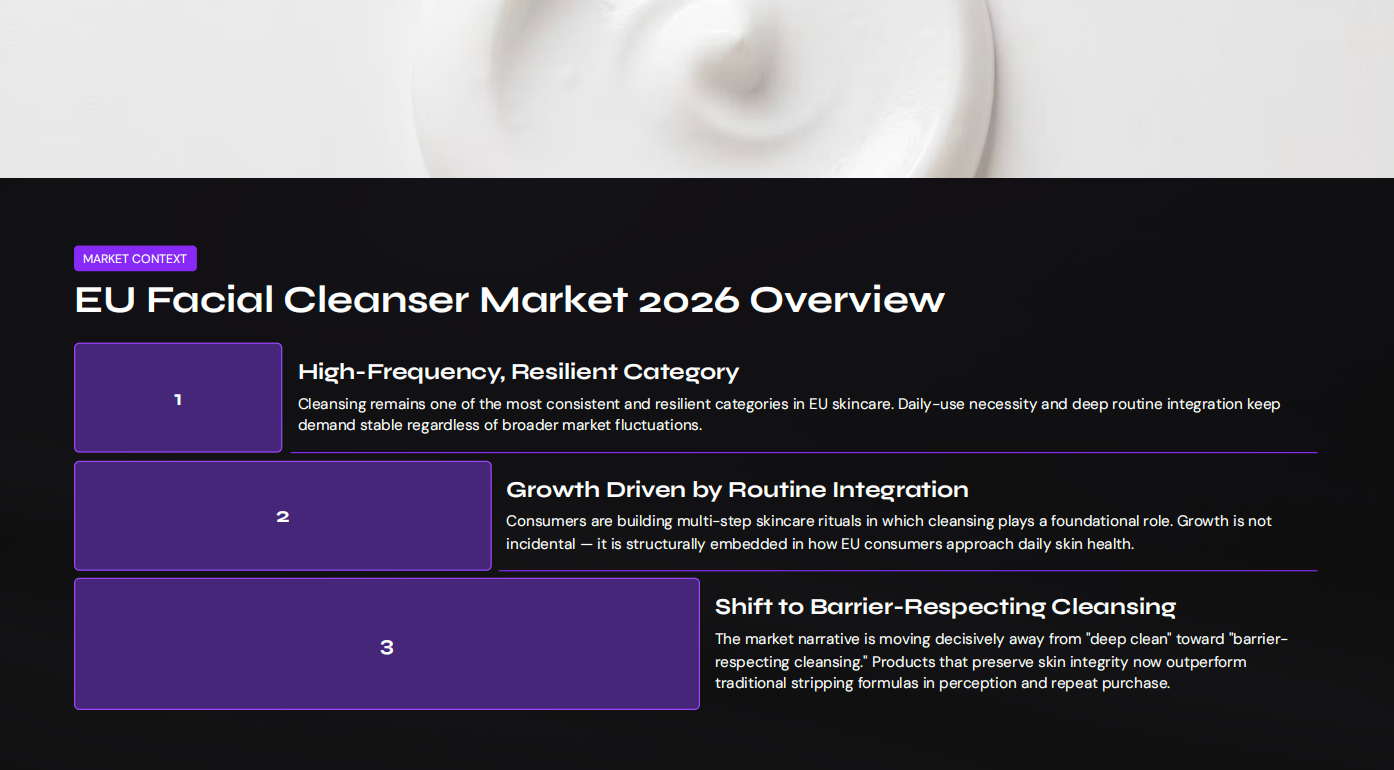
Facial cleanser remains one of the strongest skincare categories for repeat purchase because it sits at the start of nearly every routine. Even in selective consumer spending conditions, cleanser remains highly relevant because it is an everyday-use product with clear function and broad audience reach.
What has changed is how cleansing is judged. In the EU market, cleansers are now assessed not only by how well they remove dirt or makeup, but also by how they leave the skin feeling afterward. Tightness, dryness, redness, and discomfort are increasingly negative signals. Comfort, softness, and moisture balance are becoming more important purchase drivers.
This creates a commercially attractive environment for products built around:
- sensitive skin suitability
- barrier-conscious cleansing
- daily-use comfort
- mild surfactant systems
- minimalist and low-irritation positioning
- multi-format cleansing routines
The category is still growing, but growth is now coming through tolerance, routine fit, and sensorial comfort rather than harsher cleansing logic.
EU Facial Cleanser Market 2026 Overview
Why Facial Cleanser Still Grows in Europe
The EU facial cleanser market remains resilient because it aligns with several strong consumer demand patterns.
The first is the rise of sensitive skin thinking. Consumers increasingly associate good cleansing with less discomfort, less dryness, and lower irritation risk.
The second is barrier-care awareness. Cleansers are now evaluated by whether they fit moisture-respecting routines and whether they support skin comfort over time.
The third is minimalist skincare. Consumers may be using fewer products overall, but they are choosing more carefully. This raises the standard for cleanser quality rather than reducing cleanser demand.
The fourth is dermatology influence. Pharmacy-style and dermatologist-inspired cues remain commercially powerful in Europe, especially when combined with clear ingredient logic and calm, trustworthy packaging.
This means cleanser growth is not being driven by novelty alone. It is being driven by better alignment with modern skincare expectations.
Consumer Demand Signals
Consumers in the EU market are increasingly looking for facial cleansers that feel gentle but effective. This is one of the strongest commercial expectations in the category.
The most important purchase triggers include:
- tightness after washing
- visible dryness or discomfort
- redness and irritation concerns
- desire for low-irritation cleansing
- preference for fragrance-free or low-fragrance options
- need for gentle cleansing for combination or blemish-prone skin
- interest in barrier-support routines
- desire for quick but comfortable cleansing formats
The key commercial implication is simple: cleanser products should not try to communicate every benefit at once. Each SKU should lead with one clear logic, such as barrier support, sensitive skin comfort, gentle oil-balance, or makeup-removal convenience.
Core Consumer Segments
The EU facial cleanser market can be read through four important consumer groups.
The first is the sensitive skin user. This is now one of the broadest and most commercially important segments. These consumers want low-irritation cleansing, lower fragrance burden, and more comfort after washing.
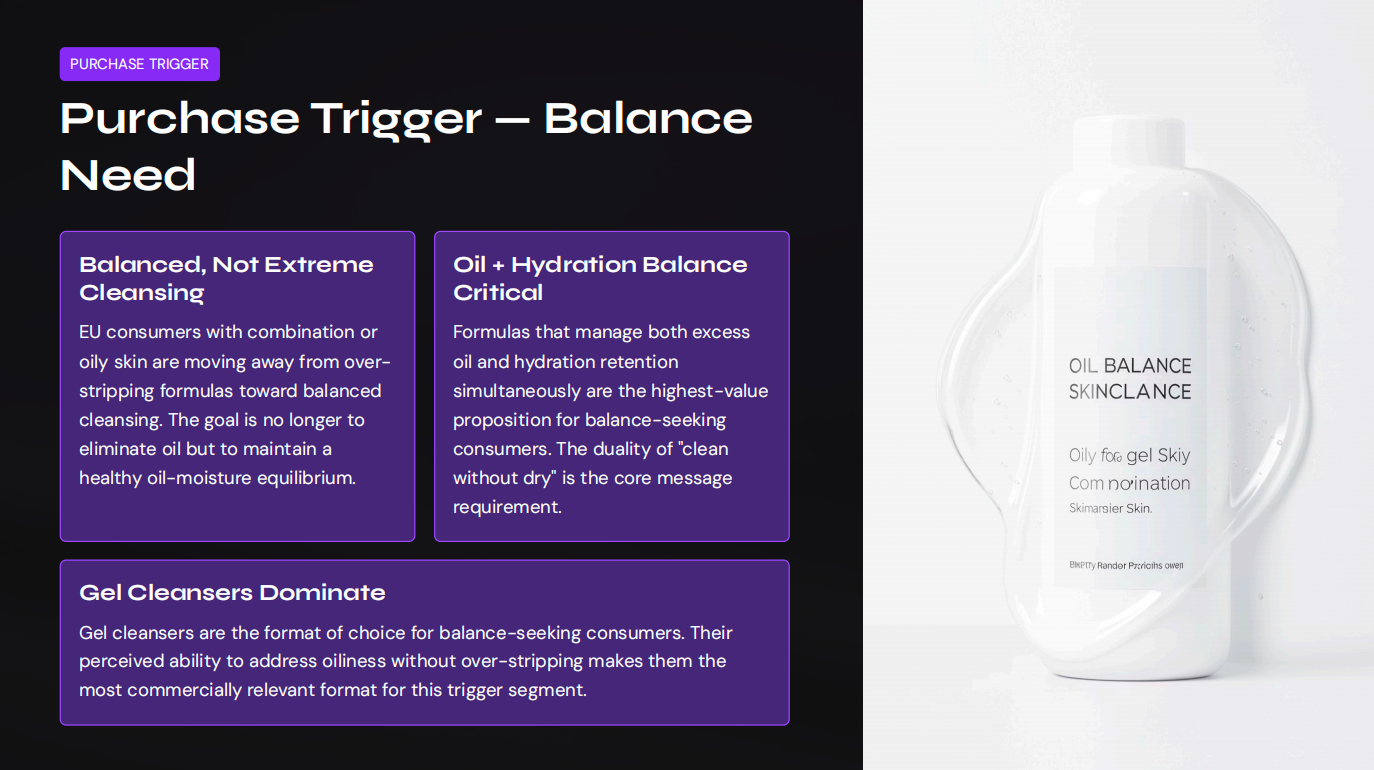
The second is the acne-prone but gentle-care seeker. This group still wants cleaner-feeling skin and better oil balance, but without harsh or stripping formulas.
The third is the barrier-repair routine user. These consumers already use ceramides, oat, panthenol, glycerin, and moisturizing skincare, and they expect their cleanser to fit into that routine rather than disrupt it.
The fourth is the clean beauty or low-irritation consumer. This segment often overlaps with DTC and premium e-commerce channels and responds well to short ingredient stories, minimalist design, and clear formulation logic.
A strong cleanser portfolio should not treat these groups as identical. Different textures and different claims territories are needed for each.
Sensitive Skin Goes
Mainstream
Category Landscape
The EU facial cleanser market is best understood through a mix of price tier and texture logic.
Mass
Mass cleansers perform through accessibility, familiarity, and high repeat purchase. They are strong in basic gels, simple foams, and large-scale micellar waters. However, this segment is crowded and highly price-sensitive.
Mid
Mid-priced cleansers are the most attractive entry point for many new launches. This tier allows better packaging, better texture, more credible ingredient storytelling, and stronger sensitive-skin positioning without requiring prestige-level brand equity.
Premium
Premium cleansers perform best where the product is linked to ritual, texture, and sensorial value. Cleansing balms, oils, and premium creams are more suitable here, especially as second-step expansion products.
For most new entrants, the best risk-adjusted strategy is to begin in the mid tier and build outward.
Format Trends
The strongest cleanser formats in the EU market each serve different needs.
Purchase Trigger 4 Balance
Need
Gel Cleanser
Gel cleanser is the most scalable format for new entry. It fits normal, combination, mildly sensitive, and broad unisex use. It is also easy to position around barrier balance, gentle cleansing, or light purifying logic.
Cream Cleanser
Cream cleanser works especially well for dry, reactive, or tight-feeling skin. It supports pharmacy-style trust and strongly aligns with comfort and hydration.
Micellar Water
Micellar water remains commercially attractive because it is familiar, gentle, and versatile. It works well for sensitive skin, makeup removal, quick cleansing, and routine completion.
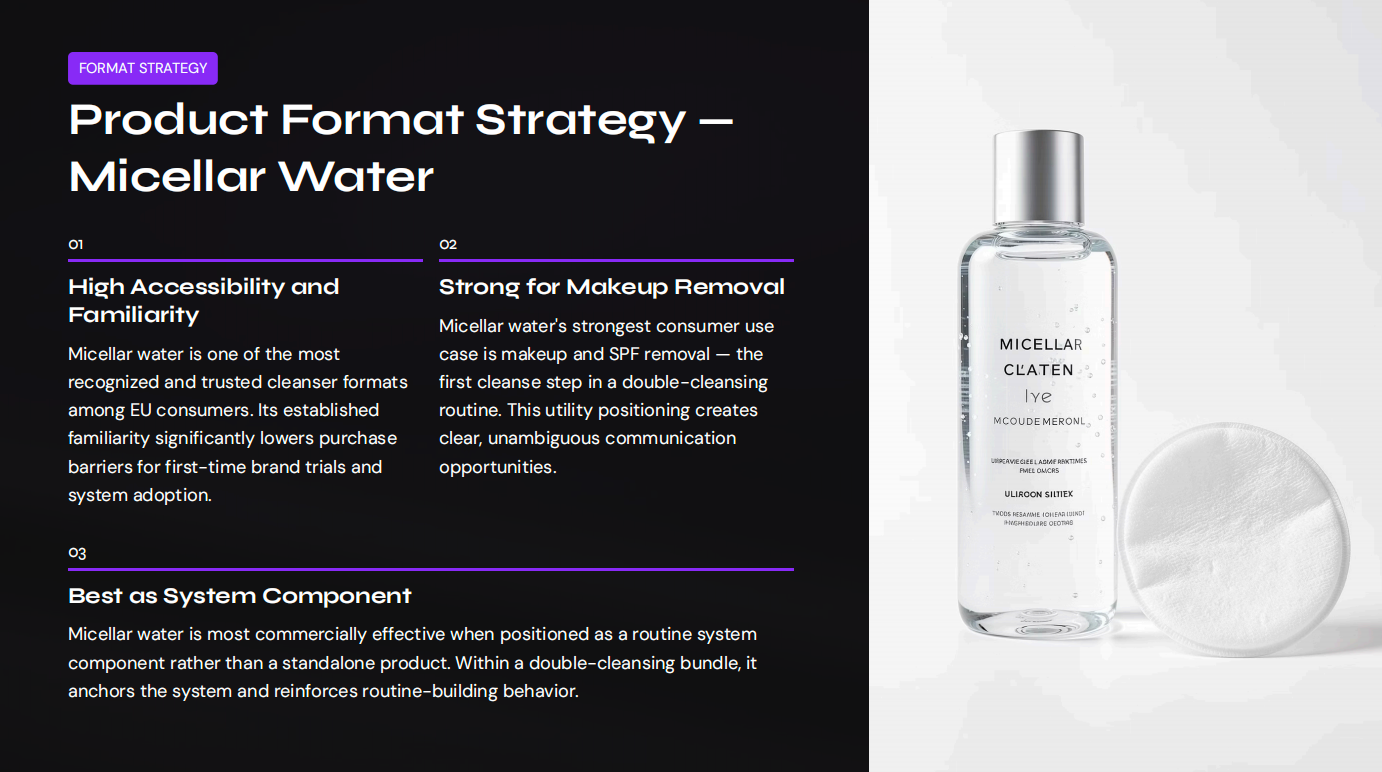
Product Format Strategy 4
Micellar Water
Cleansing Balm
Cleansing balm offers strong premiumization potential, especially for makeup removal, SPF-heavy routines, and bundle sales. It is less universal than gel cleanser, but stronger in margin and storytelling value.
Cleansing Oil
Cleansing oil works well in evening routines and double-cleansing systems. It has good modern skincare appeal and can serve as a second-wave expansion SKU.
Foam Cleanser
Foam cleanser still has a place, especially for oily skin or consumers who prefer a fresh-rinse feel. However, the formula must remain mild, because harsh foaming cleansers are less commercially attractive than before.
For most new entrants, the strongest launch order is:
- gel cleanser
- cream cleanser
- micellar water
- cleansing balm
- cleansing oil
- foam cleanser
Ingredient and Formula Direction
In the EU market, formulation success is increasingly tied to how well the ingredient story supports a comfort-first cleansing message.
The most commercially useful ingredients include:
- glycerin
- niacinamide
- panthenol
- ceramides
- oat derivatives
- betaine
- squalane
- mild surfactant systems
These ingredients work best when they support one clear benefit such as moisture balance, comfort, barrier respect, or low-irritation cleansing.
The market is moving away from overloaded formulas that try to solve too many concerns at once. The better path is to match formula architecture to user need and texture role.
Product Opportunity and SKU Strategy
The most practical way to enter the EU facial cleanser market is with a structured, multi-format portfolio rather than a single universal cleanser.
A strong first launch can be built around three core SKUs:
- a gentle barrier balance gel cleanser
- a sensitive skin hydrating cream cleanser
- a micellar cleansing water or cleansing balm
This system works because each SKU serves a different commercial role:
- the gel cleanser acts as the daily-use hero
- the cream cleanser broadens reach across dry and reactive skin users
- the micellar or balm format raises basket value and supports routine selling
A broader expansion portfolio can later include:
- a low-foam comfort cleanser
- a purifying gentle gel cleanser
- a ceramide cleansing milk
- a cleansing oil
- a double-cleanse duo kit
For first launch, it is more effective to build a clear cleanser system than to create too many fragmented variants.
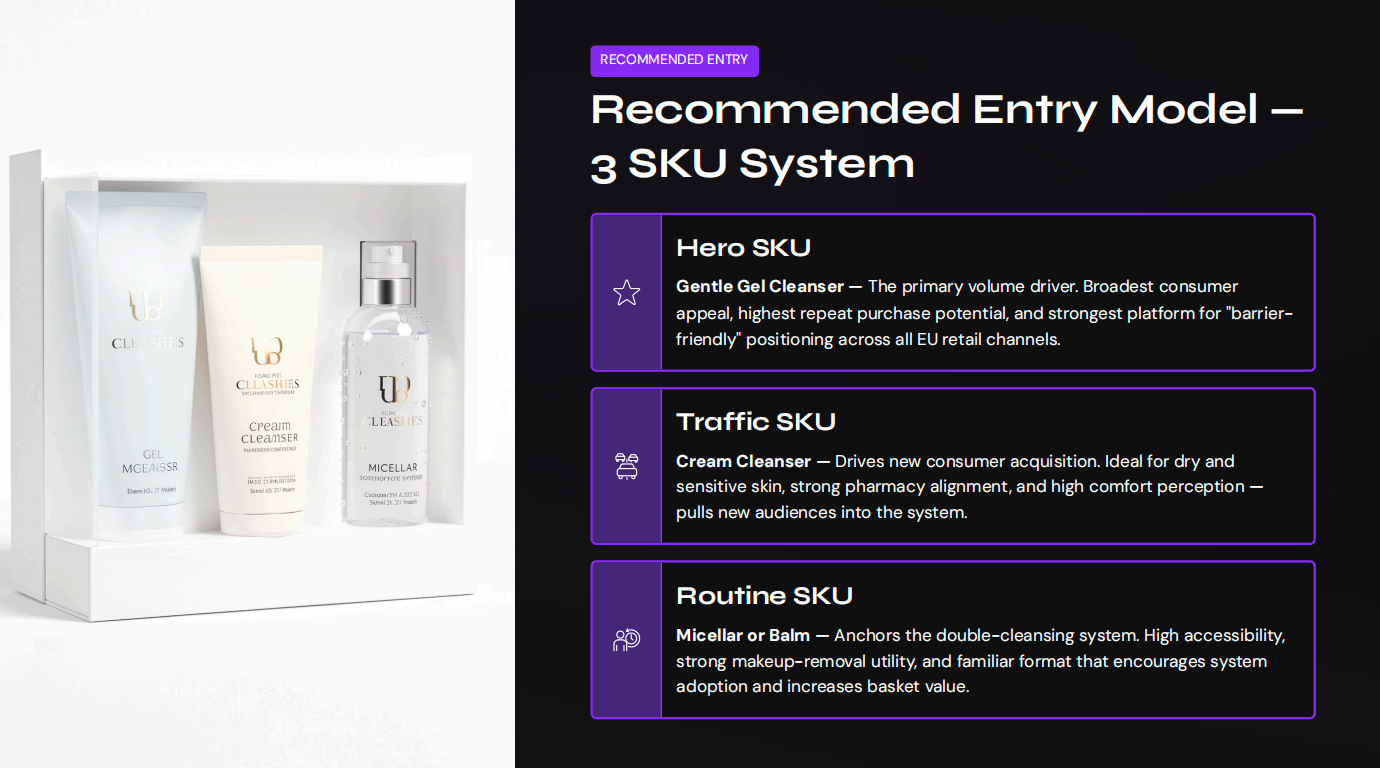
Recommended Entry Model 4
3 SKU System
Pricing Strategy
Pricing strategy in the EU cleanser market should follow both repeat-use logic and texture value logic.
Entry-level mass products can drive volume, but competition is intense and positioning space is limited. Mid-tier cleansers offer the best combination of commercial scale, better formulation storytelling, and stronger perceived value. Premium formats such as balms and oils can provide stronger margin but are usually better suited as follow-up expansion SKUs.
A practical launch structure often includes:
- one traffic or broad-use cleanser
- one hero cleanser with strongest market fit
- one margin cleanser with more premium texture or routine value
This price ladder makes the line easier to sell across Amazon, DTC, and pharmacy-style retail.
Channel Strategy
A strong EU facial cleanser launch should be channel-aware from the beginning.
For Amazon, the strongest products are those with clear problem-solution logic, fast benefit recognition, and low-friction daily-use positioning. Gel cleansers, micellar waters, and purifying gentle cleansers are especially suitable here.
For DTC, the opportunity is broader. Cream cleansers, cleansing balms, cleansing oils, and bundle systems perform well because they support education-led routines and higher basket values.
For pharmacy and retail, trust matters most. Sensitive-skin cleansers, fragrance-free SKUs, hydrating cream cleansers, and derm-style packaging are best aligned with this channel.
The strongest strategy is not to sell the exact same cleanser mix everywhere. It is to adapt the portfolio to how each channel drives conversion.
Compliance and Risk Control
The EU is a regulated cosmetics market, and facial cleanser launches should be treated with the same discipline as any other skincare category.
The most important commercial risk is claim overreach. Cleansers must remain within cosmetic territory and avoid language that implies treatment of skin disease or medical conditions.
High-risk language includes:
- treats acne
- rosacea relief
- eczema treatment
- dermatitis support
- antibacterial treatment
- healing damaged skin
Safer cosmetic language includes:
- gentle cleansing
- helps remove daily impurities
- helps maintain skin moisture balance
- respects the skin barrier
- suitable for sensitive skin
- leaves skin feeling soft, clean, and comfortable
- cleanses without stripping
- supports a comfortable daily cleansing routine
Another important risk area is fragrance. Products relying too heavily on fragrance positioning may face added complexity in claims, labeling, and long-term compliance planning. This makes fragrance-light and fragrance-free cleanser development especially attractive for EU launches.
Compliance should not be treated as the last packaging step. It should be built into claims, formula, artwork, and product planning from the beginning.
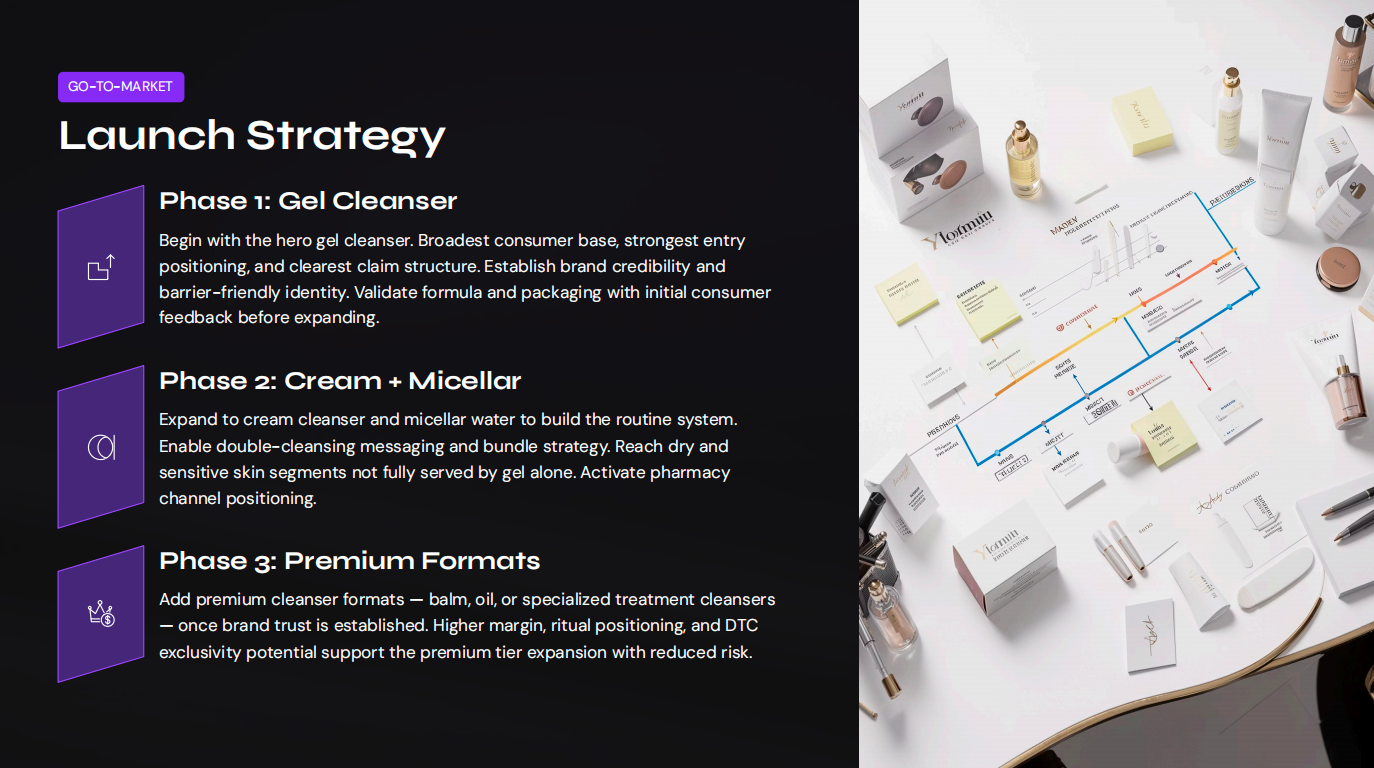
Launch Strategy
Packaging and Presentation
Packaging in the EU cleanser market performs best when it communicates trust, clarity, and restraint.
Useful packaging directions include:
- clinical or dermatology-style bottles and tubes
- minimalist design with controlled copy
- sensitive-skin visual restraint
- simple ingredient-first layouts
- texture-appropriate packs such as tubes, pumps, bottles, and jars
- bundle-ready carton formats for routine systems
A good packaging system should make it easy for consumers to understand product role, skin fit, and texture type without excessive front-pack complexity.
OEM and Launch Execution
For OEM or private label buyers, the strongest development process starts with commercial clarity, not just formula requests.
A better project brief should include:
- target EU markets
- cleanser format
- target user and skin type
- price band
- fragrance direction
- claims territory
- packaging direction
- target channel
- estimated MOQ
- launch timeline
- benchmark references
The better these variables are defined upfront, the easier it becomes to develop the right texture, select the right pack, and move efficiently from sample stage to quotation and production.
For first launch, reducing portfolio complexity is usually more valuable than forcing too many low-volume SKUs. A focused 3-SKU system is often safer, faster, and commercially clearer than a fragmented line.
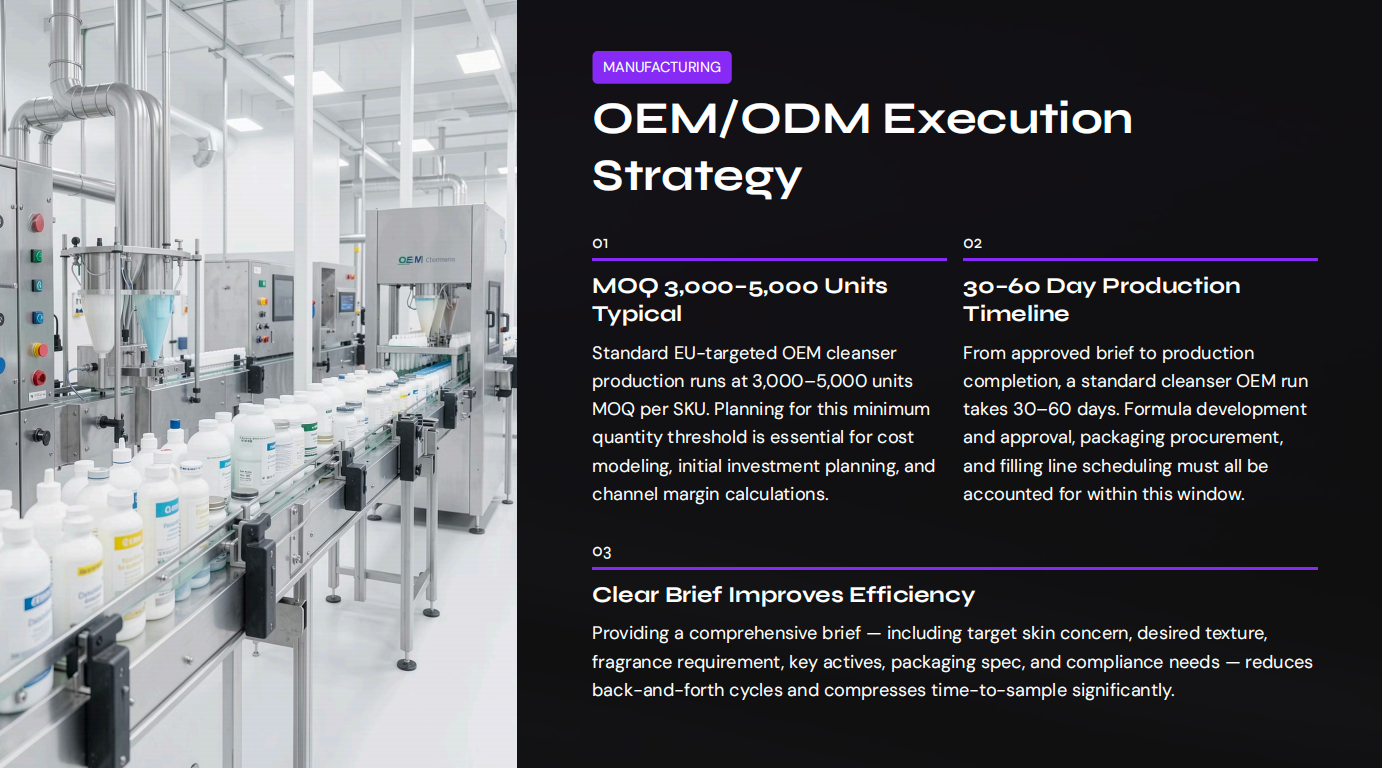
OEM/ODM Execution
Strategy
Final Takeaway
The EU facial cleanser market in 2026 is strongest where cleansing is repositioned around comfort, barrier respect, and sensitive-skin compatibility. The category is not moving toward harsher cleansing. It is moving toward formulas that feel mild, modern, and highly repeatable.
The brands most likely to win are not the ones launching the most cleanser variants. They are the ones building the clearest commercial system: a daily-use gel hero, a cream cleanser for sensitive or dry skin, and a routine-building support format such as micellar water or cleansing balm.
If you are planning an EU facial cleanser launch, the smartest next step is to define your target skin need, texture route, price tier, and claims boundary first, then build the right SKU strategy from there.
Planning an EU facial cleanser launch?
Share your target market, cleanser format, price tier, positioning direction, and launch timing — and we can help recommend the right SKU strategy, packaging route, and OEM path for your brand.
Download the Full Report (PDF)
Tell us your target region, product category, and the decision you’re trying to make. We’ll suggest the closest existing report—or build a tailored version.