


Executive Summary
This report explores the UK hair serum market in 2026, including repair, anti-frizz, heat-protect, gloss, and scalp serum opportunities. It is designed to help brands, importers, distributors, Amazon sellers, and product development teams turn market trends into clearer SKU strategy, formulation direction, and launch planning.
UK Hair Serum Market 2026: Key Trends, Formulation Direction, and Private Label SKU Strategy
The UK hair serum market in 2026 is no longer defined by a single shine-and-smooth proposition. It has developed into several commercially meaningful lanes, including bond-repair serums, anti-frizz and humidity-control serums, heat-protective styling serums, gloss and smoothing serums, and scalp-serum hybrids focused on hydration, comfort, and fuller-looking hair.
For brands, importers, distributors, Amazon sellers, and product development teams, this creates a more strategic opportunity than simply launching another generic hair serum. The strongest products now combine more than one benefit, especially repair with styling, or scalp care with visible cosmetic hair improvement.
This report translates category trends into practical launch logic. It covers market demand, consumer need states, price architecture, competitive positioning, formulation direction, channel strategy, and SKU opportunities for businesses entering or expanding in the UK hair serum category.
Executive Summary
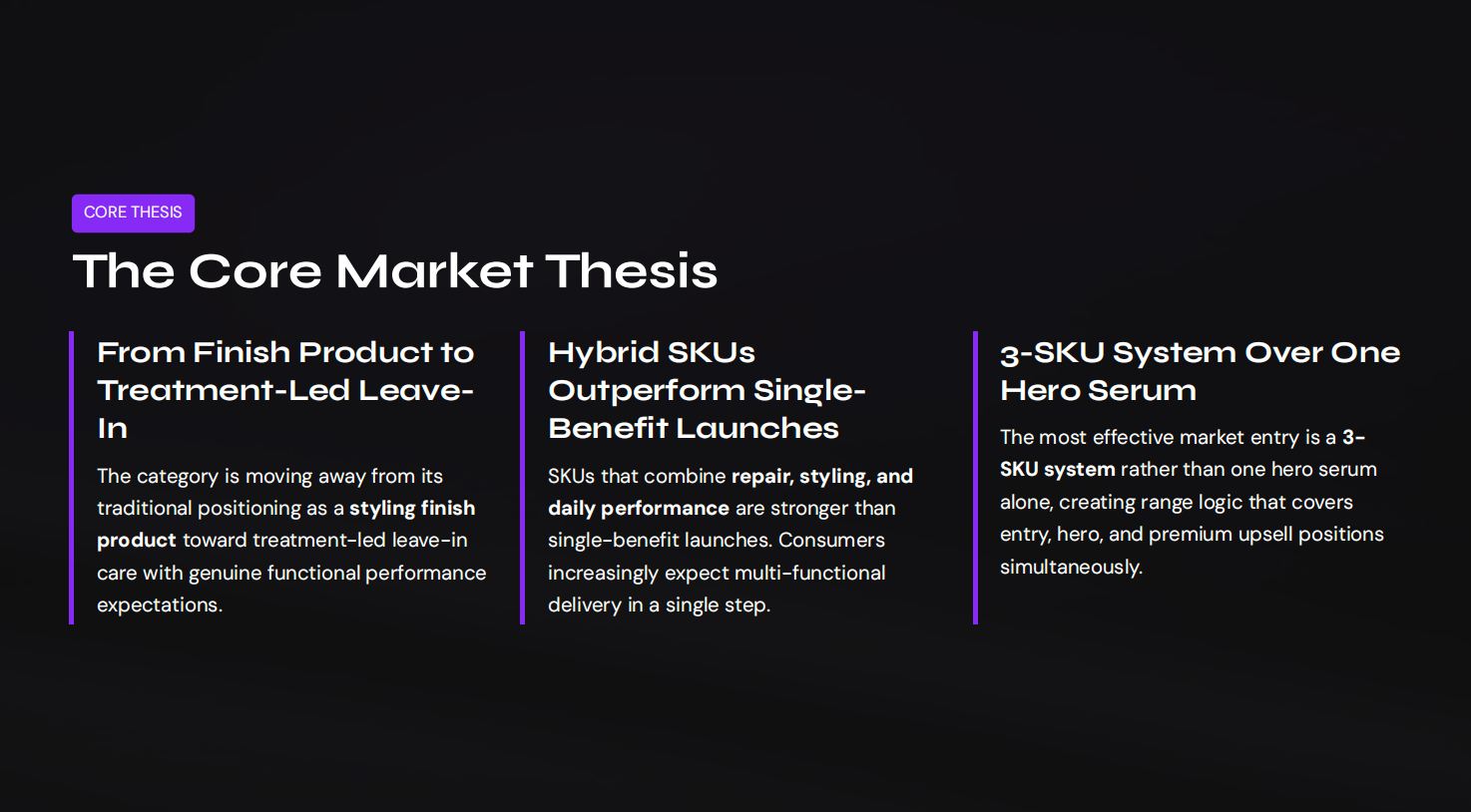
The UK hair serum category is shifting from a finishing product into a treatment-led leave-in step. Consumers increasingly expect a serum to do more than add shine. They want repair, heat protection, frizz control, humidity resistance, softness, scalp comfort, or density-support positioning within one clear routine role.
This change creates stronger opportunities for brands that can define their product by usage moment rather than by ingredient list alone. In practical terms, products built around “before heat styling,” “for humid days,” “for bleached hair,” or “for dry scalp and fuller-looking hair” are easier to understand and easier to sell than broad, generic serum claims.
For most new entrants, the best commercial route is not one standalone hero SKU. It is a small but structured system made up of a lightweight repair and anti-frizz serum, a scalp serum for differentiation, and a higher-value repair plus heat-protect serum for margin expansion and salon or masstige positioning.
Market Opportunity Overview
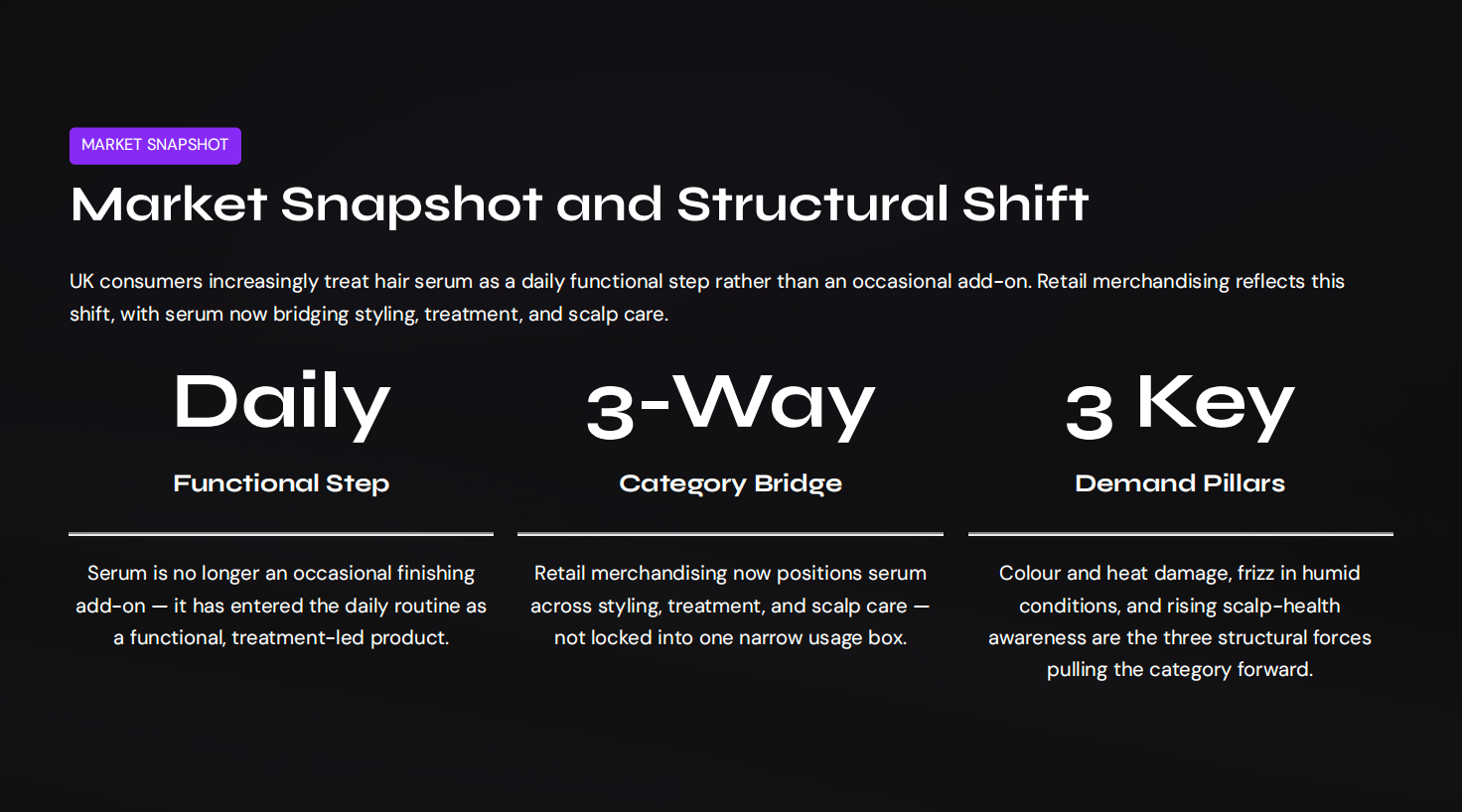
The UK hair serum market is being driven by highly practical consumer demand. Visible hair damage from colouring, bleach, and heat styling remains a strong trigger. Frizz and humidity also continue to create repeat-purchase need states, especially for everyday styling users. At the same time, rising interest in scalp health is expanding the category into hydration, comfort, scalp balance, and cosmetic density-support logic.
This means serum is no longer treated as an occasional extra. It is increasingly used as a daily functional product that sits between care and styling. That shift is commercially important because it allows brands to build more routine-based use cases, increase repeat use, and expand beyond the old “smooth and shine” positioning.
For a 2026 launch, the best approach is to define the category not by one broad benefit, but by clearly segmented consumer problems.
Market Snapshot and Structural Shift
What Is Driving Demand in 2026
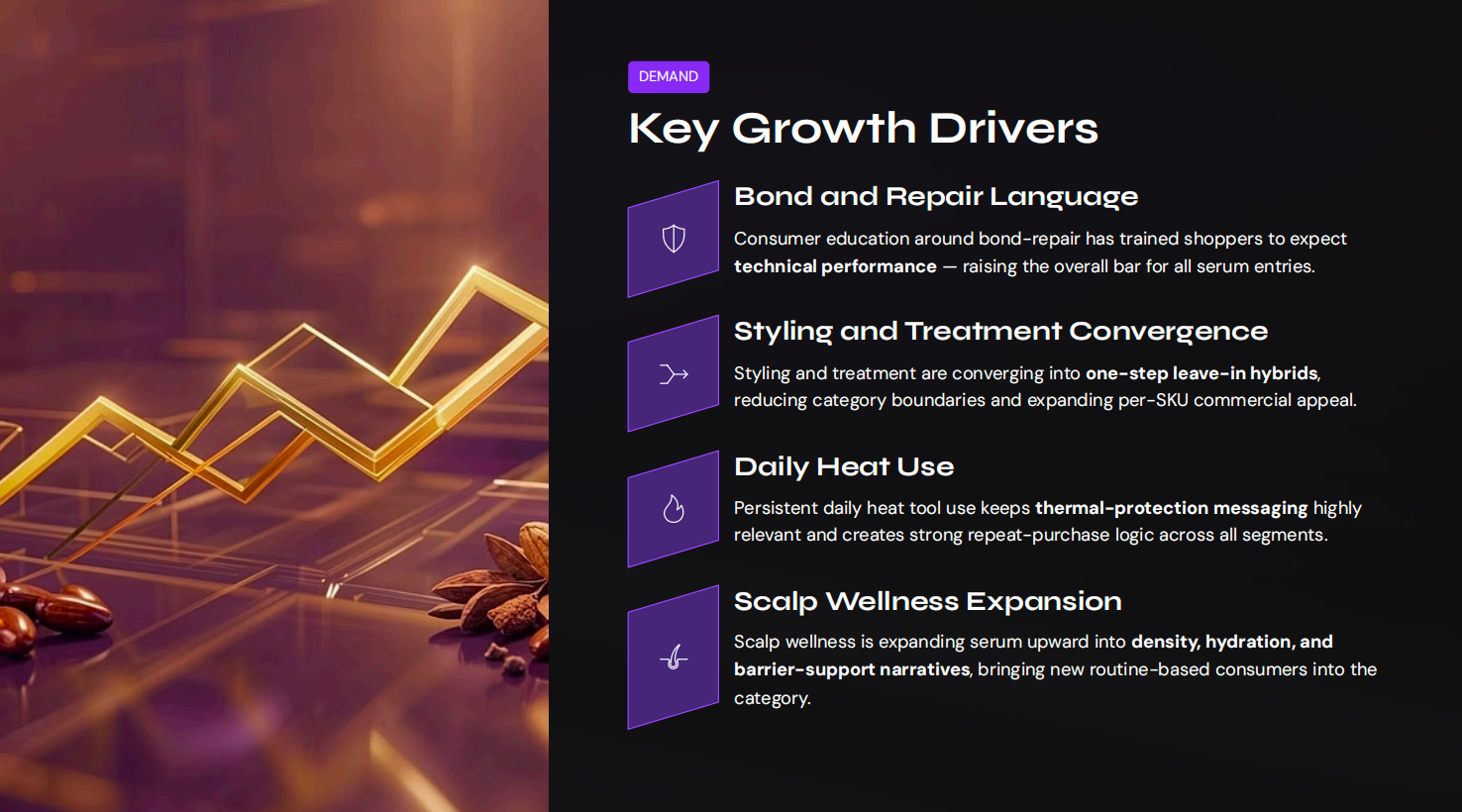
Several market shifts are shaping the category.
The first is damage repair. Consumers exposed to bleach, colouring, and frequent heat styling are actively looking for technical repair language and visible performance.
The second is treatment and styling hybridization. Consumers increasingly prefer one leave-in product that repairs, smooths, protects, and improves finish in a single step.
The third is the normalization of scalp care within hair routines. Scalp serum is no longer a niche adjacent category. It is becoming a meaningful extension of mainstream serum logic.
The fourth is texture expectation. Lightweight, non-greasy, daily-use textures are now baseline requirements rather than premium differentiators.
The fifth is claim efficiency. Single-benefit products are harder to scale unless they are very low priced or highly specialized. Multi-benefit serum formats now have stronger commercial logic across Amazon, retail, and DTC.
Key Growth Drivers
Consumer Segments That Matter
A stronger product strategy starts by matching serum type to the right user.
Damage-Repair Users
These consumers are usually colour-treated, bleached, heat-styled, or salon-service users. They respond to repair language, stronger transformation stories, and more technical-looking formulas.
Frizz-Control Users
These users want instant smoothing, anti-humidity support, and easy manageability. They often care about visible finish and repeat use in damp weather.
Fine-Hair Daily Users
This group wants shine and softness without heaviness. For them, “lightweight,” “won’t weigh hair down,” and “non-greasy” are purchase-critical.
Scalp-Concern Users
These shoppers are buying into hydration, soothing, dryness relief, scalp comfort, or cosmetic density-support narratives.
Convenience-Led Hybrid Buyers
These users want one leave-in product that handles repair, styling, smoothing, heat protection, and finish improvement in one easy step.
Best-Selling Claim Clusters
The UK hair serum market is not responding equally to all claims. Some claim clusters are significantly more commercial than others.
The strongest converting directions include:
- bond repair
- anti-frizz
- heat protection
- humidity protection
- lightweight or non-greasy finish
- shine and smoothness
- scalp hydration and soothing
- fuller-looking hair or density-support positioning
- suitable for all hair types
- vegan or silicone-free where performance supports it
The strongest launches are usually not based on one isolated claim. They combine a clear hero benefit with one or two supporting benefits that fit the usage moment.
Category Landscape and Price Architecture
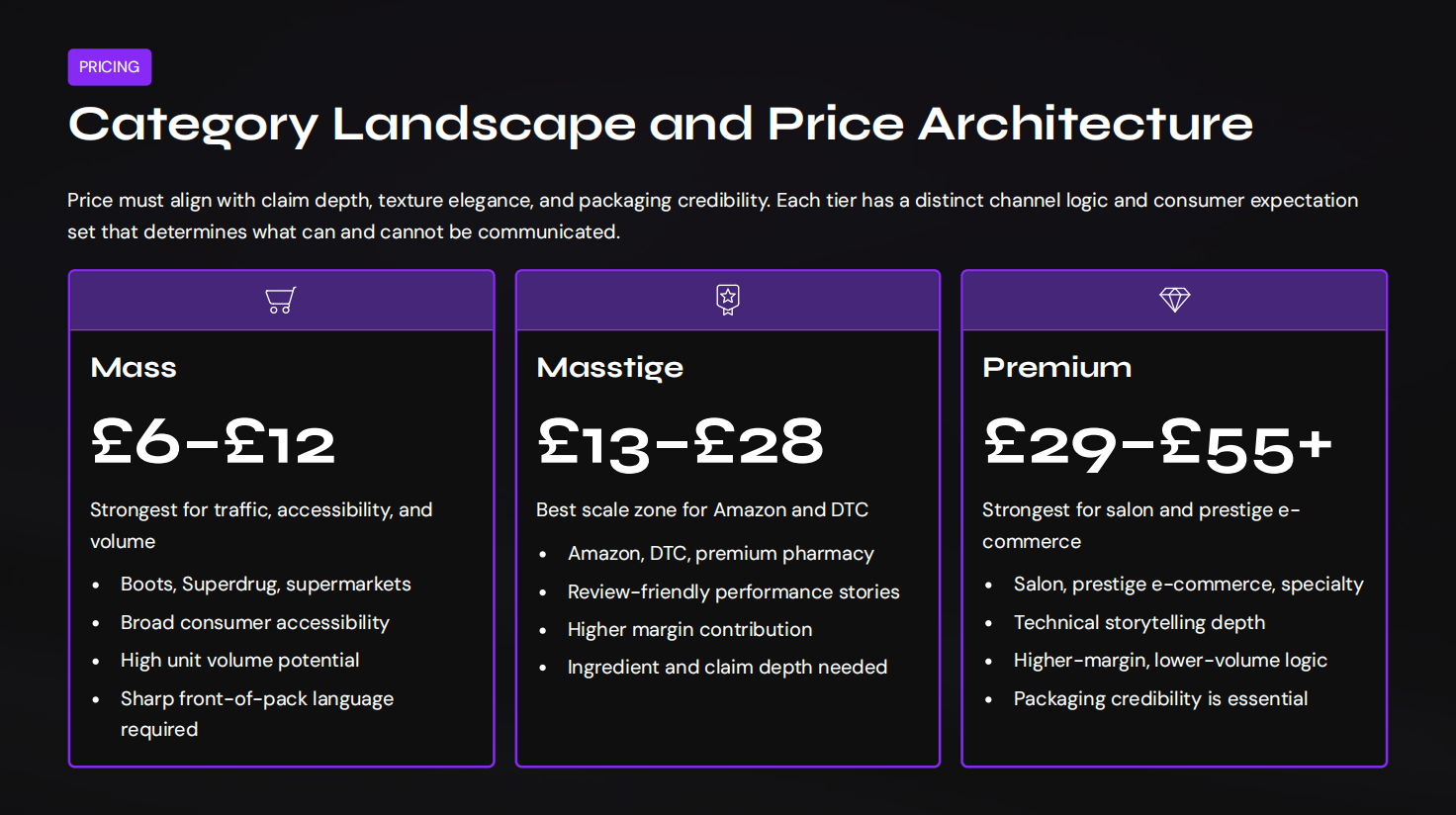
The UK hair serum category is commercially divided across three main pricing bands.
Mass
This is the strongest zone for traffic, promotions, and repeat purchase. Products in this tier need instantly understandable claims and strong value perception.
Masstige
This is one of the most commercially attractive bands for 2026. It works well for Amazon, DTC, and stronger drugstore positioning. It also gives enough pricing room to support hybrid claims such as repair plus heat protection or scalp plus density-support.
Premium
This is the strongest zone for salon, prestige e-commerce, and more technical narratives. Products in this tier need stronger texture quality, more credible efficacy cues, and better packaging execution.
A practical first-entry strategy is to decide channel and price band before locking the formula. Amazon, Superdrug-style retail, salon, and DTC each require different front-of-pack language, price-value logic, and product architecture.
Category Landscape and Price Architecture
Competitive White Space
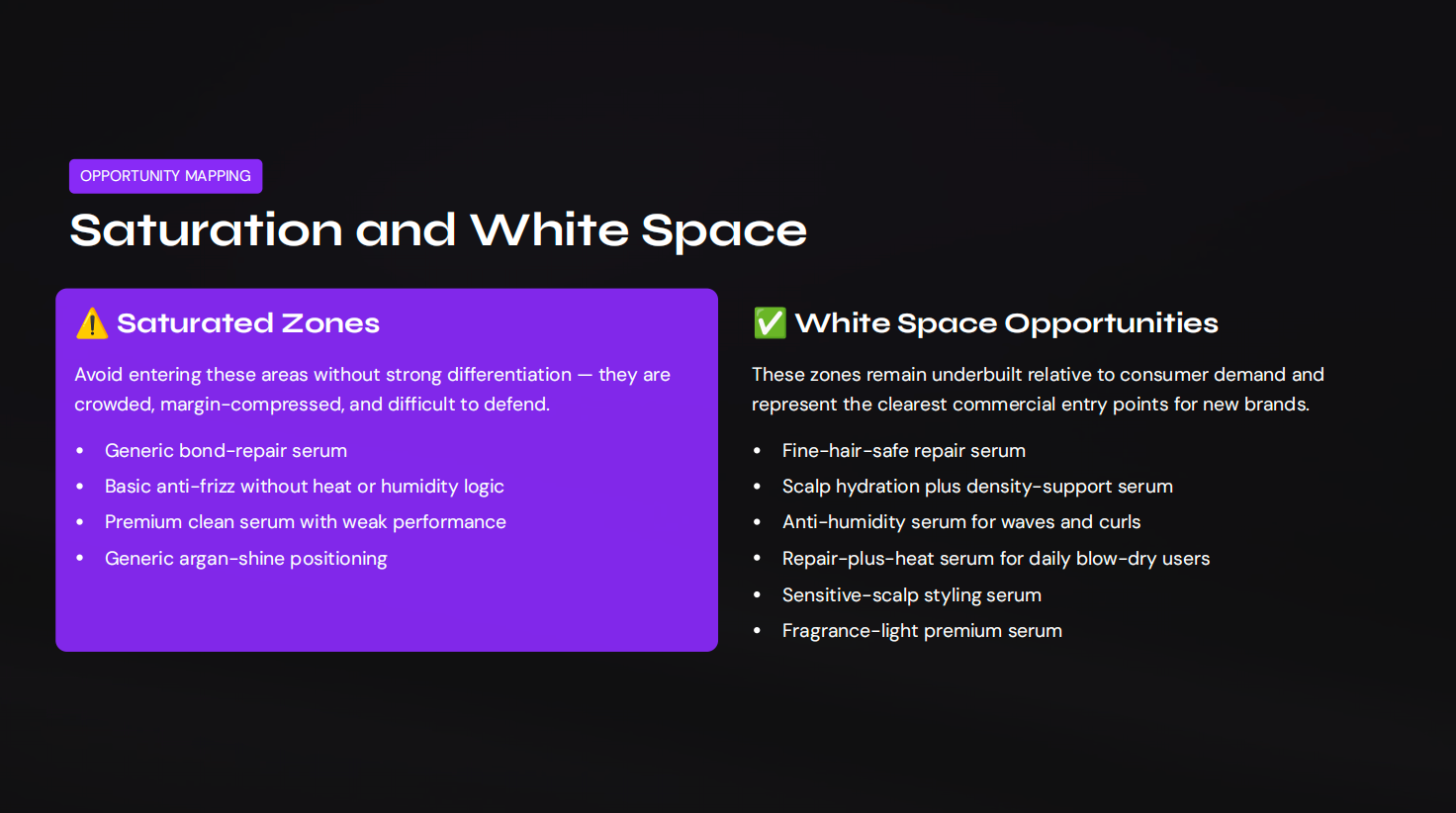
The market is crowded in several familiar directions:
- generic bond-repair serum
- basic anti-frizz serum
- generic shine serum
- premium clean serum with weak performance cues
- argan-style oil serum with little differentiation
The more attractive opportunities sit in narrower, clearer need states:
- fine-hair repair serum that stays genuinely weightless
- scalp serum positioned around hydration, comfort, and barrier support
- anti-humidity serum designed for waves or curls
- repair plus heat-protect serum for daily blow-dry users
- sensitive-scalp compatible styling serum
- fragrance-light premium serum for scalp-sensitive users
The key is not to compete with a broad prestige science story head-on. It is to narrow the problem and solve it better.
Saturation and White Space
Formulation Direction
Formulation strategy should be treated as an OEM execution question, not as a purely ingredient-led trend exercise.
Repair Serum Direction
For repair-focused products, the formula system should support strengthening, smoother feel, cuticle support, and visible softness without becoming heavy. The stronger commercial position usually comes from pairing repair with styling or finish benefits.
Anti-Frizz and Smoothing Direction
For anti-frizz products, the formula must create immediate cosmetic payoff while maintaining low build-up and acceptable repeat feel. Humidity resistance and shine are especially useful support claims.
Shine Serum Direction
Shine-focused serums need high spreadability, non-greasy finish, and clear sensory payoff. Pure shine alone is harder to defend at higher prices unless the finish is visibly superior.
Scalp Serum Direction
Scalp serums should be developed as their own category, not as diluted hair oil. Fast absorption, non-sticky feel, good dosage control, and low residue are essential. Stronger directions include hydration, soothing, scalp comfort, and fuller-looking hair support.
Heat-Protective Styling Direction
Heat-protect serums perform best when paired with repair, smoothing, or detangling logic. This makes the product more relevant to daily styling users and improves perceived value.
Texture Strategy
Texture is not secondary. It is part of the claim.
A fluid serum works best for fine hair, daily use, and younger or mass-market shoppers.
A serum-cream hybrid works well for damaged or frizz-prone hair.
A balm-serum can suit premium or salon-led products for visibly damaged hair, but carries heavier mainstream risk.
A scalp water-gel serum works best for root-focused applications and should dry quickly without greasy roots.
In the UK market, many products fail not because the claim is wrong, but because the texture feels oily, sticky, or difficult to dose.
Go-To-Market Strategy
A stronger launch begins with the right channel logic.
Amazon
Amazon works best for clear problem-solution products with strong review potential. Winning directions include anti-frizz plus heat protection, repair plus shine, and scalp density-support or comfort-led serums.
Retail Drug Channel
This channel requires accessible benefit language, simpler packaging, and tight price discipline. Anti-frizz, damage repair, and scalp comfort are especially strong.
Salon and Professional
Salon channels support stronger repair positioning, higher price tolerance, and more premium sensorial formats. Products need a more technical and less generic story.
DTC
DTC is strongest for education-heavy launches, especially scalp serum, sensitive scalp positioning, fine-hair repair, or hybrid routines that need more explanation.
Product Assortment Strategy
The strongest assortment is built around basket logic rather than ingredient novelty.
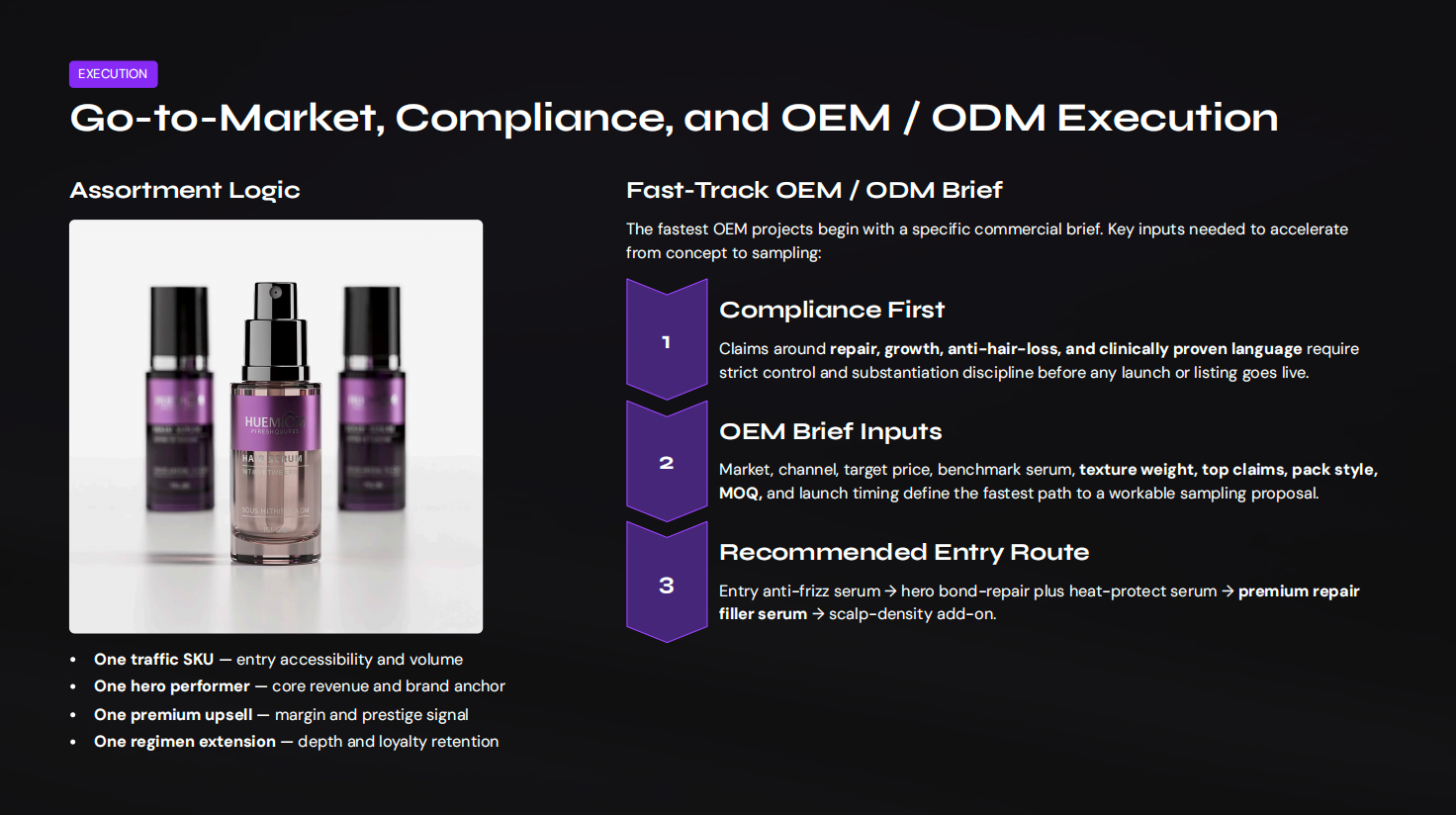
A practical 2026 structure includes:
Entry SKU
Lightweight Anti-Frizz & Shine Daily Serum
This should be broad in appeal, easy to understand, and suitable as a first purchase.
Core SKU
Bond Repair + Heat Protect Leave-In Serum
This has the strongest all-round logic for volume, repeat use, and wider channel compatibility.
Premium SKU
Peptide Repair Anti-Frizz Filler Serum
This is better for salon, prestige e-commerce, or premium masstige positioning.
Add-On SKU
Scalp Density & Hydration Serum
This increases routine depth, differentiation, and bundling potential.
For a two-SKU launch, the most practical combination is a weightless repair serum and a scalp hydration serum. For a broader four-SKU launch, add a repair plus heat-protect serum and a gloss-led finish serum.
The Core Market Thesis
SKU Opportunity Directions
The most commercially attractive SKU directions include:
- daily weightless bond repair serum
- anti-humidity smooth finish serum
- repair plus heat shield blow-dry serum
- gloss veil non-greasy shine serum
- curl and wave anti-frizz serum cream
- scalp barrier hydration serum
- fuller-looking hair density scalp serum
- sensitive scalp styling serum
- overnight repairing silk serum
- lamination-effect gloss serum
- peptide repair filler serum
- 4-in-1 everyday smart serum
The commercial value of these concepts comes from their clarity. Each of them solves a better-defined need than a generic hair serum.
Compliance and Risk Priorities
Before artwork and claims are finalized, the front-of-pack language should be locked with compliance review.
Key risk areas include:
- overclaiming on bond repair
- using growth or anti-hair loss language without sufficient support
- using clinically proven language without proper substantiation
- loading scalp serum with potentially irritating fragrance or essential oils
- poor dosage control in premium packs
- visual language that drifts too far into medicinal territory
- heavy textures sold under lightweight claims
In this category, compliance failures often come from wording and positioning rather than from formula failure alone.
Go-to-Market, Compliance, and OEM / ODM Execution
OEM / ODM Execution Plan
The fastest OEM projects happen when the buyer submits a commercial brief instead of simply asking for a quote on “hair serum.”
A stronger brief should define:
- target market
- launch channel
- target retail price
- benchmark products
- desired texture
- target hair type
- hero claims
- pack style
- MOQ target
- timeline
- clean-beauty or restricted ingredient expectations
The clearer the route-to-market, the easier it becomes for the factory to develop the right texture, claim architecture, packaging, and commercial structure.
For pilot launch projects, standard packaging and lower-risk formats are usually the best way to move faster while preserving flexibility.
Final Takeaway
The UK hair serum market in 2026 is attractive because the category has expanded beyond one narrow “smooth and shine” role. Repair, styling, anti-frizz, scalp care, and hybrid performance are all now part of serum logic.
The brands most likely to win are not the ones launching another vague repair serum. They are the ones solving a more precise problem: lightweight repair for fine hair, anti-humidity for frizz-prone users, scalp hydration with cosmetic appeal, or one-step repair plus heat protection for daily styling routines.
If your team is planning a UK hair serum launch, the smartest next step is to align your target channel, price band, texture weight, and hero claim first, then build the right SKU path from there.
Download the Full Report (PDF)
Tell us your target region, product category, and the decision you’re trying to make. We’ll suggest the closest existing report—or build a tailored version.