


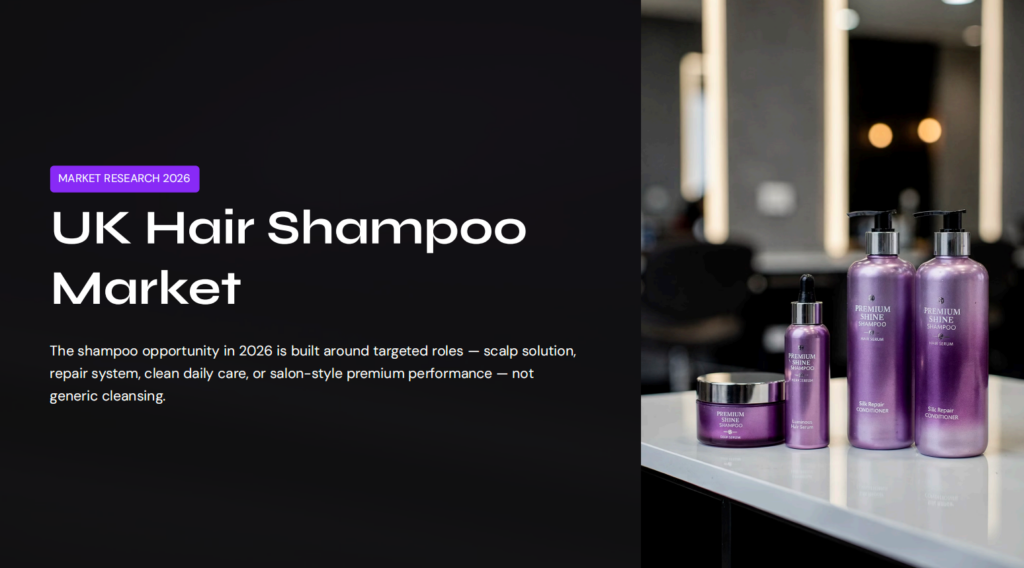
Executive Summary
This report explores the UK shampoo market in 2026, including scalp care demand, repair and sulfate-free trends, price architecture, category whitespace, channel strategy, compliance priorities, and OEM launch planning. It is designed to help brands, distributors, importers, and e-commerce sellers turn market insight into a more practical shampoo launch strategy.
UK Hair Shampoo Market 2026: Scalp Care, Repair, Sulfate-Free Trends, and OEM Launch Guide
The UK shampoo market in 2026 is no longer driven by generic cleansing alone. Consumers are not simply buying shampoo to wash hair. They are buying a solution: scalp relief, anti-flake control, sulfate-free daily care, damage repair, salon-inspired performance, or sensitive-scalp comfort.
For brands, distributors, product developers, and e-commerce sellers, this changes how a shampoo line should be built. The strongest commercial opportunities are not in broad “for all hair types” launches. They are in clearly defined functional roles that match real consumer tensions and repeat-use routines.
This report turns UK shampoo demand into a practical launch roadmap. It covers market direction, consumer demand signals, price architecture, category whitespace, channel strategy, formulation logic, compliance priorities, and OEM execution planning for 2026.
Executive Summary
The UK shampoo category remains commercially attractive because it sits inside a high-frequency personal care routine. Consumers may be price-aware, but they still trade up when a product solves a visible or recurring problem.
In 2026, the strongest demand drivers are scalp care, repair, gentle daily cleansing, and salon-style premium performance. This means new shampoo launches need to be built around a clear use case rather than a generic “clean beauty” or “natural shampoo” message alone.
For most OEM and private label buyers, the best entry path is a mid-tier functional shampoo line supported by a stronger hero SKU. A scalp-led hero can drive search and conversion. A repair or premium SKU can raise margins. A daily sulfate-free shampoo can build repeat purchase and subscription behavior.
The right launch strategy is not a wide catalog. It is a tightly structured product system with each SKU doing one clear job.
Market Opportunity Overview
The UK shampoo market in 2026 should be understood as a problem-solving category rather than a simple hygiene category. Consumers increasingly buy around scalp issues, hair damage, ingredient preferences, and home-performance expectations.
This creates a more structured commercial landscape. Products that solve visible concerns such as flakes, itch, oil imbalance, sensitivity, breakage, or colour-stress are more likely to win than products built only around vague beauty language.
What matters most in this market is fit:
- fit between formula and claim
- fit between price and packaging
- fit between channel and SKU role
- fit between consumer problem and front-of-pack message
That is why successful launches are usually built from one strong problem-led anchor rather than from a generic family shampoo concept.
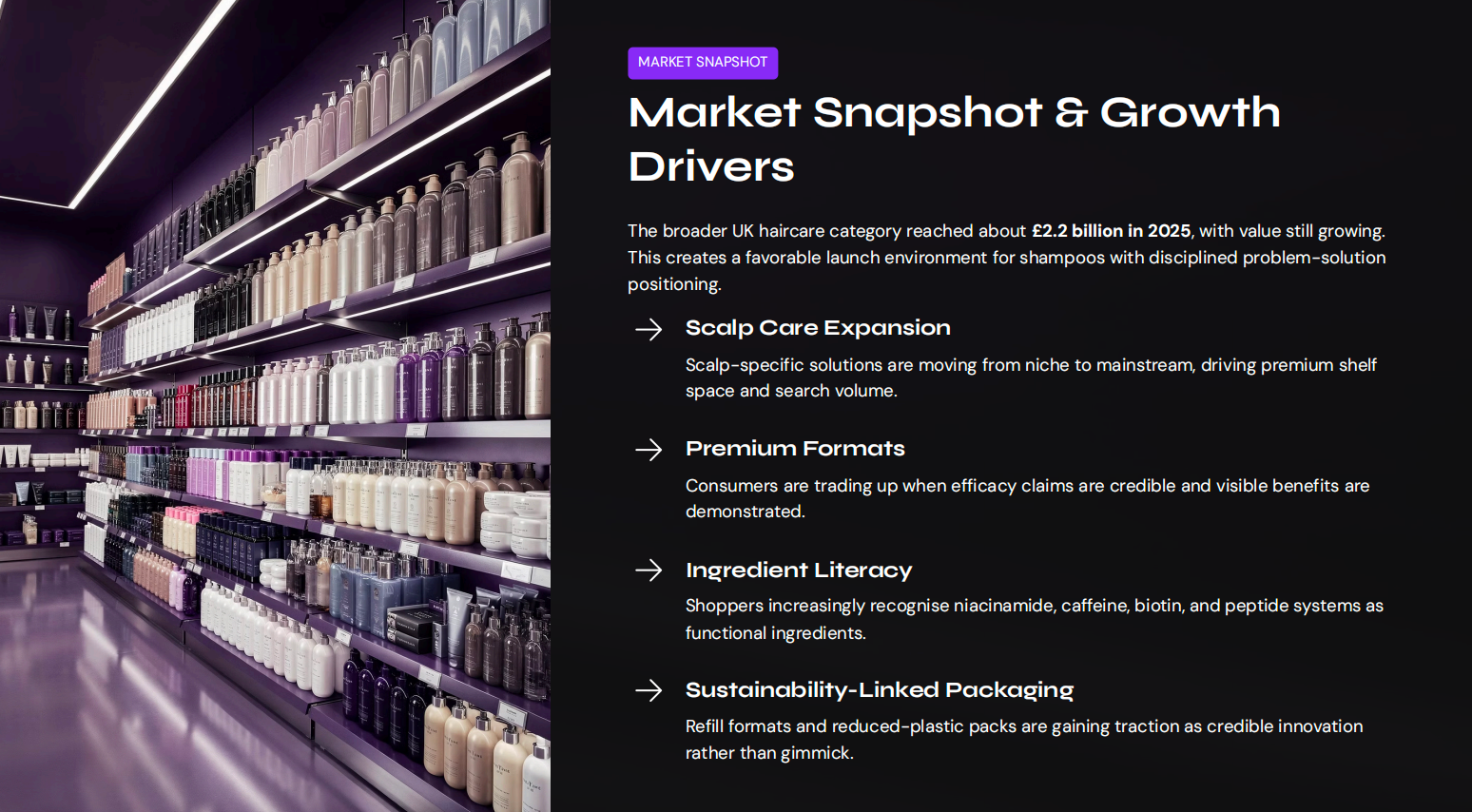
Market Snapshot & Growth
Drivers
What Is Driving Demand in 2026
Several trends are shaping the UK shampoo market.
The first is scalp-first care. Consumers increasingly think about scalp health the way they think about skin health. Flakes, itch, oil control, sensitivity, and comfort have become major purchase triggers.
The second is repair-led premiumization. Damage from colouring, heat styling, bleaching, and overprocessing continues to support stronger demand for repair and salon-inspired shampoos.
The third is gentle daily cleansing. Sulfate-free, silicone-free, vegan, and sensitive-scalp-friendly messaging remains commercially useful, especially when paired with a believable performance story.
The fourth is sustainability with practicality. Refill pouches, reduced-plastic packaging, and repeat-use formats are becoming more mainstream, but they work best when they support routine retention rather than acting as decoration.
These shifts mean that winning shampoos are no longer built around generic promises. They are built around routine relevance.
The Most Commercially Attractive Product Spaces
In practical terms, four product directions stand out in the UK market.
Scalp-First Shampoo
This is one of the strongest opportunities because the consumer problem is visible and recurring. Anti-dandruff, oily scalp, itchy scalp, scalp balance, and sensitive scalp positioning all support repeat purchase.
Repair-Led Premium Shampoo
This is commercially attractive because consumers are willing to pay more when the product clearly addresses damage, colour stress, frizz, or salon-style restoration.
Daily Sulfate-Free Shampoo
This works well as a repeat-purchase line because it supports frequent washing habits, family use, sensitive users, and clean-performance positioning.
Salon-Inspired Home-Care Shampoo
This direction works best when the formula, fragrance, and packaging are strong enough to justify a higher price point and when the product feels more professional than generic premium.
For most launches, it is better to choose one of these spaces first and build depth, rather than trying to enter all of them at once.
Consumer Segmentation
A useful way to think about UK shampoo demand is through four buyer types.
Mass Functional Buyer
This customer shops for visible benefit at an accessible price. Anti-dandruff, oil control, caffeine, and family use are common purchase drivers.
Mid-Tier Problem Solver
This customer wants efficacy without paying salon-level pricing. This is often the best segment for new launches because it balances conversion, margin, and channel flexibility.
Premium Performance Buyer
This customer expects a stronger sensory profile, more polished packaging, and a more convincing performance story. Repair, scalp expertise, and salon cues matter more here.
Clean Beauty Buyer
This customer looks for sulfate-free, silicone-free, vegan, milder cleansing systems, and a less harsh product story. They do not necessarily want fully natural purity. They want cleaner performance.
Each of these buyer types responds to different price points, claims, and packaging cues. That is why one shampoo cannot do every job well.
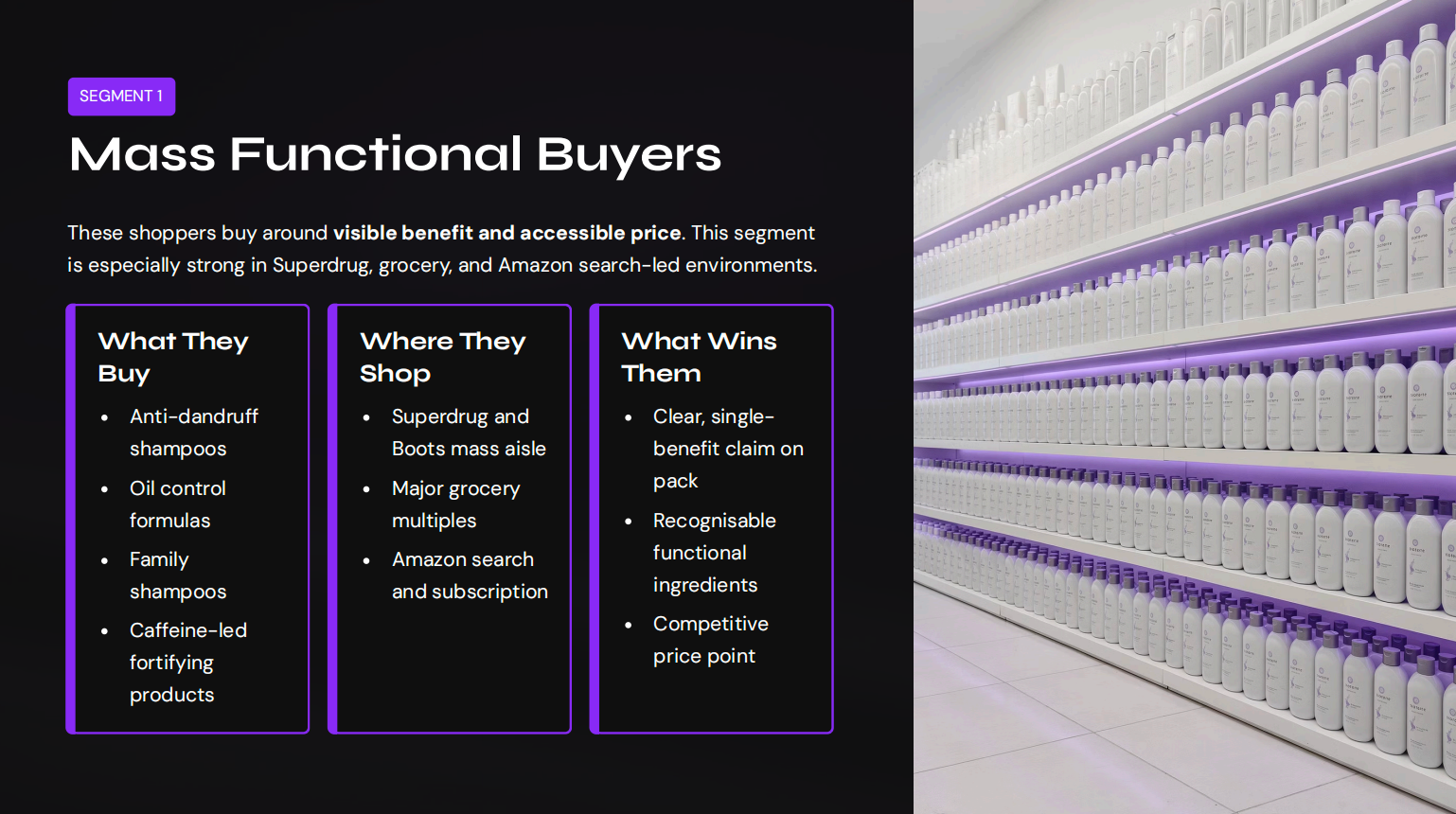
Mass Functional Buyers
Price Architecture and Launch Logic
The UK shampoo market can be viewed across three broad price tiers.
Mass Tier
This tier works best for traffic products, family use, anti-dandruff value, and simple problem-solution communication. Packaging needs to stay efficient, and the claim structure should remain focused.
Mid Tier
This is often the strongest launch zone for new brands. It allows better surfactants, more meaningful ingredient storytelling, better fragrance, and cleaner visual identity without pricing the product out of broad reach.
Premium Tier
This tier supports stronger margins and better brand-building, but it requires a more complete product story. Bond repair, salon performance, scalp expertise, and elevated sensory experience matter much more here.
A more effective launch usually includes one clear traffic or hero product, one higher-margin extension, and one repeat-use SKU that supports replenishment.
Recommended SKU Architecture
A more commercially disciplined shampoo launch should assign a clear role to each SKU.
Hero SKU
A scalp relief or anti-dandruff shampoo is often the strongest hero because it maps well to search demand, shelf logic, and repeat use.
Profit SKU
A bond repair or damage recovery shampoo can lift margin and give the line a more premium feel.
Differentiation SKU
A sensitive scalp or microbiome-friendly shampoo can give the brand a stronger point of view and improve DTC storytelling.
Repeat Purchase SKU
A daily sulfate-free gentle shampoo can build habit, subscription logic, and family-friendly replenishment.
For most launches, the smartest starting portfolio is:
- one scalp hero
- one daily repeat shampoo
- one repair premium extension
- one fortifying or sensitive-scalp extension
This keeps the range commercially focused without becoming too narrow.
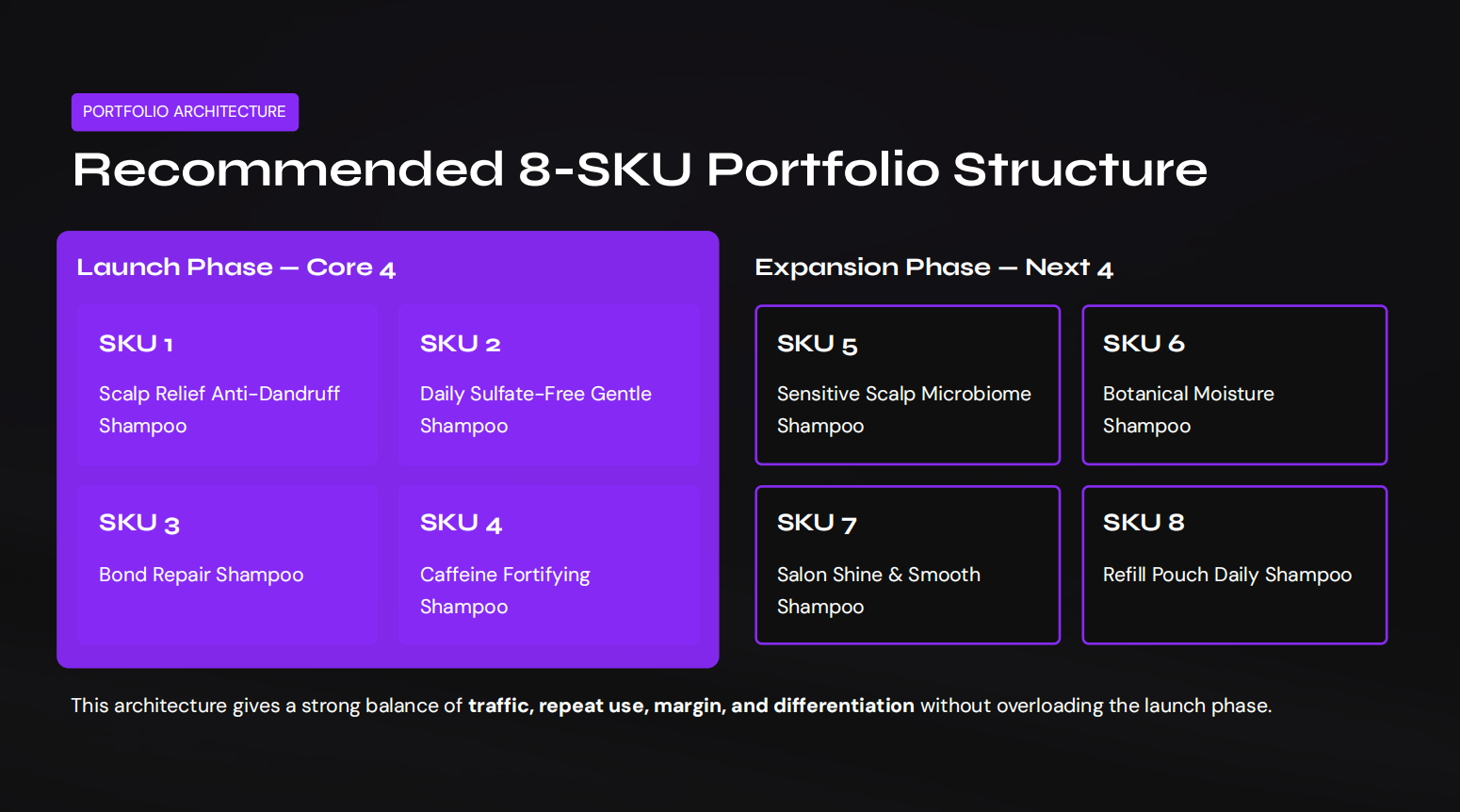
Recommended 8-SKU Portfolio Structure
Channel Strategy
A shampoo launch in the UK should be channel-specific from the start.
Amazon UK
Amazon is especially strong for problem-led search demand. Scalp care, anti-dandruff, sulfate-free, repair, and fortifying terms all perform better when the hero benefit is clear. Smaller trial-ready sizes and strong review velocity are especially important early on.
Boots and Superdrug
These channels reward clear shelf logic. The strongest front-of-pack messages are usually the simplest: anti-dandruff, sensitive scalp, sulfate-free, repair, oily scalp, or vegan. Products need to look retail-ready and claims need to stay disciplined.
DTC
DTC is best for story-led ranges, refill logic, premium sensorial lines, and bundled routines. It is also where more differentiated concepts such as microbiome-friendly or refill-first shampoo lines can perform better.
The strongest strategy is not to launch one identical proposition everywhere. It is to adapt the SKU role and packaging logic to how each channel converts.
Formulation Strategy for OEM Buyers
For OEM and private label buyers, the commercial role of the formula matters more than trend-chasing.
Mild Daily Cleansing Systems
Best for sulfate-free, family-friendly, sensitive scalp, and repeat-use shampoos. These support daily use, tolerance perception, and cleaner brand positioning.
Scalp Balance Systems
Best for flakes, discomfort, scalp imbalance, and fortifying concepts. These are among the most commercially relevant formula directions in 2026.
Repair Systems
Best for damaged, coloured, bleached, or heat-stressed hair. These work well in mid-premium and salon-inspired launches.
Botanical Support Systems
Best for natural-inspired, soothing, and moisture-led concepts. These should support the performance story rather than replace it.
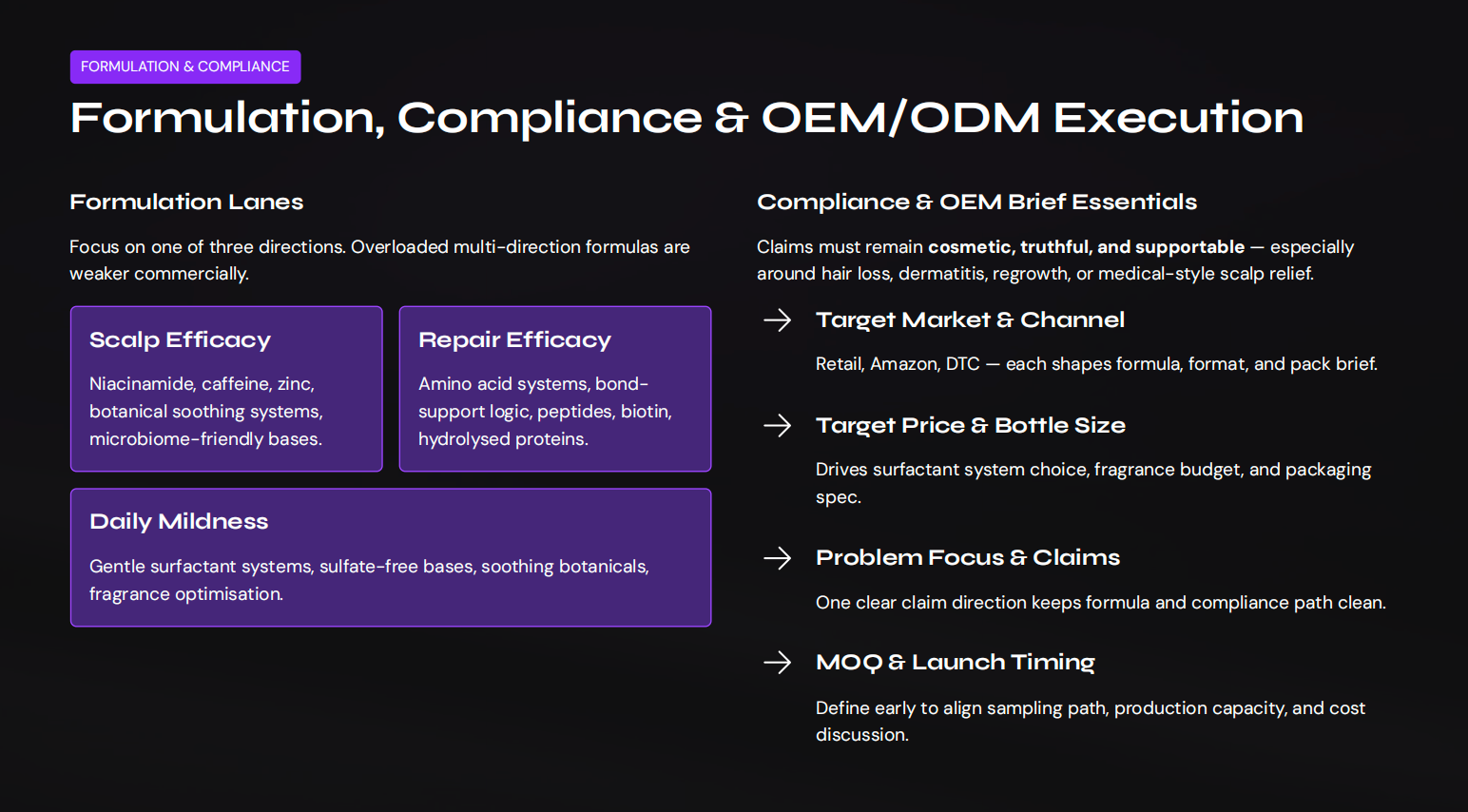
The strongest formula briefs usually choose one primary direction first:
- scalp efficacy
- repair efficacy
- daily mildness
Then they add secondary ingredients to support that story. Overloaded formula logic usually weakens the label rather than strengthening it.
Formulation, Compliance & OEM/ODM Execution
Packaging and Format Strategy
Packaging in shampoo needs to do more than look attractive. It needs to support channel fit, perceived value, and repeat use.
Useful format choices include:
- standard 250ml or 300ml bottle for launch
- pump format for premium or family-size logic
- refill pouch for phase-two extension
- travel size for trial, bundle, or seasonal use
Sustainable packaging works best when it supports routine retention and margin structure, not just eco messaging. Refill systems, for example, are most effective when the hero formula already has repeat-purchase traction.
For most first launches, standard bottle plus strong claim logic is a safer starting point than highly customized packaging.
Compliance and Claims Control
One of the biggest risks in the UK shampoo market is claim overreach.
Shampoo is still a cosmetic category, which means wording has to stay cosmetic, supportable, and proportionate. Medical-style claims such as treating hair loss, regrowing hair, or curing scalp conditions create avoidable risk.
Safer and stronger commercial wording includes:
- helps reduce visible flakes
- helps support scalp comfort
- helps hair feel stronger
- helps smooth and soften damaged hair
- gentle cleansing for everyday use
- suitable for sensitive scalp
- promotes healthier-looking hair
Compliance should be built into the concept stage, not left to artwork review at the end. In shampoo, many launch problems begin with a badly chosen claim direction rather than a badly printed label.
OEM Execution Plan
The best way to reduce wasted time and failed samples is to improve the buyer brief.
A stronger shampoo RFQ should define:
- target market
- target channel
- price tier
- bottle size
- target consumer problem
- must-have claims
- restricted claims to avoid
- MOQ expectations
- launch deadline
- whether refill or premium packaging is phase one or phase two
The most efficient development flow usually looks like this:
- define the target consumer problem
- fix the price tier
- choose one or two core claims
- decide standard or custom packaging
- request two or three formula directions
- compare formula fit, cost, and lead time
- align claims and packaging before final RFQ
That sequence reduces unnecessary revisions and makes launch timing much more realistic.
What Brands Should Do Next
If you are entering the UK shampoo market in 2026, do not start with a vague “nice shampoo” concept.
A better sequence is:
- pick one high-demand problem space
- decide whether the brand is mass, mid-tier, or premium
- build one hero SKU first
- use one repeat-use SKU to support retention
- add one margin-lifting extension only after the first logic is clear
For most operators, the strongest launch order is:
- scalp hero
- daily repeat shampoo
- repair premium extension
That gives searchability, repeat volume, and better margin balance.
Ready to Turn Market
Opportunities Into Your Next
Product Launch?
Final Takeaway
The UK shampoo market in 2026 is attractive, but only for launches with disciplined SKU logic.
The best opportunities are not in generic cleansing products. They are in scalp care, repair, gentle daily use, and premium home-performance. The brands most likely to win are the ones that assign one role to each SKU, match price to channel and formula, and keep claims commercially strong without crossing compliance lines.
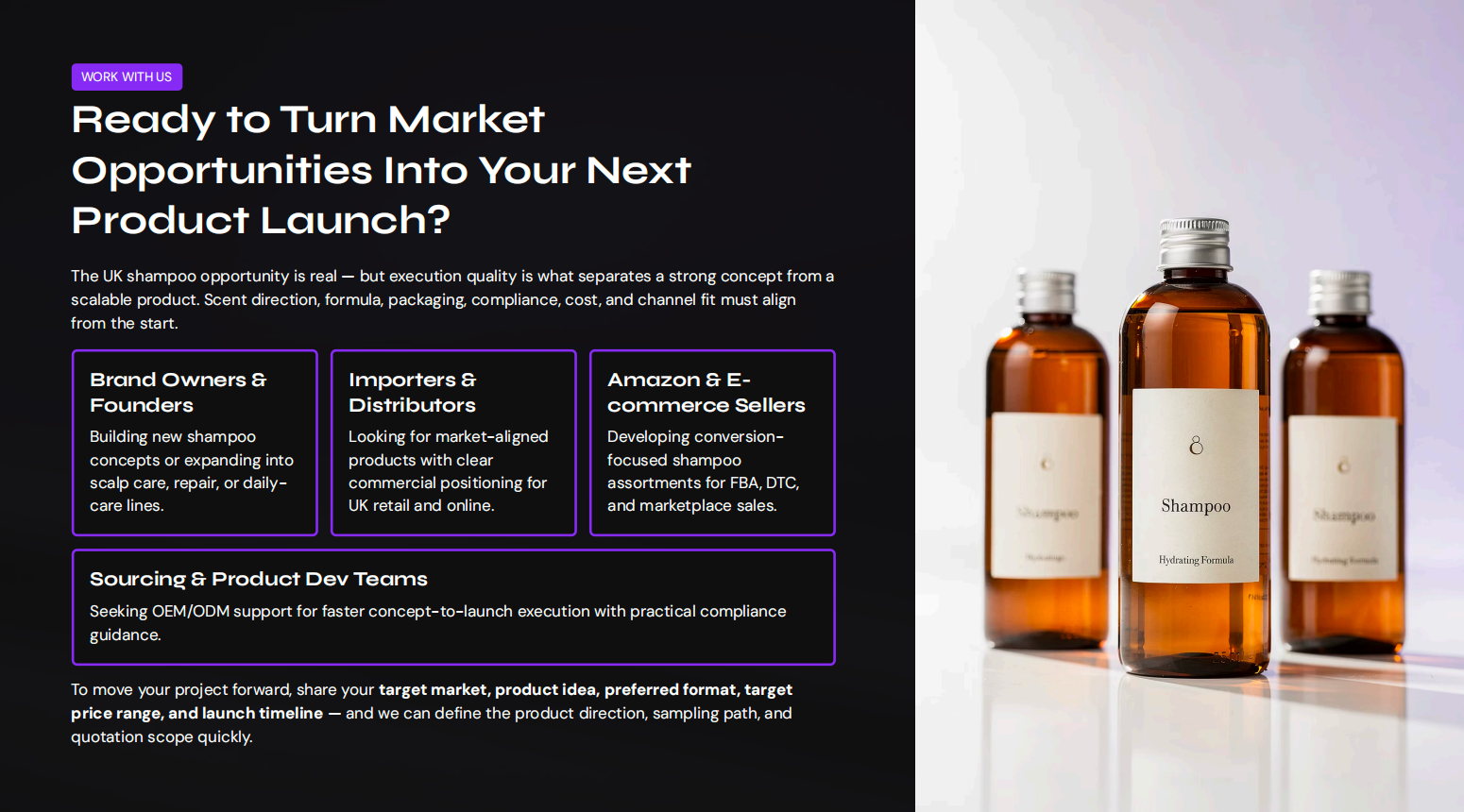
If your team is evaluating a UK shampoo launch, the smartest next step is to align the target problem, price band, core claim, and packaging route first, then move into sampling with a much clearer OEM brief.
Download the Full Report (PDF)
Tell us your target region, product category, and the decision you’re trying to make. We’ll suggest the closest existing report—or build a tailored version.