


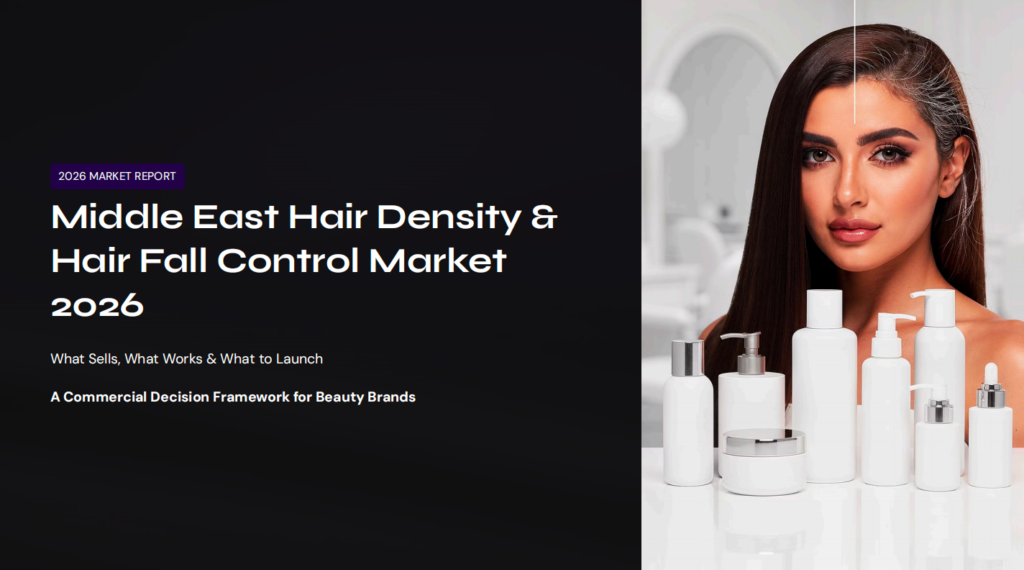
Executive Summary
This report explores the Middle East hair thinning and scalp care market in 2026, including GCC demand, consumer triggers, serum-led product strategy, scalp oil opportunities, men’s grooming growth, channel fit, compliance priorities, and OEM launch planning. It is designed to help brands, importers, distributors, private label buyers, and Amazon sellers turn market insight into a more practical scalp care launch strategy.
Middle East Hair Thinning & Scalp Care Report 2026: GCC Demand, Product Formats, and OEM Opportunities
The Middle East hair thinning and scalp care market in 2026 is not best approached as a generic hair growth category. The stronger opportunity lies in scalp-first, routine-based, cosmetically compliant systems that address thinning appearance, scalp imbalance, breakage concern, and daily grooming needs without crossing into therapeutic territory.
For brands, importers, distributors, private label buyers, and e-commerce sellers, the commercial logic is clear. Saudi Arabia remains the region’s largest hair care market, the UAE continues to function as a high-visibility beauty hub, male grooming demand is growing across GCC markets, and digital beauty retail is strong enough to support focused treatment-led launches rather than only mass shampoo plays.
This report translates those signals into a practical market-entry and product-development guide. It covers regional demand, consumer triggers, product formats, SKU structure, channel logic, compliance priorities, and an OEM-ready launch path for hair thinning and scalp care in the Middle East.
Executive Summary
The most attractive opportunity in this category is not a single hair growth hero SKU. It is a scalp-density system built around one problem cluster and one clear product hierarchy.
In practical terms, the strongest commercial structure is:
- shampoo as the traffic generator
- scalp serum as the commercial core
- scalp oil as the regional adaptation layer
- bundle kit as the average-order-value and distributor presentation layer
This structure works because it reflects how the market actually buys. Shampoo brings broader discoverability and repeat use. Serum carries the highest perceived efficacy and premium value. Oil adds regional relevance and ritual familiarity. Bundles make the line easier to explain, easier to sell, and more commercially complete.
For most buyers, the strongest first entry cluster is not “all hair loss concerns.” It is thinning appearance, scalp imbalance, and breakage concern. That positioning is easier to commercialize, easier to bundle, and safer to claim.
Market Opportunity Overview
The Middle East scalp care opportunity is attractive because the region’s hair care growth is not being driven by basic cleansing alone. Demand is becoming more treatment-led, more premium, and more problem-solution focused.
Saudi Arabia remains the largest country opportunity in the region, while the UAE plays an outsized role as a beauty trend hub, premium retail market, and regional showcase. Together, these two markets create a strong base for specialist scalp-care launches.
The category is also supported by structural regional conditions. Climate, frequent washing behavior, heat, dust, dryness, humidity shifts, and air-conditioned indoor lifestyles all create a commercially useful bridge between thinning concerns and scalp care needs. Consumers do not need to buy into regrowth claims for the category to work. They are already willing to buy for:
- scalp balance
- fresher roots
- reduced breakage appearance
- stronger-feeling hair
- fuller-looking density
- more comfortable scalp condition
This is why the category should be treated as a problem-solution routine market rather than a general haircare market.
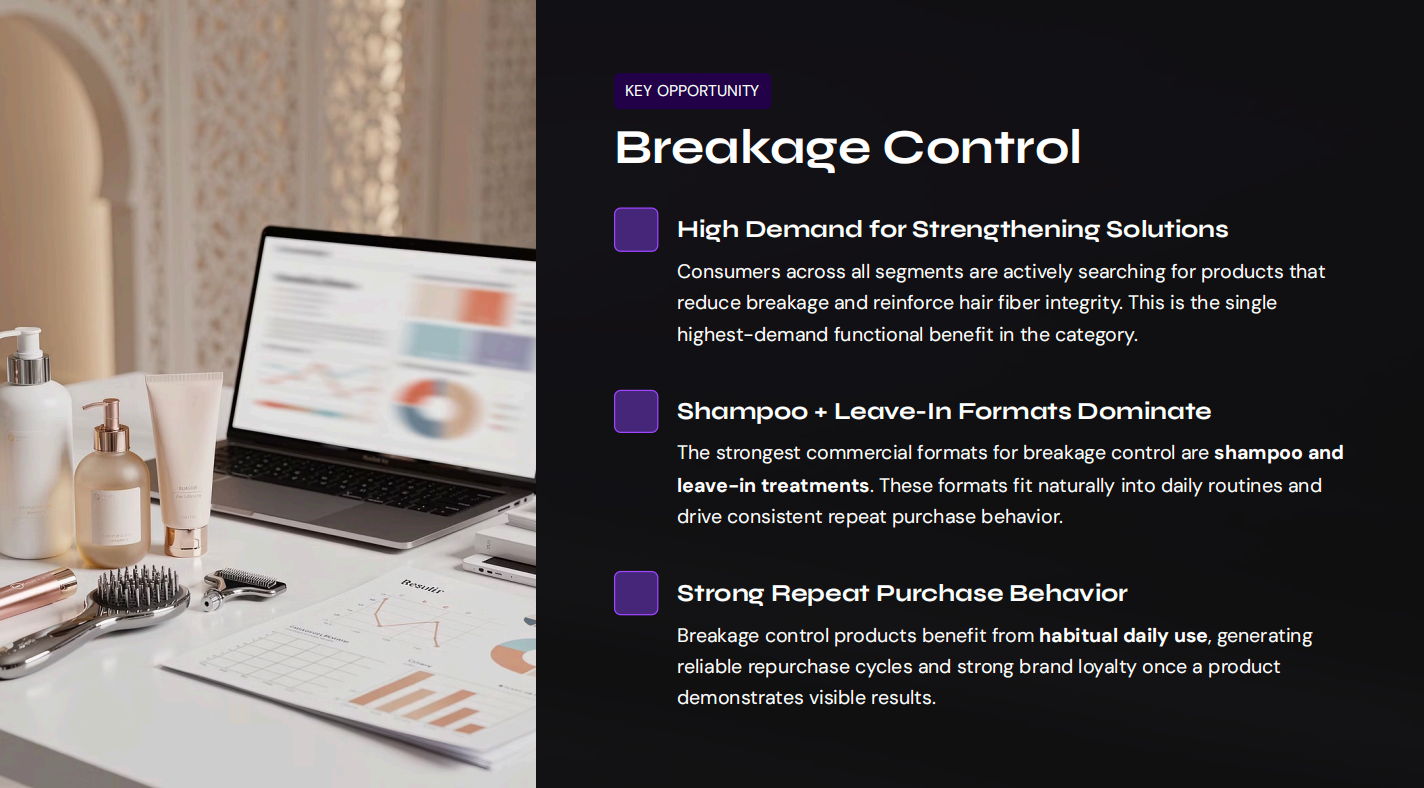
Breakage Control
Why the Category Is Growing
Several demand drivers are strengthening the Middle East hair thinning and scalp care market.
The first is visible hair-thinning anxiety. Users are highly motivated when they notice more shedding, weaker-looking roots, a widening part line, or lower density appearance.
The second is scalp imbalance. Heat, oil, sweat, dust, and frequent washing create real demand for balancing, soothing, and pre-treatment scalp products.
The third is grooming culture. Across GCC markets, grooming is increasingly associated with daily discipline, self-presentation, and premium personal care. This creates strong conditions for both female and male-targeted scalp routines.
The fourth is ingredient familiarity. Consumers increasingly recognize ingredients such as caffeine, niacinamide, biotin, peptides, rosemary, argan oil, and black seed oil. They may not understand every mechanism, but they do associate these names with stronger, fuller-looking hair and a healthier scalp environment.
Together, these drivers support a category where routine-based scalp care is more commercially attractive than one-off treatment positioning alone.
Target Consumer Segments
There are five commercially important consumer groups in this market.
The first is the hair-thinning anxiety user. This consumer is highly conversion-ready and often responds well to serum, tonic, and shampoo bundles.
The second is the postpartum or female hair-fall user. This segment usually wants support that feels gentle, beauty-led, and non-medical. Serum, oil-serum hybrid, and routine kits are especially relevant here.
The third is the grooming-focused male consumer. This audience is one of the strongest underexploited entry routes in GCC markets. Men in this segment respond best to fast-use, daily-discipline formats such as shampoo, tonic spray, leave-in serum, and barber-adjacent products.
The fourth is the premium beauty consumer. This buyer is willing to pay more for elegant packaging, recognizable actives, sophisticated texture, and an intentional regimen.
The fifth is the natural or oil-based ritual user. This group is especially important in the Middle East because oil-based beauty habits already have cultural relevance. They do not want crude traditional products. They want a modernized oil story.
For most brands, the best launch path is to choose one primary audience and one secondary audience, rather than trying to serve everyone with one formula brief.
Purchase Triggers and Demand Signals
The strongest purchase triggers in this market are:
- visible thinning
- excessive shedding
- hairline concern
- oily scalp and greasy roots
- itchy or uncomfortable scalp
- weak, breakage-prone hair
- desire for denser-looking hair in social and professional settings
These triggers should directly shape SKU planning.
Visible thinning supports the strongest case for serum, tonic, and leave-in treatment.
Shedding anxiety creates good logic for shampoo and serum bundles.
Hairline concern favors precise applicator formats such as nozzle serums, spray tonics, and dropper oils.
Oily scalp creates opportunity for balancing shampoos and pre-shampoo scalp treatments.
Scalp discomfort supports soothing leave-ins and comfort-focused scalp formats.
Weak, brittle, or breakage-prone hair supports support-SKUs such as conditioner or mask.
A strong product brief in this category should start with the sentence: “The user notices X.” That is much stronger than starting with “We want a hair growth product.”
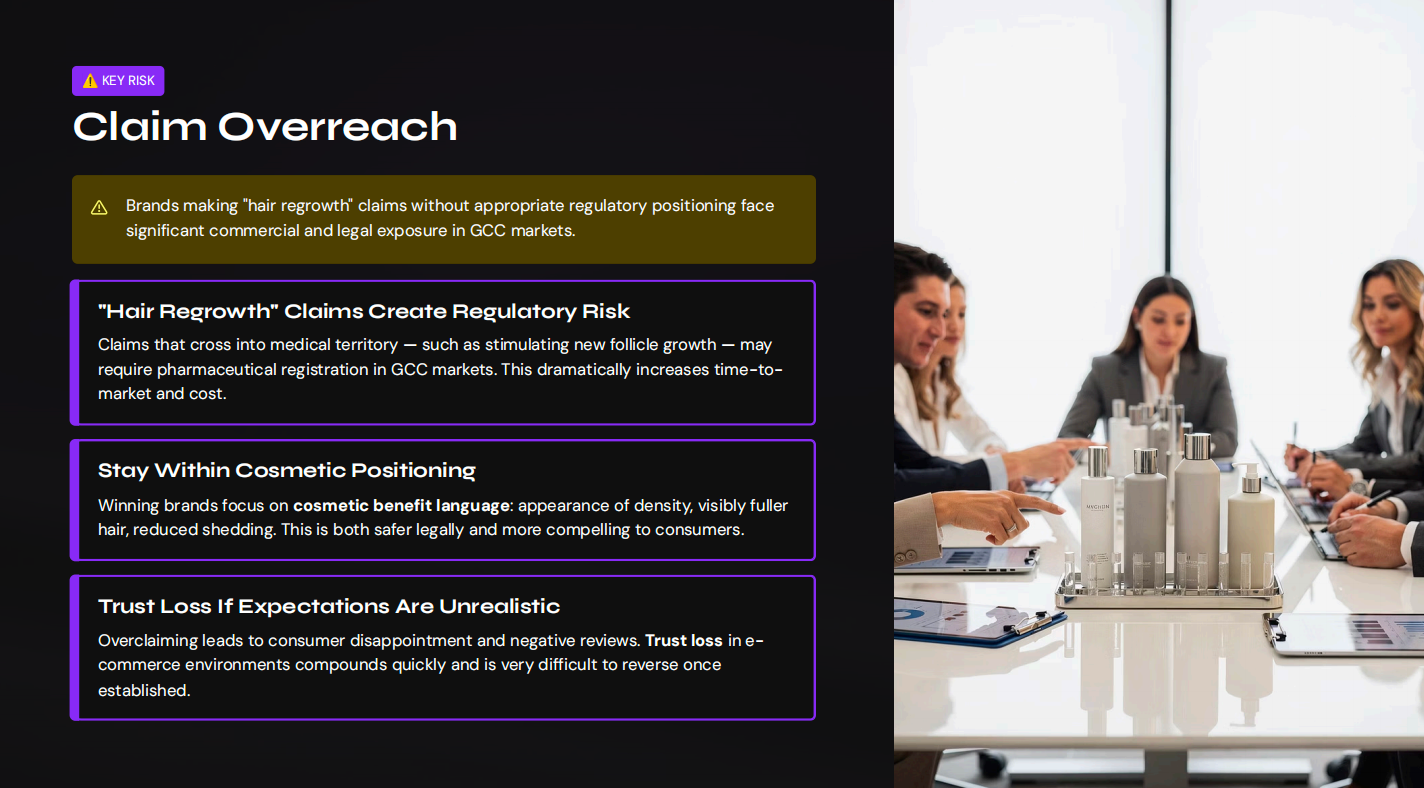
Claim Overreach
Product Format Trends
Each format plays a different commercial role, and strong launches reflect that clearly.
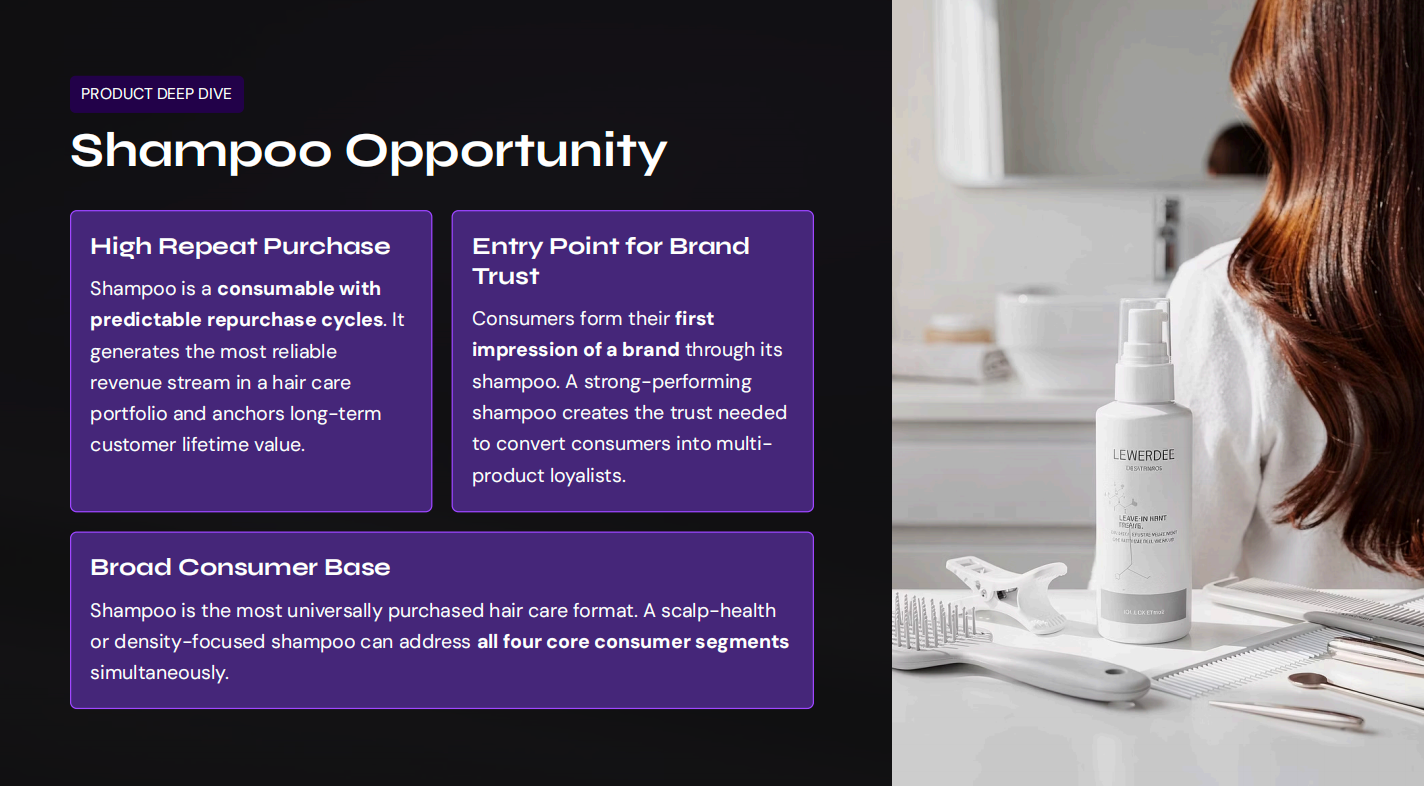
Shampoo
Shampoo is the traffic driver. It supports discoverability, repeat purchase, and wider market access. It is usually the entry point, but not the highest-margin format.
Serum
Serum is the commercial core of the category. It offers the strongest premium logic, strongest efficacy perception, strongest storytelling potential, and highest margin opportunity.
Oil
Oil is the regional adaptation layer. In the Middle East, a well-positioned scalp oil or density-support oil is not a side SKU. It is a local relevance advantage.
Tonic or Spray
Tonic or spray formats are especially good for men’s grooming, barber-linked channels, fast daily use, and low-friction application.
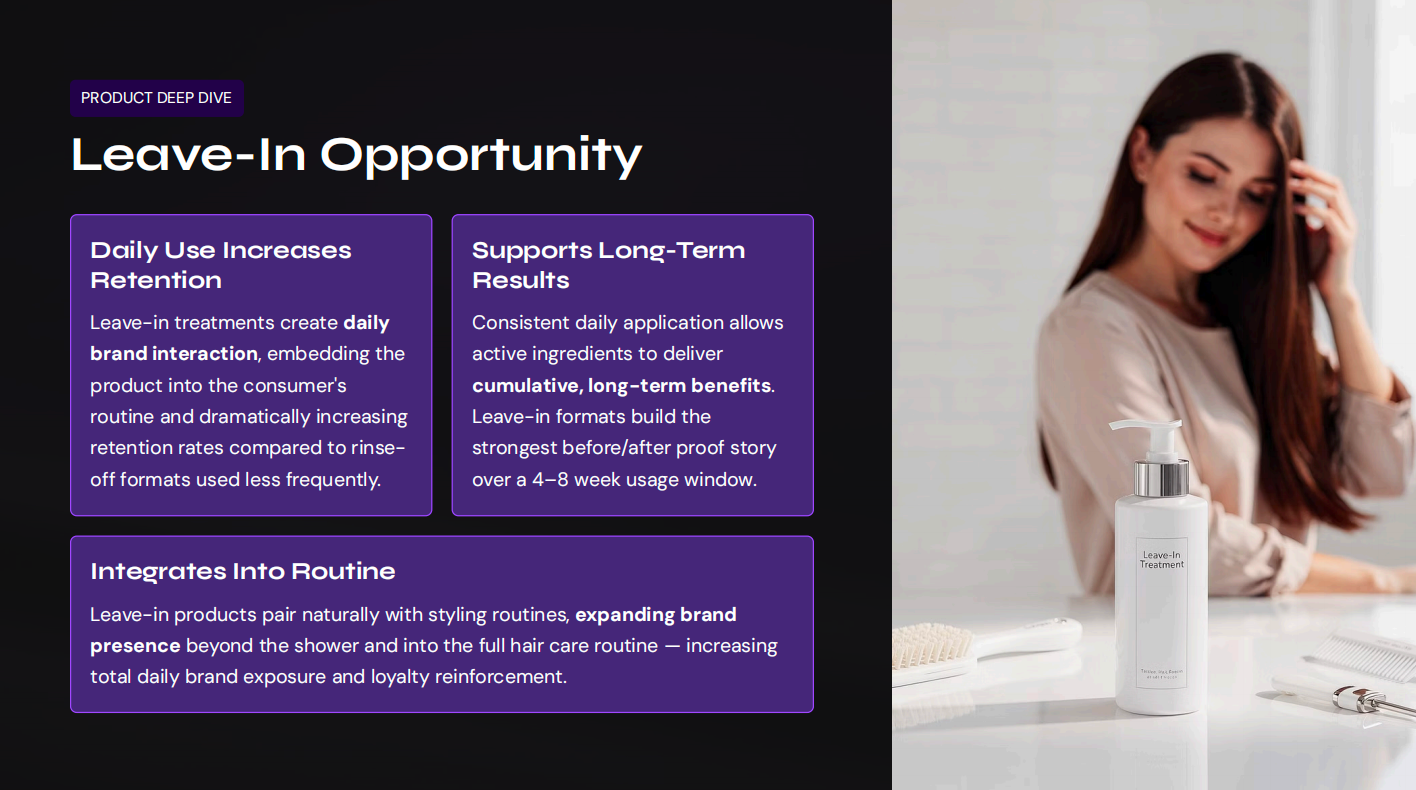
Leave-In Scalp Treatment
Leave-in scalp care is especially useful for women, sensitive scalp consumers, and premium users who want a skincare-style routine.
Pre-Shampoo Treatment
This format supports innovation and routine depth, especially for users dealing with oily roots, buildup, or imbalance.
Conditioner and Mask
These are support formats. They are not the category hero, but they improve conversion, routine credibility, and bundle value.
The strongest format logic is simple:
- traffic = shampoo
- margin = serum
- regional differentiation = oil
- AOV lift = kit
Pricing Strategy
The category works best across three price bands.
Mass is mainly useful for shampoo traffic and accessible daily care, but it is difficult for new entrants unless they already have strong distribution.
Mid is the strongest entry zone for most brands. It allows recognizable actives, cleaner claims, better packaging, and better margin without requiring full luxury positioning.
Premium is where serum, oil, and kit economics become strongest. Premium is especially viable in the Middle East because prestige beauty cues, premium presentation, and grooming rituals are already commercially accepted.
For most export-oriented buyers, the best entry band is upper-mid to accessible premium. That leaves enough room for perceived efficacy, polished packaging, and healthier gross margin.
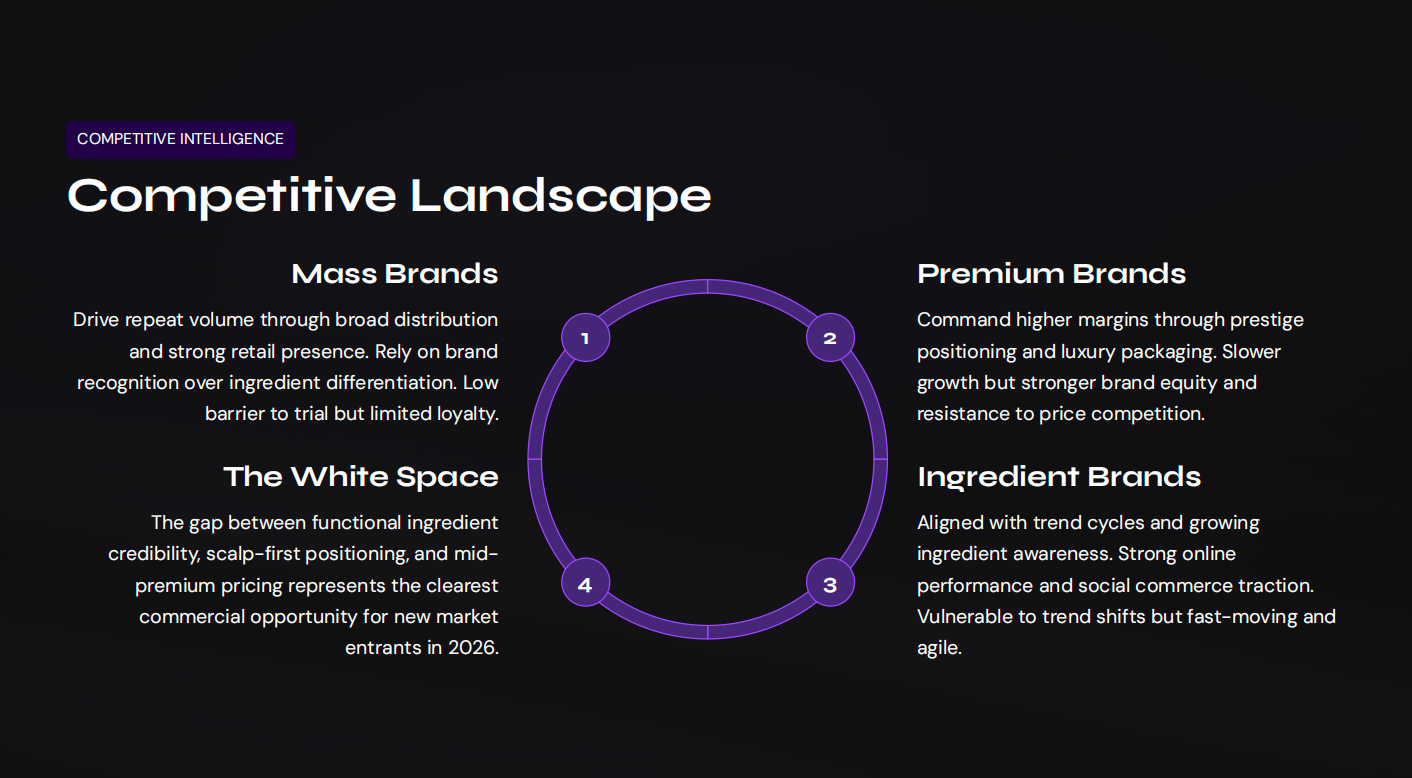
Competitive Positioning
The category is fragmented, but that fragmentation creates opportunity.
There are four broad competitor types:
- mass brands focused on anti-hair fall and strengthening
- pharmacy or clinical brands focused on scalp care and thinning-support
- natural or oil-based brands focused on herbs and ritual care
- premium brands focused on densifying ritual and prestige presentation
New entrants usually do not win by beating mass brands on price. They win by finding the space between clinical trust and premium beauty.
The most promising gaps include:
- mid-premium scalp serum
- premium scalp oil with modern formula logic
- shampoo + serum + oil routine systems
- men’s daily scalp tonic with premium barber aesthetics
- female density-support routines with gentle, non-medical language
The best opportunity is not to copy one product. It is to build a clearer product system than fragmented competitors are offering.
Competitive Landscape
Product Opportunity and SKU Strategy
The most practical way to enter this category is with a phased system, not a wide launch.
A strong first-wave portfolio usually includes four SKUs:
- one traffic shampoo
- one hero scalp serum
- one localized scalp oil
- one bundle or routine kit
For phase-one commercialization, high-potential examples include:
- a scalp-density shampoo for fuller-looking hair
- a core scalp serum for thinning appearance and scalp vitality
- a scalp oil with black seed, rosemary, argan, or similar regionally relevant cues
- a shampoo + serum starter system or shampoo + serum + oil ritual set
This type of structure gives the line clear commercial roles:
- shampoo drives search and retailer acceptance
- serum anchors premium value
- oil strengthens regional fit
- kits improve conversion and distributor pitch quality
For first launch, it is better to validate 3 to 4 disciplined SKUs than to open with a scattered 7-SKU line.
Leave-In Opportunity
Channel Strategy
A strong Middle East launch should be channel-aware from the start.
Amazon
Amazon works best for shampoo, serum, tonic, and kit formats. The category is search-led, comparison-heavy, and symptom-driven, which makes it highly suitable for compliant scalp-care conversion.
DTC
DTC is best for education-heavy formats such as serum, oil, premium kits, and postpartum-support routines. It allows deeper ingredient explanation, regimen selling, and higher-value bundles.
Distributor and Retail
Distributor routes work best when the assortment is simple and commercially readable. Most distributors prefer one hero shampoo, one hero treatment, and one support SKU rather than an overly broad assortment. In retail, serum and oil need stronger packaging and shelf clarity than online-only formats.
For brands with limited budget, an Amazon + DTC-first approach is often the strongest entry route before scaling into broader distributor discussions.
Messaging Strategy
This category should be sold through compliant, cosmetic-safe language.
Good claims language includes:
- helps support fuller-looking hair
- helps improve the appearance of hair density
- helps reduce breakage-related hair fall
- helps maintain a balanced scalp environment
- helps refresh and comfort the scalp
- helps support stronger-looking roots
- helps leave hair looking thicker and healthier
Claims that should be avoided include:
- regrows hair
- treats hair loss
- cures baldness
- stimulates follicles
- prevents male pattern baldness
- medical solution for thinning hair
In this category, stronger conversion often comes from better framing, not stronger promises.
Compliance and Risk Control
Regulatory management in this market should be treated as part of commercialization, not as a late-stage packaging task.
For GCC routes, brands should assume:
- bilingual Arabic and English packaging is the safest default
- claims must remain within cosmetic scope
- product labeling and listing consistency matter
- essential oils, herbs, and “hair growth” language need careful review
- importer and local-market workflow should be aligned before shipment
The biggest risks usually come from:
- overpromising on hair growth
- missing or weak Arabic-facing packaging
- inconsistent claims across carton, bottle, listing page, and social media
- product naming that sounds therapeutic rather than cosmetic
The safest path is to align claims, formula, artwork, and registration logic together from the beginning.
Shampoo Opportunity
Packaging and Presentation
Packaging matters more in this category than many buyers assume.
Clinical-premium packaging works best for serum-led lines because it creates efficacy cues while keeping the brand elevated.
Natural-premium packaging works best for oil-led lines because it keeps ritual and regional relevance while still looking modern.
Clean pharmacy-style packaging works best for distributor and pharmacy-adjacent routes.
High-performing packaging directions include:
- dropper bottles for premium serum and oil
- nozzle applicators for scalp targeting
- treatment pumps for easy leave-in use
- secondary cartons for gifting and premium presentation
- elegant bilingual labeling
- modern, refined natural visuals rather than rustic herbal cues
A strong line should choose one dominant packaging code and stay consistent.
OEM and Launch Execution
For OEM or ODM buyers, the most productive way to start is with a disciplined, phase-one brief.
A stronger buyer brief should include:
- target market
- hero consumer
- key scalp problem to solve
- product format
- target price band
- packaging style
- benchmark references
- quantity target
- launch timing
- preferred claims language
- route to market
In most cases, lower risk comes not from forcing ultra-low MOQ, but from launching fewer SKUs with cleaner claims and stock-compatible packaging.
For first-wave development, a realistic structure is:
- shampoo, conditioner, serum, tonic, oil, and mask usually planned at standard MOQ logic
- kits assembled from approved inner SKUs
- simpler packaging used first to protect timing and cost
The best OEM conversations start with fewer, clearer decisions.
Final Takeaway
The Middle East hair thinning and scalp care opportunity in 2026 should not be approached as a generic hair growth range.
The strongest route is a scalp-density system:
- anchored by serum
- supported by shampoo traffic
- localized by oil
- monetized by kits
Brands are most likely to win when they build around one clear scalp problem cluster, one hero audience, one disciplined claims territory, and one commercially readable SKU structure.
If you are planning a Middle East scalp care launch, the smartest next step is to define your target market, scalp concern, product hierarchy, and price ladder first, then build the right phase-one system from there.
Download the Full Report (PDF)
Tell us your target region, product category, and the decision you’re trying to make. We’ll suggest the closest existing report—or build a tailored version.