


Executive Summary
This report explores the EU facial mask market in 2026, including hydration demand, barrier-support trends, gentle formulations, sensitive-skin positioning, format strategy, compliance priorities, and OEM launch planning. It is designed to help brands, importers, distributors, private label buyers, and Amazon sellers turn market insight into a more practical facial mask launch strategy.
EU Facial Mask Market 2026: Barrier Support, Hydration Trends, and Launch Strategy
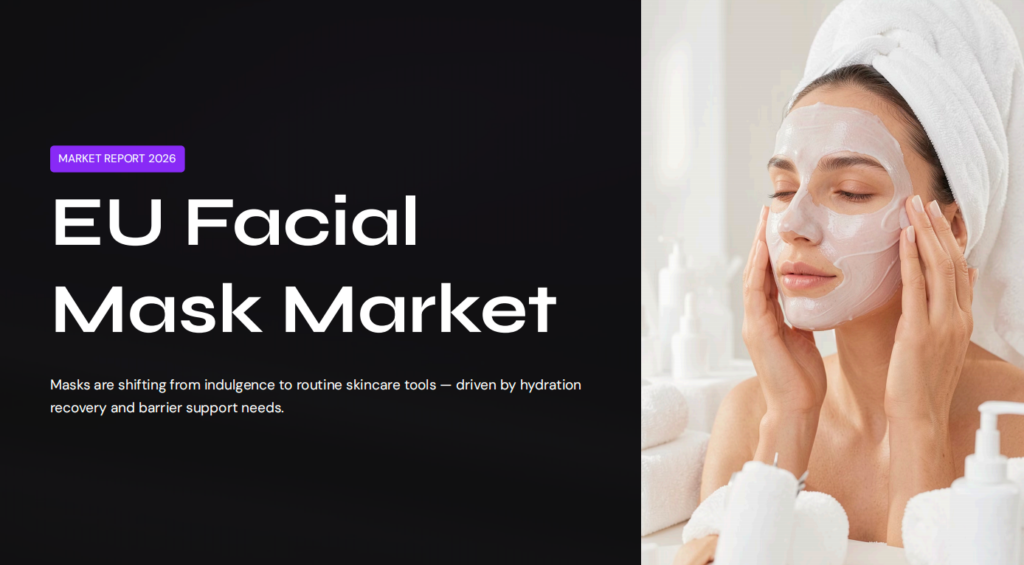
The EU facial mask market in 2026 is no longer driven only by occasional beauty indulgence. It is increasingly shaped by routine-based skincare behavior, barrier-support awareness, hydration recovery, sensitive-skin compatibility, and flexible use occasions such as weekly reset, overnight replenishment, and fast visible moisture support.
For brands, importers, distributors, private label buyers, and e-commerce sellers, the strongest opportunity is not to compete on novelty alone. It is to build a facial mask portfolio that feels gentle, effective, clearly positioned, and commercially structured for modern EU skincare demand.
This report translates those market signals into a practical launch guide. It covers consumer demand, category growth logic, format trends, price segmentation, channel fit, compliance priorities, and an OEM-ready SKU strategy for entering the EU facial mask market in 2026.
Executive Summary
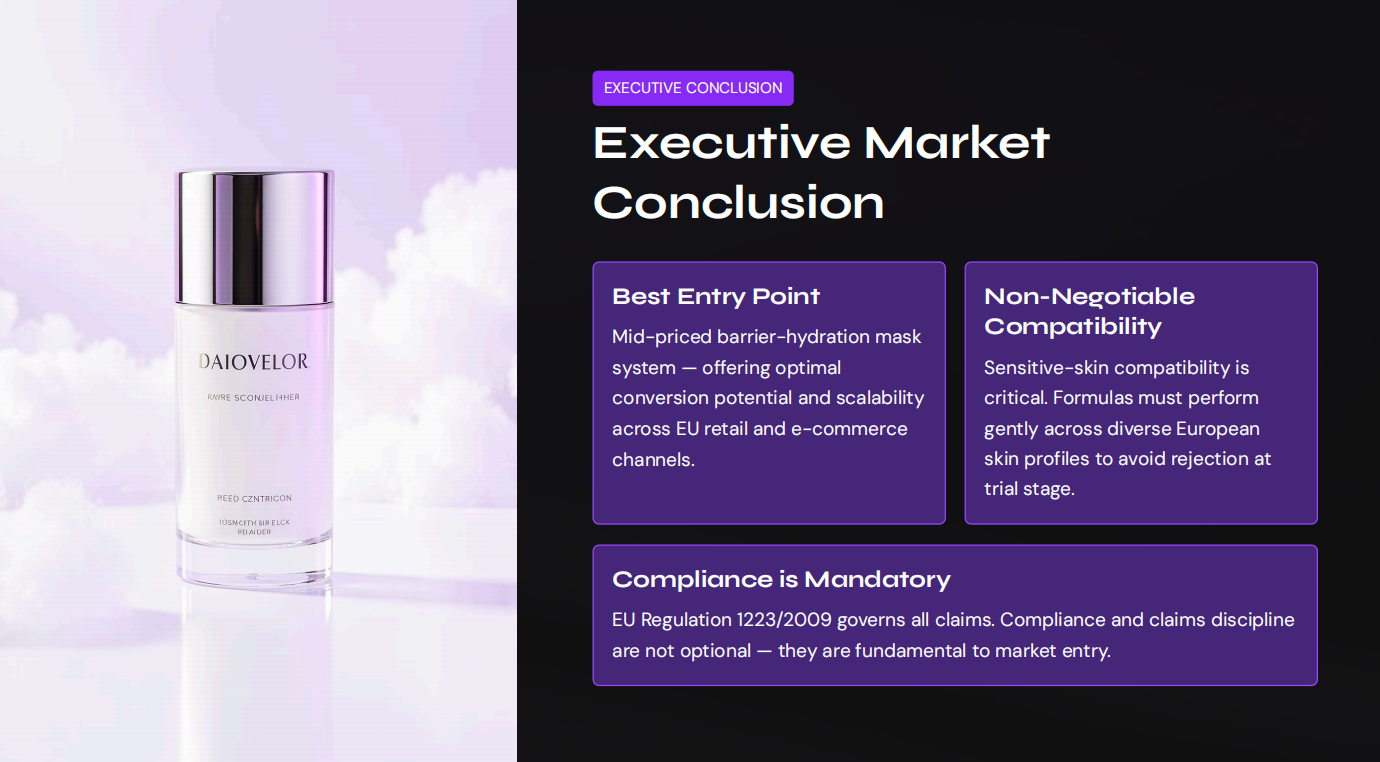
The EU facial mask opportunity is strongest for products positioned as routine-supporting, barrier-conscious, and gentle-performance skincare rather than as one-off beauty treats. Consumers increasingly want masks that help with dryness, tight-feeling skin, dehydration, skin stress, and comfort recovery without using overly aggressive or treatment-style positioning.
This is why hydration-led, barrier-support, and sensitive-skin mask stories have become more commercially attractive than “instant transformation” concepts. Sheet masks, soothing gel masks, cream comfort masks, and overnight sleeping masks all fit this shift well, especially when supported by simple, cosmetic-safe benefit language and easy-to-understand ingredient systems.
For most export-oriented buyers, the best entry route is a mid-priced 3-SKU system:
- one barrier hydration sheet mask
- one soothing recovery gel or cream mask
- one overnight sleeping mask
This creates one strong entry SKU, one repeat-oriented comfort SKU, and one higher-margin recovery SKU while keeping the line commercially coherent.
Market Opportunity Overview
The EU facial mask market is growing because masks now function as targeted routine enhancers rather than only as pampering add-ons. Consumers use them for hydration support, comfort after routine overload, overnight replenishment, weekly balancing, and quick visible moisture before events or after travel.
This gives masks a strong dual role in skincare portfolios. They can work as traffic-driving trial products and as premium add-on products with better texture, ritual value, and bundle logic.
For new entrants, the biggest mistake is trying to solve every skin problem in one SKU. A stronger approach is to build around one clear need cluster first, such as:
- hydration plus barrier support
- soothing plus sensitive skin
- overnight recovery plus moisture retention
- gentle purification plus comfort rebound
That type of structure is easier to merchandise, easier to explain, and easier to scale across channels.
Executive Market
Conclusion
Why Facial Masks Are Growing in Europe
The category benefits from several reinforcing growth drivers.
The first is rising skin barrier awareness. Consumers are becoming more familiar with product language around moisture retention, skin comfort, dehydration support, and fragile-feeling skin. This makes barrier-support masks more commercially understandable than they were a few years ago.
The second is sensitivity and over-treatment fatigue. Many consumers are looking for gentler products after overusing exfoliants, active-heavy routines, or stripping treatments. Masks positioned around comfort and hydration are benefiting from this shift.
The third is climate and seasonal dryness. European skincare demand is strongly affected by winter dryness, post-summer dehydration, travel stress, and environmental exposure. Masks fit these seasonal need states well.
The fourth is convenience. Facial masks can deliver a visible treatment moment without requiring the consumer to rebuild their whole skincare routine. That makes them easy to add, easy to gift, and easy to bundle.
Consumer Demand Signals
Consumers in the EU facial mask category are increasingly buying by need state, not just by format. The strongest demand signals are coming from:
- dryness and dehydration
- tight-feeling skin
- dull-looking skin
- stressed-looking skin
- redness-prone or sensitive-feeling skin
- overnight recovery needs
- weekly balancing for combination skin
This matters because product conversion is often driven by the first thing the customer feels or sees. Strong masks usually respond to that trigger directly.
The most commercially effective trigger language tends to be:
- my skin feels dry
- my skin feels tight
- my skin looks tired
- my skin feels stressed
- my skin needs a weekly reset
Products that try to communicate too many triggers at once usually weaken their message and reduce conversion clarity.
Core Consumer Segments
A useful way to understand the EU facial mask market is through four main buyer groups.
The first is the sensitive-skin consumer. This segment wants predictable, gentle products that feel calming, barrier-conscious, and low-irritation. They are highly responsive to gel, cream, and fragrance-conscious formulas.
The second is the barrier-support seeker. These consumers experience dryness, tightness, fragility, or post-stress discomfort. They are especially relevant for ceramide, panthenol, and overnight moisture-retention masks.
The third is the hydration-focused user. This is one of the broadest and easiest conversion segments. They are looking for fast visible moisture, smoother-feeling skin, and fresher-looking skin.
The fourth is the ingredient-conscious skincare buyer. These users pay attention to ingredient systems such as ceramides, hyaluronic acid, niacinamide, panthenol, peptides, and beta-glucan. They are especially relevant for Amazon, DTC, and accessible-premium channels.
A strong launch should not try to speak to all four equally in every SKU. It should assign one clear user logic to each product.
Recommended Entry
Strategy
Category Landscape
The EU facial mask market is best understood through a good-better-best structure across multiple formats.
Mass
The mass tier competes on accessibility, gifting, impulse purchase, and simple hydration or detox positioning. This tier is especially visible in sheet masks and entry-level hydration masks.
Mid
The mid tier is the strongest entry zone for most export-oriented buyers. It allows better textures, better actives, clearer barrier-support storytelling, stronger packaging, and more disciplined margins without needing prestige brand equity.
Premium
Premium masks compete through ritual value, luxurious textures, prestige packaging, and premium benefit language. This tier can be attractive, but it is usually better as a second-stage expansion rather than a first battlefield.
For most new entrants, the best risk-adjusted opportunity is not the cheapest end of the market. It is the mid-priced, barrier-friendly, gentle-performance segment.
Format Trends
The market is not dominated by one single mask format. Different formats serve different commercial roles.
Sheet Masks
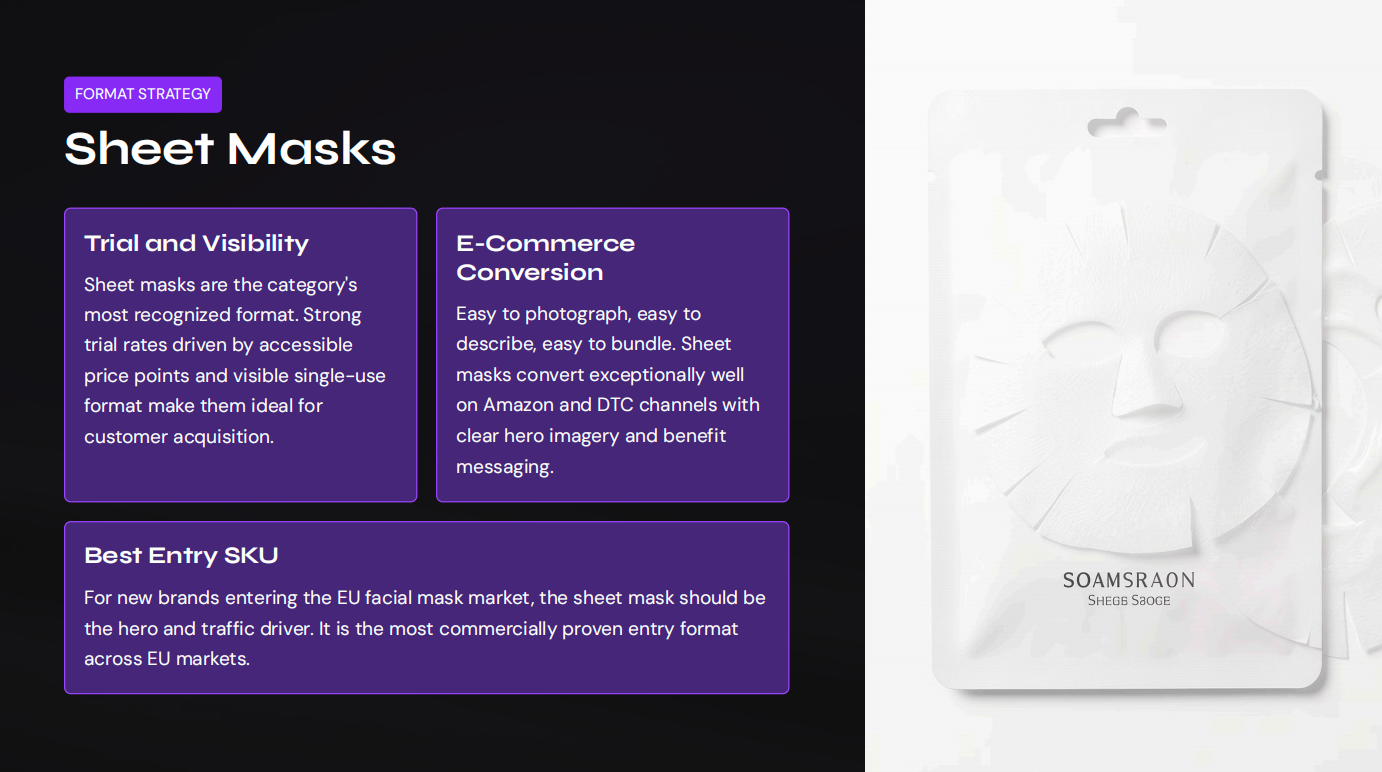
Sheet masks work well for fast hydration, travel, gifting, event-prep, and stressed-skin support. They are visually strong and easy to understand, which makes them ideal for traffic and e-commerce conversion.
Sheet Masks
Cream Masks
Cream masks offer stronger multi-use value and are often better for repeat purchase than buyers first assume. They are especially attractive for comfort, dry skin, and sensitive-skin routines.
Clay Masks
Clay masks remain relevant for oil balance, congestion, and weekly reset use, but they need gentler positioning. In 2026, harsher clay stories are less attractive than balancing masks that purify while keeping skin feeling comfortable.
Gel Masks
Gel masks are especially useful for cooling hydration, comfort, redness-appearance care, and sensitive-skin positioning. They also offer stronger sensorial differentiation than many buyers expect.
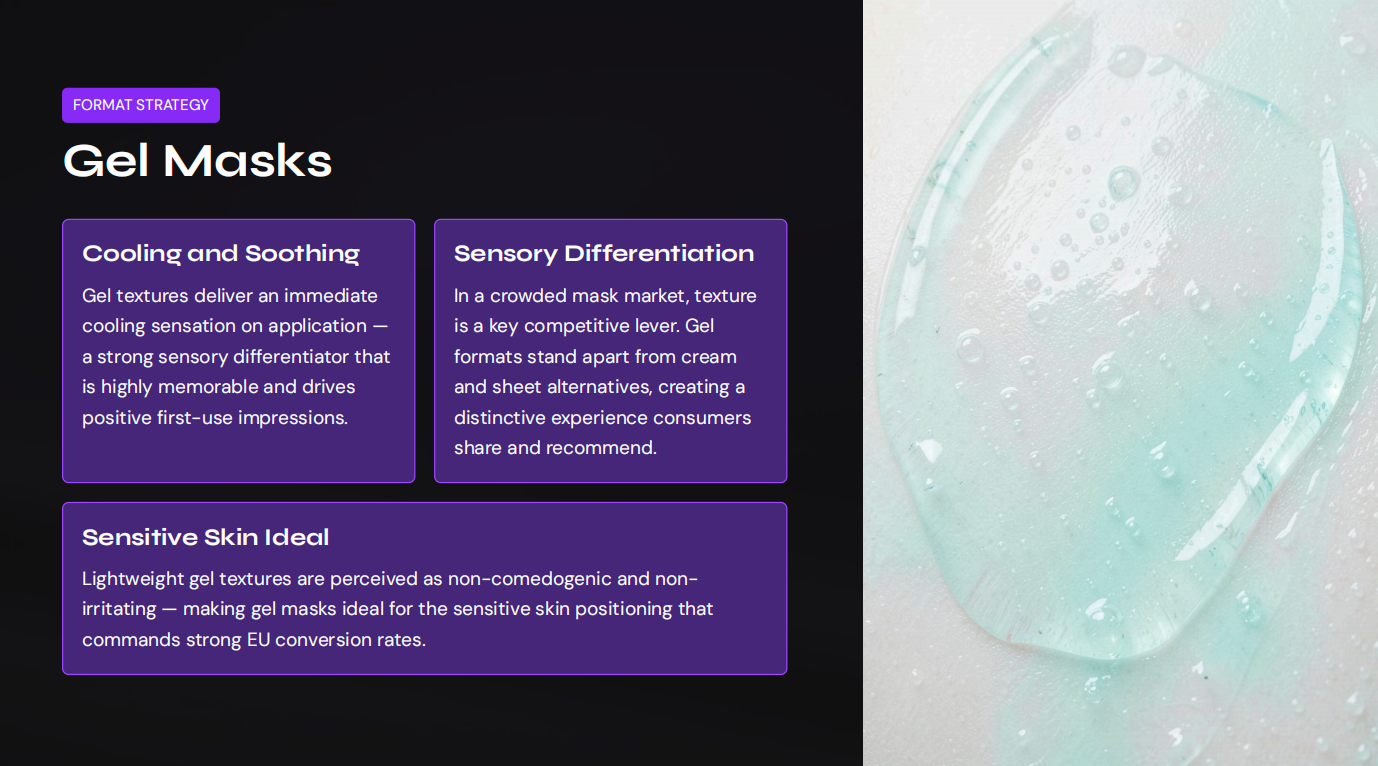
Gel Masks
Sleeping Masks
Sleeping masks are one of the strongest premiumization routes because they fit overnight replenishment, moisture sealing, and higher-value routine integration.
Multi-Step Kits
Mask kits and alternating-use systems help increase basket value and support gifting, but they are usually better added after core hero SKUs have validated demand.
Fragrance, Texture, and Ingredient Directions
The strongest mask concepts in Europe are increasingly built around comfort and visible skin-feel improvement rather than aggressive treatment language.
The most commercially useful ingredient systems include:
- ceramides
- panthenol
- glycerin
- hyaluronic acid
- beta-glucan
- ectoin
- allantoin
- niacinamide
- squalane
- peptides
- kaolin and zinc PCA in balancing masks
For most SKUs, one to three hero ingredients are enough. Overloaded ingredient decks often make the product harder to understand and harder to market.
Texture is also a real conversion factor. Consumers often perceive gel masks as soothing, cream masks as nourishing, and sleeping masks as more premium. A strong portfolio uses texture intentionally, not just formula cost.
Product Opportunity and SKU Strategy
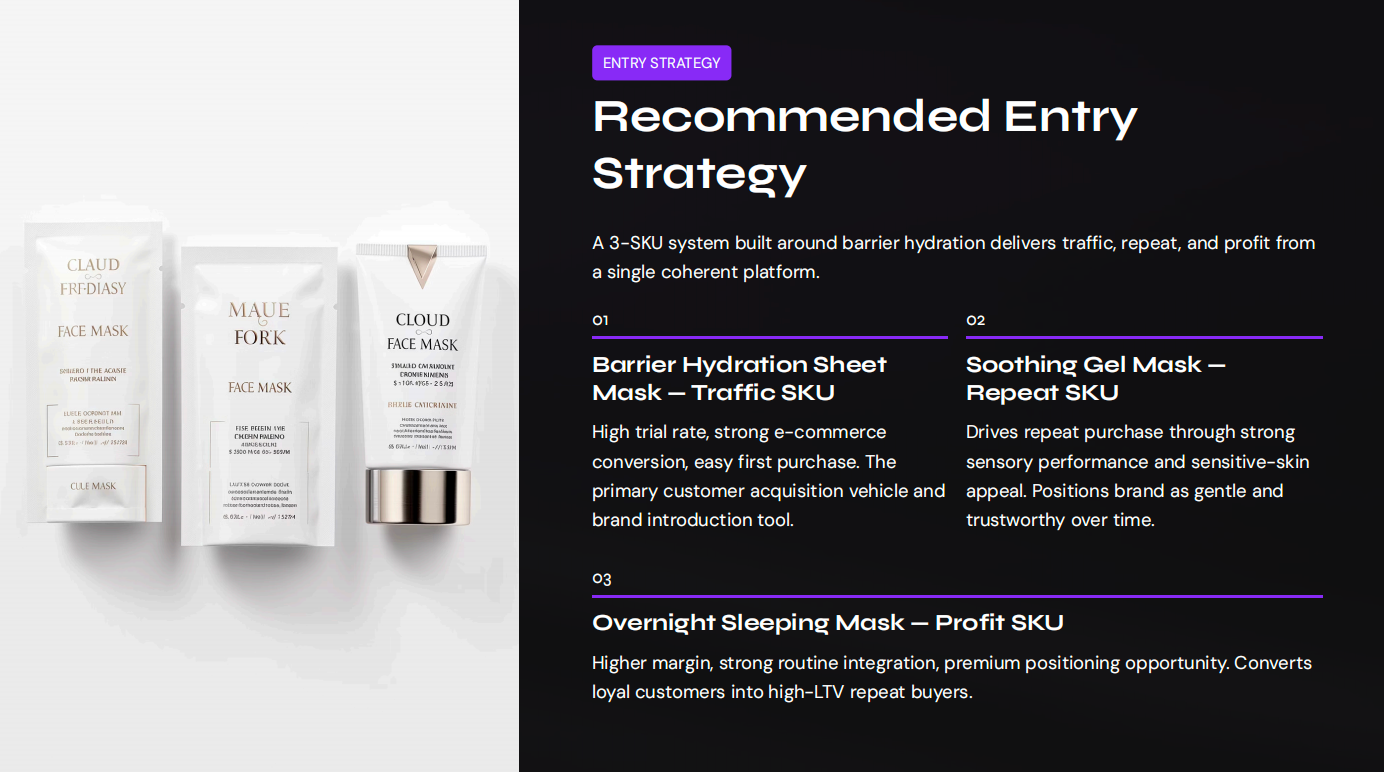
The most practical way to enter the EU facial mask market is with a structured 3-SKU system rather than a broad launch.
A strong first portfolio could include:
- one barrier hydration sheet mask
- one soothing gel or gel-cream recovery mask
- one overnight moisture sleeping mask
This structure works because each SKU plays a different commercial role:
- the sheet mask drives trial and easy understanding
- the soothing gel or cream mask supports repeat use and sensitive-skin comfort
- the sleeping mask adds premium value and better margin logic
A second-stage portfolio can then expand into:
- a cream comfort mask for sensitive skin
- a gentle clay balance mask
- a niacinamide glow sheet mask
- one premium hydrogel or multi-step kit
That kind of progression helps avoid overbuilding too early while still creating room for bundle growth and channel expansion.
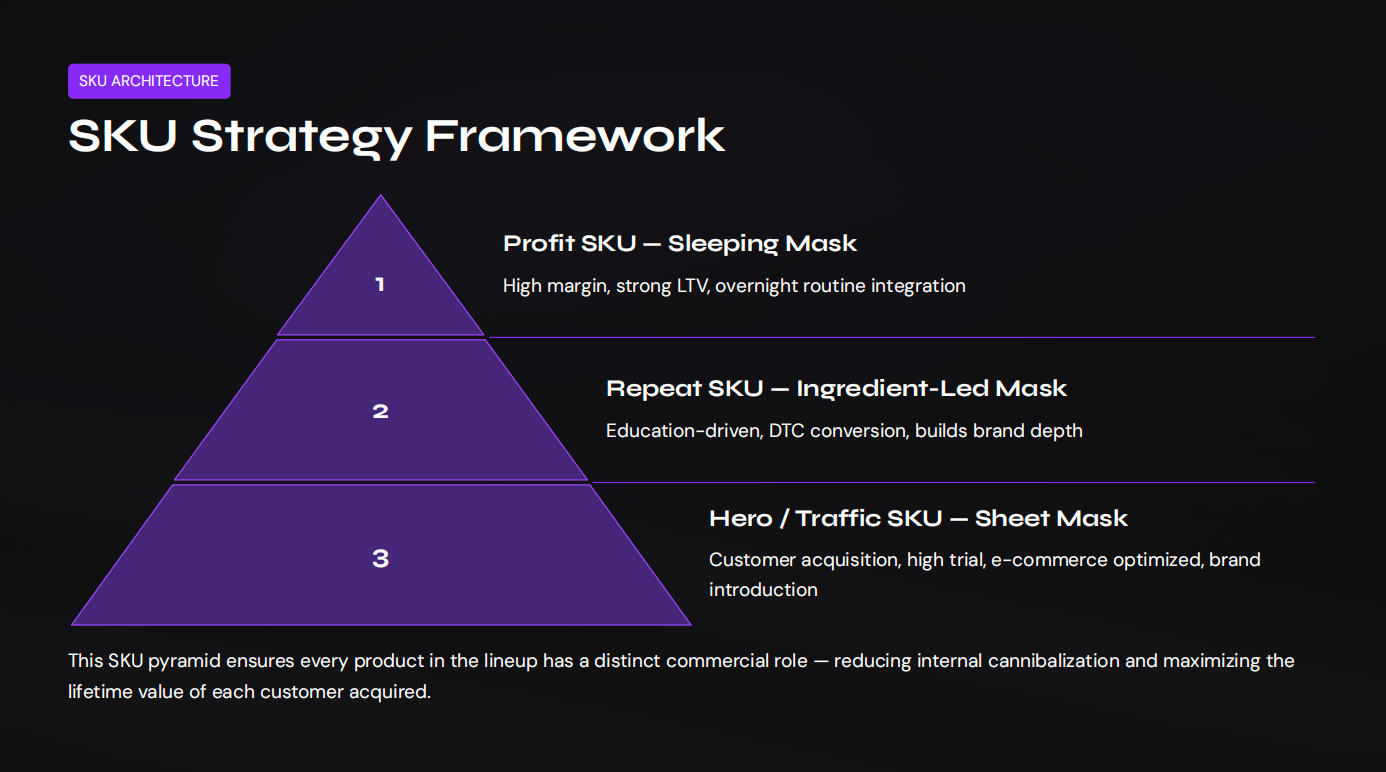
SKU Strategy Framework
Pricing Strategy
The facial mask category rewards price structure more than random price points.
Entry-level products may support trial and impulse purchase, but they are usually crowded and promotion-heavy. Premium products can carry stronger margins, but they require higher trust and stronger branding.
The most commercially attractive space for most new entrants is mid-priced accessible premium. This zone allows:
- stronger ingredient stories
- better texture
- better packaging
- more visible channel fit
- healthier price-value logic
A portfolio should usually include:
- one traffic SKU
- one repeat-oriented comfort SKU
- one profit-oriented overnight or premium-feeling SKU
This creates better acquisition, retention, and average order value logic than a flat lineup.
Channel Strategy
A strong EU facial mask launch should be channel-aware from the start.
For Amazon, the best-performing mask types are usually sheet masks, hydration masks, overnight masks, and ingredient-led barrier-support SKUs. Search visibility favors simple need-state language and familiar hero ingredients.
For DTC, the strongest opportunity lies in routine education, sensitive-skin storytelling, bundle logic, and seasonal recovery campaigns. DTC is especially useful for gel masks, cream masks, and system-based selling.
For retail and pharmacy-style channels, calm packaging, clear benefit language, and low-irritation positioning are especially important. Sensitive-skin and barrier hydration stories work better when the front of pack is clean and easy to understand quickly.
The strongest launch strategy is not to sell the same product mix in every channel. It is to adapt the assortment to the way each channel converts.
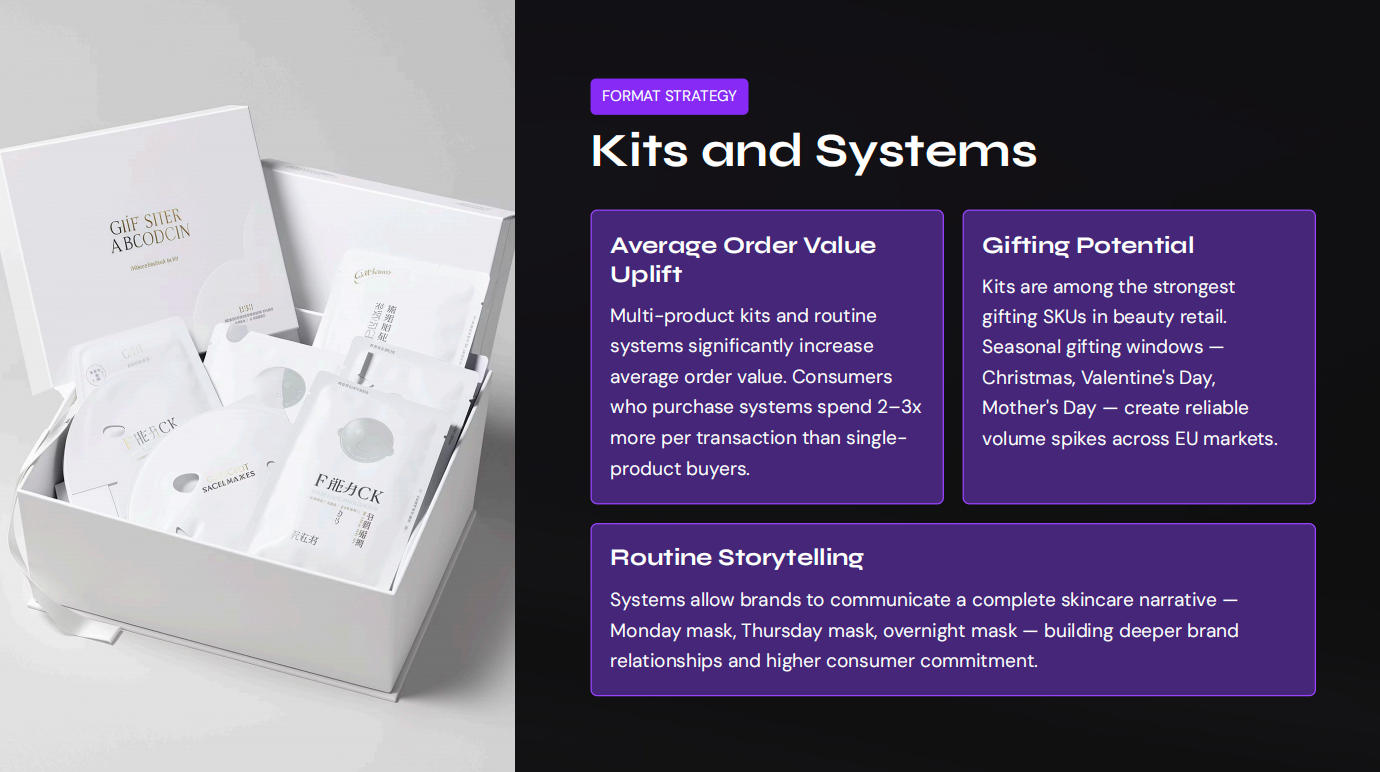
Kits and Systems
Compliance and Risk Control
The EU is a compliance-sensitive cosmetics market, which means claims discipline is part of commercialization, not just legal review.
The most important commercial rule is to remain clearly within cosmetic territory. A facial mask should not use therapeutic or disease-style positioning.
High-risk claims include:
- treats eczema
- heals dermatitis
- treats inflammation
- cures irritation
- medical-grade repair
- post-procedure treatment claims
Safer cosmetic language includes:
- helps support the skin barrier
- helps replenish moisture
- helps reduce the feeling of tightness
- leaves skin feeling soothed and comfortable
- helps improve the appearance of dry, tired-looking skin
- suitable for sensitive skin
- helps lock in overnight moisture
For EU-facing launches, claims, pack copy, Amazon copy, and DTC copy should all come from one approved cosmetic claims framework.
Packaging and Presentation
Packaging format should follow channel logic, not only formula logic.
Single-use sachets are still important for trial, gifting, event use, and e-commerce entry, especially in sheet masks. Multi-use jars and tubes matter because they improve value perception and often feel more sustainable per use.
European buyers are also more aware of packaging waste and packaging efficiency than many markets, so excessive packaging can create both cost and perception problems.
Useful packaging directions include:
- single sachets for discovery and travel
- 4-pack or 5-pack multipacks for repeat sheet-mask economics
- tubes for cream and gel masks
- jars or tubes for sleeping masks depending on positioning
- simplified cartons only where they improve retail performance or gifting value
Packaging should also match formula story. Barrier-support and sensitive-skin products usually work better with clean, calm, clinical-leaning visuals. Self-care or comforting products can support softer, more natural visual cues.
OEM and Launch Execution
For OEM or private label buyers, a stronger launch starts with a clearer brief.
A good project brief should include:
- target EU countries
- target channel
- target retail price
- preferred mask formats
- texture preference
- hero ingredients
- fragrance-free or low-fragrance direction
- claim boundaries
- packaging direction
- forecast quantity
- launch timing
- benchmark products
The clearer these details are upfront, the easier it becomes to sample efficiently, align packaging, plan documentation, and reduce revision cycles.
For first launch, it is usually smarter to reduce packaging complexity before asking for ultra-low MOQ. In many mask projects, packaging and component complexity create more delay than the formula itself.
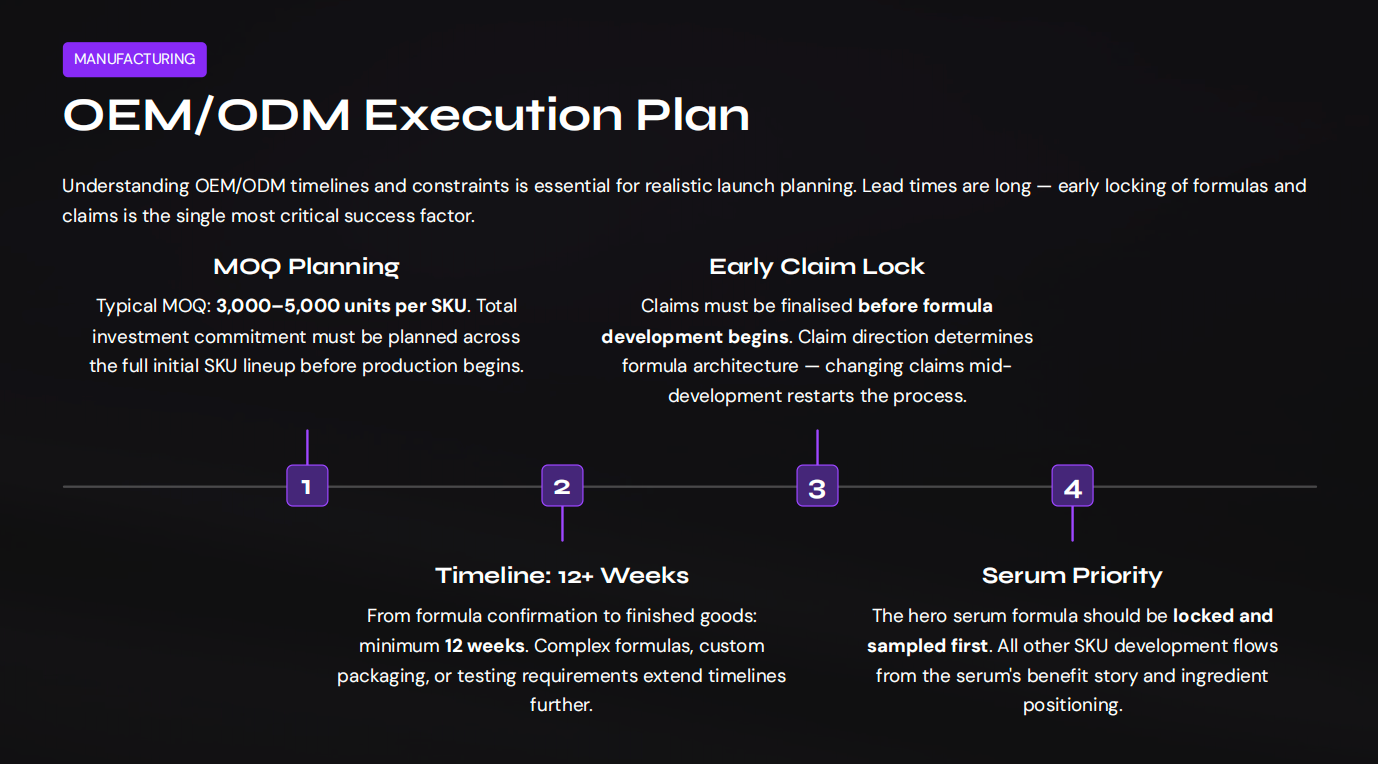
OEM / ODM Execution
Final Takeaway
The EU facial mask market in 2026 is attractive because masks now sit closer to functional skincare routines than to occasional indulgence. The most investable part of the category is not novelty for novelty’s sake. It is gentle-performance, hydration-led, barrier-conscious skincare that fits real need states and repeat use.
The brands most likely to win are not the ones with the most formats at launch. They are the ones building the clearest commercial system: one easy hydration entry point, one soothing repeat-use comfort SKU, and one higher-value overnight recovery product.
If you are planning an EU facial mask launch, the smartest next step is to define your first demand cluster, price band, channel strategy, and claim territory first, then build the right SKU portfolio from there.
Download the Full Report (PDF)
Tell us your target region, product category, and the decision you’re trying to make. We’ll suggest the closest existing report—or build a tailored version.