


Executive Summary
This report explores the Europe scalp care market in 2026, including anti-dandruff demand, sensitive scalp relief, oily scalp balancing, hair-thinning support, dermocosmetic positioning, channel fit, compliance priorities, and product launch strategy. It is designed to help brands, distributors, sourcing teams, and e-commerce sellers turn market insight into a more practical scalp care launch plan.
Europe Scalp Care Market 2026: Anti-Dandruff, Sensitive Scalp, and Product Launch Strategy
The Europe scalp care market in 2026 is no longer just an anti-dandruff niche. It is becoming a broader scalp-first category shaped by visible flakes, sensitivity, oil imbalance, barrier discomfort, and growing hair-thinning concerns.
For brands, distributors, product development teams, and e-commerce sellers, this shift creates a more valuable opportunity than traditional shampoo positioning alone. Consumers are increasingly looking for targeted scalp problem-solving supported by dermatological credibility, gentle daily-use comfort, and ingredient-led reassurance.
This report translates market trends into practical launch logic. It explores the most commercially important scalp concerns, product formats, price architecture, channel fit, compliance priorities, and product development strategy for brands entering or expanding in Europe scalp care.
Executive Summary
Europe scalp care is moving from generic cleansing into targeted scalp problem-solving. The strongest demand is no longer driven only by anti-dandruff basics. It is now supported by scalp sensitivity, oily-root imbalance, barrier-aware care, and premium interest in thinning-support routines.
This matters because the category sits at the intersection of visible consumer need and high-frequency use. A shampoo can solve an immediate issue such as flakes, oil, or discomfort, while a leave-on serum or tonic extends the regimen and increases both basket size and repeat purchase.
For most new entrants, the strongest 2026 strategy is not a single hero shampoo alone. It is a coordinated system built around a treatment shampoo, a maintenance or sensitive-scalp shampoo, and one leave-on scalp treatment that lifts both expertise and margin.
Market Opportunity Overview
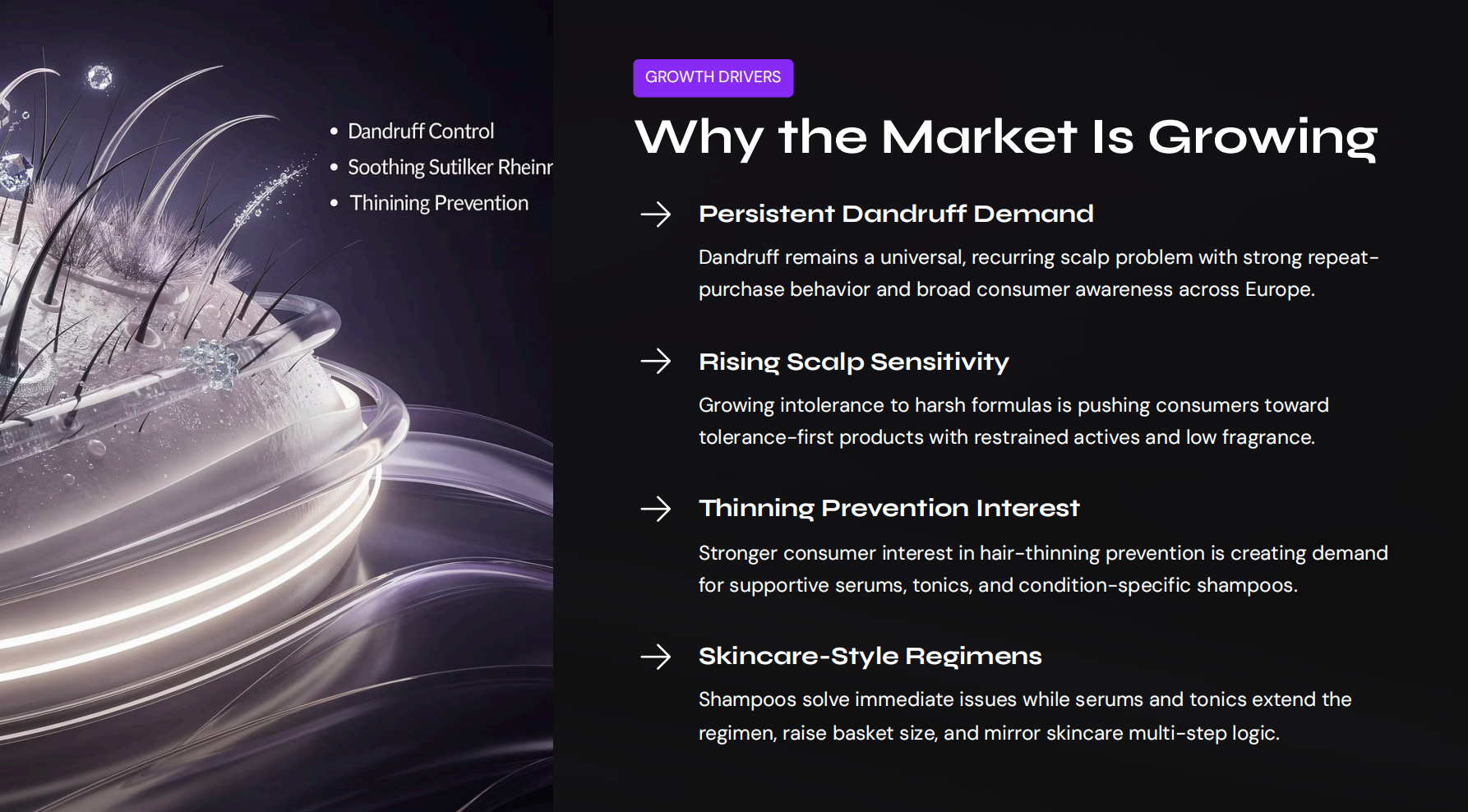
The European scalp care opportunity is being shaped by four converging forces.
The first is the ongoing demand for dandruff and visible flake control. This remains the broadest and most commercially stable entry segment.
The second is the rise of scalp sensitivity. More consumers now expect scalp products to deliver efficacy without a harsh feel, overloaded fragrance, or an overly medicated experience.
The third is stronger consumer interest in hair-thinning support. While claims must remain cosmetic and compliant, the premium opportunity around strengthening, energizing, and density-support language continues to grow.
The fourth is the spread of skincare logic into hair care. Consumers now evaluate shampoos and scalp products in terms of barrier respect, ingredient recognition, daily tolerance, and regimen structure.
For brands, this means scalp care should be developed as a targeted subcategory, not treated as a shampoo extension only.
Why the Market Is Growing
From Hair Care to Scalp-First Care
European consumers increasingly shop by scalp problem first rather than by hair texture alone. This changes how products should be developed, named, and sold.
Consumers are now more likely to search around:
- flakes and itch
- oily scalp and greasy roots
- dryness and scalp discomfort
- thinning concerns
- buildup and scalp refresh
This creates a clear product development rule: start with the scalp condition, then build the formula, claims, and packaging around that problem.
A stronger brief should no longer say only “we want a scalp shampoo.”
It should define:
- the scalp concern
- the daily-use expectation
- the channel
- the tolerance boundary
- the hero active system
That level of clarity creates a far better path for launch.
Dermatological and Dermocosmetic Positioning
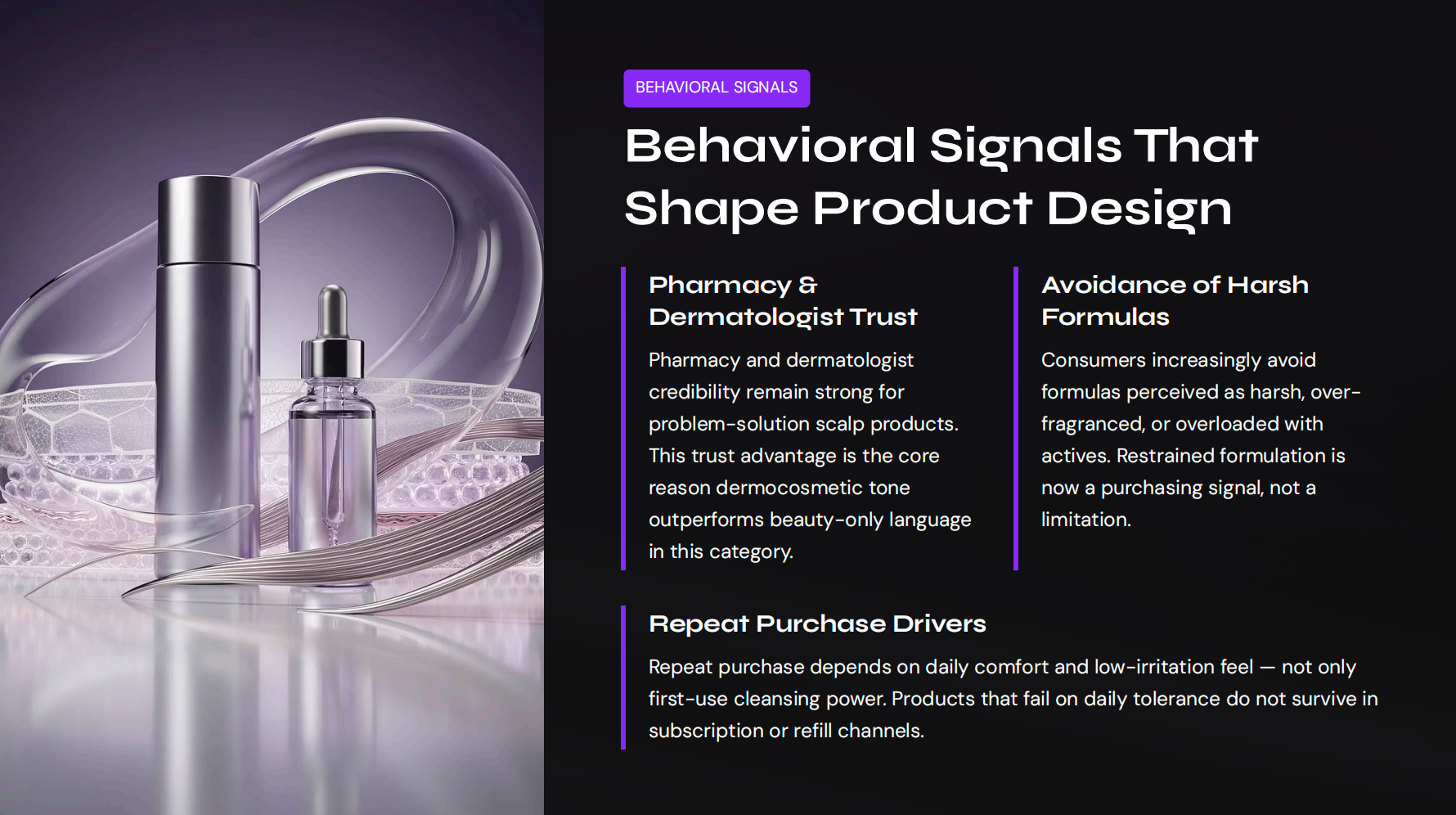
One of the most important trends in Europe scalp care is the growth of the dermocosmetic zone. This is the area between mass shampoo and true medicinal treatment, where products signal stronger efficacy while staying within cosmetic positioning.
This part of the market performs well because it balances four things:
- clinically minded tone
- visible scalp concern targeting
- daily-use comfort
- restrained and credible communication
For brands, this is especially important in anti-dandruff, sensitive scalp, and thinning-support categories. Products that feel too cosmetic can lose trust. Products that feel too medical can create compliance and positioning problems. The strongest commercial route is often a dermatologist-inspired but consumer-friendly middle ground.
The Core Consumer Problems Driving Purchase
Not all scalp concerns are equal in commercial value. The broadest and most bankable opportunities for most new entrants are still problem-led.
The most relevant scalp concerns in Europe are:
- visible dandruff and persistent flaking
- itchy, reactive, or overheated scalp
- oily scalp imbalance and greasy roots
- hair thinning and weakened hair concerns
- buildup from styling, pollution, or infrequent deep cleansing
For most launch plans, the best priority order is:
- anti-dandruff / anti-flake
- sensitive scalp relief
- oily scalp balancing
- thinning-support scalp care
- exfoliating or maintenance scalp care
This order allows brands to enter through broad demand, then premiumize through more targeted and regimen-led extensions.
Behavioral Signals That
Shape Product Design
Ingredient Directions That Matter
Ingredient awareness is becoming more important in Europe scalp care, but consumers still respond best to ingredient stories that are easy to understand.
The most useful ingredient territories include:
- piroctone olamine for dandruff-focused cosmetic systems
- salicylic acid for exfoliation and scalp renewal
- niacinamide for soothing and barrier-support language
- zinc PCA for oily scalp balance
- caffeine for energizing and strengthening positioning
- panthenol, betaine, glycerin, and allantoin for comfort support
- microbiome-friendly or probiotic-inspired concepts when communicated carefully
The strongest formulas do not overload one product with too many hero actives. They solve one clear problem and support that benefit with a disciplined secondary system.
For product development, the practical rule is simple:
- one main scalp concern per SKU
- one hero active
- one comfort support system
- one clear claim ladder
Price Segmentation and Where the Best Opportunity Sits
The Europe scalp care market can be understood across three main value zones.
Mass
This tier is built around anti-dandruff basics, family use, and supermarket or mass retail distribution. It is volume-driven and requires very clear problem-solution communication.
Masstige
This is often the most attractive entry zone for new brands. It supports stronger ingredient language, more premium texture and packaging, and better fit for Amazon and e-commerce positioning.
Dermocosmetic / Premium
This zone works best for recurrent dandruff care, sensitive scalp routines, thinning-support treatment systems, and leave-on expertise products. It performs especially well in pharmacy, premium e-commerce, and distributor discussions that prioritize credibility.
For many new entrants, masstige offers the best balance of volume potential, margin, and product storytelling flexibility.
Channel Structure
Product Format Strategy
Scalp care is not a single-format category anymore. Shampoo remains the core volume driver, but growth and expertise increasingly come from supporting formats.
The strongest format logic for 2026 includes:
- treatment shampoo as the main traffic driver
- maintenance or sensitive shampoo for repeat daily use
- leave-on scalp serum or tonic for premium margin and regimen value
- scalp scrub as a later-stage extension
- scalp mask or barrier support format as a selective premium add-on
For most first-phase launches, the most practical structure is:
- 200–300 ml shampoo
- 50–100 ml serum or tonic
This avoids early format complexity while still building a system that feels more expert than a single shampoo SKU.
Recommended Product Architecture
A stronger scalp care launch is built as a coordinated range, not as one isolated hero.
For most brands, a six-SKU phase-one architecture is commercially sound:
- anti-dandruff treatment shampoo
- sensitive scalp anti-flake shampoo
- oily scalp balancing shampoo
- hair-thinning support shampoo
- scalp relief leave-on serum
- anti-hair fall scalp tonic
This structure works because it covers the broadest scalp concerns while keeping the range commercially legible.
A smaller three-layer launch can also work very well:
- entry: anti-dandruff or scalp balancing shampoo
- hero: sensitive scalp anti-flake or scalp relief shampoo
- premium: leave-on serum or tonic
That route is especially useful for brands entering through Amazon, pharmacy-adjacent retail, or distributor channels without overbuilding the assortment.
Claims and Communication Strategy
Scalp care is a category where wording matters. Consumers want efficacy, but the strongest products do not overpromise.
Safer and more commercially useful claim directions include:
- reduces visible flakes
- helps soothe scalp discomfort
- helps rebalance oily roots
- supports stronger-feeling hair
- helps reduce the appearance of hair fall from breakage
- suitable for sensitive scalp routines
Higher-risk wording that should be handled carefully includes:
- hair growth
- treats seborrheic dermatitis
- cures dandruff
- stops hair loss
- medical or therapeutic treatment language
In Europe, the best commercial communication is usually clear, specific, and restrained.
Fragrance and Tolerance Strategy
Tolerance matters more in scalp care than in many general hair care categories. Consumers entering this segment are often already irritation-aware.
That means fragrance policy should be structured, not improvised.
A strong commercial approach is:
- very low fragrance or fragrance-free direction for sensitive scalp products
- clean, fresh but restrained fragrance for standard anti-dandruff products
- slightly stronger freshness only in oily scalp or men’s scalp concepts where appropriate
At formula level, common launch failures often come from:
- overly harsh surfactant systems
- menthol overload mistaken for efficacy
- too many actives in one formula
- fragrance levels that feel too aggressive for repeated scalp contact
Products that feel comfortable on repeat use usually win over products that feel strong only on first impression.
Channel Strategy
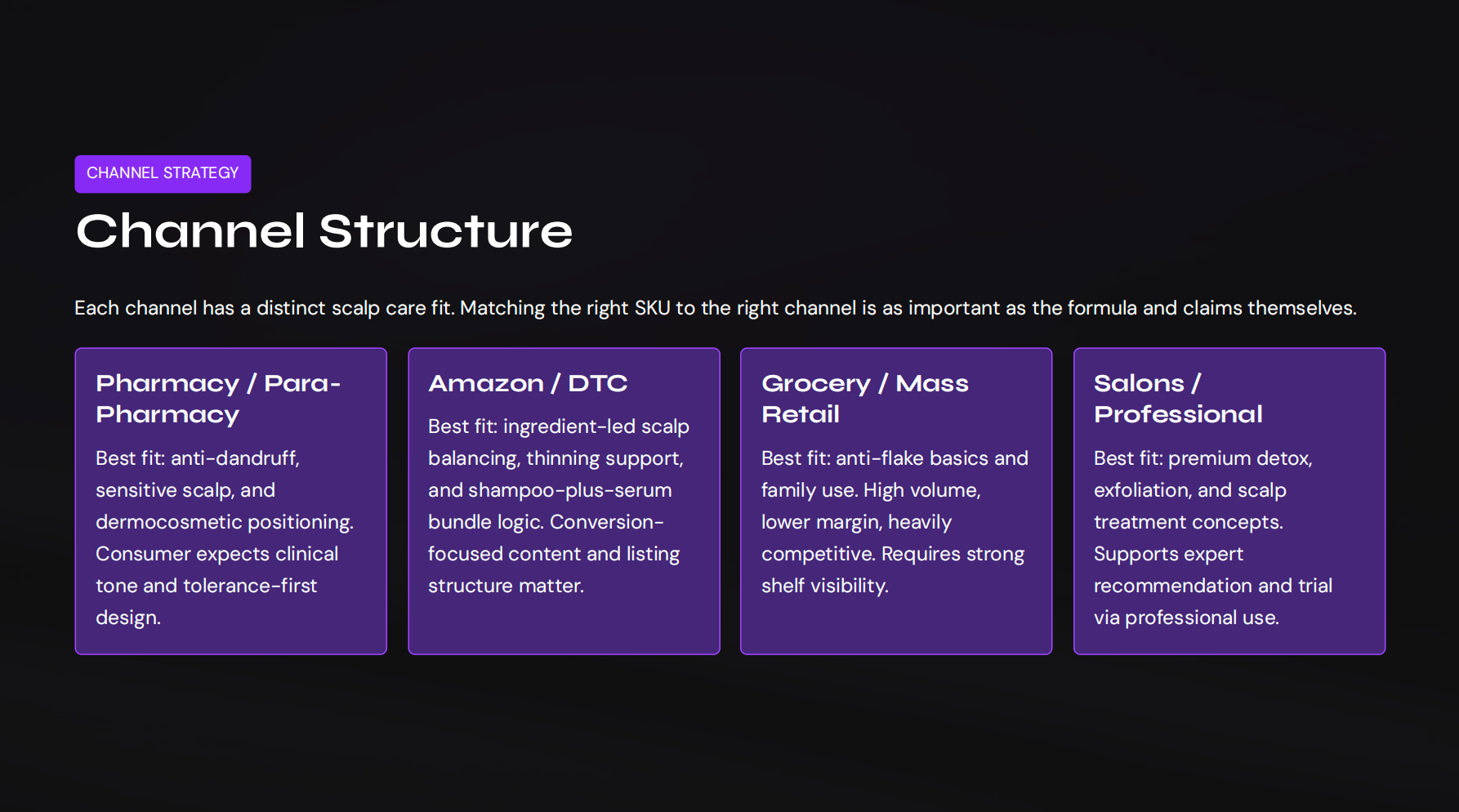
A scalp care line should be built for channel fit from the beginning.
Pharmacy / Para-pharmacy
Best for:
- anti-dandruff
- sensitive scalp
- dermocosmetic positioning
What matters:
- strong credibility
- restrained design
- tolerance and comfort story
Amazon / E-commerce / DTC
Best for:
- ingredient-led scalp balancing
- thinning-support scalp care
- scalp serums and bundled systems
What matters:
- problem-first naming
- visible hero ingredients
- clear non-greasy texture benefits
- strong review generation
Grocery / Mass Retail
Best for:
- anti-flake basics
- family-use scalp shampoo
What matters:
- repeat purchase logic
- easy claims communication
- strong value positioning
Salon / Professional Channels
Best for:
- scalp detox
- premium balancing concepts
- exfoliation or service-linked scalp routines
What matters:
- sensory differentiation
- treatment ritual education
- premium service framing
The best launch strategy is to let the channel shape the formula tone, claims boundary, and packaging from day one.
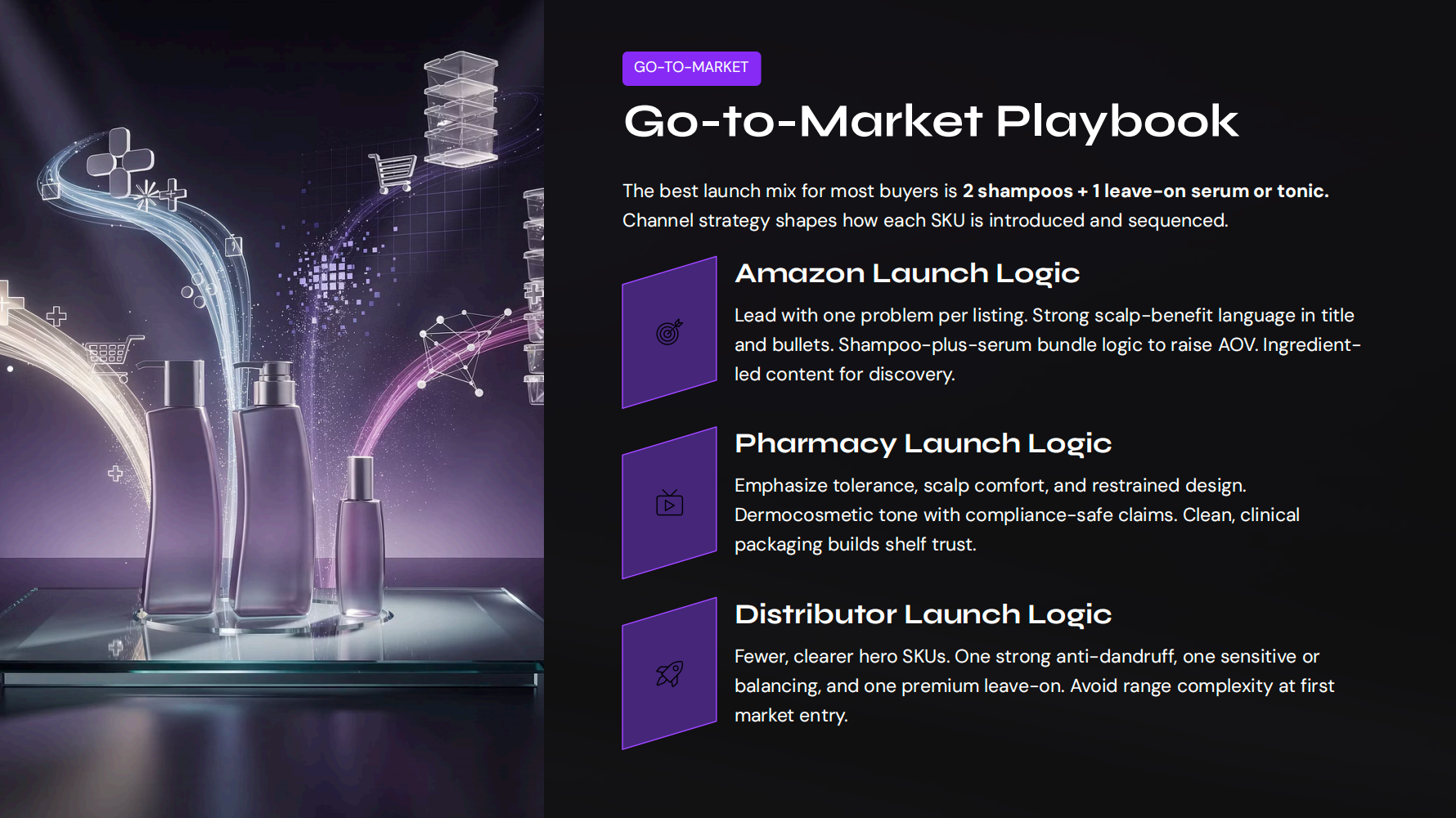
Go-to-Market Playbook
Compliance and Quality Priorities
Europe scalp care launches require more than a good formula. They need a complete compliance and quality path.
Core priorities include:
- EU ingredient compliance review
- Product Information File preparation
- Cosmetic Product Safety Report completion
- Responsible Person arrangement for the relevant market
- CPNP notification before sale
- full labeling review including INCI, allergens, function, content, and warnings where needed
- packaging compatibility testing
- stability and microbiology support
- claims support planning aligned to each SKU
For scalp care specifically, patch or tolerance testing and user testing can be especially valuable because tolerance is such a major buying driver.
The strongest launches treat compliance as part of product development, not as a final artwork check.
OEM and Product Development Strategy
The fastest way to improve a scalp care project is to give the OEM partner a clearer brief.
A better development brief should define:
- target market and countries
- target retail price band
- priority channel
- benchmark products
- packaging style
- top three required benefits
- what the product must avoid, such as heavily fragranced, harsh-cleansing, or medicated-feel positioning
- first launch quantity
- claims priority ranking
A strong OEM partner should then provide:
- formula proposals aligned to the claims boundary
- sample iterations with texture and fragrance adjustment
- packaging compatibility guidance
- documentation support
- production planning and QC standards
- honest feedback on whether the concept is realistic at the target cost
For most scalp care private label launches, success depends as much on clarity of brief as on lab capability.
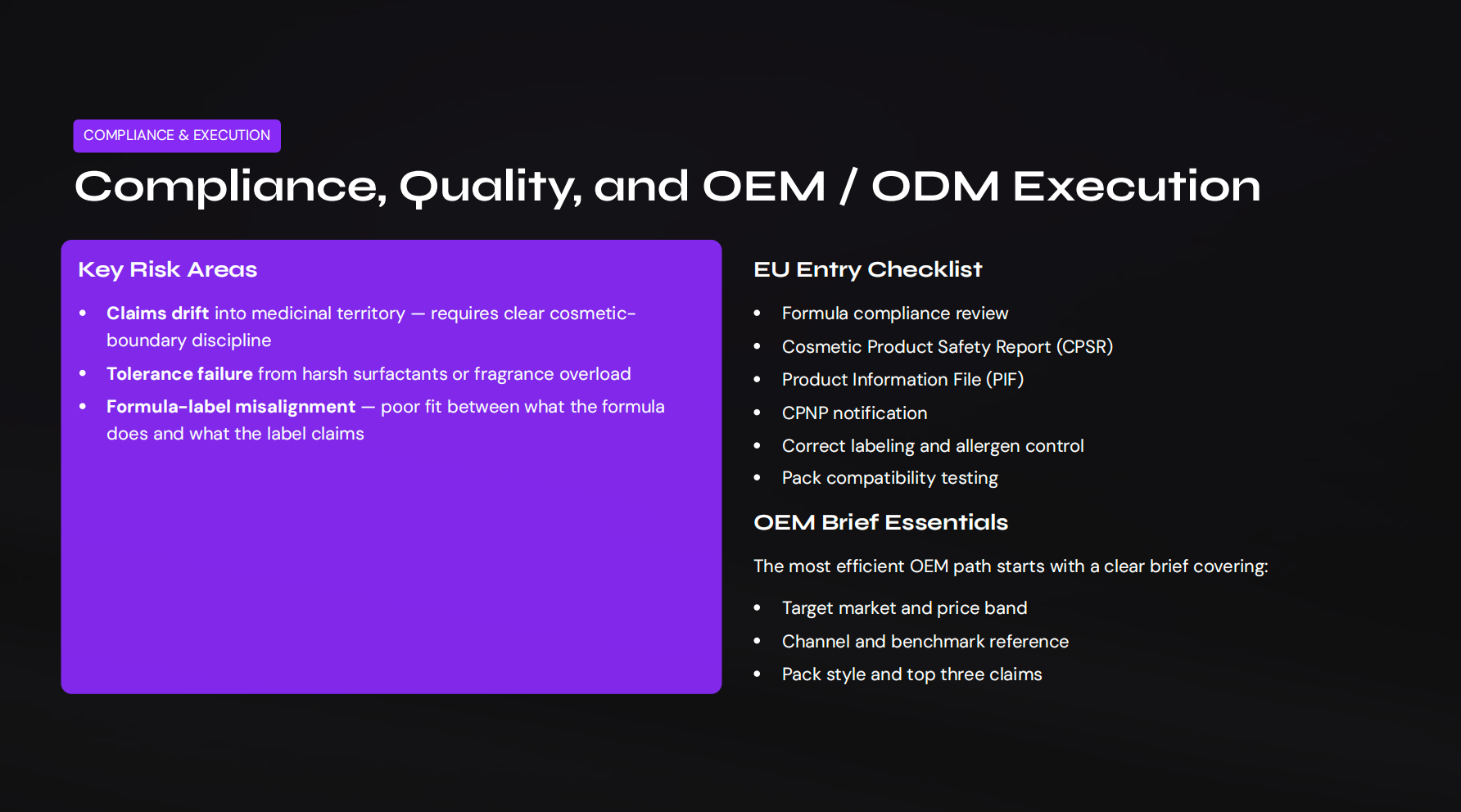
Compliance, Quality, and OEM / ODM Execution
What Brands Should Do Next
If you are evaluating a Europe-focused scalp care launch, the most productive next step is not to begin with too many formats.
Instead:
- choose the lead scalp concern
- define the hero shampoo
- decide whether the premium extension should be a serum or tonic
- set the claims boundary early
- separate sensitive line fragrance policy from standard line policy
- align formula, packaging, price, and channel before sampling
That approach leads to faster development, clearer quotations, fewer sample revisions, and a more commercially usable range.
Final Takeaway
Europe scalp care in 2026 offers real opportunity, but the strongest launches will not come from trend chasing alone. They will come from translating scalp concerns into the right product architecture, claims discipline, formula logic, packaging format, and channel fit.
The most successful brands are likely to be the ones that combine:
- visible problem-solving
- daily-use comfort
- dermatological tone
- ingredient clarity
- disciplined SKU structure
- compliance-ready development
If your team is planning a Europe scalp care line, the smartest route is to align the scalp concern, format strategy, price band, and OEM path first, then move into development with a much clearer launch plan.
Download the Full Report (PDF)
Tell us your target region, product category, and the decision you’re trying to make. We’ll suggest the closest existing report—or build a tailored version.