


Executive Summary
This report explores the Europe hair serum market in 2026, including anti-frizz demand, lightweight texture trends, formulation strategy, price architecture, packaging direction, compliance priorities, and private label launch opportunities. It is designed to help brands, importers, distributors, Amazon sellers, and product development teams turn market insight into a more practical hair serum launch strategy.
Europe Hair Serum Market 2026: Anti-Frizz Trends, Formulation Strategy, and Private Label Opportunities
The Europe hair serum market in 2026 is commercially attractive because it sits at the intersection of styling, frizz control, shine, repair appearance, and lightweight leave-in care.
Consumers are no longer looking for heavy oils or traditional rinse-off conditioning alone. They increasingly want fast-absorbing, easy-to-use serums that improve manageability, reduce frizz, add shine, and support heat styling without leaving the hair greasy, sticky, or weighed down.
For brand owners, importers, distributors, Amazon sellers, and product development teams, this creates a clear opportunity. The strongest launches are not built around vague nourishment claims. They are built around visible daily performance, modern texture systems, strong packaging logic, and private label formulas that match how European consumers actually use hair serum today.
This report turns market demand into practical product strategy. It covers demand shifts, price architecture, competitive positioning, formulation direction, compliance boundaries, packaging priorities, and private label launch opportunities for the European market.
Executive Summary
The Europe hair serum category is growing because it solves immediate, visible hair problems in a format that fits modern routines. Consumers want products that help with frizz, shine, smoothness, flyaways, heat styling, dull lengths, and rough ends, all in a lightweight leave-in step.
The most commercially attractive products are not oil-heavy treatments and not generic leave-in conditioners. They are multi-benefit serums that feel quick, light, and effective. This is why anti-frizz, heat protection, shine enhancement, and smooth finish claims are becoming central across both premium and mass-market launches.
In 2026, the market is increasingly dividing into two strong product directions. One is performance-first silicone or hybrid serums focused on instant result, anti-frizz control, and polished finish. The other is cleaner-feeling botanical or hybrid serums that still deliver visible styling benefits without relying only on oil richness.
For most new entrants, the strongest route is a masstige anti-frizz and heat-protection hero SKU in a pump format, supported by a lower-price entry serum and one gloss-focused extension.
Market Opportunity Overview
The Europe hair serum market is moving away from single-function “nourishing oil” positioning and toward multi-benefit leave-in performance care.
Consumers increasingly expect one serum to support styling, smoothness, gloss, humidity control, and heat protection at the same time. That is why the category is no longer defined only by ingredient stories such as argan oil or keratin. It is increasingly defined by outcome language such as anti-frizz, shine, soft finish, lightweight feel, heat shield, and smoother-looking lengths.
This creates a strong opportunity for private label development because the category responds well to clear benefit communication, visible sensory payoff, and practical packaging. Hair serum is also highly suitable for Amazon, DTC, modern retail, and cross-channel beauty launches because it offers an easy, repeatable use case and strong before-and-after storytelling potential.
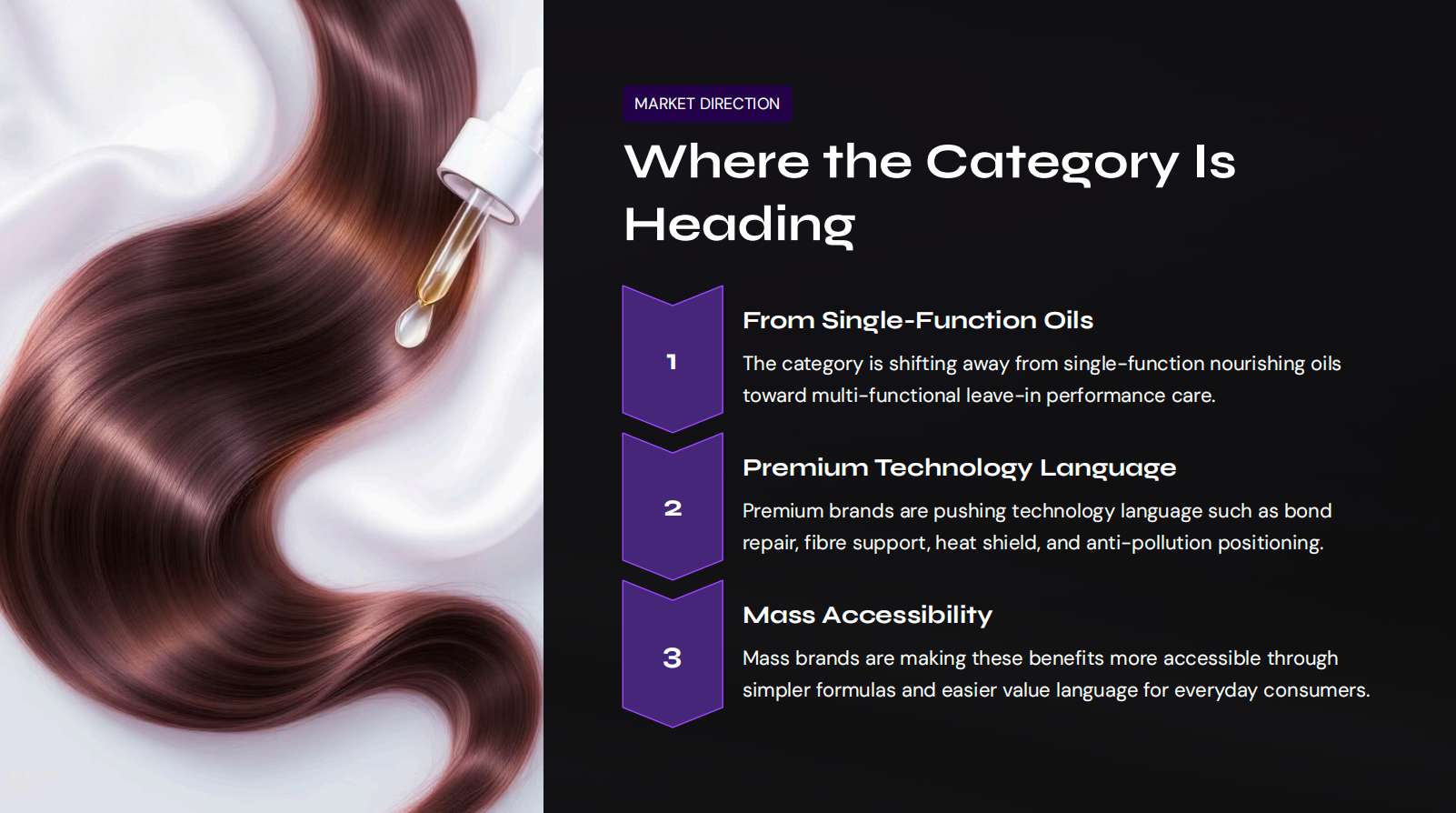
Where the Category Is
Heading
What Is Driving Demand in 2026
Several factors are shaping demand across the European market.
The first is daily styling behavior. Blow-drying, straightening, brushing, and routine heat exposure continue to support demand for products that protect the hair surface and improve manageability.
The second is humidity and seasonal frizz. Across many European markets, consumers need lightweight solutions that can control puffiness, static, and flyaways without making hair feel coated.
The third is the rejection of greasy textures. Consumers increasingly prefer serums that absorb quickly, spread easily, and leave the hair polished rather than oily.
The fourth is the rise of multi-benefit styling care. Instead of buying separate products for shine, anti-frizz, and heat support, consumers increasingly want one product that combines them in a credible and convenient way.
The fifth is growing scalp awareness. While scalp serum and styling serum are still often poorly separated in the market, this creates room for better crossover products that support both root comfort and length management without drifting into medical positioning.
What Consumers Actually Want from Hair Serum
Hair serum is not purchased as an abstract treatment. It is bought to solve visible, daily hair problems.
Consumers want:
- frizz control
- smoother lengths
- visible shine
- softer hair feel
- easier styling
- humidity resistance
- lightweight texture
- non-greasy finish
- heat styling support
- better-looking ends without rinse-off effort
This is especially true in fine hair, straight hair, color-treated hair, and frequently styled hair categories, where residue and heaviness quickly reduce repeat purchase.
The strongest repeat-purchase formulas are the ones that feel modern, spread quickly, and make the hair look better immediately.
Hair Types and Product Implications
Different hair types respond to different serum cues, but some needs are widely shared.
Fine Hair
Fine hair users want shine and smoothness without flatness. They are especially sensitive to greasy or sticky textures, so weightless payoff is critical.
Damaged Hair
Damaged or chemically treated hair responds well to repair language, bond-support positioning, smoother ends, and breakage appearance reduction, but the texture still has to remain credible and not overly rich.
Frizz-Prone Hair
This segment needs anti-puffiness, humidity resistance, cuticle smoothing, and polished finish. It is one of the strongest commercial segments for serum.
Color-Treated Hair
These users are interested in shine retention, smoother surface feel, and styling protection that helps maintain a more polished look.
Curly and Wavy Hair
This segment can respond well to lightweight anti-frizz serum concepts that add shine and polish without stiffness or crunch.
For OEM and private label buyers, the implication is clear: the target hair type must shape the formula system, texture profile, and claim stack from the beginning.
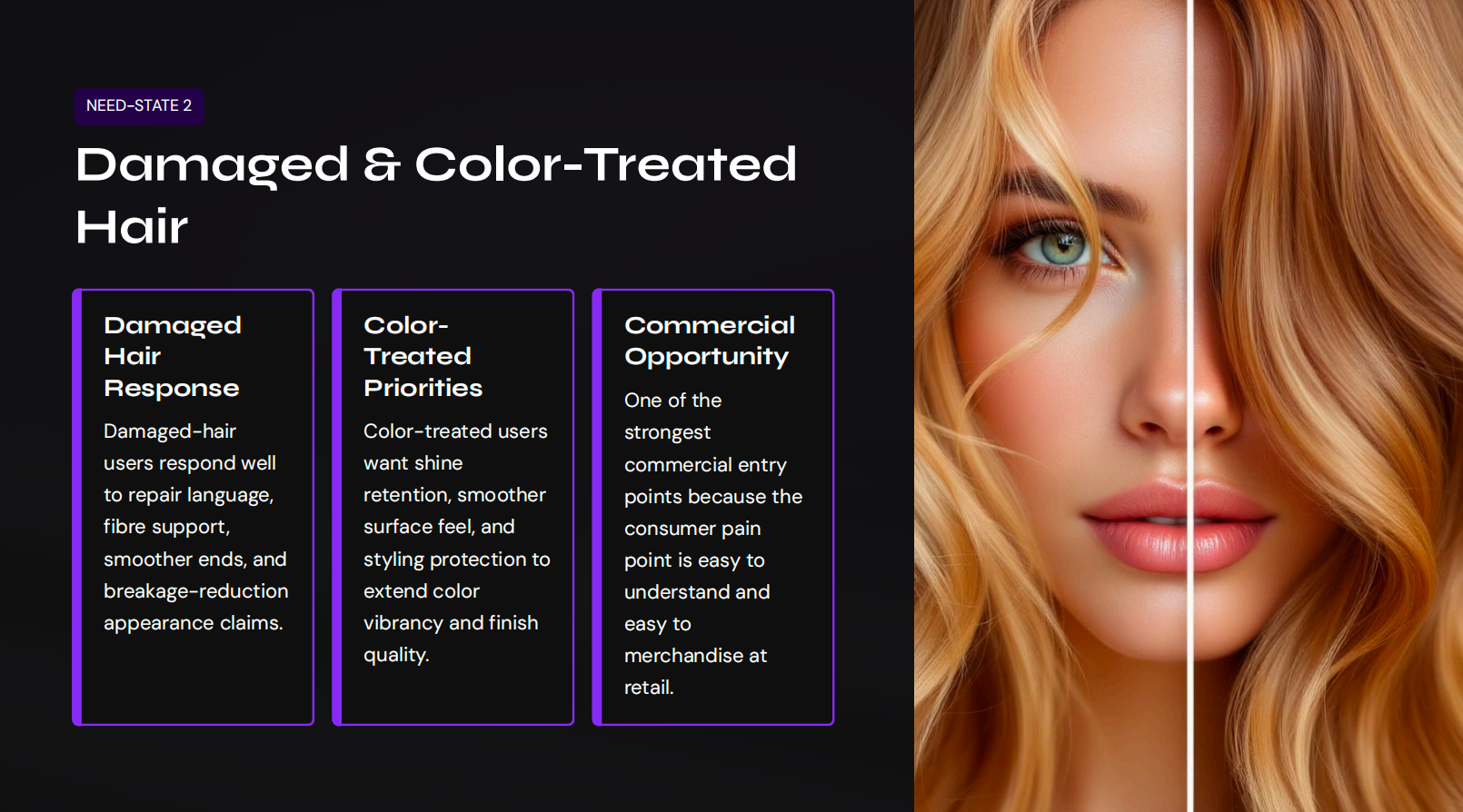
Damaged & Color-Treated
Hair
Category Structure and Price Tiers
The Europe hair serum category is clearly segmented by price and positioning.
Mass
This tier is driven by straightforward anti-frizz, gloss, and heat-protect language. Packaging is usually simpler, and consumers expect clear value.
Masstige
This is one of the best spaces for private label opportunity. It allows better textures, cleaner aesthetics, stronger packaging, and more premium-looking performance language without requiring prestige-level pricing.
Premium
This tier is shaped by salon-coded positioning, more technical language, stronger efficacy stories, and elevated packaging. It can work well, but it usually requires better formula sophistication and tighter claims discipline.
For most new private label launches, masstige is the most commercially balanced entry point because it combines premium perception with broader accessibility.
Competitive Positioning and White Space
Leading brands are already doing several things well:
- combining multiple benefits in one serum
- translating technical performance into simple user outcomes
- using heat protection as a value multiplier
- keeping textures lighter even when repair language is used
- supporting conversion with sleek packaging and visible result storytelling
But the category still has gaps.
The most under-served spaces include:
- true lightweight anti-frizz serum for fine-to-medium hair
- gloss plus heat-protection serum that does not feel salon-heavy
- scalp-comfort plus lengths smoothing hybrid concepts
- e-commerce-first serum lines with clear entry, hero, and premium tiering
- private label formulas that feel more premium than their price point suggests
The strongest opportunity is not to copy prestige salon brands directly. It is to offer prestige-like result language with easier use, more accessible pricing, and clearer online conversion logic.
Formulation Strategy: What Actually Works
Formulation direction is one of the most important decisions in this category, because it determines texture, channel fit, claim credibility, and repeat purchase performance.
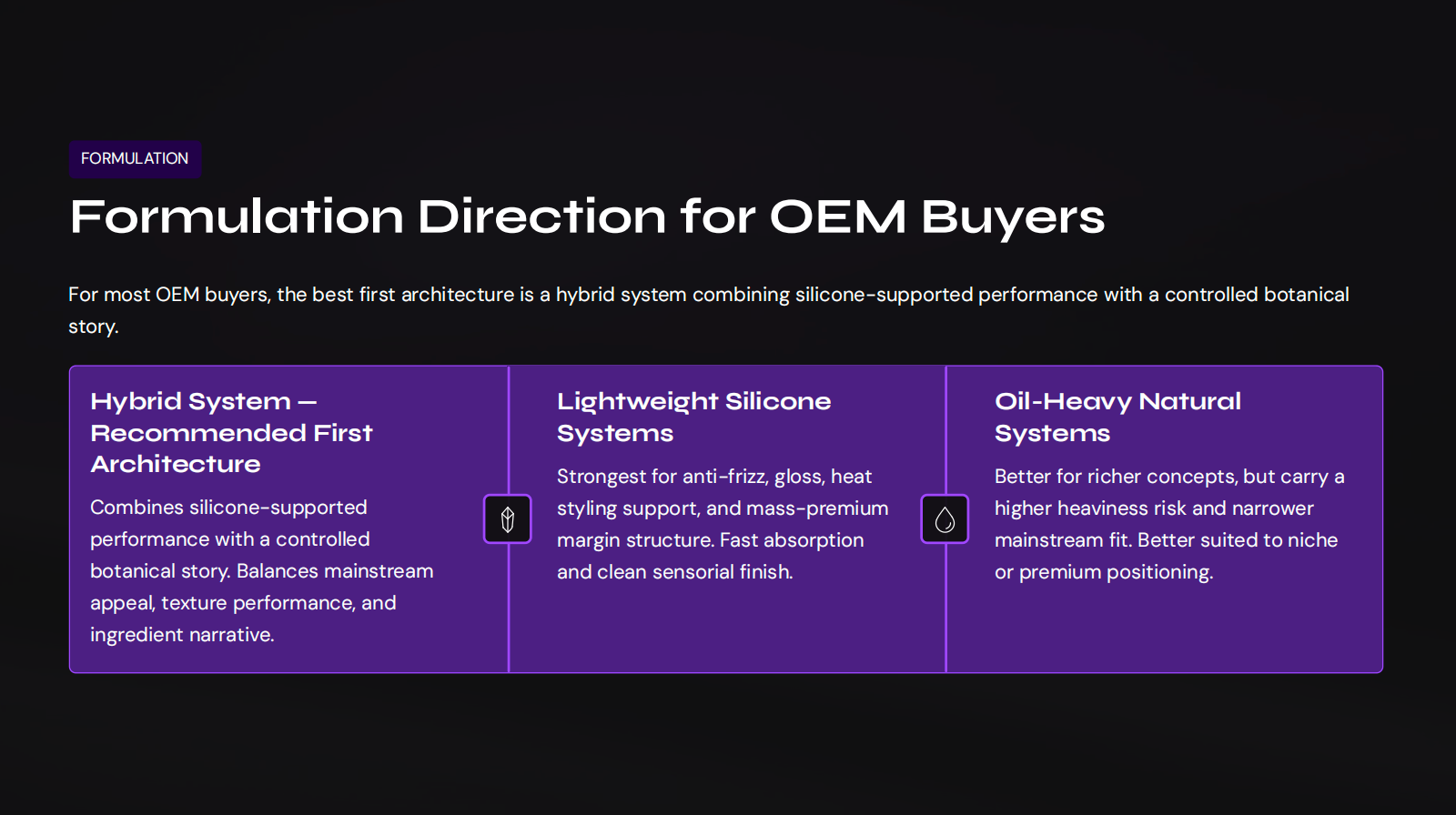
Lightweight Silicone Systems
These systems are highly effective for anti-frizz control, gloss, humidity defence, and instant smoothness. They usually deliver strong sensory payoff and good shine, while remaining cost-efficient for mass and masstige launches.
Natural Oil-Based Serums
These systems are better for nourishment stories, dry ends care, and richer botanical positioning. However, they carry a higher risk of heaviness and are less suitable for fine hair and styling-led daily use if the oil load is too high.
Hybrid Systems
Hybrid systems combine silicone-supported performance with botanical appeal. For many private label projects, this is the strongest commercial route because it provides visible result, cleaner-feeling storytelling, and broader channel fit.
Scalp-Serum Crossover Formulas
These concepts can differentiate strongly in DTC and content-led channels, especially when consumers want scalp comfort plus smoother lengths. But they require careful texture control and conservative claims language.
For most OEM buyers entering Europe in 2026, the safest and strongest choice is a hybrid system with lightweight performance, controlled botanical support, and validated anti-frizz plus heat-protection positioning.
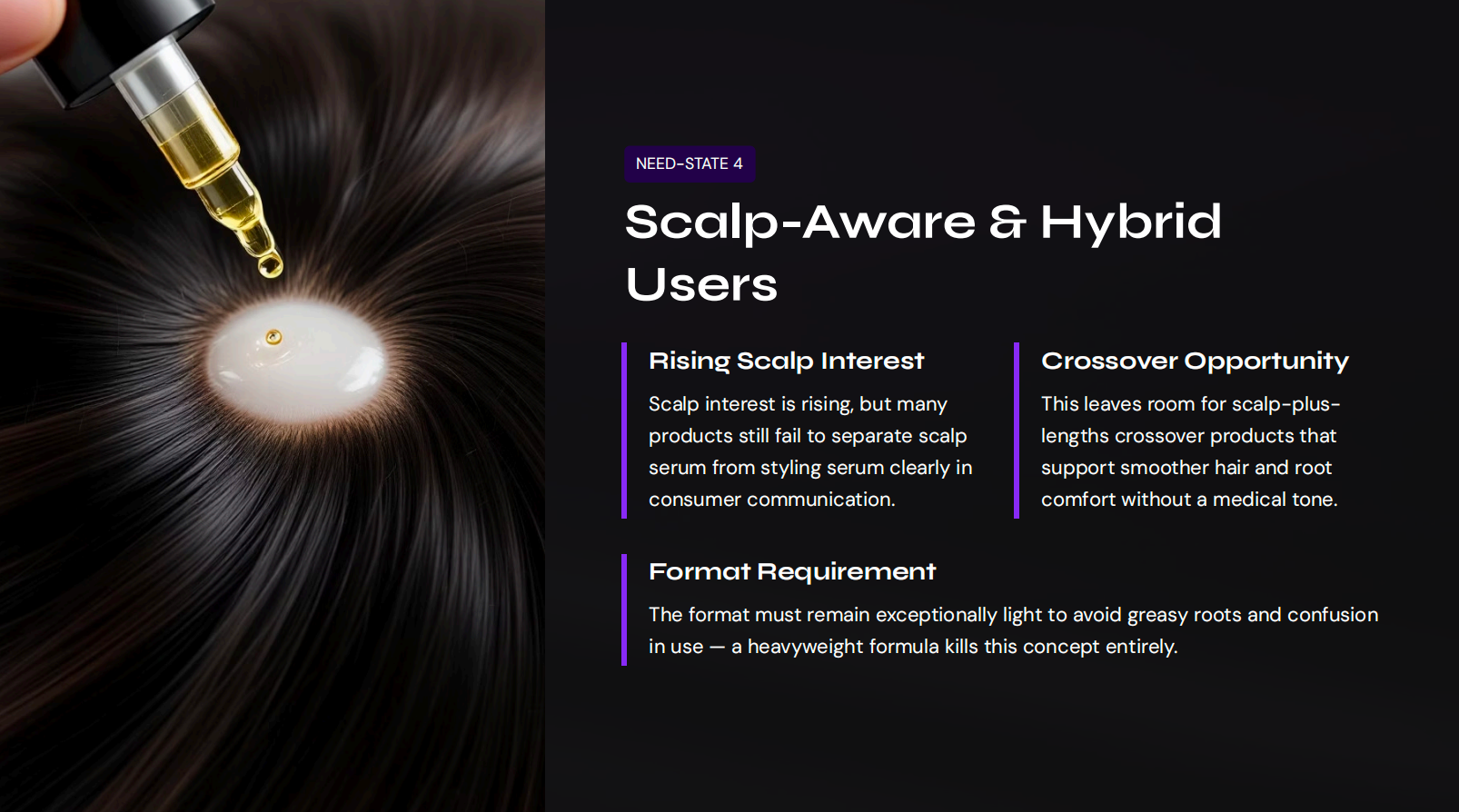
Scalp-Aware & Hybrid
Users
Recommended Hero Product Direction
For a first launch, the strongest hero concept is a lightweight hybrid serum built around:
- anti-frizz control
- heat protection
- visible shine
- smooth finish
- non-greasy texture
- daily styling use
The most practical format is:
- 90 to 100 ml
- pump pack
- masstige pricing
- minimalist-clinical or polished-premium design
This kind of SKU has the broadest fit across Amazon, DTC, modern beauty retail, and private label distribution programs.
Packaging Strategy
Packaging is increasingly important in this category because it affects both conversion and user experience.
Pump Packs
Pump packs are the most practical and commercially scalable choice for daily-use styling serums. They provide controlled dosage, cleaner use, and better fit for mainstream consumers.
Droppers
Droppers can work for scalp-led or more ingredient-focused concepts, but they are less convenient for mass styling use.
Spray or Mist Serums
These are highly relevant for fine-hair, anti-frizz shield, and humidity-defence positioning, especially where a weightless promise is central.
For most new launches, pump packaging remains the strongest commercial default because it balances usability, channel fit, and clean product perception.
Channel Strategy
A hair serum launch should be channel-aware from the start.
Amazon
This is one of the best channels for anti-frizz, shine, heat protection, and before-and-after storytelling. Clear claims, visible texture promise, and review generation are essential.
DTC
This channel works especially well for more educational or differentiated concepts such as scalp plus lengths hybrids, bond-style narratives, or formulas tailored to specific hair needs.
Retail
Retail requires packaging that communicates hero claims instantly. The serum needs to explain itself in seconds through pack design and claim hierarchy.
Salon
Salon-coded channels are better suited to premium repair, fibre, and more technical texture narratives.
For most new entrants, the best strategy is to begin with one strong hero serum, one entry SKU, and one future extension rather than launching too many variants at once.
Compliance and Risk Control
EU compliance for hair serum is manageable, but the bigger risk in 2026 is not basic safety. It is claims discipline, ingredient restrictions, execution quality, and the mismatch between copy and substantiation.
The biggest mistakes include:
- overclaiming around repair, regrowth, or anti-hair-loss
- using scalp language that drifts into quasi-medical territory
- overusing “free-from” or “hypoallergenic” wording without adequate support
- launching oil-heavy textures into channels where consumers expect lightweight styling performance
- building claims before the substantiation strategy exists
A stronger approach is to keep claims practical, visible, and styling-oriented:
- anti-frizz
- shine
- smooth finish
- heat protection
- soft feel
- non-greasy
- humidity defence
- polished lengths
This is usually both more credible and more commercially effective.
Private Label and OEM Execution Advice
The most efficient private label brief is never just “make me a serum.”
A better brief looks like this:
- target market
- intended channel
- target hair type
- core user problem
- desired texture
- top 3 to 4 priority claims
- target retail price
- packaging preference
- initial order estimate
- target launch date
This kind of input reduces reformulation loops, improves RFQ accuracy, and helps suppliers build a more commercially realistic product path.
For 2026 Europe launches, the most efficient route is:
- one hero hybrid serum
- one lower-price shine or smooth entry serum
- one future premium or scalp-crossover extension
That keeps the range commercially focused while leaving room for later expansion.
Formulation Direction for OEM Buyers
Recommended SKU Concepts
A practical launch range could include:
Air-Silk Anti-Frizz Heat Serum
For fine to medium hair with anti-frizz, heat protection, and non-greasy finish.
Glass Finish Daily Shine Serum
For dull, rough, or color-treated hair with shine, smoothness, and anti-static positioning.
Urban Shield Humidity Control Serum
For frizz-prone hair with humidity defence and silky finish messaging.
Bond Smooth Repair Serum
For damaged or chemically treated hair with smoother-feeling, stronger-looking positioning.
Root to Ends Comfort Serum
For scalp-aware consumers who want lightweight root comfort and smoother lengths.
This kind of assortment gives you a clear hero, a broader entry point, and room for premium extension.
Final Takeaway
The Europe hair serum opportunity in 2026 is strong because the category solves immediate, visible hair problems in a format that fits both online and offline sales.
The most commercially attractive products are lightweight, leave-in serums that combine smoothness, shine, frizz control, and styling support in a modern, easy-to-use format.
For business buyers, the goal is not to launch just another serum. It is to launch the right serum architecture for the right channel, price tier, and user need.
The strongest route is to start with a hybrid lightweight hero formula, position it in the masstige band, build around anti-frizz plus shine plus heat support, keep the packaging practical, and turn the market opportunity into a clear private label brief that is ready for sampling and quotation.
Download the Full Report (PDF)
Tell us your target region, product category, and the decision you’re trying to make. We’ll suggest the closest existing report—or build a tailored version.