


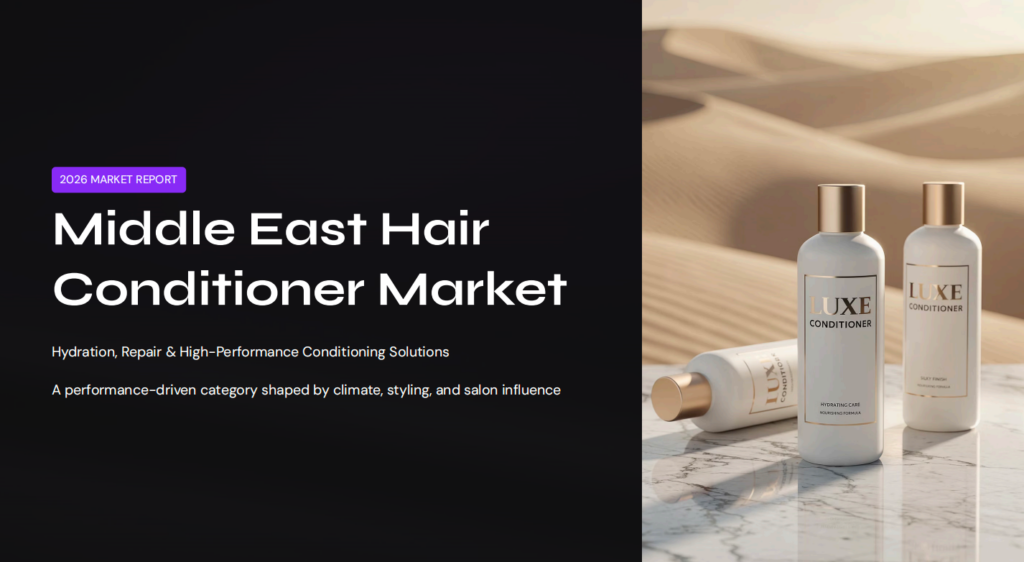
Executive Summary
This report provides an in-depth analysis of the Middle East hair conditioner market in 2026, including market size, trends, pricing strategies, and SKU recommendations for targeting the region’s growing demand for high-performance conditioners.
Middle East Hair Conditioner Market 2026: Hydration, Repair, and High-Performance Solutions for Dry, Damaged, and Frizz-Prone Hair
The Middle East hair conditioner market is set for strong growth in 2026, driven by climate-driven hair care needs and growing demand for clean, Halal-certified, and hydrating products. Brands that innovate with conditioners focused on frizz control, moisture replenishment, and hair repair are well-positioned to lead the market. Understanding the local climate and consumer preferences, such as the increasing demand for Halal-certified products and clean beauty solutions, will be crucial for market success.
This report provides an in-depth look at the 2026 Middle East hair conditioner market, including key growth opportunities, consumer demand drivers, regulatory considerations, and the best strategies for product development and market entry.
Executive Summary:
The Middle East hair conditioner market in 2026 presents significant opportunities for brands that cater to the region's unique needs: hydration, frizz control, and repair. The market is primarily driven by harsh climatic conditions, which lead consumers to seek conditioners that can combat dryness, frizz, and damage. Moreover, the increasing trend for Halal-certified, clean beauty, and natural ingredient-based products further accelerates growth.
3 Key Opportunities:
- Hydrating & Frizz-Control Conditioners: Addressing the dry, hot climate in the Middle East, these products are in high demand.
- Clean & Halal Conditioners: Rising demand for Halal-certified and natural beauty products offers growth potential for conditioners with clear ingredient transparency.
- Keratin & Protein-Enriched Conditioners: With a growing market for hair repair products, especially for chemically treated hair, conditioners fortified with keratin and proteins are highly sought after.
2 Key Risks:
- Regulatory Challenges: Navigating Halal certification, ingredient transparency, and claims accuracy in the region can be challenging for new entrants.
- Cultural Sensitivity: Brands need to ensure that their marketing and product positioning align with cultural beauty preferences in the Middle East.
Recommended Entry Strategy (3-SKU System):
- Hydrating Frizz-Control Conditioner: Ideal for consumers in dry climates with frizz-prone hair.
- Halal-Certified Repair Treatment Conditioner: Meets the demand for Halal and natural beauty solutions.
- Keratin & Protein Enriched Hair Repair Conditioner: Targets users with chemically treated or damaged hair.
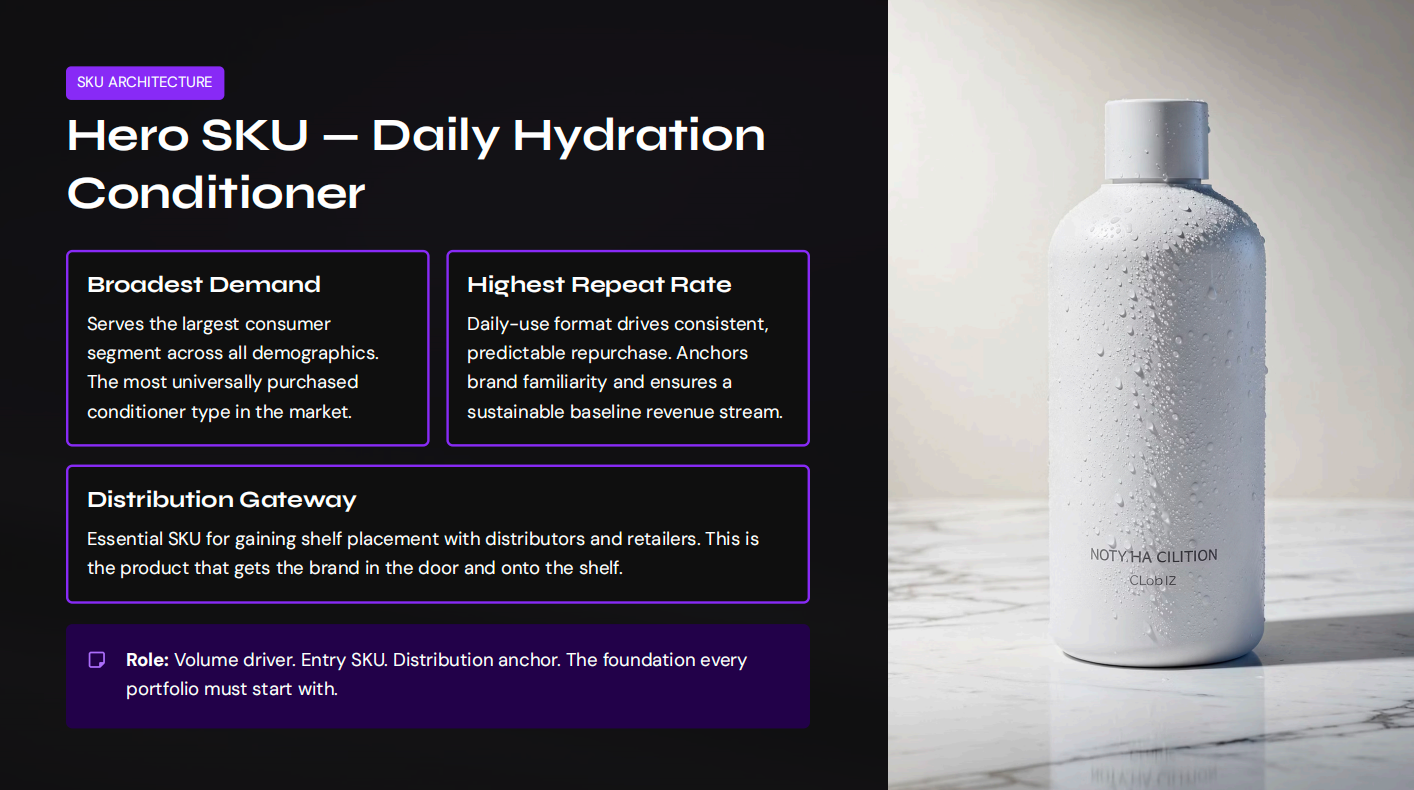
Hero SKU 4 Daily Hydration
Conditioner
2. Market Snapshot (Middle East 2026)
Market Dynamics:
- Climate & Hair Type: The Middle East is known for its hot, dry climate, leading to consumers seeking conditioners that hydrate, protect, and tame frizzy hair. Hair types in the region are often thick, curly, and prone to dryness and frizz, making conditioners essential for daily maintenance.
- Cultural Context: Beauty standards in the region emphasize well-groomed, healthy, and shiny hair. There is also a growing preference for natural and Halal beauty products.
- Growth Drivers: Key factors include the region’s hot, dry weather, increasing awareness of hair health, and a growing focus on high-quality ingredients and ethical certifications.
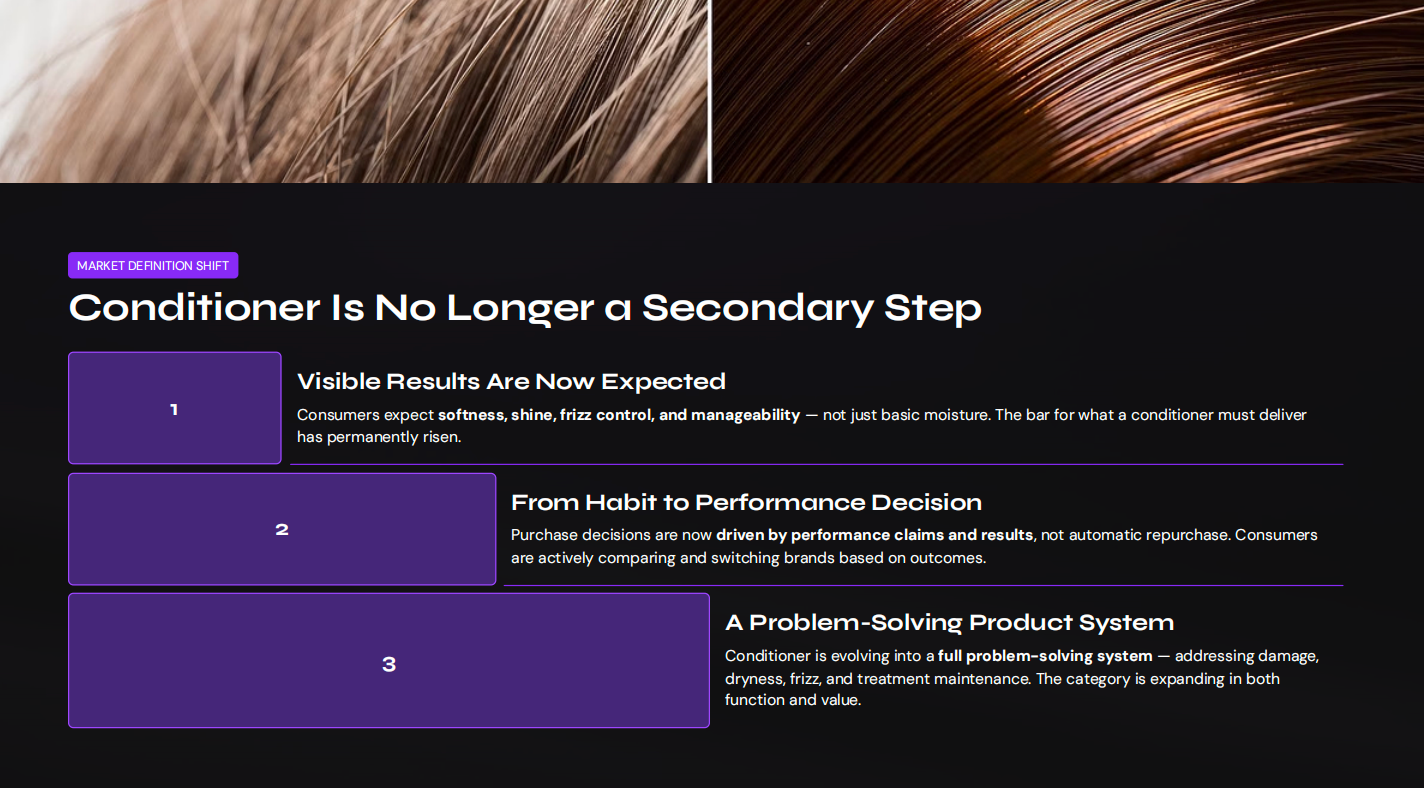
Conditioner Is No Longer a Secondary Step
Channel Overview:
- Retail vs. E-commerce: Retail remains a strong channel for personal care products, but e-commerce, especially through platforms like Amazon, is experiencing rapid growth. Direct-to-consumer (DTC) sales are also becoming more significant.
- Salon Products: Professional-grade hair conditioners continue to perform well in high-end salons, often packaged in premium bottles and with high-quality ingredients.
Strategic Implications for Product Development:
- Focus on developing conditioners that cater to the region’s climate and address common hair concerns, such as hydration, frizz control, and hair repair. Products that are Halal-certified and contain natural, clean ingredients will likely resonate with a larger consumer base.
3. Consumer & Demand Signals
3.1 Target Consumer Segments:
- Dry/Damaged Hair Consumers: Seeking conditioners that repair and nourish hair.
- Frizz-Control Seekers: Individuals with thick, coarse, or curly hair prone to frizz.
- Chemically Treated Hair Users: Consumers who have permed, colored, or chemically treated their hair and need restorative products.
- Modest Beauty / Halal-Conscious Consumers: There is a growing demand for Halal-certified products with natural ingredients.
3.2 Key Demand Drivers:
- Climate: The dry and hot climate creates a high demand for products that hydrate and control frizz.
- Hair Texture: Thick, coarse, and curly hair types require conditioners that manage frizz, enhance shine, and maintain hydration.
- Beauty Routines: Many consumers use oils, masks, and conditioners in layers for extra hydration, especially in humid conditions.
- Ingredient Awareness: Ingredients like Keratin, Argan Oil, and Aloe Vera are highly sought after due to their hydrating and restorative properties.
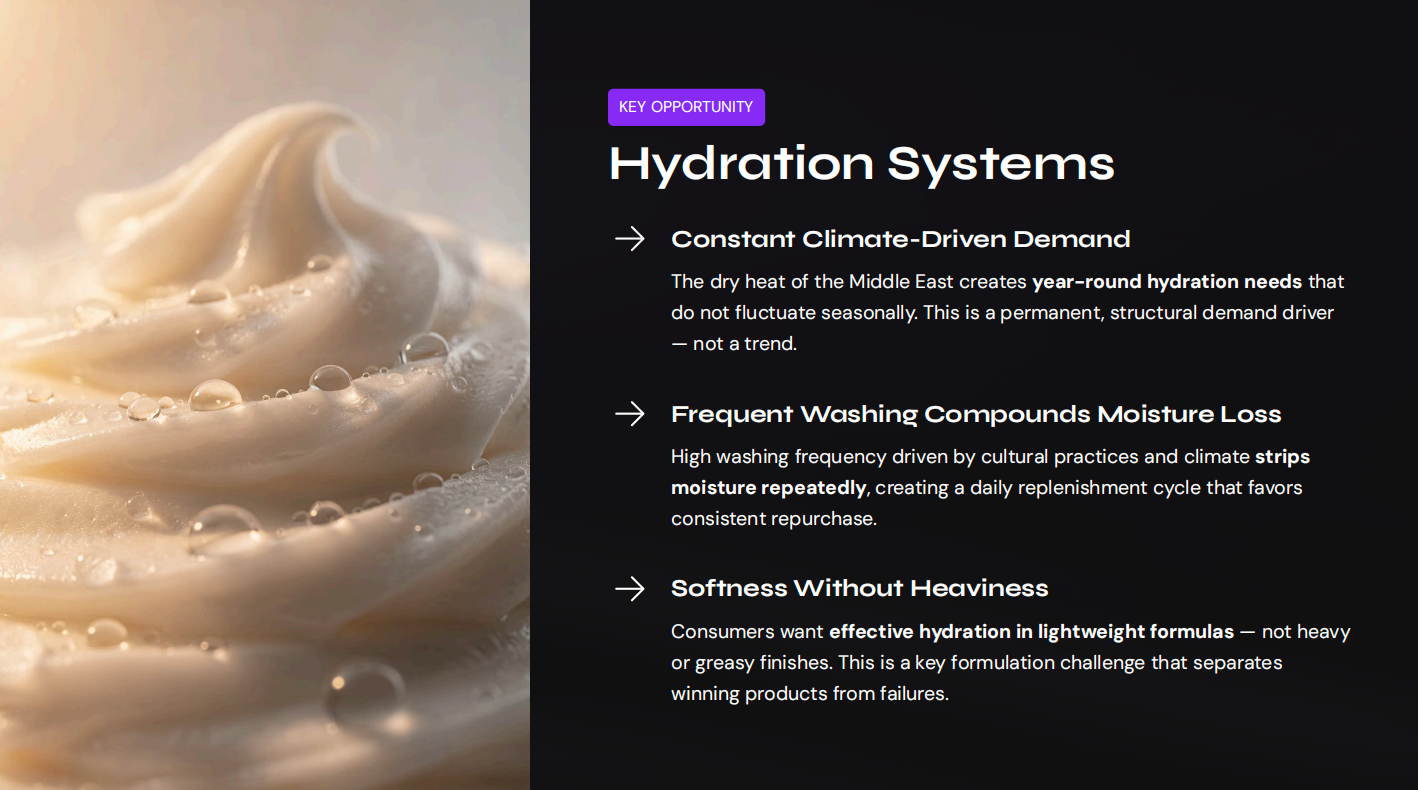
Hydration Systems
3.3 Purchase Triggers:
- Frizz Visibility: Consumers seek solutions for hair that looks unkempt or frizzy.
- Dryness After Washing: Conditioners that provide lasting hydration are essential.
- Hair Breakage: Consumers will opt for conditioners that claim to repair and strengthen hair.
- Shine & Softness Expectations: Shiny, smooth hair is highly valued in Middle Eastern beauty standards.
4. Category Landscape
4.1 Price Segmentation:
- Mass: Affordable conditioners with basic hydration and frizz control. Ideal for entry-level consumers and everyday use.
- Mid: Mid-tier conditioners with added ingredients like Keratin, Argan Oil, and Aloe Vera. Best for retail and e-commerce.
- Premium: High-end, salon-quality conditioners with advanced formulations for deep hydration and repair. Often used in professional settings.
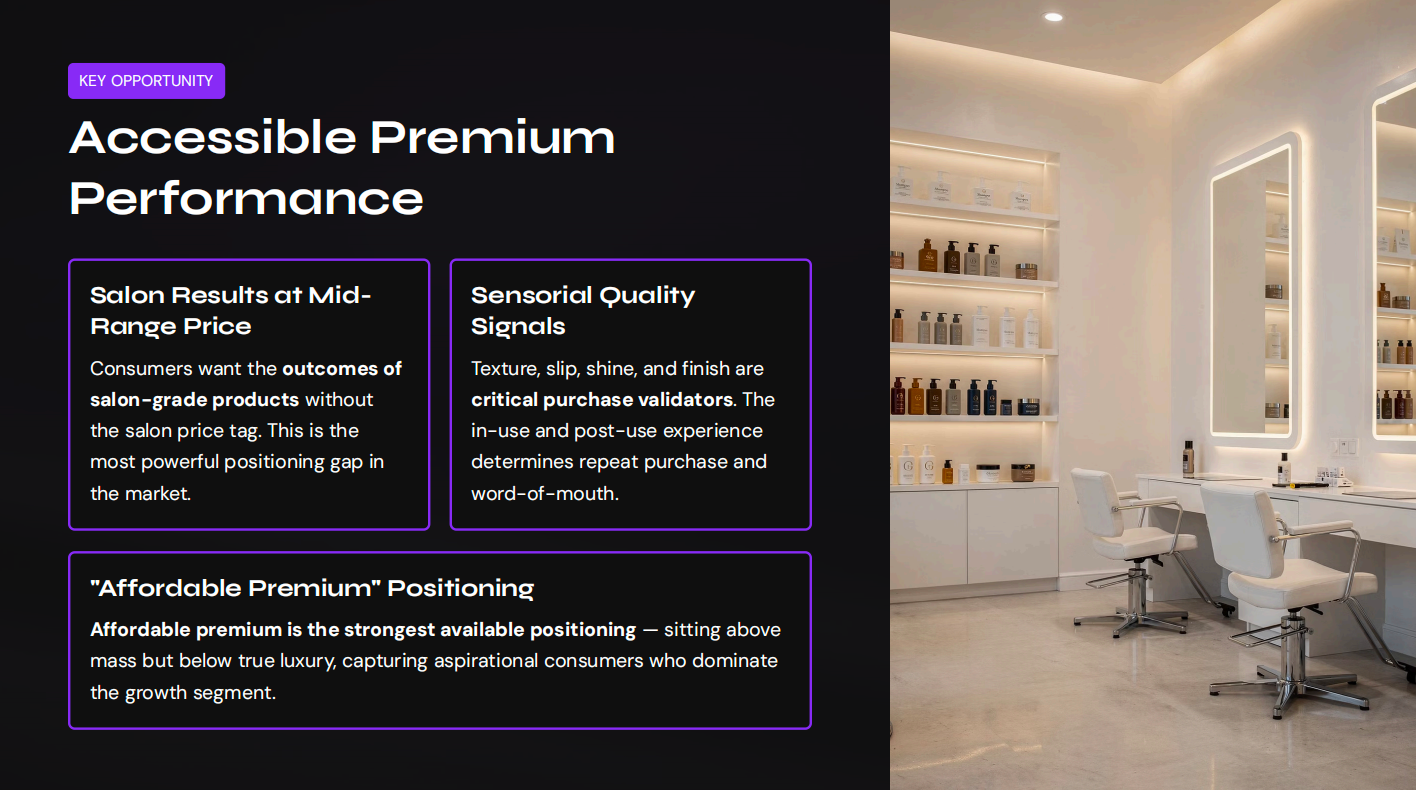
Accessible Premium
Performance
4.2 Product Format Trends:
- Rinse-off Conditioners: Most common format, especially for daily use.
- Leave-in Conditioners: Gaining popularity for frizz control and moisture retention.
- Hair Repair Treatment Conditioners: Higher-value products for repairing chemically treated hair.
- Hydrating Conditioners: Focused on replenishing moisture, particularly in the Middle Eastern climate.
4.3 Packaging Trends:
- Luxury vs. Natural vs. Clinical: Packaging ranges from sleek, high-end bottles for premium products to eco-friendly packaging for natural products.
- Bottle vs. Jar vs. Pump vs. Tube: Pumps are popular for convenience, while jars are used for deep treatment masks.
Winning Format Combinations:
- Frizz-Control Shampoo + Hydrating Conditioner
- Hair Repair Treatment + Leave-In Conditioner
5. Competitive Benchmark
Brand Types:
- Mass Brands: Focus on affordable, widely available products.
- Premium Brands: High-margin, often with advanced ingredients.
- Clean/Ingredient-led Brands: Targeting consumers looking for natural and Halal-certified options.
- Salon Brands: Positioned as professional-grade, often used by high-end consumers or salons.
Competitor Matrix
| Brand Type | Example Positioning | Price Tier | Core Formats | Strength |
|---|---|---|---|---|
| Mass Brands | Hydrating Conditioner | Mass | Rinse-off | High volume, accessibility |
| Premium Brands | Keratin Repair | Premium | Leave-in | High-margin, luxury appeal |
| Ingredient-led | Halal & Natural | Mid | Rinse-off/Leave-in | Ingredient transparency |
| Salon Brands | Luxury Treatment | Premium | Treatment Mask | Professional quality |
6. Product Opportunity & SKU Strategy
6.1 Top Recommended SKUs:
SKU 1: Hydrating Frizz-Control Conditioner
- Target User: Dry, frizz-prone hair
- Key Ingredients: Argan Oil, Aloe Vera, Glycerin
- Core Claim: Provides deep hydration and frizz control
- Format & Size: 250ml bottle, rinse-off
- Price Positioning: Mass-mid
- Channel Suitability: E-commerce, retail
- Why Launch: Most sought-after feature in the region due to climate and hair type.
SKU 2: Halal-Certified Hair Repair Treatment Conditioner
- Target User: Chemically treated, damaged hair
- Key Ingredients: Keratin, Protein Complex
- Core Claim: Repairs and strengthens damaged hair
- Format & Size: 200ml jar, rinse-off
- Price Positioning: Mid
- Channel Suitability: Amazon, DTC
- Why Launch: Growing Halal beauty demand and hair restoration market.
SKU 3: Leave-In Hydrating Conditioner
- Target User: Those with coarse, thick, or curly hair
- Key Ingredients: Shea Butter, Jojoba Oil, Vitamin E
- Core Claim: Adds moisture, detangles, and enhances shine
- Format & Size: 150ml pump bottle, leave-in
- Price Positioning: Mid-premium
- Channel Suitability: E-commerce, Amazon
- Why Launch: The rise of leave-in conditioners due to frizz and dryness.
6.2 SKU Portfolio Strategy
- Hero SKU: Hydrating Frizz-Control Conditioner
- Traffic SKU: Halal-Certified Hair Repair Treatment Conditioner
- Profit SKU: Leave-In Hydrating Conditioner
- Bundle Strategy: Offer bundles with shampoo + conditioner + leave-in for a complete haircare routine.
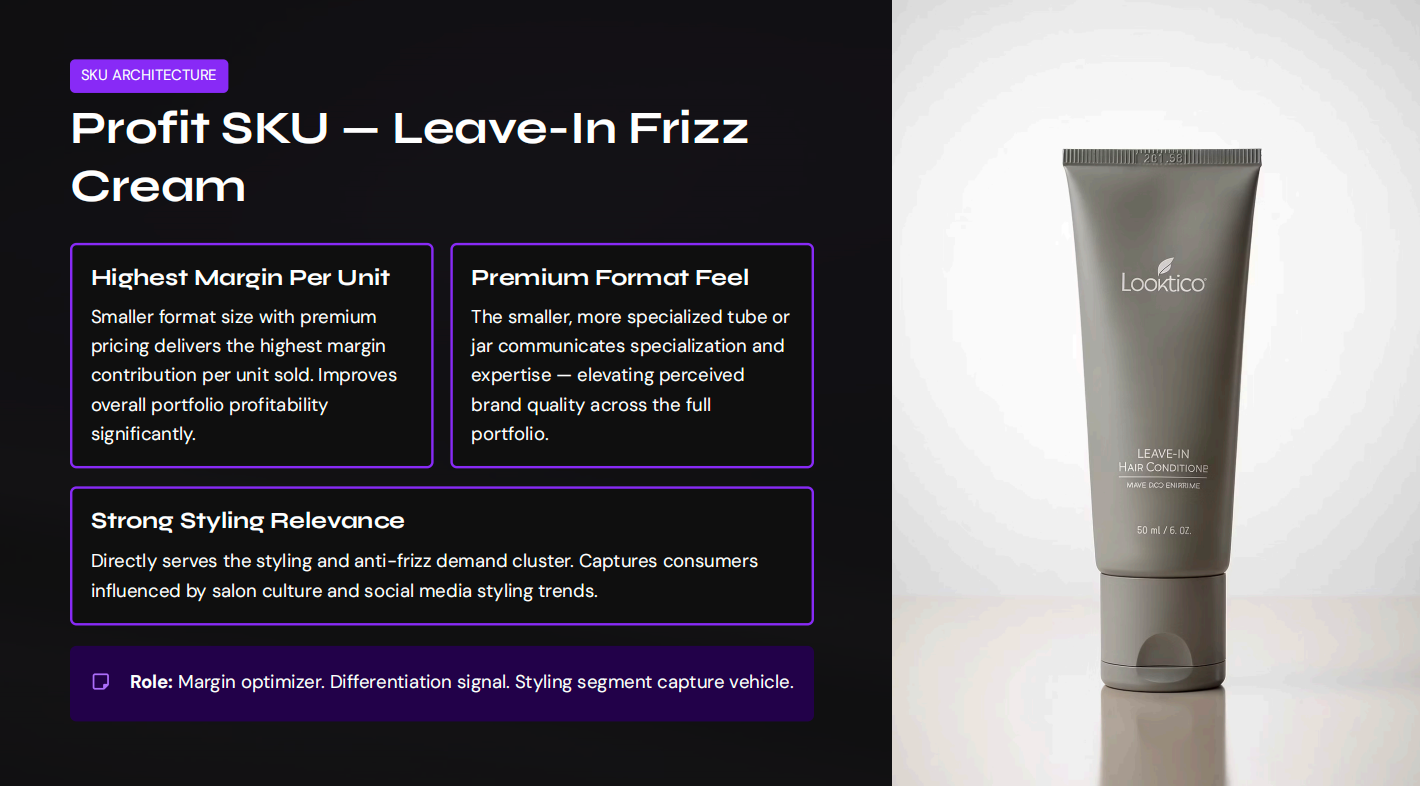
Profit SKU 4 Leave-In Frizz
Cream
7. Go-to-Market Playbook
7.1 Channel Strategy:
- Amazon: Best for mass-market conditioners, focusing on problem-solving features like frizz control and hydration.
- DTC: Focus on premium offerings with educational content, Halal-certified options, and targeted ads.
- Retail / Distributors: Place mass and mid-tier conditioners with strong visual appeal for easy in-store decision-making.
- Salon: Launch premium lines with deep conditioning and protein-rich formulations for professional use.
8. Compliance & Risk Checklist
- Halal Certification: Ensure all ingredients comply with Halal standards.
- Ingredient Risks: Avoid banned ingredients in the Middle East, especially related to fragrance allergens.
- Labeling Compliance: Include clear, compliant ingredient lists and disclaimers.
9. OEM/ODM Execution Plan
9.1 Development Timeline:
- Concept brief: 3-7 days
- Formula proposal: 5-10 days
- Sample approval: 4-6 weeks
- Production lead time: 30-60 days
12. Ready to Launch?
How We Help:
- Market-aligned product concepts and SKU strategies
- Fast sampling and flexible MOQ
- Custom packaging solutions
- Compliance-oriented development
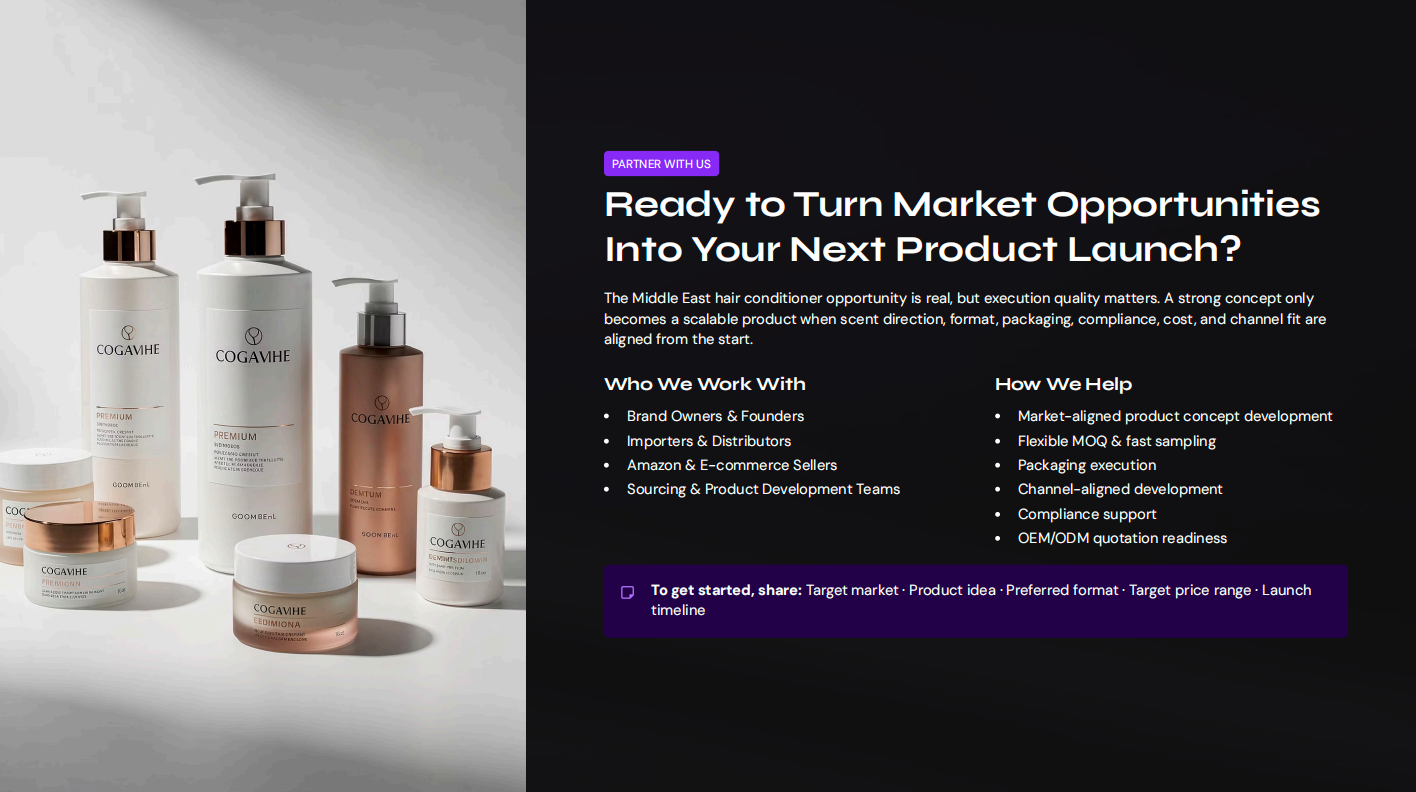
Ready to Turn Market Opportunities
Into Your Next Product Launch?
Download the Full Report (PDF)
Tell us your target region, product category, and the decision you’re trying to make. We’ll suggest the closest existing report—or build a tailored version.