

Call(WhatsApp Us)
+8615360806100Email Us
cherry@laeyo.comSee the factory by live video walkthrough
Book an on-site factory visit in Guangzhou
Call(WhatsApp Us)
+8615360806100Email Us
cherry@laeyo.com广州市花都区花山镇华辉路18号
微观化妆品创意产业园E栋整栋Most makeup labelled “Made in China” comes from a surprisingly small number of industrial clusters — and knowing which cluster, and which type of supplier inside it, tells you more about your risk than…
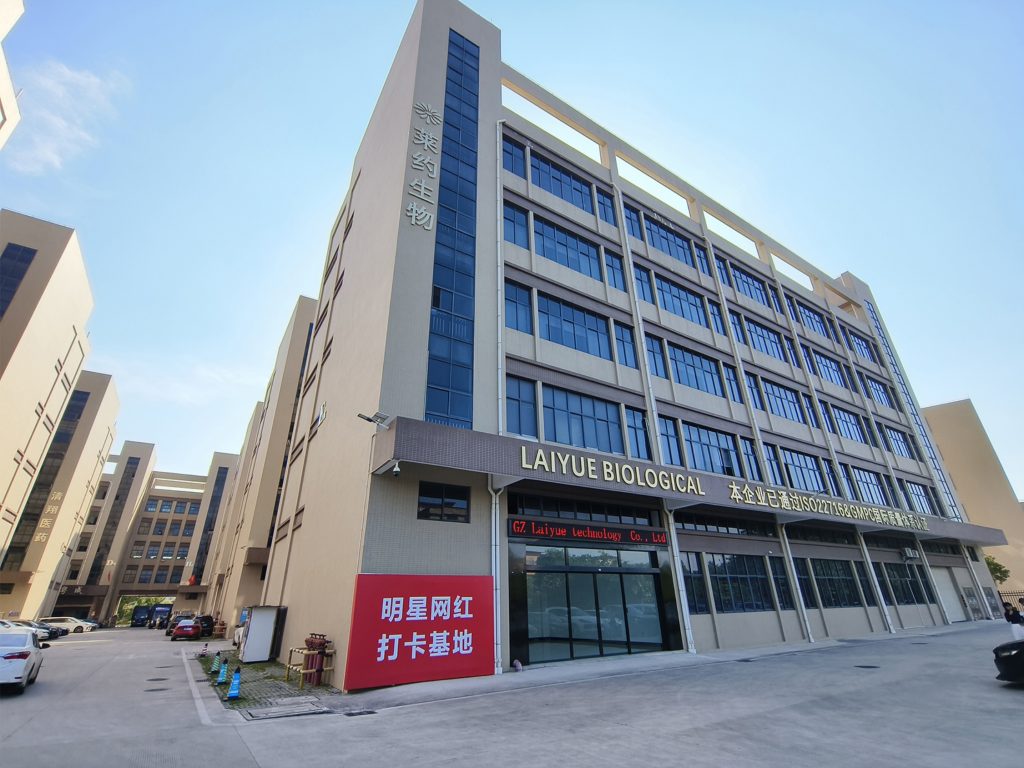
Most makeup labelled “Made in China” comes from a surprisingly small number of industrial clusters — and knowing which cluster, and which type of supplier inside it, tells you more about your risk than any factory brochure. China’s cosmetics manufacturing is heavily concentrated in the Pearl River Delta around Guangzhou, with secondary clusters in the Yangtze River Delta and the Bohai Rim. What separates a smooth program from a delayed one is rarely geography — it is license scope, GMP discipline, packaging coordination, and whether the documentation set actually matches the product you receive.
Chinese cosmetics production is geographically concentrated because suppliers cluster around shared supply chains: component moulders, label printers, carton plants, filling equipment vendors, and testing labs. That density is why a single city can support hundreds of finished-goods factories.
| Cluster | Main cities | Typical strengths | Verify before you commit |
|---|---|---|---|
| Pearl River Delta (Guangdong) | Guangzhou (Huadu, Baiyun, Panyu), Shenzhen, Dongguan, Zhongshan, Shantou | Color cosmetics, skincare, fragrance; deep packaging and component supply; export logistics | Cosmetic production license scope, GMP certificate, per-batch COA, export documentation set |
| Yangtze River Delta | Shanghai, Suzhou, Hangzhou, Ningbo | Premium skincare, sun care, precision filling, stronger in-house R&D labs | Stability and micro data, claims substantiation files, change-control records |
| Bohai Rim | Beijing, Tianjin, Qingdao | Mass-market skincare, traditional and herbal positioning | Product notification/filing history, raw-material specification files |
Guangdong has long been China’s largest cosmetics-producing province. Industry association data has put the province at roughly 1,560 licensed cosmetics manufacturers — around 40% of the national total — with the densest concentration in and around Guangzhou. Several practical reasons sit behind that:
For pressed powders, lipstick, mascara, and eyeliner, buyers often look beyond Guangzhou to Shantou and the surrounding Chaoshan area, which has a long history in color cosmetics and component manufacturing. It is a separate trip from Guangzhou — plan it as its own day.
When you search for makeup manufacturers in China, you will encounter three supplier types that look almost identical online:
Whether you visit or not, request this pack first. If a supplier cannot produce it before an order, they will not produce it after one.
Informational only, not legal advice. Confirm regulatory obligations for your destination market with qualified counsel or a regulatory consultant.
If you are flying in, two working days can cover three to four facilities if you group them by district. A workable pattern:
On site, ask to see: the raw-material quarantine area, the weighing and dispensing room, line clearance records, the retain-sample library, and one complete batch record for a product similar to yours.
Symptom: Formula passes lab tests, but the first production lot leaks, the pump stalls, or the label lifts after two weeks.
Root cause: Formula and pack were developed separately and never tested together under real fill and transport conditions.
Prevention: Require a compatibility study with the actual pack, actual filling temperature, and a transit simulation.
What to request from the factory: A written compatibility report covering leakage, dispenser function, viscosity change, label adhesion, and fragrance–plastic interaction, plus retain samples from the trial.
Symptom: Shipment arrives; the COA references a different lot number, the INCI list on the label does not match the formula, or the stability report is a template.
Root cause: Documents are prepared after production by someone who never saw the batch record.
Prevention: Make document delivery a payment milestone and specify the exact document list in the PO.
What to request from the factory: Lot-matched COA, SDS, stability and micro reports with dates and conditions, and a signed statement that the label INCI matches the released formula.
Symptom: Mid-project, the factory says a format must be subcontracted to another plant.
Root cause: The license scope was never checked against the intended category.
Prevention: Send your product brief and ask for written confirmation of scope before sampling.
What to request from the factory: The license document plus a written statement confirming the specific category is covered.
Symptom: The approved lab sample and the bulk production differ in texture, odor, or color.
Root cause: No signed specification — pH, viscosity, color, odor, fill weight — was locked before the pilot.
Prevention: Freeze a written spec sheet with tolerances and retain a sealed golden sample.
What to request from the factory: Signed spec sheet with test methods and acceptance ranges, plus the golden-sample retention record.
Symptom: Bulk is ready but sits in the warehouse for weeks.
Root cause: Component tooling and decoration lead times were never mapped against bulk production.
Prevention: Lock packaging before the pilot run and get written lead times per component.
What to request from the factory: A component-by-component timeline with tooling, decoration, and delivery dates, plus the name of the packaging supplier.
Subject: Pre-qualification checklist — [Brand] / [Category] / [Target market]

1. Confirm the legal entity name that holds your cosmetics production license.
2. Provide the production license number and category scope.
3. Attach your NMPA GMP evidence and ISO 22716 certificate (if held).
4. Confirm in writing whether our category is inside your licensed scope.
5. Share two recent client references in our category and market.
6. Provide a sample per-batch COA with actual measured values.
7. Attach stability and microbiological test summaries with conditions and duration.
8. Confirm which third-party lab you use for safety and micro testing.
9. Share raw material specifications for key actives, preservatives, and fragrance.
10. Confirm your AQL sampling standard and acceptance level in writing.
11. Provide a packaging compatibility report template you use before bulk.
12. Confirm who performs compatibility testing — you or the packaging supplier.
13. Share typical lead times: sampling, pilot, bulk, and packaging.
14. Confirm your process for label artwork approval and version control.
15. State who signs the batch record and who releases each lot.
16. Confirm the document pack delivered with every shipment.
17. Provide the retention-sample policy and storage duration.
18. Confirm export documentation you can issue (SDS, COA, packing list).
19. Share your change-control procedure for formula and supplier changes.
20. Confirm the named contact for QA escalations after shipment.
No. Guangzhou and the wider Pearl River Delta dominate color cosmetics and mass skincare, but plenty of premium skincare, sun care, and specialty formats come from the Yangtze River Delta. Country of origin is a labeling and customs question based on where the product was manufactured — not on which cluster is largest.
Not mandatory, but strongly advised for a first order. If travel is not possible, substitute a scheduled video walkthrough of the filling line and QC lab, a complete document pack, and a pre-shipment third-party inspection using an agreed AQL plan.
Many can coordinate all three, but components are usually made by specialist suppliers. The important question is not who makes the pack — it is who is contractually responsible for compatibility testing and who signs off before bulk production runs.
At minimum: a lot-matched COA, SDS, stability and micro summaries, the packaging specification sheet, the approved label artwork record, the packing list, and any claim substantiation file you relied on for marketing copy.
Typical ranges: sampling 10–15 business days, stability testing 4–12 weeks depending on protocol, pilot run 2–3 weeks, bulk production 20–35 days, plus packaging lead time and ocean freight. Packaging and stability are usually the critical path, not filling.
To get a quote that reflects your actual project rather than a generic price list, Request a Quote and include your target market, SKU list and formats, brand positioning, packaging direction, and target launch date.
With more than 20 years of experience in OEM/ODM/Private Label Cosmetics, I'd love to share valuable knowledge related to cosmetics & skincare products from a top-tier Chinese supplier's perspective.