


Executive Summary
This report explores the EU makeup removal market in 2026, including gentle cleansing trends, sensitive skin demand, product format opportunities, pricing structure, channel fit, compliance priorities, and OEM launch strategy. It is designed to help brands, importers, distributors, private label buyers, and Amazon sellers turn market insight into a more practical product launch plan.
EU Makeup Removal Market 2026: Gentle Cleansing Trends, Consumer Needs & Market Entry Strategy
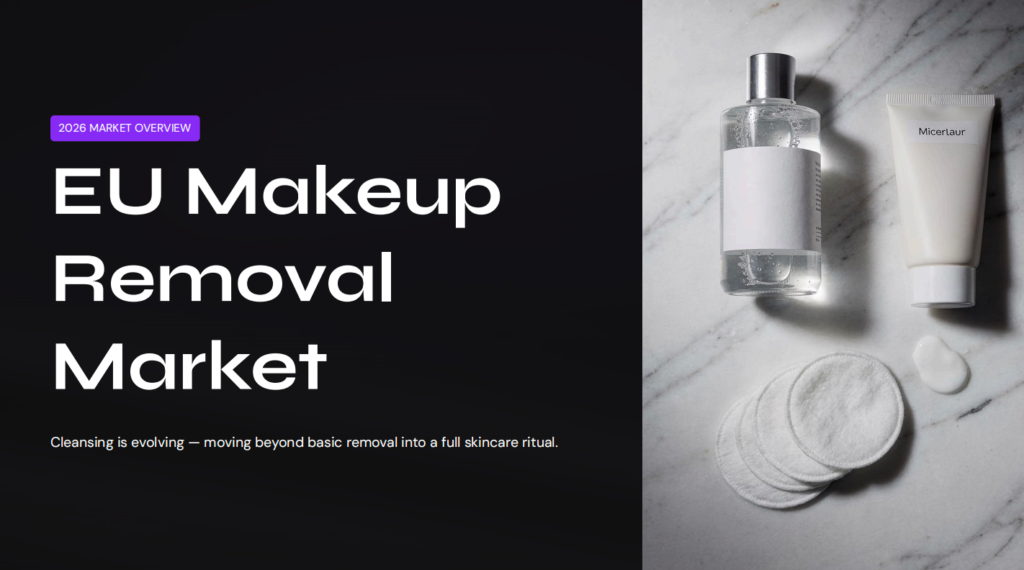
The EU makeup removal market in 2026 is no longer just a cleansing category. It is increasingly a barrier-conscious, routine-driven, and texture-led market where consumers expect products to remove makeup effectively while still feeling gentle, comfortable, and suitable for sensitive skin.
For brands, importers, distributors, private label buyers, and e-commerce sellers, the opportunity is strongest where removal products go beyond simple cleansing and deliver a better overall user experience. In practical terms, that means gentle performance, residue-free comfort, waterproof makeup removal, and strong integration into daily skincare routines.
This report turns those market signals into a practical launch guide. It covers consumer demand, product format opportunities, channel logic, pricing, compliance, and a commercially structured SKU strategy for entering the EU makeup removal market in 2026.
Executive Summary
The EU makeup removal category is growing because removal is now linked to more than taking off makeup at the end of the day. Daily SPF use, long-wear base products, waterproof eye makeup, skin barrier awareness, and skincare-led cleansing routines are all expanding the role of removers in modern beauty routines.
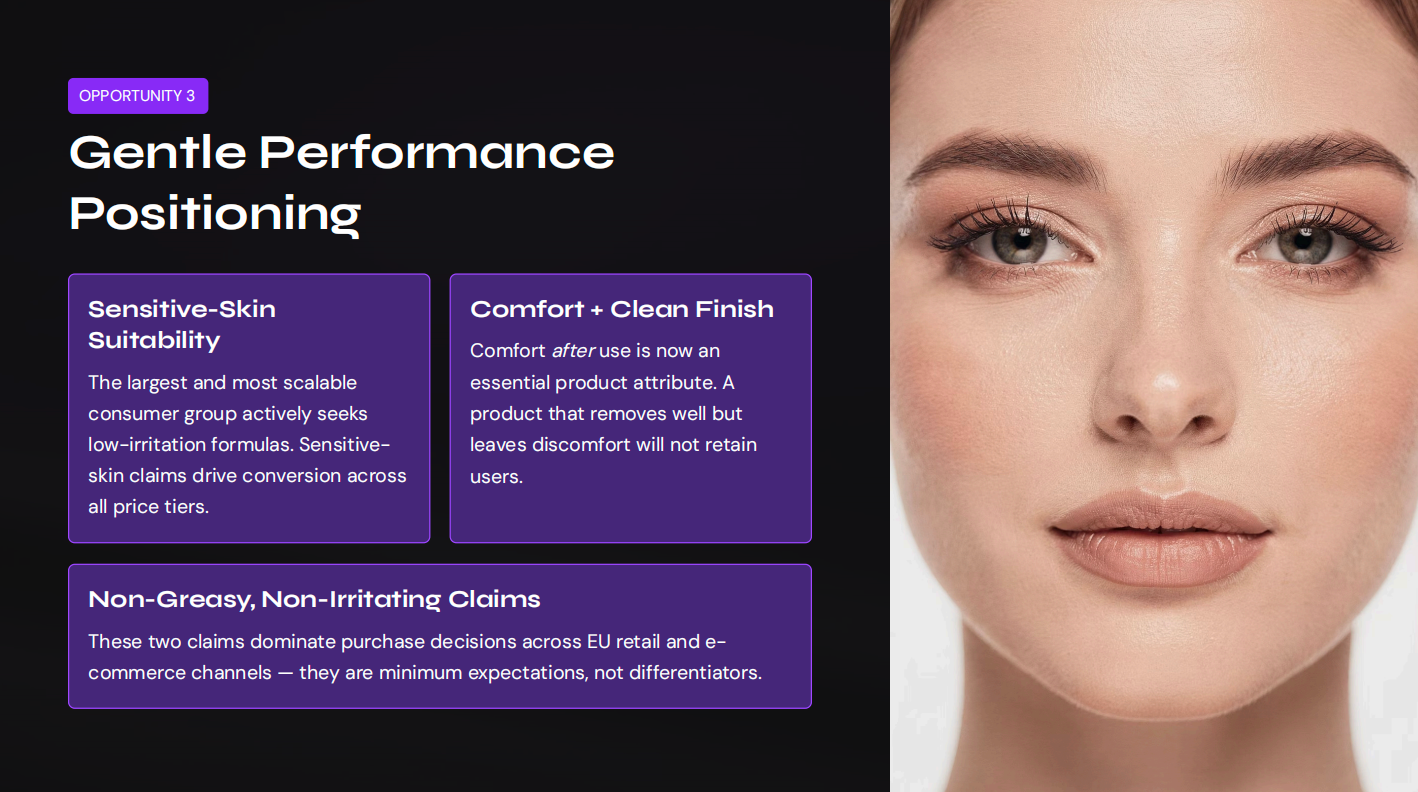
The strongest commercial opportunities sit in the middle of the market. Consumers increasingly want better performance and a more comfortable skin feel than low-cost commodity removers can offer, but they do not always want to pay prestige pricing. This makes mid-price gentle-performance products one of the most scalable entry zones.
The category is also moving away from one-product logic. Routine-based systems are becoming more commercially relevant, especially combinations such as micellar water plus reusable pads, a face remover plus an eye and lip specialist, or a balm paired with a second-step cleanser.
For most buyers, the best market entry structure is a three-SKU system:
- one hero micellar water for daily face, eyes, and lips removal
- one dual-phase eye and lip remover for waterproof makeup
- one cleansing balm or cleansing oil for higher basket value and double-cleansing routines
This gives one traffic SKU, one specialist performance SKU, and one higher-margin routine SKU.
Market Opportunity Overview
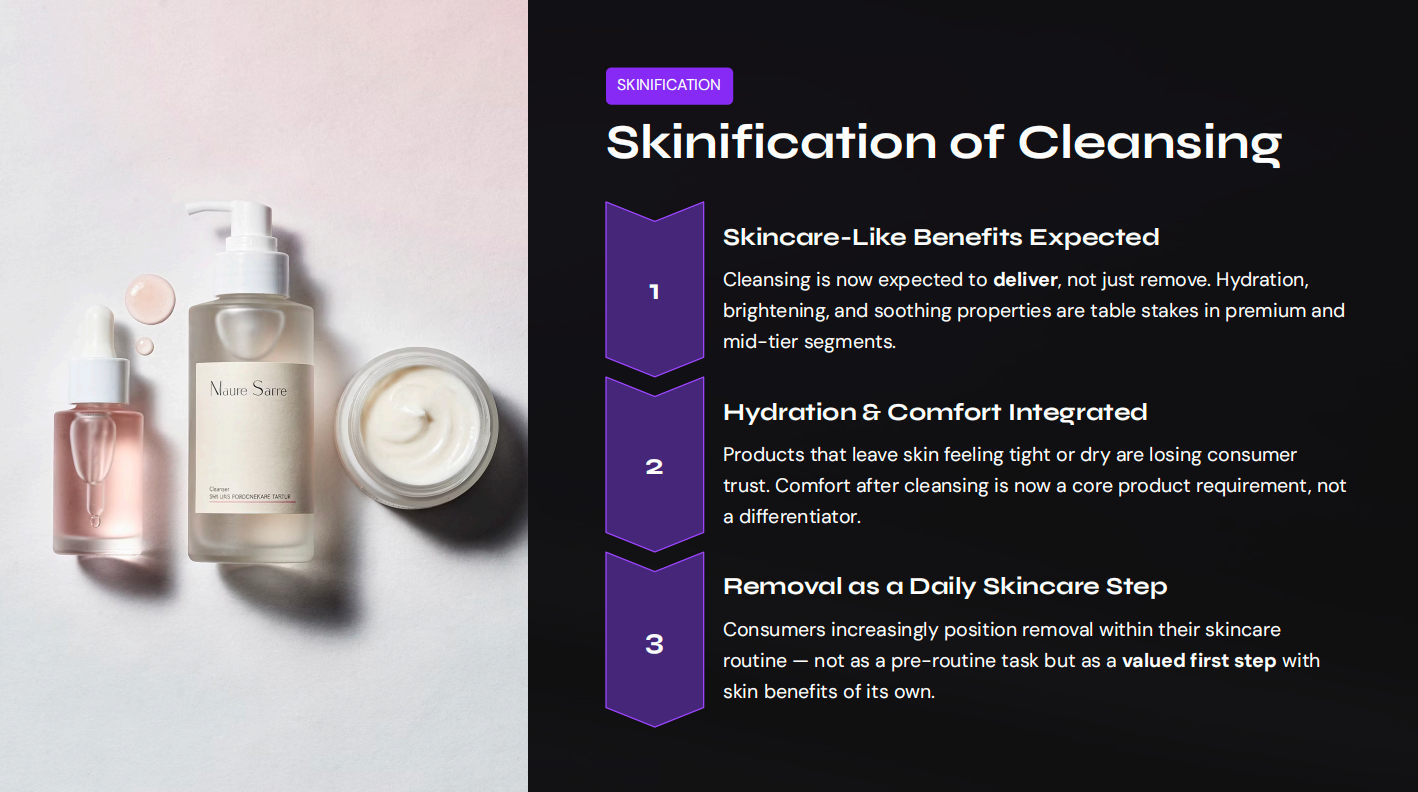
The EU makeup removal market is evolving because consumers now expect removers to work like skincare, not like harsh stripping cleansers. A remover is no longer judged only on whether it takes off makeup. It is also judged on eye-area tolerance, residue level, comfort after use, and how well it fits into a daily routine.
This matters because modern makeup removal is influenced by several structural changes:
- more long-wear and transfer-resistant makeup
- wider daily use of sunscreen
- higher sensitivity awareness
- stronger skincare routines
- growing preference for gentle textures and non-stripping formulas
- increased interest in reusable and lower-waste cleansing systems
For brands entering the category, this means success depends on balancing four factors at once: removal power, skin comfort, tolerance, and routine compatibility.
Skinification of Cleansing
Why the Category Is Growing
Makeup removal is growing because it now solves more than one problem. It helps remove makeup, sunscreen, daily impurities, and long-wear products, while also acting as an important first step in a skincare routine.
Consumers are also more aware of skin barrier comfort than before. They no longer want removers that leave the skin tight, dry, irritated, or heavily coated in residue. This shift is changing what wins in the market. “Gentle but effective” is now more commercially useful than “deep clean” or “strong cleanse.”
In practical terms, this creates stronger demand for:
- micellar water for daily and sensitive-skin use
- dual-phase removers for waterproof makeup
- cleansing balms and oils for full-routine removal
- eye-area removers with low sting risk
- comfortable textures that leave a clean but non-stripped finish
The market is becoming more skincare-led, more routine-based, and more sensory-driven.
Consumer Demand Signals
EU consumers are increasingly buying makeup removal products based on comfort and compatibility, not just performance claims.
The strongest purchase triggers include:
- removes waterproof makeup effectively
- suitable for sensitive skin
- leaves no greasy film
- does not sting around the eyes
- works on face, eyes, and lips
- leaves skin feeling soft, fresh, and comfortable
What causes switching is equally important. Consumers often leave products when they sting, require too much rubbing, leave residue, fail on long-wear makeup, or make the skin feel dry and tight.
This means repeat purchase is built on trust. Products that remove reliably while maintaining a pleasant skin feel are much more likely to create loyalty than products that only promise strong cleansing.
Consumer Segmentation:
Eco-Conscious Users
Core Consumer Segments
A useful way to understand the category is through four major consumer groups.
The first is the sensitive-skin user. This is the broadest mainstream opportunity for hero SKU development. These users prioritize low-irritation removal, gentle after-feel, low-sting eye-area performance, and barrier-conscious positioning.
The second is the heavy makeup user. This segment needs stronger efficacy for waterproof mascara, matte foundation, and long-wear lipstick. Dual-phase removers, high-slip oils, and cleansing balms are especially relevant here.
The third is the skincare-focused user. These consumers want removal to fit into a routine, especially double cleansing. They respond well to texture, comfort, hydration-support language, and bundle logic.
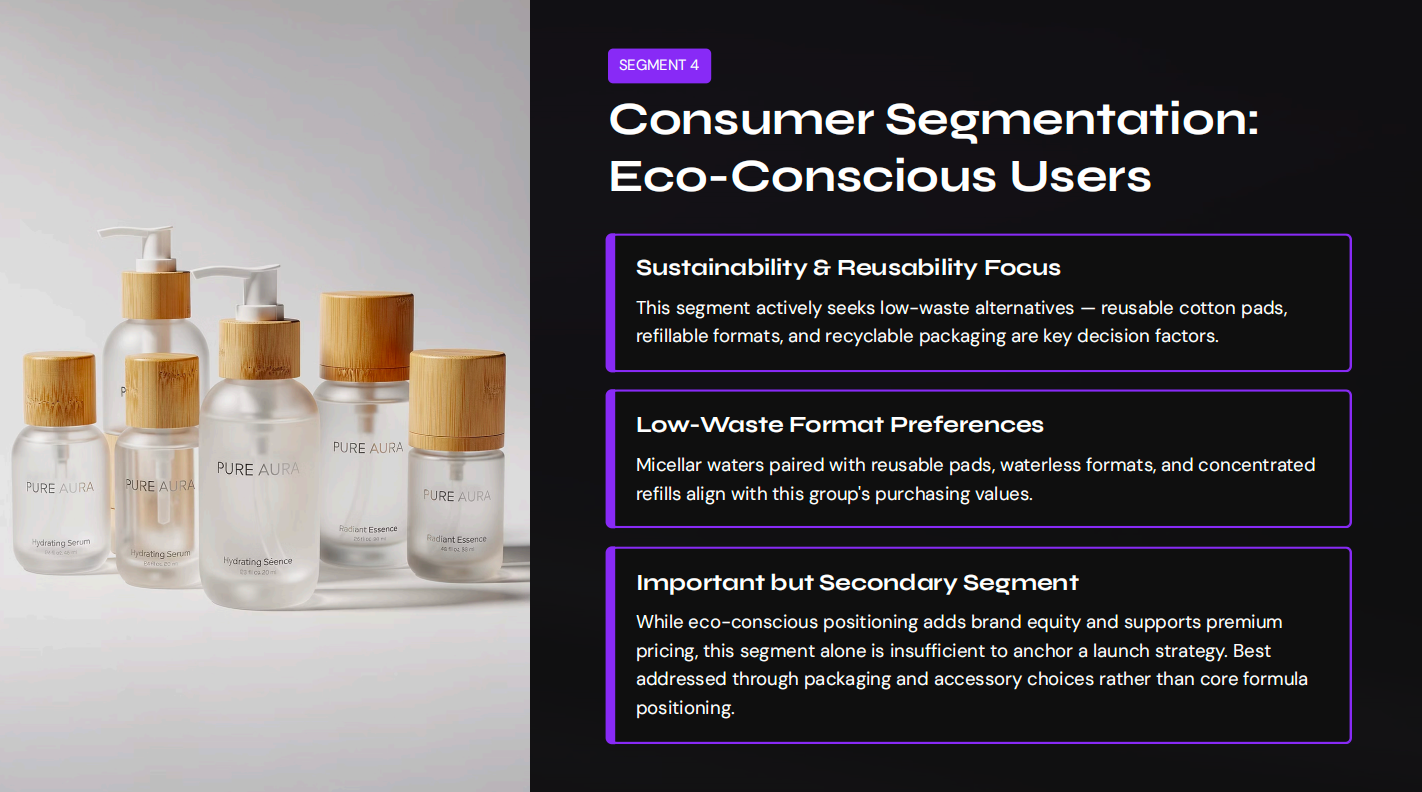
The fourth is the eco-conscious routine user. These consumers care more about reusable tools, refill concepts, lower-waste habits, and simple but effective cleansing systems.
A strong launch should not try to force one product to satisfy all four groups at once. The better strategy is to assign each SKU a clear role.
Category Landscape
The EU makeup removal market is best understood through three main price zones.
Mass
Mass products are usually led by micellar waters, entry wipes, and basic eye makeup removers. Their strength is volume and accessibility, but they often face higher price pressure and lower differentiation.
Mid
This is the most important commercial zone. Consumers expect better tolerance, better texture, and better finish than basic removers, but they still want realistic pricing. This is the best entry space for export-focused private label launches.
Premium
Premium products are usually texture-led and more ritual-driven, such as cleansing balms, cleansing oils, luxury milk cleansers, and prestige eye removers. These products can offer better margin, but they usually need stronger branding, better packaging, and more developed channel authority.
The strongest entry route for most buyers is not the cheapest price point. It is the mid tier with clear gentle-performance logic.
Product Format Trends
Different formats play different roles in the market, and each one should be chosen based on usage occasion and channel fit.
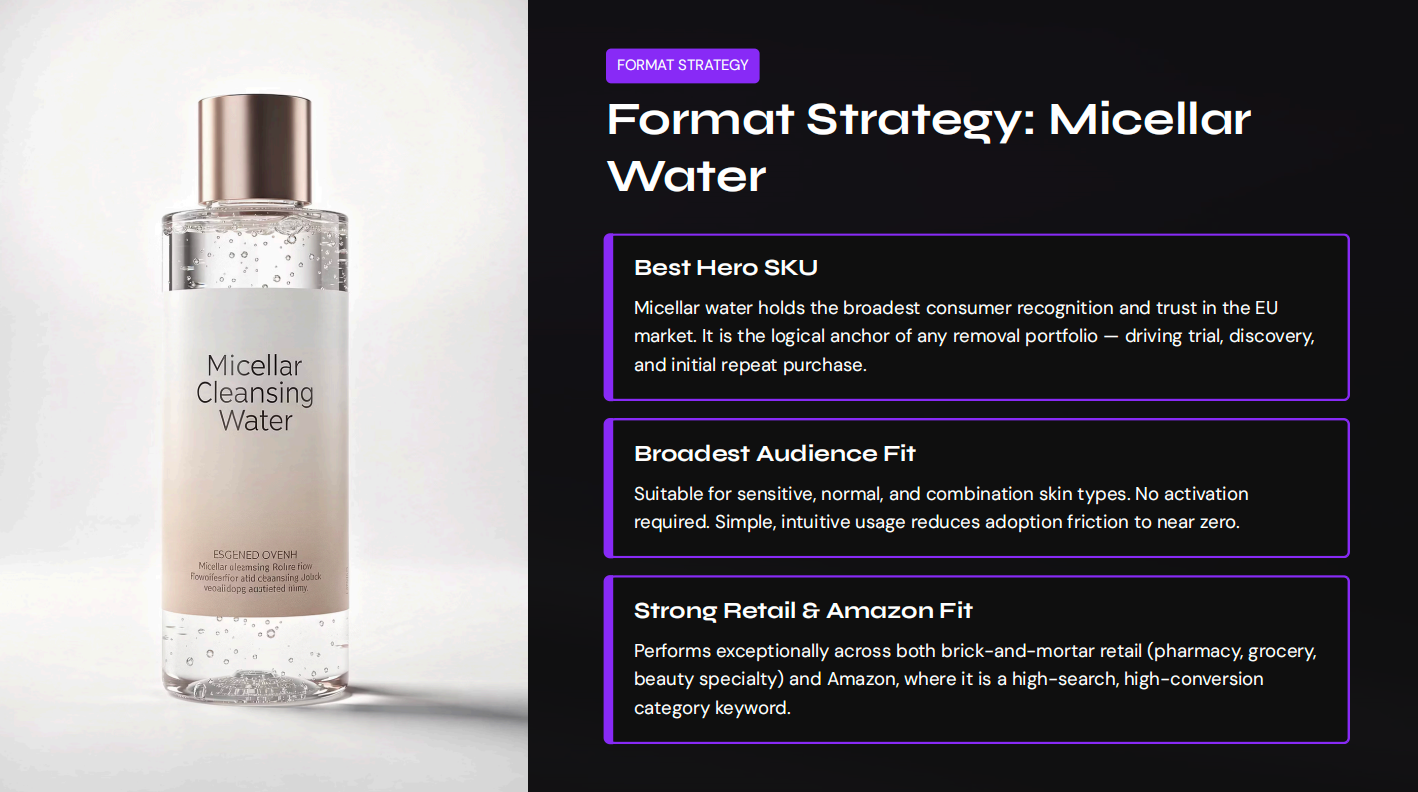
Micellar Water
Micellar water remains the best broad-use hero format. It works well for daily removal, sensitive skin, face-eyes-lips convenience, and high repeat purchase. It is also the easiest format to scale across pharmacy, Amazon, retail, and DTC starter lines.
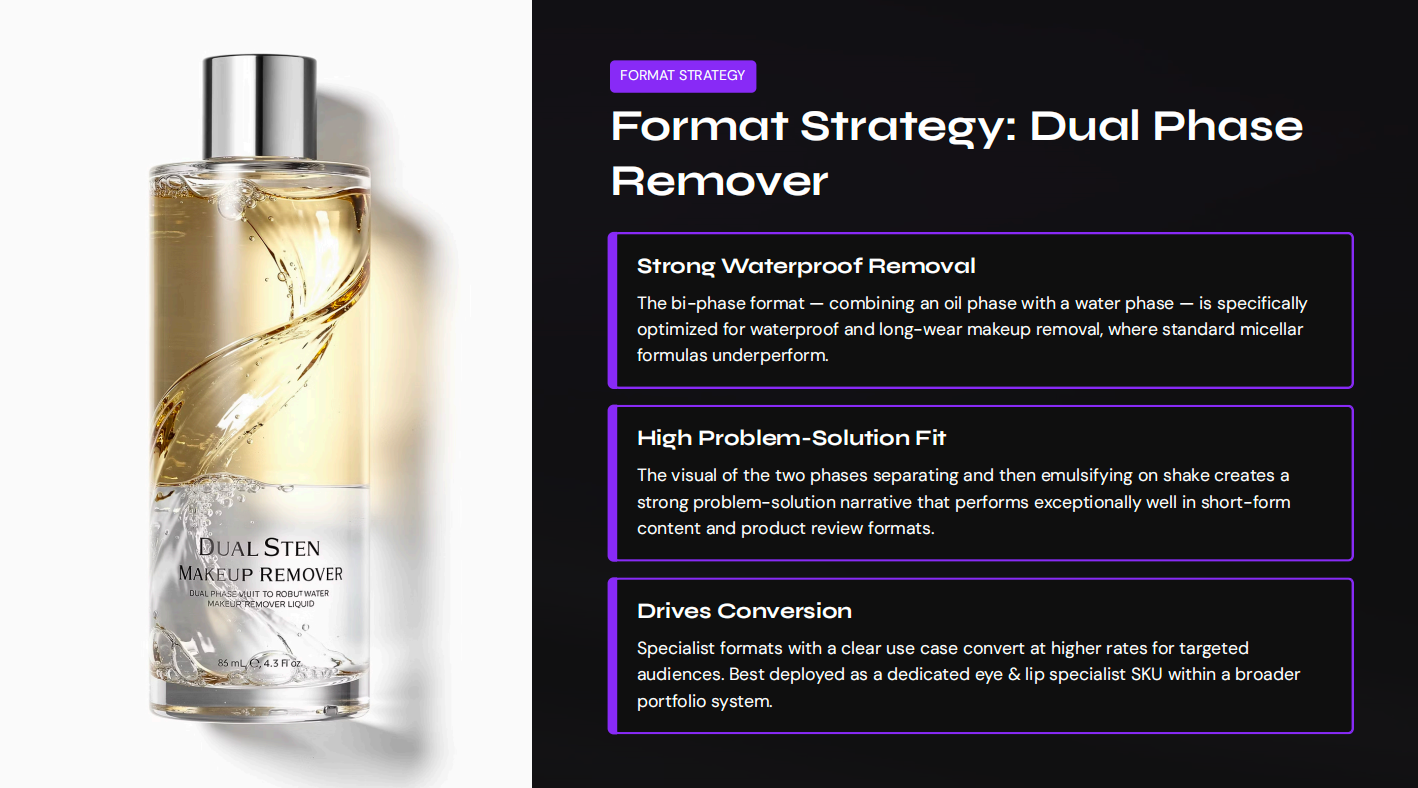
Dual-Phase Eye & Lip Remover
This is one of the strongest specialist formats because it directly solves a visible consumer problem: waterproof makeup removal. It performs best when the formula offers strong removal with a light, non-heavy finish.
Cleansing Balm
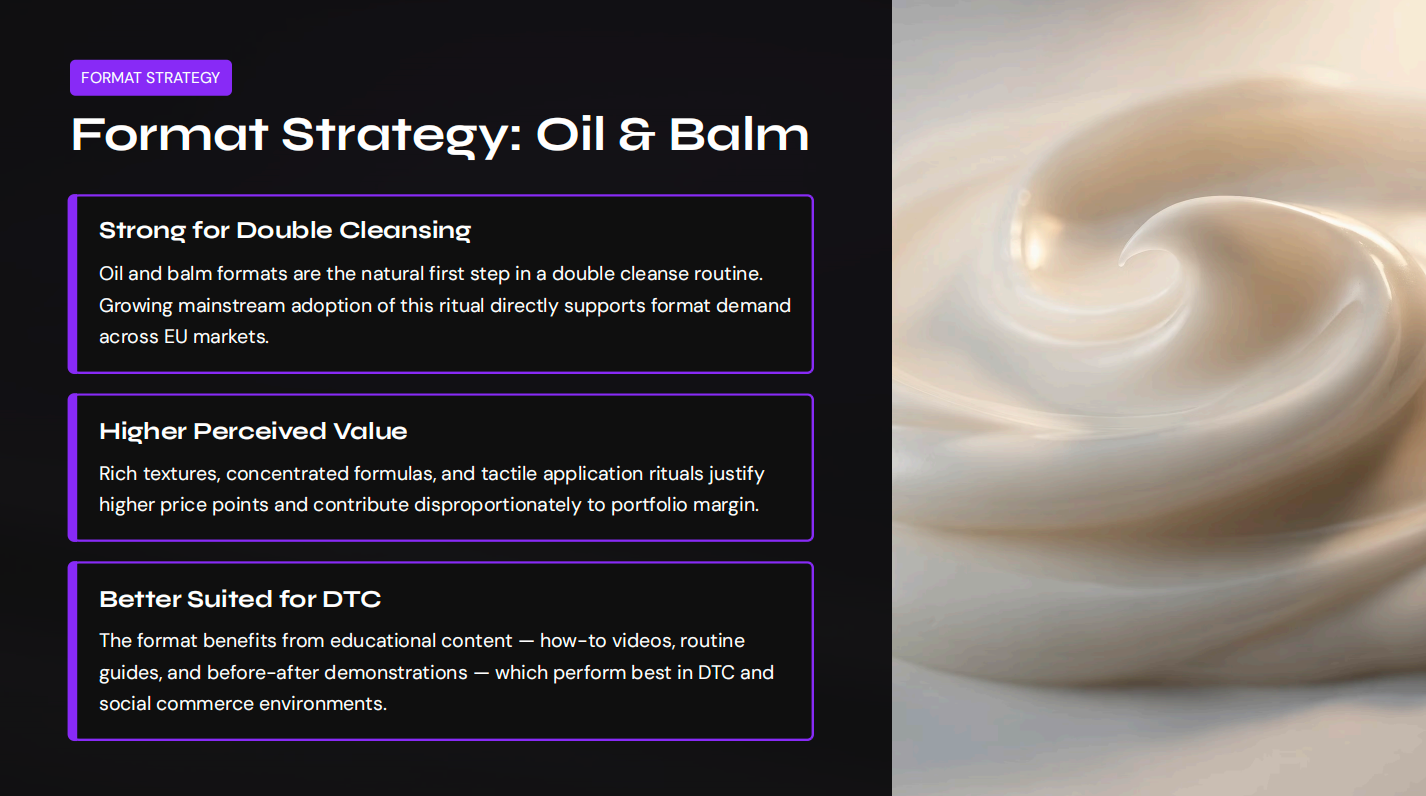
Cleansing balm is one of the strongest profit and bundle formats. It fits double-cleansing routines, higher basket value, premium texture expectations, and gifting logic. It is especially strong in DTC and Amazon.
Cleansing Oil
Cleansing oil is highly relevant for users who wear sunscreen, waterproof makeup, and full-face products. It performs best when it rinses clean and avoids an overly greasy after-feel.
Format Strategy: Oil & Balm
Makeup Remover Wipes
Wipes still have convenience value in travel, gym, and emergency-use occasions, but they are better used as auxiliary SKUs rather than hero products.
Cream and Gel Cleansers
Cream cleansers work best for dry and sensitive skin, while gel cleansers often perform better as follow-up or hybrid cleansing steps rather than standalone heavy makeup removers.
The strongest market logic is not format diversity for its own sake. It is format selection based on clear consumer need.
Fragrance, Texture, and Ingredient Direction
This category wins more on comfort, finish, and feel than on aggressive active marketing.
The most commercially useful formulation and ingredient territories include:
- glycerin for hydration support
- panthenol for comfort and conditioning
- ceramide-support positioning for barrier-friendly logic
- mild surfactants for lower-stripping cleansing systems
- lightweight oils and esters for efficient but elegant removal
- emollient systems that reduce drag and rubbing
Texture is also part of the commercial offer. Consumers are increasingly sensitive to whether a product feels watery, cushiony, slippery, milky, balm-like, or greasy. The right texture can strongly influence repeat purchase.
For this reason, texture and residue profile should be evaluated as seriously as removal performance.
Product Opportunity and SKU Strategy
The best way to enter the EU makeup removal market is with a clear three-SKU system instead of too many overlapping formats.
A strong first launch can be built around:
- a sensitive micellar water
- a dual-phase waterproof eye and lip remover
- a melting cleansing balm or lightweight cleansing oil
This works because each SKU serves a distinct role.
The micellar water acts as the hero SKU. It has the broadest consumer base, the strongest repeat logic, and the easiest cross-channel fit.
The dual-phase eye and lip remover acts as the traffic and specialist problem-solution SKU. It is highly legible in e-commerce and solves a very visible need.
The cleansing balm or oil acts as the profit SKU. It supports higher basket value, stronger routine storytelling, better bundling, and DTC or Amazon conversion.
For first launch, it is usually better to choose either balm or oil for phase one unless brand positioning clearly supports both.
Pricing Strategy
The category performs best when price architecture is planned clearly.
A practical portfolio should usually include:
- one broad-use hero SKU in the mass-mid to mid tier
- one specialist performance SKU in the mid tier
- one routine or premium texture SKU in the mid-premium tier
This creates a more readable range for distributors, retailers, and e-commerce buyers. It also helps support repeat purchase, entry-level trial, and basket-size growth without relying on random price points.
For export-focused private label projects, the strongest entry point is usually mid-tier gentle performance rather than the cheapest price zone.
Gentle Performance
Positioning
Channel Strategy
A strong EU makeup removal launch should be channel-aware from the start.
For Amazon, the most effective formats are usually micellar water, dual-phase eye and lip remover, cleansing balm, and bundle sets. Success depends on problem-first titles, clear sensitive-skin or waterproof-removal messaging, strong main images, and clear size or value communication.
For DTC, the strongest opportunities are cleansing balm, cleansing oil, routine-led systems, reusable pads, and premium textures. DTC works best when the story is built around ritual, double cleansing, comfort, and education.
For pharmacy and retail, hero products should be broad-use, gentle, and easy to understand. Micellar water, eye-and-lip remover, and comfort-first cleansers are especially strong here.
The strongest launch model is not to force the same assortment into every channel. It is to match format and packaging to the way each channel converts.
Format Strategy: Micellar
Water
Compliance and Risk Control
The EU market requires disciplined cosmetic positioning. Makeup removers should remain clearly within cosmetic scope and avoid drifting into treatment or therapeutic language.
The biggest risk areas include:
- unsupported barrier-repair claims
- medicinal or therapeutic wording
- overstated eye-area tolerance promises
- misleading natural or clean claims
- superiority claims without evidence
Safer cosmetic language includes:
- gently removes makeup, SPF, and daily impurities
- suitable for face, eyes, and lips
- suitable for sensitive skin
- leaves skin feeling soft and comfortable
- helps remove waterproof makeup without harsh rubbing
- leaves a clean, non-heavy finish
Compliance should be built into development from the beginning. Formula, claims, packaging, allergen labeling, and artwork should be aligned together before final production decisions are made.
Format Strategy: Dual Phase
Remover
Packaging and Merchandising
Packaging should be selected according to channel role, not only visual preference.
Useful packaging directions include:
- large-format bottles for daily micellar use
- compact bottles for eye and lip removal
- travel sizes for convenience and gifting
- jars or premium pumps for cleansing balm or oil
- reusable-pad bundle logic for sustainability-oriented sets
- clean, modern design that supports gentle and skin-comfort positioning
In this category, packaging is not just a container. It is part of the product promise. It should support usability, dose control, routine fit, and channel merchandising.
OEM and Launch Execution
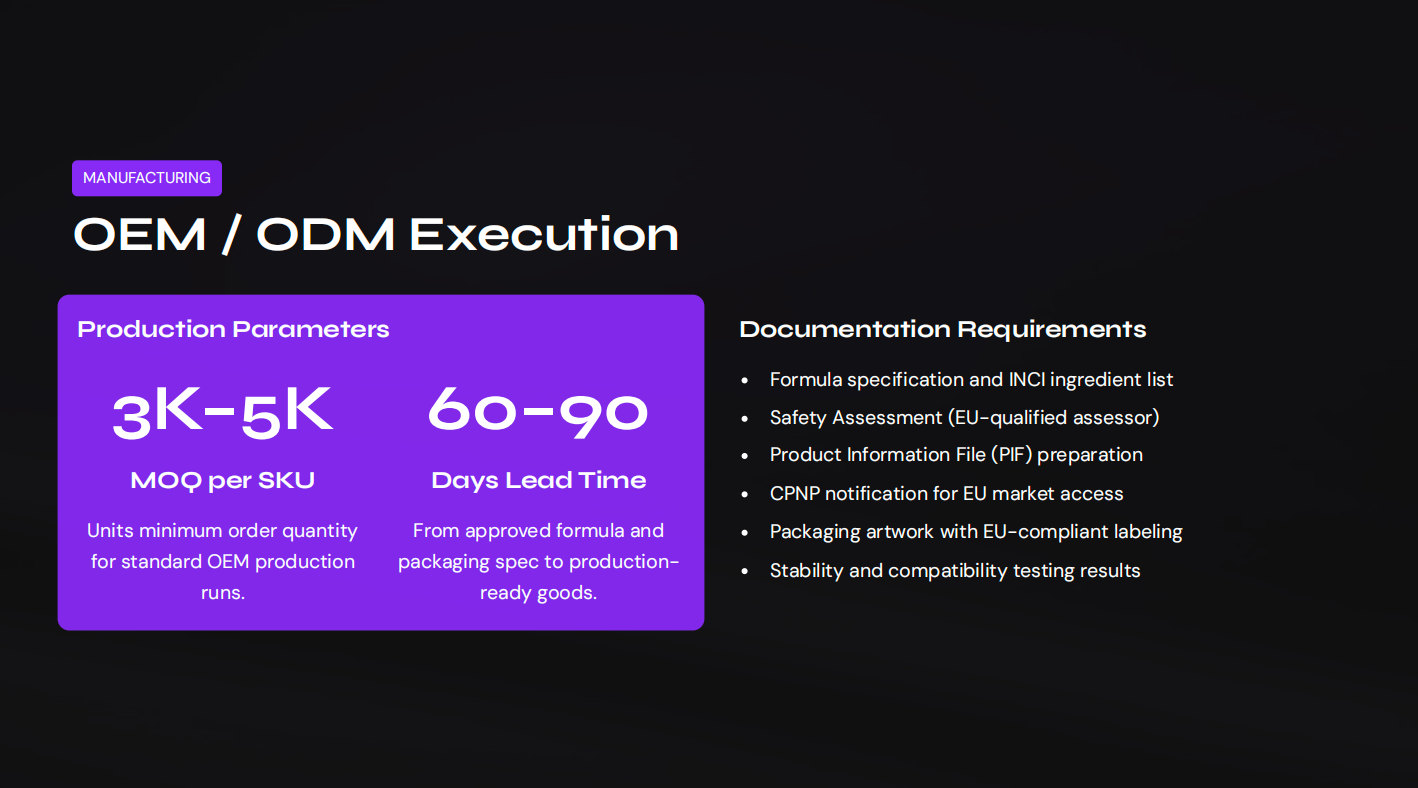
For OEM and private label buyers, the fastest way to improve results is to build a sharper product brief before sampling starts.
A stronger brief should include:
- target market
- product format
- target skin type
- makeup-use scenario
- desired claims
- price tier
- target channel
- packaging direction
- benchmark references
- planned MOQ
- launch timeline
The better these variables are defined upfront, the easier it becomes to quote accurately, sample efficiently, and avoid delays.
In this category, pack format should be locked early, especially for cleansing oil, balm, and dual-phase systems.
OEM / ODM Execution
Final Takeaway
The EU makeup removal market in 2026 is attractive because consumers now expect removers to be more than effective. They expect them to be gentle, comfortable, residue-aware, routine-friendly, and compatible with sensitive skin expectations.
The brands most likely to win are not the ones with the widest format range at launch. They are the ones with the clearest system: one daily-use hero, one visible problem-solution specialist, and one higher-margin routine SKU that supports basket growth.
If you are planning an EU makeup removal launch, the smartest next step is to define your hero format, target user, claim territory, and channel strategy first, then build the right SKU system from there.
Download the Full Report (PDF)
Tell us your target region, product category, and the decision you’re trying to make. We’ll suggest the closest existing report—or build a tailored version.