


Executive Summary
This report explores the EU facial toner market in 2026, including hydration and barrier-support trends, sensitive-skin demand, essence and milky toner opportunities, pricing structure, channel fit, compliance priorities, and OEM launch strategy. It is designed to help brands, importers, distributors, private label buyers, and Amazon sellers turn market insight into a more practical toner launch plan.
EU Facial Toner Market Report 2026: Hydrating, Soothing, and Barrier-Support Opportunities
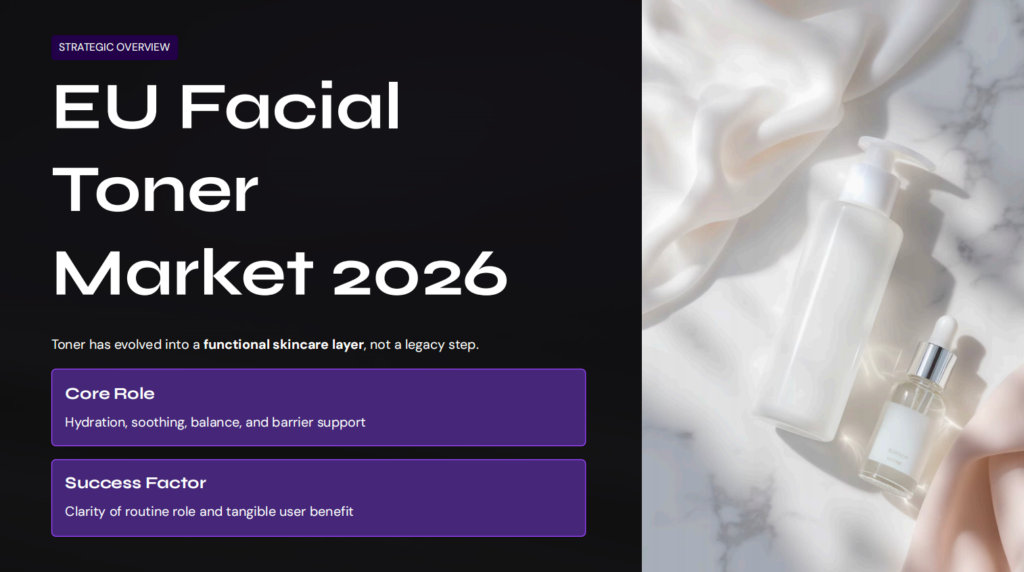
The EU facial toner market in 2026 is no longer defined by traditional “freshening toner” logic. Toner remains commercially relevant when it is positioned as a skin-function support step that helps restore comfort, add lightweight hydration, support the skin barrier, and prepare skin for the next stage of the skincare routine.
For brands, importers, distributors, private label buyers, and e-commerce sellers, the strongest commercial opportunity is not in old-style astringent toners. The strongest opportunity is in hydrating, soothing, barrier-support, and sensitive-skin-friendly toner concepts delivered through modern formats such as essence toners, milky toners, mist toners, and carefully controlled mild exfoliating toners.
This report translates those market signals into a practical launch guide. It covers category evolution, consumer demand, format trends, pricing logic, channel strategy, compliance considerations, and an OEM-ready toner portfolio strategy for entering the EU market in 2026.
Executive Summary
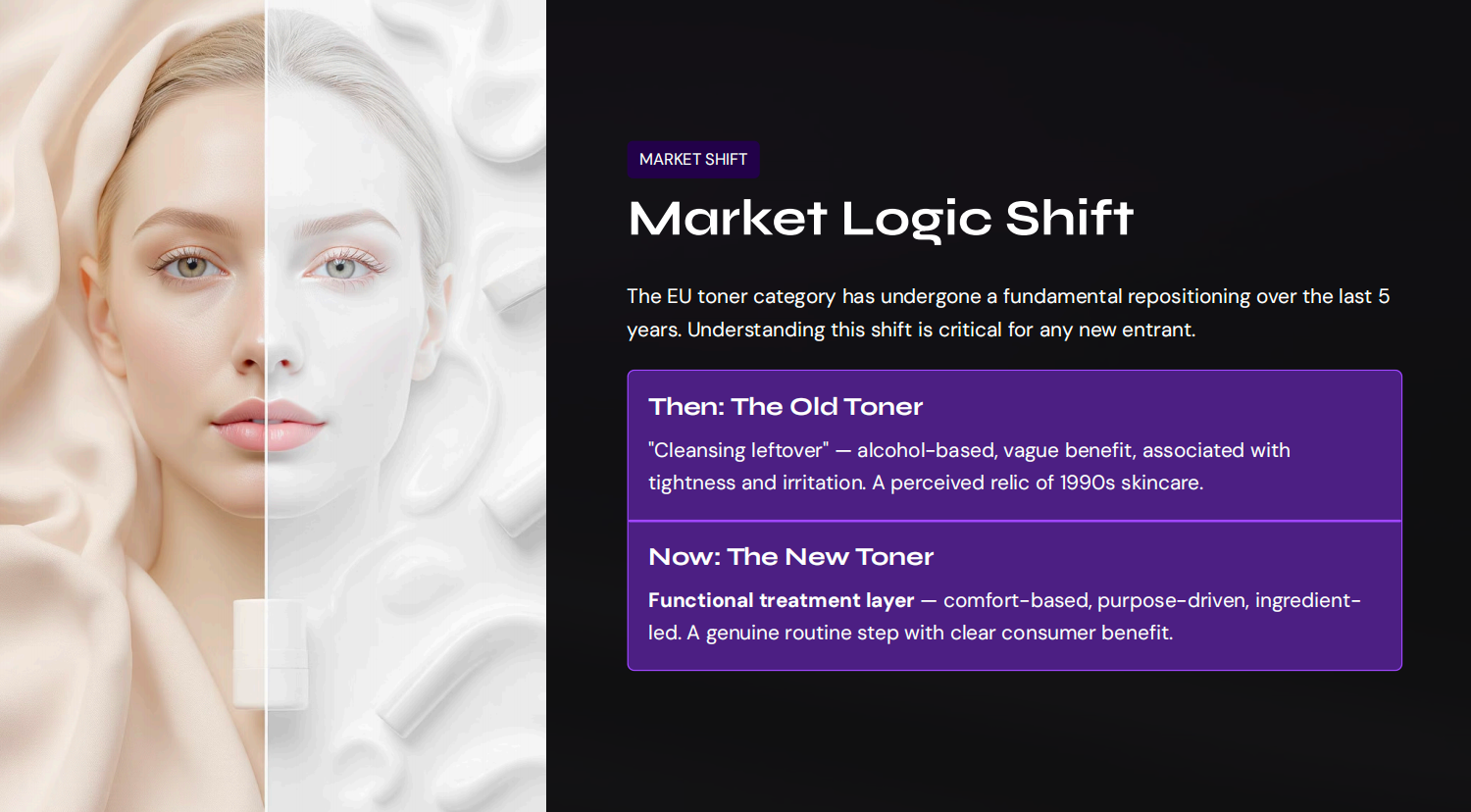
The clearest commercial conclusion for the EU facial toner market in 2026 is that toner still matters when it functions as a lightweight skincare layer rather than a leftover cleansing step. Products that focus on hydration, soothing, barrier support, and skin comfort now have broader relevance than traditional alcohol-led toners associated with stinging or stripping sensations.
This shift matters because the toner category has changed. Consumers increasingly expect toner to behave more like a light treatment fluid than a simple refresh liquid. Essence toner, milky toner, hydrating toner, and sensitive-skin toner are now stronger commercial routes than harsh clarifying toner. Mild exfoliating variants also have value, but they work best as controlled problem-solution SKUs rather than the first mass-entry product.
For most new entrants, the strongest route is a focused 3-SKU system:
- one hydrating barrier toner for broad daily use
- one soothing sensitive-skin toner for trust and comfort
- one mild exfoliating toner for texture and dullness concerns
This creates one scalable hero SKU, one trust-building differentiation SKU, and one margin-supporting problem-solution SKU.
Market Opportunity Overview
The EU toner market remains relevant because toner has evolved from a routine extra into a useful functional layer. Instead of being purchased only for freshness, toner is now expected to solve practical consumer needs such as post-cleansing tightness, daily hydration, skin comfort, skin balance, and lightweight routine layering.
That shift creates a better opportunity for new entrants. Buyers no longer need to compete only through generic “freshening toner” offers. They can win through better texture, better ingredient logic, more sensitive-skin-friendly positioning, and clearer routine architecture.
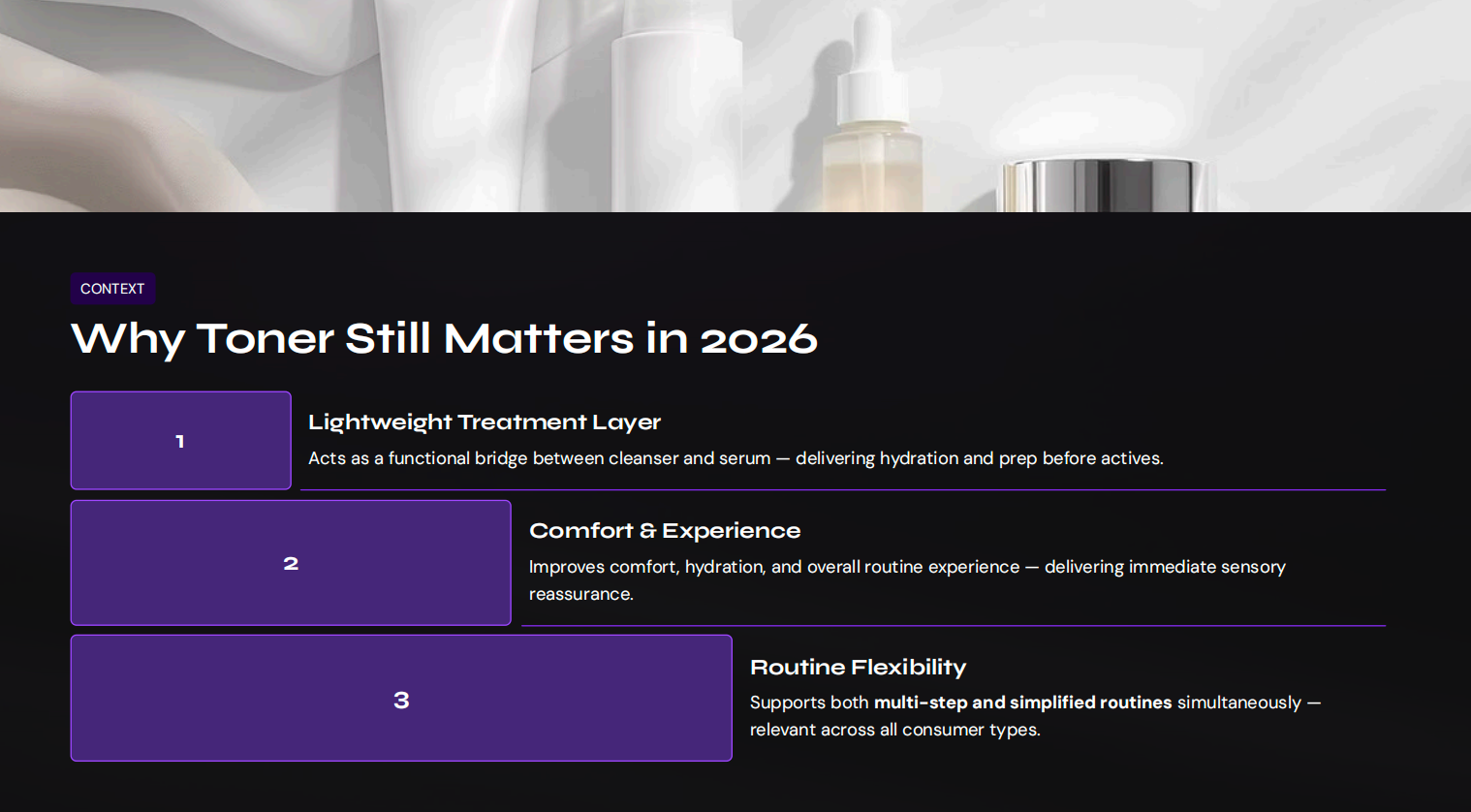
The category is especially attractive for brands that understand toner as a bridge product. Toner connects cleanser with serum and moisturizer. That makes it strategically valuable not only as a standalone SKU, but also as a basket-building and regimen-building product across Amazon, DTC, pharmacy, and retail.
Market Logic Shift
Why Toner Still Matters in 2026
Toner matters in the EU because it solves a set of lightweight but important daily-use problems that consumers feel immediately after cleansing.
These include:
- tightness after cleansing
- dryness
- discomfort
- reactive skin feel
- the need for better hydration layering
- the desire for smoother or more balanced-looking skin without a heavy formula
This means toner should no longer be developed as a generic category filler. It should be built around one clear functional role. The most commercially effective toner concepts in 2026 are the ones that tell consumers exactly why the product belongs in the routine.
The strongest roles include:
- hydration support
- soothing comfort
- barrier-support positioning
- skin-balance maintenance
- mild daily resurfacing
Why Toner Still Matters in 2026
Consumer Demand Signals
Consumer demand in the EU toner category is being shaped by a combination of skin sensitivity, ingredient awareness, minimalist routines, and skinification.
Many consumers no longer want toner that feels harsh or heavily fragranced. They want products that feel calm, modern, useful, and easy to incorporate into everyday skincare. This is especially true for sensitive-skin users, barrier-conscious users, and hydration-focused users.
The strongest purchase triggers include:
- tightness after cleansing
- lightweight hydration needs
- redness or irritation concerns
- desire for a gentler daily routine
- need for smoother-looking skin
- interest in skin balance without heaviness
This creates a category where the strongest concepts are not the loudest. They are the clearest. Toner performs best when the user instantly understands the skin need it addresses.
Sensitive Skin Segment
Core Consumer Segments
A useful way to read the EU facial toner market is through four consumer groups.
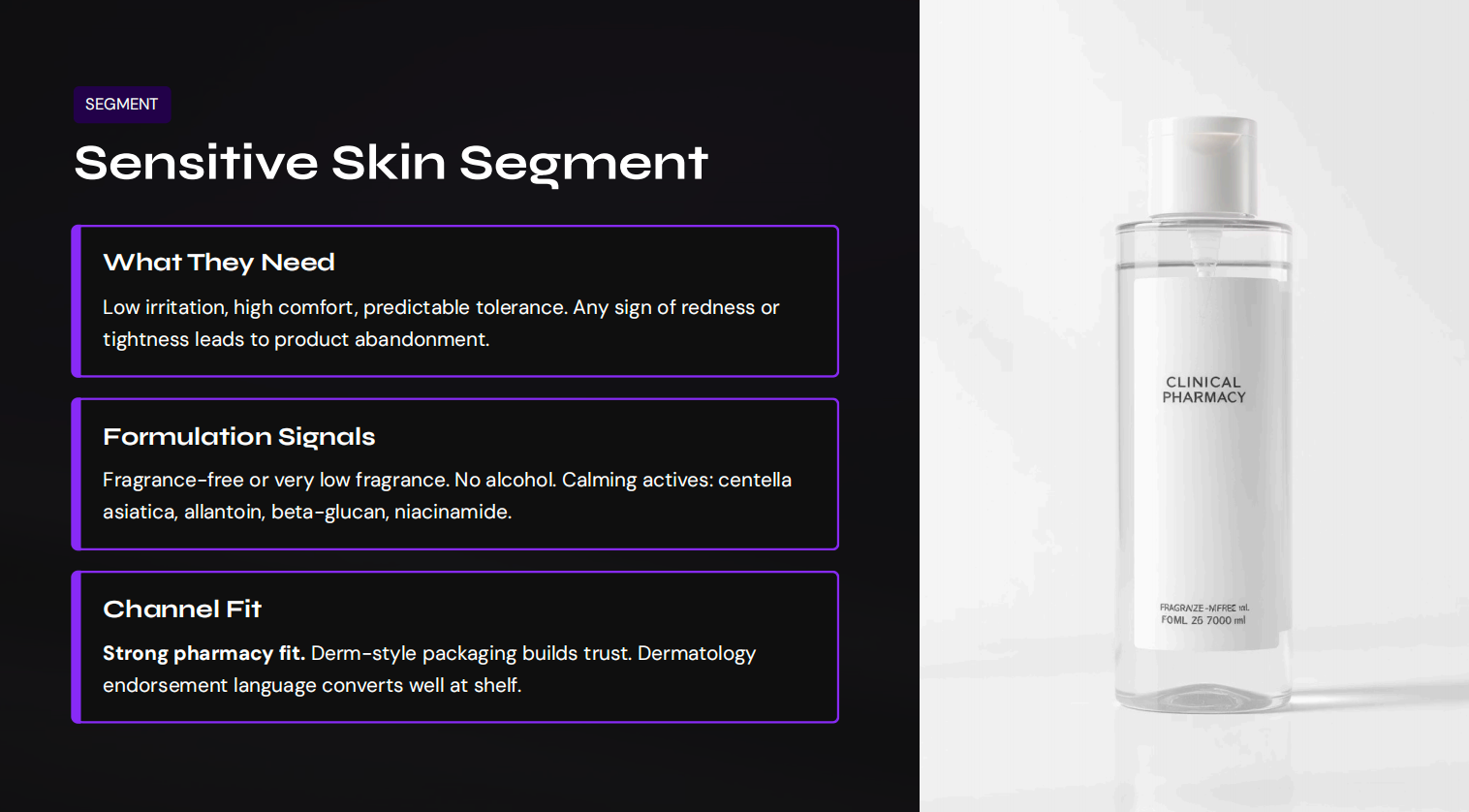
The first is the sensitive-skin user. This consumer wants comfort, lower irritation risk, fragrance-conscious formulas, and skin that feels calmer after cleansing.
The second is the barrier-support user. This buyer often wants skin to feel less stripped, less reactive, and more comfortable over time, without crossing into medical-style positioning.
The third is the hydration-focused user. This group wants daily moisture layering, plump-looking skin, softness, and lightweight texture without stickiness.
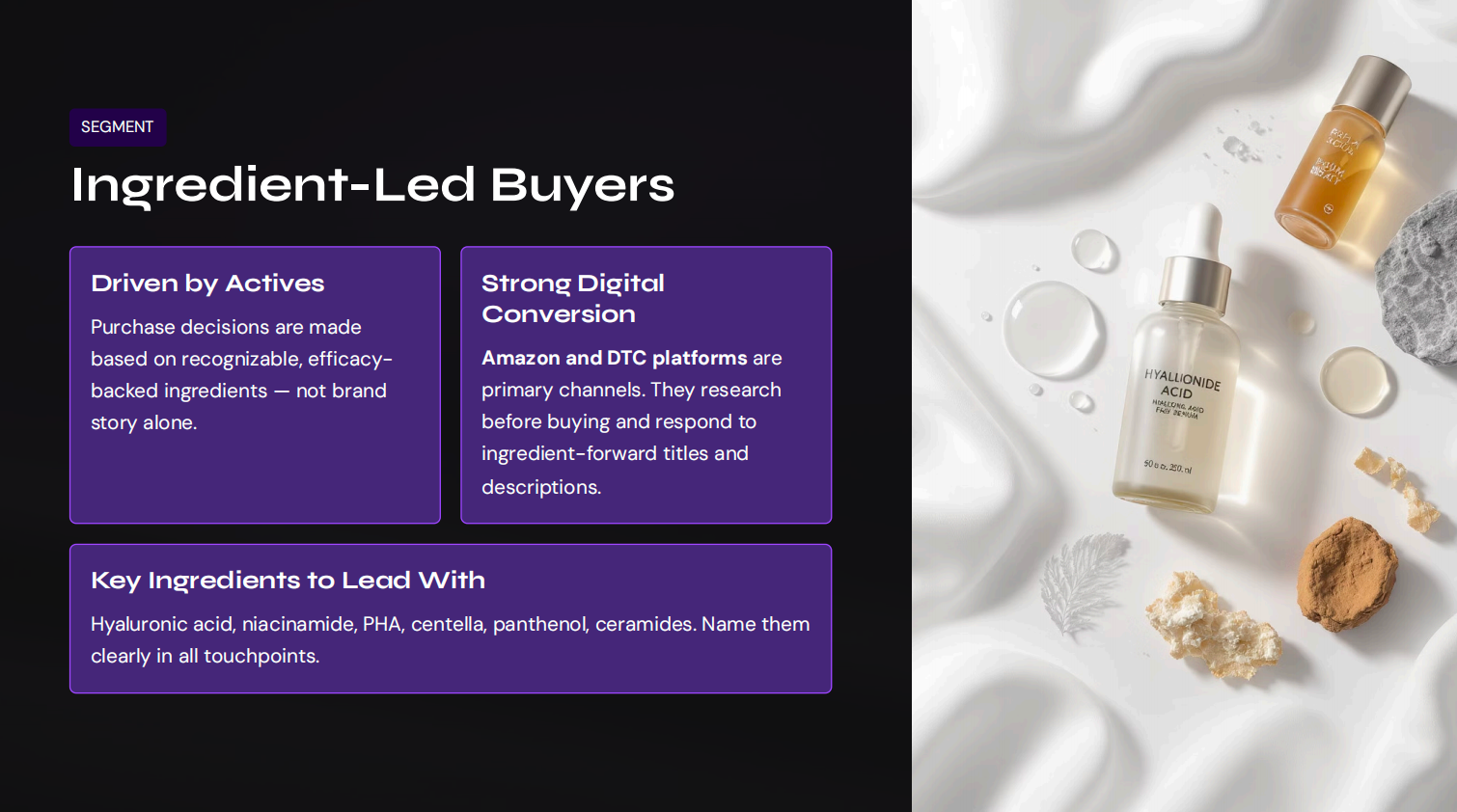
The fourth is the ingredient-conscious user. This consumer responds to recognizable actives, cleaner formula logic, and streamlined positioning rather than overloaded trend stacks.
These segments matter because each one buys toner for a different reason. A strong portfolio is built around need-state clarity rather than one vague “all skin types” toner.
Category Landscape
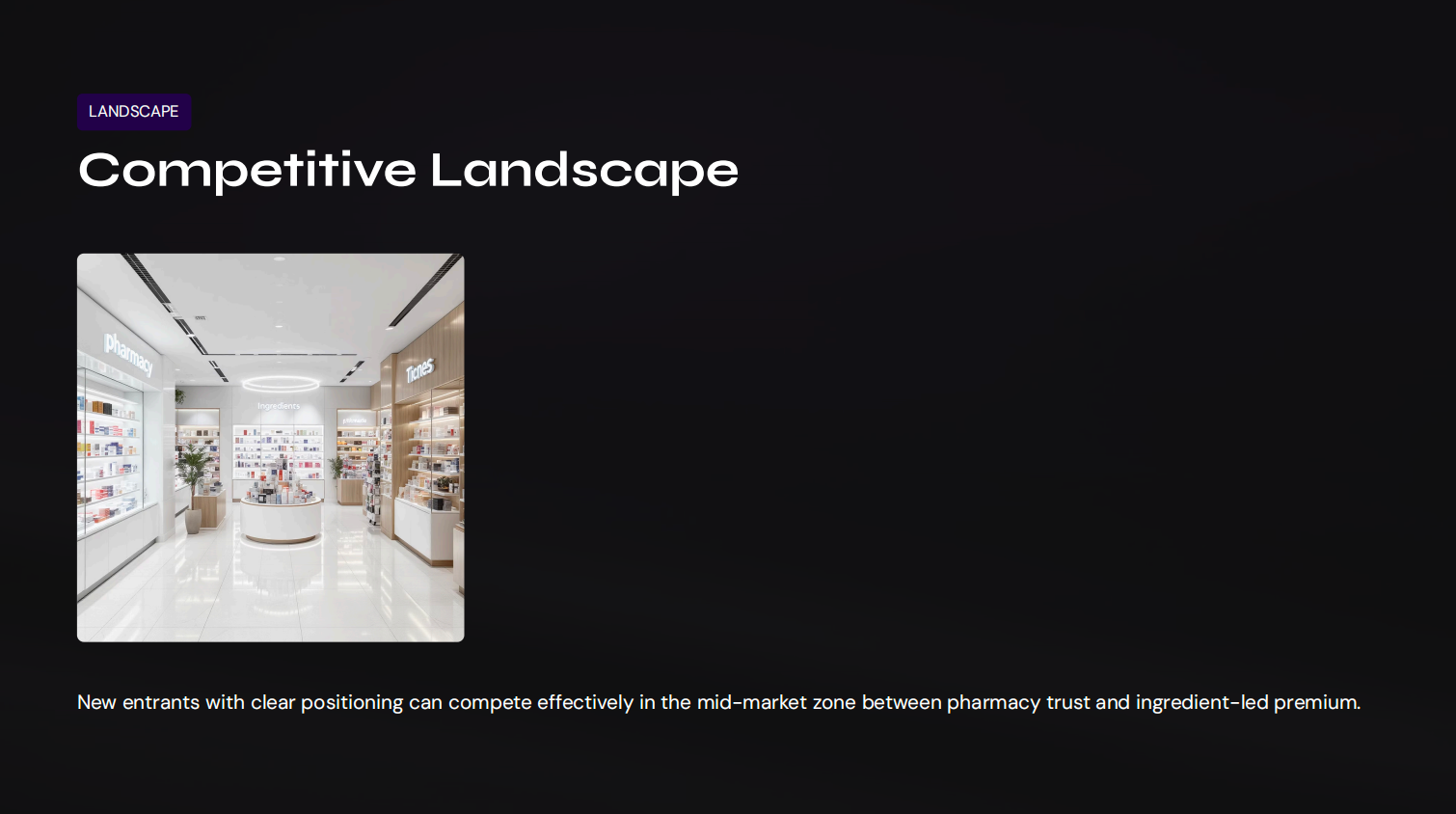
The EU toner market is best understood through a good-better-best structure across multiple modern formats.
Mass
Mass toners usually compete on basic hydration, balancing, or refreshing logic. They work well in large-volume channels but leave less room for differentiation.
Mid
The mid-price band is the strongest commercial opportunity for most new entrants. It allows ingredient storytelling, better packaging, better texture quality, and stronger trust-led positioning without requiring prestige-level brand equity.
Premium
Premium toners often win through more elevated textures, stronger sensoriality, milky or essence formats, and a broader skincare brand universe. They can support better margins, but usually require slower brand-building and stronger positioning discipline.
For most OEM and private label buyers entering the EU toner category, the mid band offers the best balance between accessibility, credibility, and repeat-purchase potential.
Competitive Landscape
Format Trends
The toner category is no longer one format. It now includes multiple commercially meaningful sub-formats.
Hydrating Toner
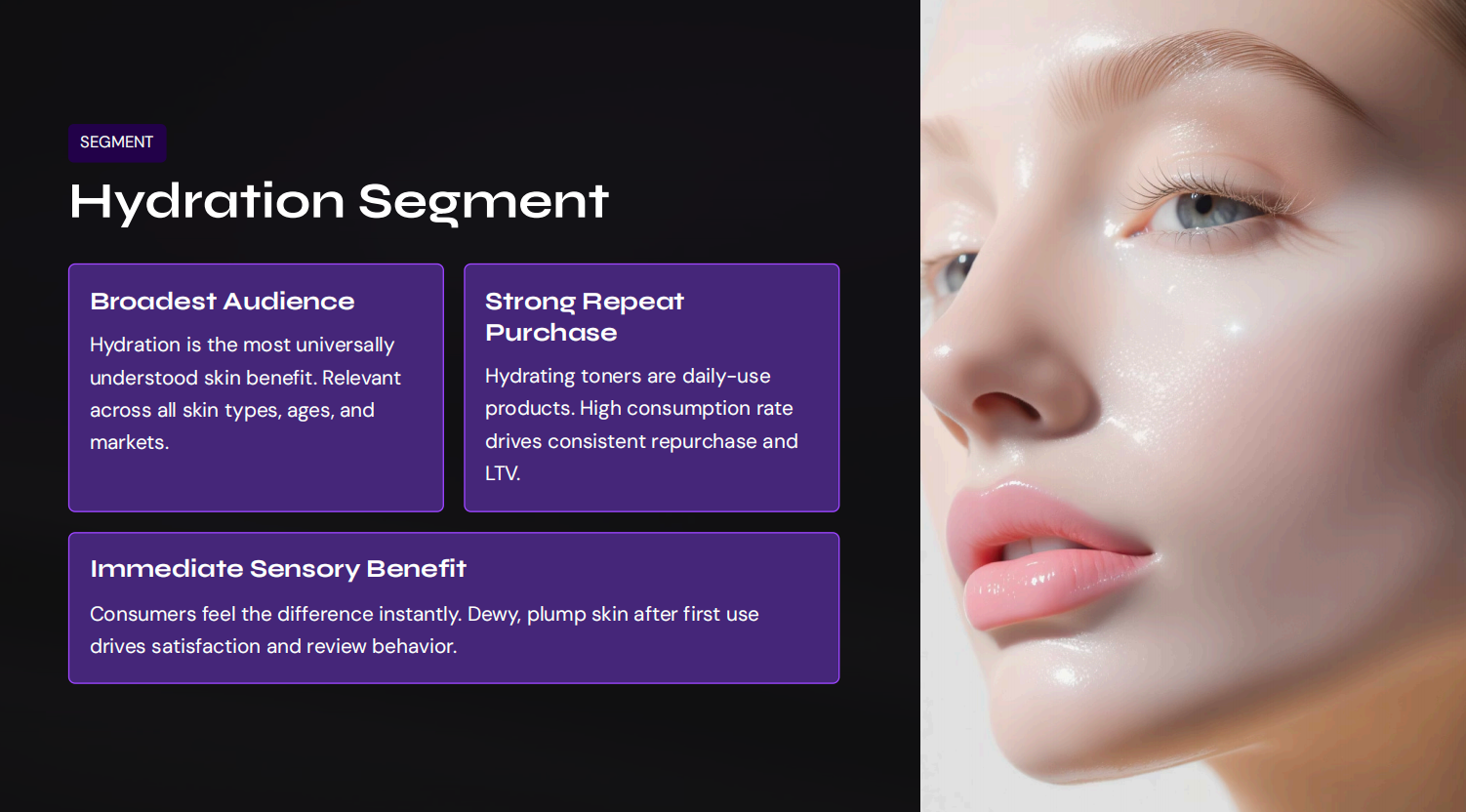
Hydrating toner is the broadest and safest entry format. It appeals to normal, dry, and combination users looking for a lightweight daily hydration step.
Soothing Toner
Soothing toner is especially relevant for sensitive, reactive, and redness-prone consumers. It performs best when positioned around comfort, calmness, and reduced irritation potential.
Essence Toner
Essence toner is a stronger treatment-oriented evolution of toner. It works well for users who want more than water-light hydration, but less than a serum.
Milky Toner
Milky toner is a strong differentiation route for dry skin, comfort-seeking consumers, and brands that want to build a more modern barrier-support story.
Mild Exfoliating Toner
Mild exfoliating toner is commercially attractive, but it works best when clearly positioned for texture, dullness, or combination skin, with disciplined acid language and frequency guidance.
Mist Toner
Mist toner is useful as a convenience, travel, and lifestyle extension format. It works especially well as a secondary SKU or routine add-on.
The strongest market logic is not to choose every format at once. It is to enter through one broad format, then expand selectively into higher-value or more problem-specific ones.
Hydration Segment
Ingredient and Positioning Directions
The EU toner market is strongly influenced by ingredient familiarity and comfort-first positioning.
The most commercially relevant ingredient directions include:
- hyaluronic acid
- glycerin
- panthenol
- centella asiatica
- niacinamide
- allantoin
- ectoin
- betaine
- polyglutamic acid
- mild PHA or low-level AHA systems
The strongest claims language remains cosmetic, simple, and user-friendly. Consumers respond well to concepts such as:
- hydration
- soothing
- barrier support
- skin comfort
- lightweight daily layering
- refreshed and balanced-looking skin
- smoother skin feel
Products become weaker when they try to overclaim or stack too many incompatible trends into one formula.
Product Opportunity and SKU Strategy
The most practical way to enter the EU toner market is not with six similar liquids. It is with a focused, commercially tiered system.
A strong first launch can be built around three core SKUs:
- one hydrating barrier toner
- one soothing sensitive-skin toner
- one mild exfoliating toner
For brands wanting broader expansion, the next layer can include:
- one essence toner
- one milky barrier-support toner
- one mist toner
This type of structure works because each SKU has a clear role:
- the hydrating toner acts as the broad-volume hero
- the soothing toner builds trust and improves conversion among sensitive users
- the mild exfoliating toner supports margin and problem-solution demand
- the essence or milky toner gives the line more premium value and differentiation
- the mist toner creates portability and impulse opportunity
For first launch, it is better to start with one hero, one trust SKU, and one treatment-style SKU than with multiple near-identical toners.
Pricing Strategy
The EU toner market rewards clear price architecture rather than random SKU pricing. Entry-level products can support trial, but the broadest commercial opportunity for most new entrants sits in the mid band.
A practical pricing structure often looks like this:
- traffic SKU for daily hydration
- trust SKU for sensitive or reactive skin
- profit SKU for essence, milky, or gentle exfoliating toner
This structure makes it easier to build bundles, retailer logic, and routine storytelling. It also gives importers, distributors, and e-commerce operators a cleaner range architecture than single-SKU launches.
Channel Strategy
A strong EU toner launch should be channel-aware from the start.
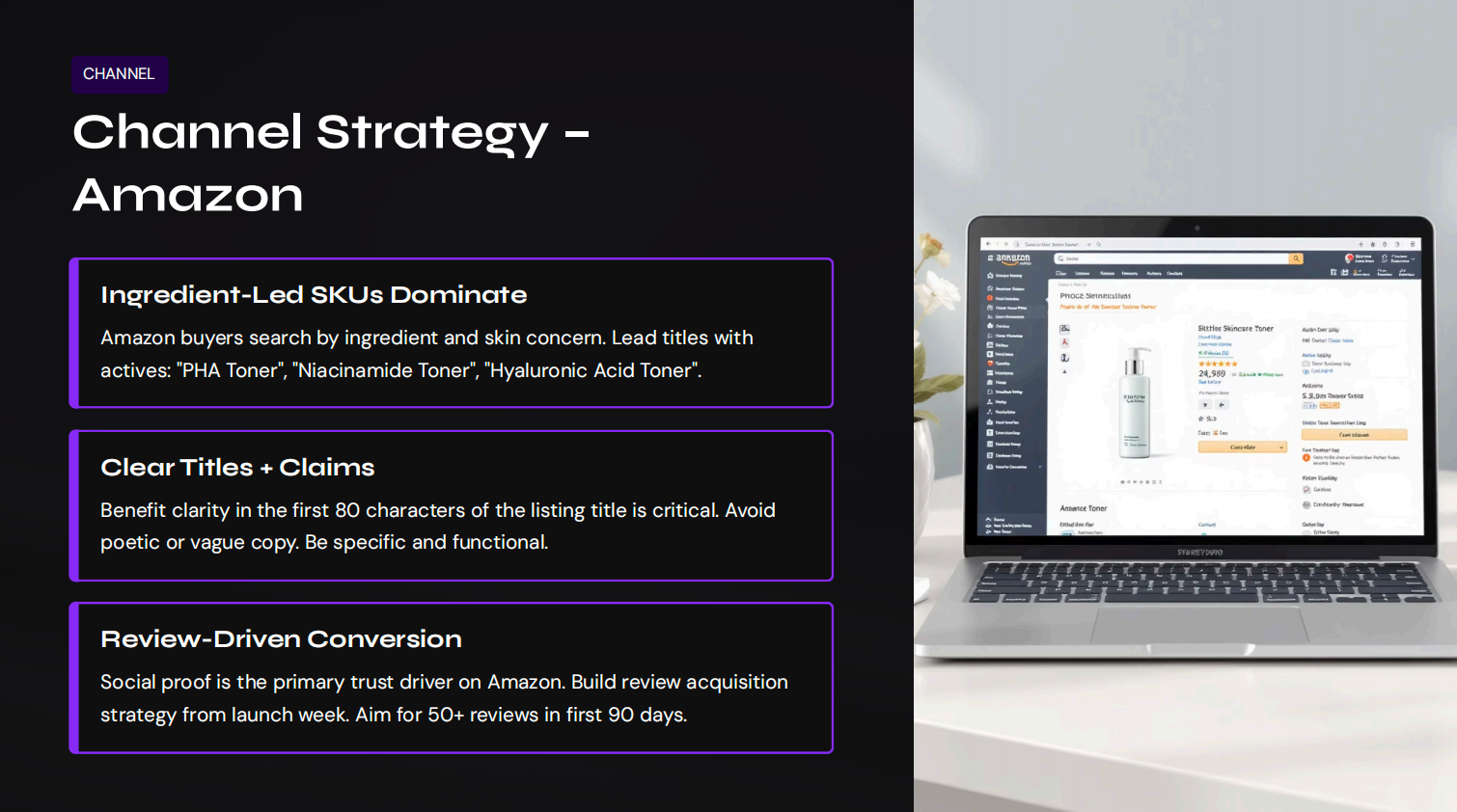
For Amazon, the strongest SKUs are usually hydrating toner, sensitive-skin toner, niacinamide balance toner, and mild exfoliating toner. Success depends on clear use-case titles, visible hero ingredients, texture explanation, routine placement, and disciplined claims wording.
For DTC, higher-value formats often work better. Essence toners, milky toners, recovery toners, mist toners, and toner pads perform well when supported by routine education, ingredient storytelling, bundles, skin-type logic, and multi-buy incentives.
For retail and pharmacy channels, trust-led products work best. Sensitive-skin toner, hydrating barrier toner, and fragrance-free recovery toner are stronger fits when supported by clean pack design, simple benefit hierarchy, and low-risk claims.
The best launch model is not to push every toner into every channel. It is to match each format with the channel where it converts most naturally.
Channel Strategy 3
Amazon
Compliance and Risk Control
The EU is a regulated cosmetics market, and toner launches should be handled with the same discipline as the rest of skincare. A good formula can still fail commercially if claims, labeling, artwork, and documentation are misaligned.
The most important commercial and regulatory risk is claim overreach. Toners must remain clearly within cosmetic territory.
High-risk language includes:
- treats rosacea
- heals eczema
- anti-inflammatory treatment
- medical-grade repair
- cures redness
- acne treatment claims that move into treatment territory
- aggressive peel or resurfacing language for daily toner
Safer language includes:
- hydration
- soothing
- barrier support
- skin comfort
- suitable for sensitive skin
- helps reduce the feeling of tightness
- helps maintain skin hydration
- gently smooths skin texture
- helps skin feel refreshed and balanced
For EU launches, compliance should be built into development from the start. Formula, claims, fragrance strategy, packaging, and artwork should be developed as one aligned system.
Packaging and Presentation
Packaging plays an important role in toner conversion because it helps communicate tolerability, quality, and use-case.
Sensitive-skin and barrier-support toners usually perform best with calm, minimalist, trust-led packaging. Essence and milky toners can support a more premium but still clean visual direction. Mild exfoliating toners should look precise and controlled rather than harsh or trend-chaotic.
Useful packaging directions include:
- minimalist clinical design
- clean typography
- controlled dispensing systems
- recyclable or simplified packaging where practical
- visual hierarchy that makes skin type and toner role obvious
- premium but calm pack architecture for mid-premium lines
The strongest packaging strategy is one that reinforces the formula role instead of competing with it.
Ingredient-Led Buyers
OEM and Launch Execution
For OEM or private label buyers, toner projects work best when the commercial structure is defined before sampling begins.
A stronger brief should include:
- target market
- core toner concept
- preferred format
- target channel
- price tier
- packaging direction
- benchmark products
- fragrance preference
- launch timeline
- claims territory
- MOQ expectations
For first launch, it is usually smarter to reduce packaging complexity before pushing for ultra-low MOQ. Standard stock bottle routes are often faster and more commercially efficient than fully custom packaging for early-stage toner projects.
In toner especially, clarity wins. A sharp brief for one hero SKU is more useful than a vague request covering multiple overlapping toner concepts.
Final Takeaway
The EU facial toner market in 2026 is attractive when toner is treated as a skin-function support step rather than a legacy cleansing extra. The strongest opportunities sit in hydration-first, soothing-first, barrier-support, and sensitive-skin-friendly concepts, with controlled room for mild exfoliation.
The brands most likely to win are not the ones launching the most toner variants. They are the ones building the clearest toner system: one broad daily-use hero, one trust-building comfort SKU, and one carefully controlled problem-solution SKU that expands routine value.
If you are planning an EU facial toner launch, the smartest next step is to define your target format, skin need, channel, and price band first, then build the right SKU structure from there.
Planning an EU facial toner launch?
Share your target market, toner concept, preferred format, price tier, and launch timing — and we can help recommend the right SKU strategy, packaging direction, and OEM path for your brand.
Download the Full Report (PDF)
Tell us your target region, product category, and the decision you’re trying to make. We’ll suggest the closest existing report—or build a tailored version.