


Executive Summary
This report explores the Canada castor oil market in 2026, including demand trends, product formats, pricing structure, target users, packaging direction, compliance boundaries, and OEM launch strategy. It is designed to help brands, distributors, importers, private label buyers, and Amazon sellers turn market insight into a more practical castor oil launch plan.
Canada Castor Oil Market 2026: Trends, Product Formats, and Launch Strategy
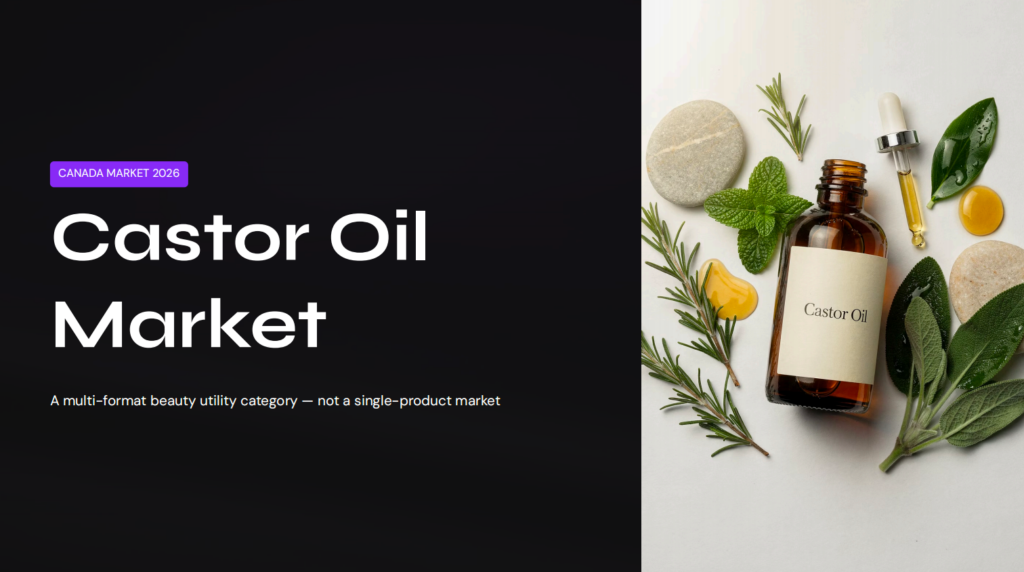
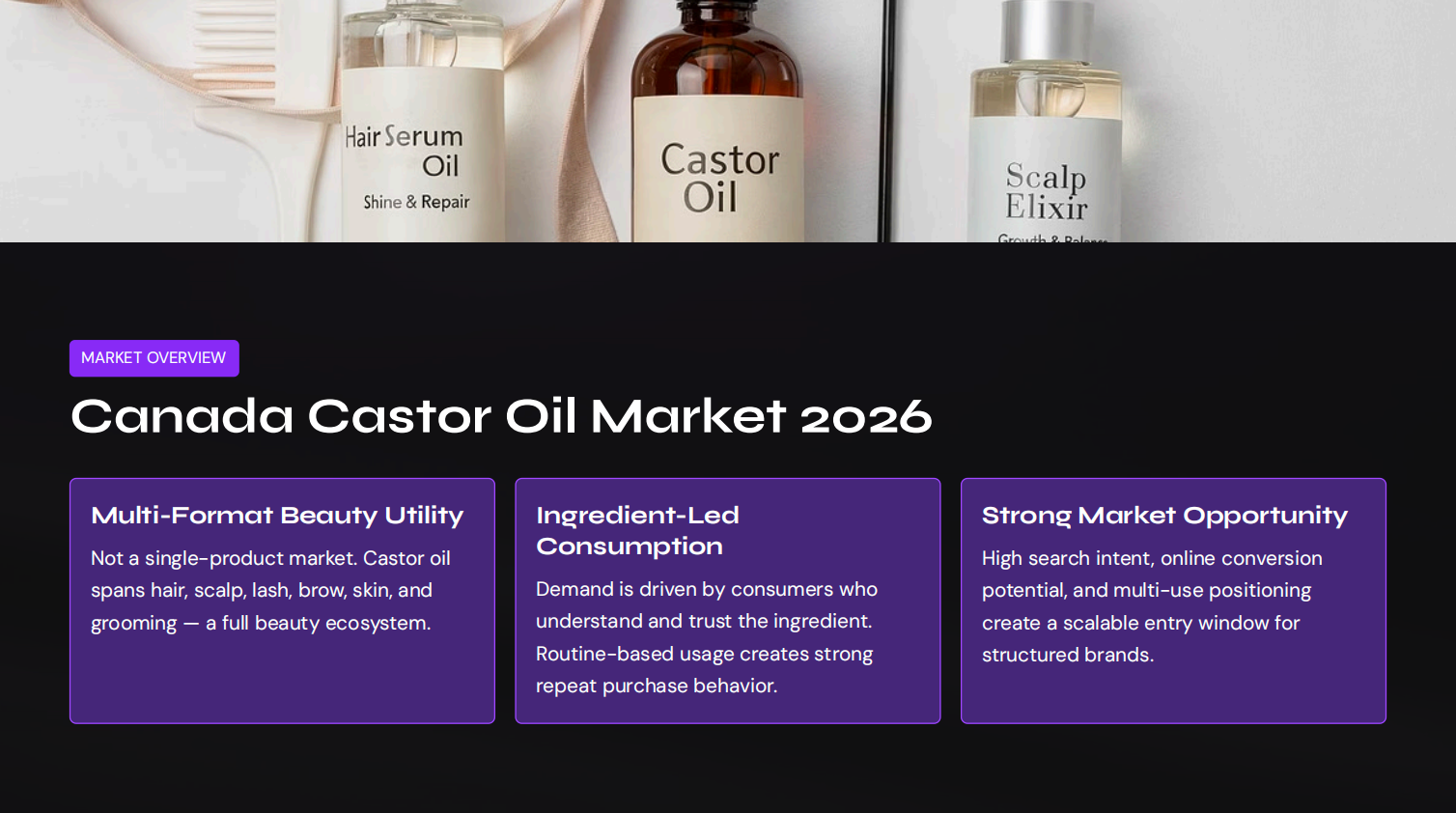
The Canada castor oil market in 2026 is not a single-product opportunity. It is a multi-format beauty utility category shaped by hair and scalp care, lash and brow conditioning, skin nourishment, and male grooming.
For brands, distributors, importers, private label buyers, and Amazon sellers, the real opportunity is not to launch only one generic bottle of pure castor oil. The stronger strategy is to build a structured product ladder that covers trust-building entry, targeted treatment, and precision beauty use.
This report turns castor oil demand in Canada into a practical launch plan. It covers product format trends, target users, demand drivers, pricing logic, packaging direction, channel fit, compliance boundaries, and OEM launch strategy for brands planning a commercially stronger castor oil line.
Executive Summary
Castor oil is commercially attractive in Canada because it sits across several beauty routines at once. Consumers already associate it with hair, scalp, lashes, brows, beard, skin, and nails, which means the education cost is lower than in categories that require a completely new behavioral shift.
The strongest market logic in 2026 is not to rely on one pure oil SKU alone. A more scalable route is to build a 3-SKU system:
- one pure oil hero for trust
- one targeted treatment blend for better conversion and margin
- one precision applicator SKU for higher-intent beauty use
This structure works because it serves three different buyer missions at the same time: broad utility purchase, problem-solution purchase, and precision beauty purchase.
For most new entrants, this is a stronger launch model than trying to open too many extensions at once, such as large family-size oils, beard oils, lash serums, and body oils all in the first phase.
Market Opportunity Overview
Castor oil is not one of the biggest standalone categories in Canada, but that is exactly why it remains commercially interesting. It behaves less like a commodity oil and more like an ingredient-led beauty utility product.
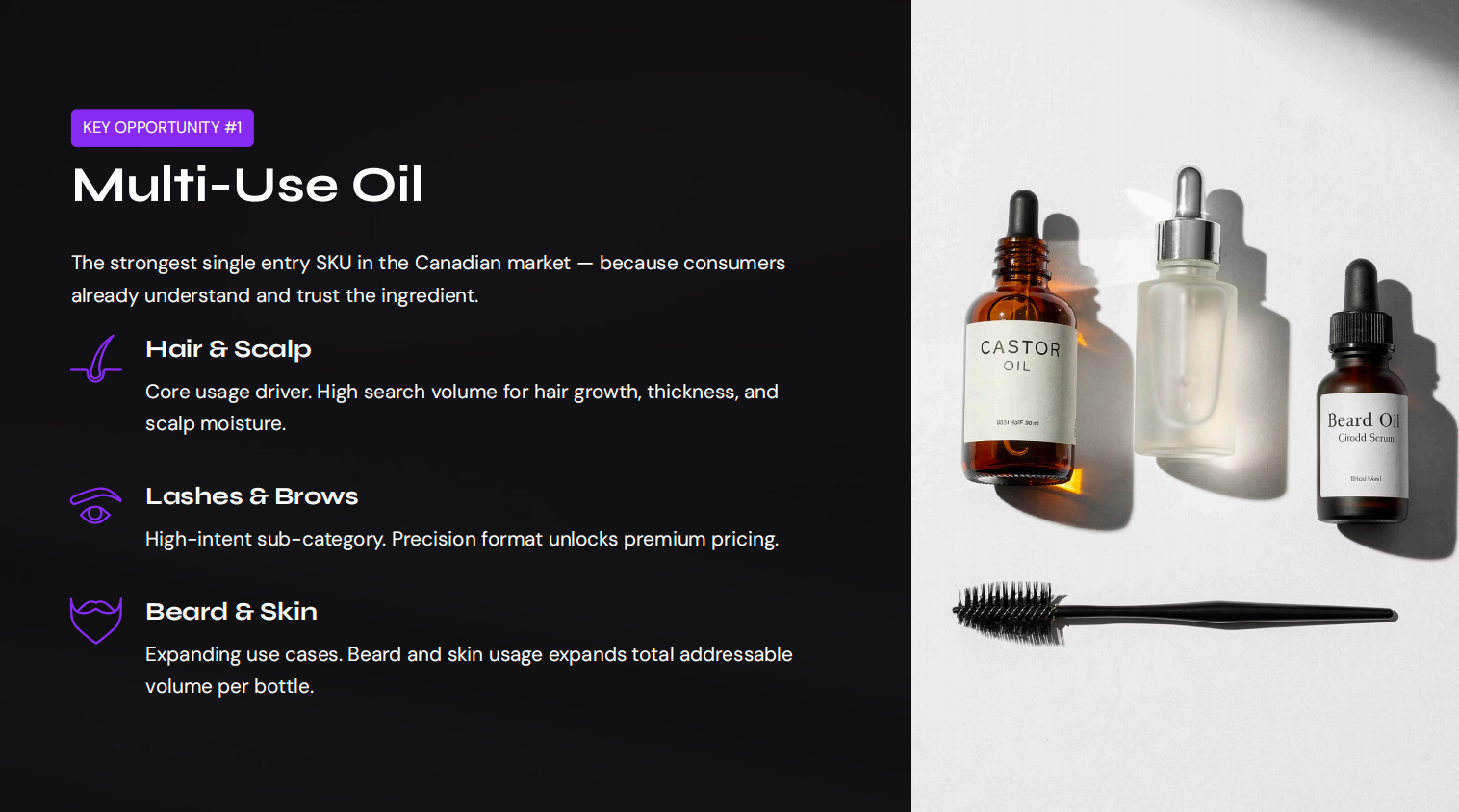
Consumers are not usually buying castor oil for abstract reasons. They are buying it for a visible use case:
- fuller-looking hair
- conditioned scalp
- healthier-looking lashes and brows
- softer beard
- dry skin and cuticle care
- one affordable oil for multiple beauty uses
That is what makes castor oil different from a trend-only category. Its demand is tied to practical routines, recognizable ingredient identity, and easy product understanding.
In Canada, this is especially relevant because consumers often balance performance, price sensitivity, and clean beauty preference. A product that feels natural, multi-use, and useful across seasons has a stronger chance of repeat purchase.
Canada Castor Oil Market 2026
Why Castor Oil Works in Canada
The market works because castor oil sits at the intersection of four strong consumer beliefs.
First, natural ingredients often feel safer and easier to trust.
Second, oils feel more nourishing and ritual-oriented than many synthetic-feeling treatments.
Third, multi-use beauty products feel economical, especially in a market where consumers still care about value.
Fourth, ingredient-based rituals feel more authentic than generic repair claims.
Canada’s climate also supports richer oils more than many people assume. Dry air, indoor heating, scalp discomfort, beard roughness, hair dryness, and seasonal skin dehydration all make oil-based overnight care and targeted conditioning more commercially relevant.
That said, format matters. Open-mouth bulk packaging is harder to position as premium beauty care. Controlled formats such as droppers, scalp-tip bottles, and lash applicators make castor oil feel more intentional and easier to use.
Consumer Demand Signals
The strongest demand signals in the Canada castor oil market come from consumers shopping by visible mission, not by brand loyalty.
The most important buyer groups include:
- hair-thinning and breakage-concern users
- scalp-conditioning users
- lash and brow beauty shoppers
- natural and clean beauty users
- multi-use minimalist consumers
- beard and grooming users
This matters because castor oil is often purchased because of the ingredient itself. That creates room for new entrants if the packaging, product story, and use-case structure feel trustworthy.
The strongest purchase triggers are practical and emotional:
- weak-feeling hair
- thinning edges
- sparse-looking brows
- desire for fuller-looking lashes
- dry-feeling scalp
- rough beard texture
- damaged hair from styling or coloring
- interest in one simple multi-use beauty oil
A castor oil line performs best when these triggers are translated into clear SKU missions rather than broad, vague promises.
Multi-Use Oil
Product Format Trends
The category is no longer just about one bottle of pure oil. Several product formats now have stronger commercial logic.
Pure Oil
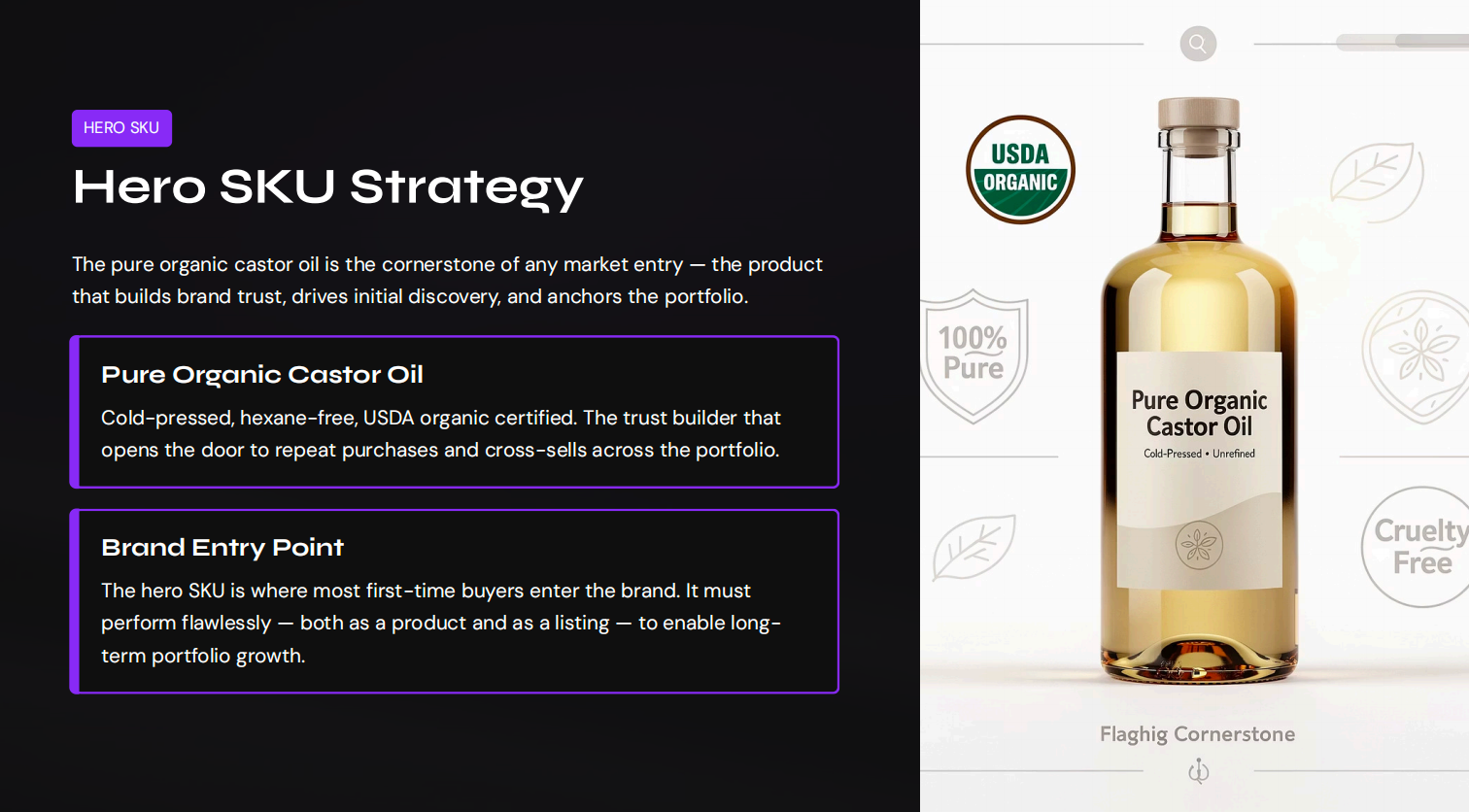
Pure castor oil remains essential as the hero trust-building SKU. It is the easiest format to understand and the best way to attract broad utility users.
Hair and Scalp Blends
These formats create better margin and better product feel. Castor oil alone can feel heavy, sticky, or too basic. Blending with supportive oils helps create a more premium and use-specific treatment.
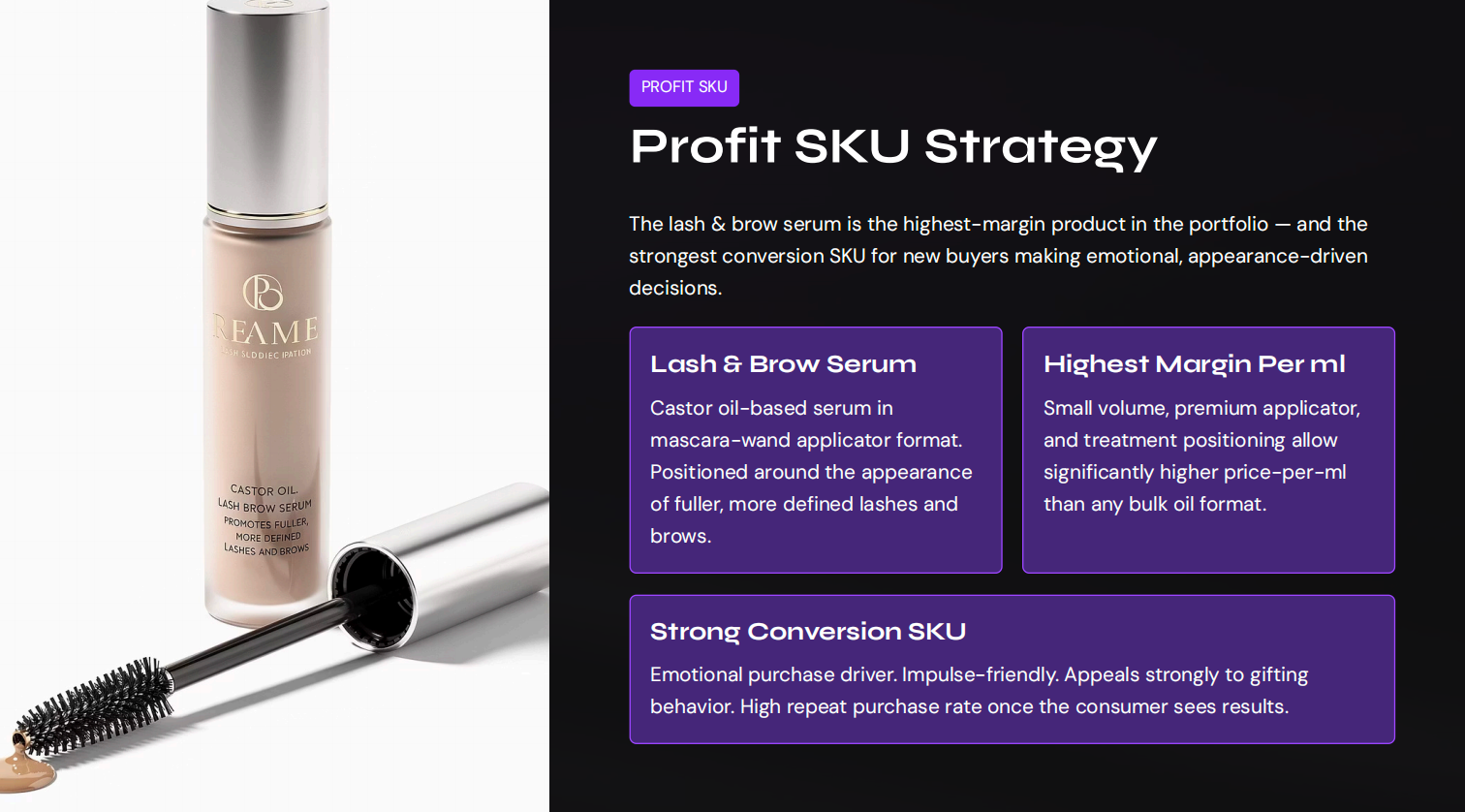
Lash and Brow Serum Formats
These are especially attractive because they feel precise, beauty-specific, and giftable. Applicator choice has a major impact on perceived value.
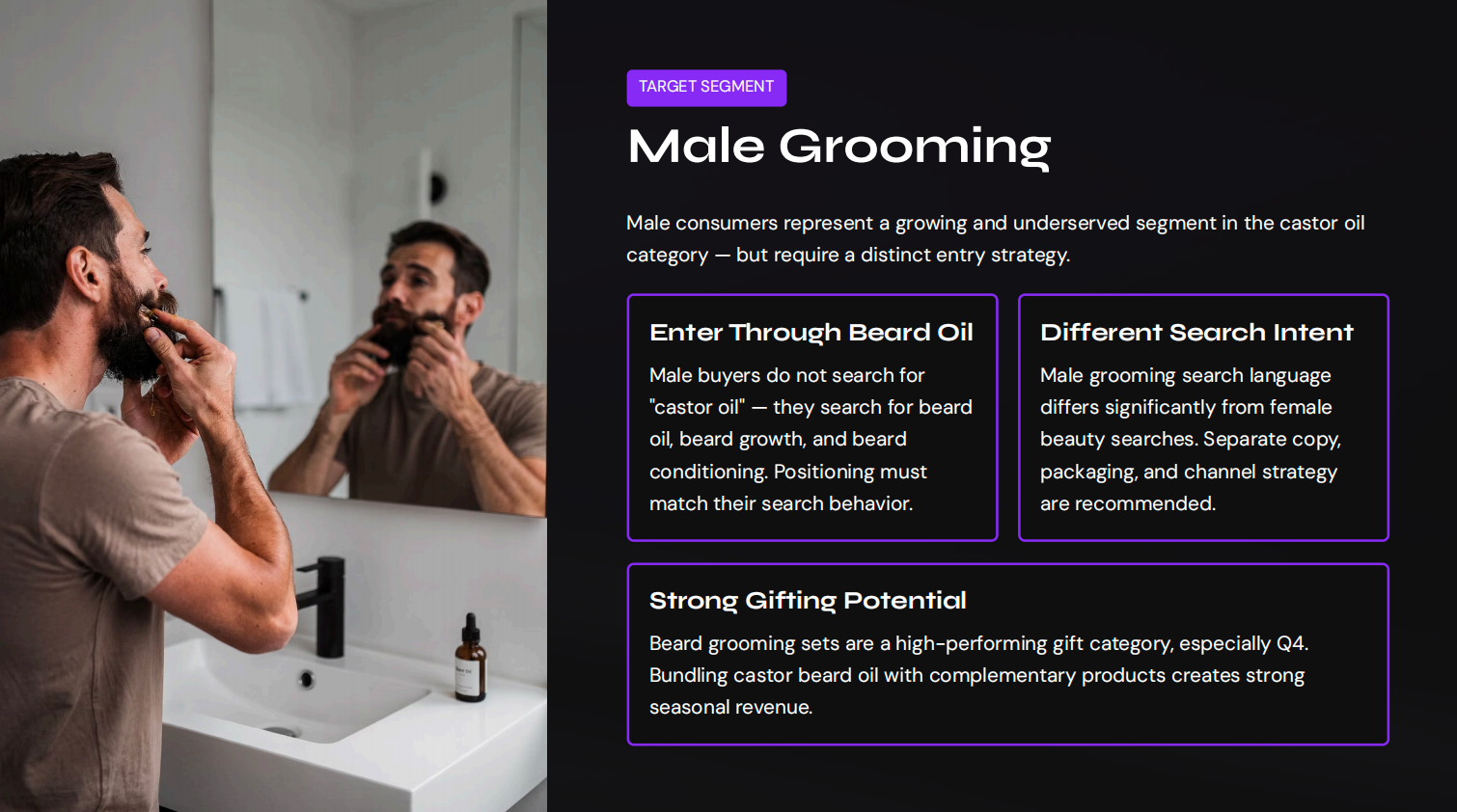
Beard and Grooming Oils
This is a useful expansion format, especially for male grooming and gifting. In most cases, it works better as a second- or third-phase extension than as the first hero SKU.
Multi-Purpose Beauty Oils
These broaden the line beyond hair-only users and are useful for clean beauty and minimalist consumers.
The strongest commercial conclusion is simple: castor oil should be sold as a beauty system, not only as a raw ingredient.
Best Product Architecture for Launch
For most new entrants, the best launch route is a 3-SKU starter system.
1. Hero SKU
100% Pure Organic Cold-Pressed Castor Oil
Best for trust, search capture, and broad multi-use demand.
2. Margin SKU
Castor Oil Hair & Scalp Treatment Blend
Best for problem-solution positioning, better sensory feel, and stronger repeat logic.
3. Conversion SKU
Castor Lash & Brow Conditioning Serum
Best for premium pricing, precision beauty, and high-intent conversion.
This three-part structure works better than trying to launch a scattered line because it creates role clarity:
- trust purchase
- targeted routine purchase
- precision beauty purchase
That makes the collection easier to sell on Amazon, DTC, and selective retail.
Hero SKU Strategy
Pricing Strategy
The Canada castor oil category is not best read through luxury pricing. The strongest zone is usually mid-tier or functional premium.
Consumers are generally willing to pay more for:
- organic positioning
- cold-pressed quality
- hexane-free cues
- amber glass packaging
- precision applicators
- targeted treatment framing
They are less willing to pay premium pricing for a large generic bottle that does not clearly separate itself from cheaper alternatives.
This creates a useful price ladder:
- broad-use pure oil for traffic and trust
- treatment blend for margin
- precision lash and brow serum for premium per-ml pricing
That is a stronger pricing system than trying to force the same margin structure across every SKU.
Packaging Strategy
Packaging matters more in castor oil than many brands assume. It directly affects both conversion and perceived quality.
A good castor oil package should do three things:
- communicate the use case quickly
- make application easier
- reduce leakage and mess
Recommended packaging directions:
- pure oil: amber glass dropper or reducer insert
- scalp treatment: scalp-tip or pointed nozzle bottle
- lash and brow serum: mascara wand plus fine brush or dual applicator
- beard oil: dropper bottle
- multi-purpose oil: dropper or treatment pump depending on size
Visually, the strongest directions are usually:
- natural and organic
- clinical and problem-solution
- minimalist premium
In Amazon-style environments, the pack should immediately show use-case clarity, size, and applicator relevance.
Profit SKU Strategy
Channel Strategy
A Canada castor oil launch should be channel-aware from the start.
Amazon
Amazon is often the strongest first channel because castor oil is already highly search-driven. Buyers often arrive with a clear mission, such as hair, lashes, brows, beard, or multi-use conditioning.
The strongest Amazon products usually win through:
- clear use-case titles
- visible applicator logic
- trust-building purity cues
- better image sequencing
- routine-led bundle logic
DTC
DTC is stronger for brands that want to educate more deeply and build ritual logic around the category.
It works especially well for:
- organic positioning
- scalp-care storytelling
- premium lash and brow formats
- routine kits and bundles
- concern-based navigation
Retail
Retail can work, but the line needs tighter SKU logic. Shelf clarity matters more than category breadth.
The most retail-friendly first SKUs are:
- pure organic castor oil
- lash and brow conditioning serum
- one scalp treatment blend
- one beard or grooming extension
Compliance and Claim Boundaries
One of the biggest commercial risks in castor oil is claim overreach. The category is attractive because many consumers believe castor oil supports growth-related results, but that is also where regulatory and advertising risk becomes much higher.
The safer and more scalable route is to use cosmetic-safe language such as:
- helps nourish hair and scalp
- helps condition lashes and brows
- helps soften beard hair
- helps improve softness and manageability
- supports fuller-looking hair
- helps improve the appearance of healthy-looking brows and lashes
- multi-purpose beauty oil
It is better to avoid:
- regrows hair
- stimulates follicles
- treats hair loss
- cures thinning
- grows eyelashes
- eyebrow regrowth
- baldness treatment
- therapeutic restoration
The most successful castor oil brands usually sound more credible, not more aggressive.
Male Grooming
OEM Launch Logic
For OEM and private label buyers, the strongest launch result usually comes from sending a sharper brief at the start.
A stronger RFQ should include:
- target channel
- target use case
- target price band
- preferred bottle size
- packaging direction
- whether organic certification is needed
- whether fragrance-free is required
- target launch window
- benchmark products
- whether the hero SKU is pure or blended
The clearer these decisions are upfront, the faster the project moves and the easier it becomes to quote accurately, reduce revision cycles, and align packaging with formula performance.
For Canada, buyers should also treat label review, compliant claims, ingredient positioning, and notification requirements as part of the launch plan rather than as a late-stage correction.
What Brands Should Do Next
If you are planning a Canada castor oil launch in 2026, the smartest next step is not to ask for one generic oil sample. It is to define the role of each SKU first.
Start with a focused structure:
- one trust-building pure oil
- one treatment blend
- one precision beauty format
Then align those roles with:
- channel fit
- packaging type
- price ladder
- claims language
- target user mission
Castor oil performs best when the line is built around portfolio roles, not random product ideas.
Download the Full Report (PDF)
Tell us your target region, product category, and the decision you’re trying to make. We’ll suggest the closest existing report—or build a tailored version.