


Executive Summary
This report explores the UK hair oil market in 2026, including consumer demand, anti-frizz and repair trends, scalp care opportunities, price structure, product architecture, channel fit, compliance priorities, and OEM launch planning. It is designed to help brands, distributors, Amazon sellers, and product development teams turn market insight into a more practical hair oil launch strategy.
UK Hair Oil Market 2026: Anti-Frizz, Repair, Scalp Care, and Product Launch Strategy
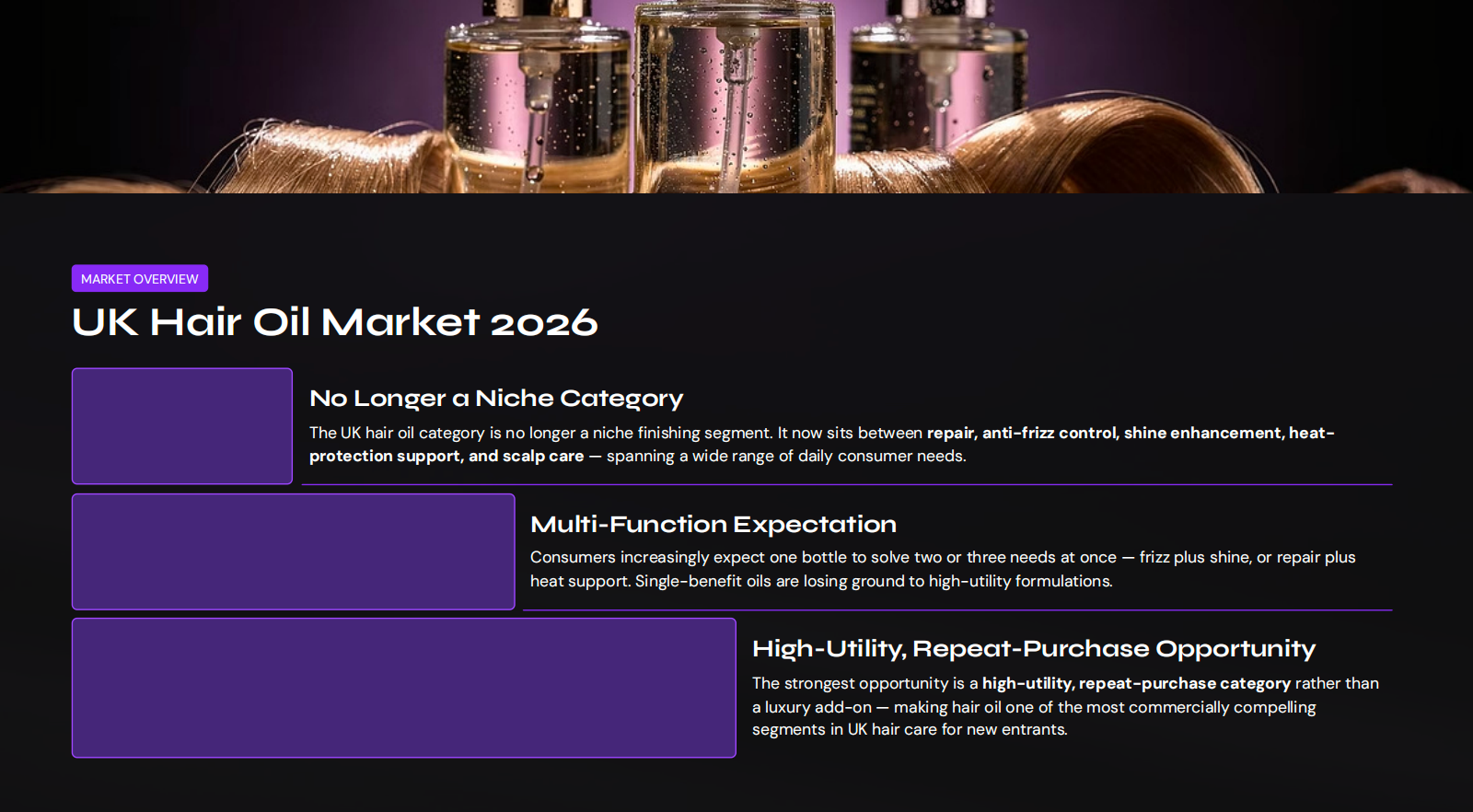
The UK hair oil market in 2026 is no longer a niche category built around one-ingredient stories. It is becoming a practical, multi-function segment shaped by repair, anti-frizz control, shine enhancement, styling support, and scalp care.
For brands, distributors, importers, Amazon sellers, and product development teams, the opportunity is not simply to launch another generic oil. The stronger commercial route is to build a focused product architecture with clear jobs-to-be-done: one repair and styling hero, one lightweight daily anti-frizz oil, one scalp-focused treatment, and one higher-margin premium or gifting-led SKU.
This report translates category signals into launch logic. It shows how UK consumers are buying hair oils, which claim territories are most commercially relevant, where the price structure sits, which product formats work best, and how new entrants can build a stronger SKU plan for 2026.
Executive Summary
The UK hair oil category is moving from optional add-on to routine support product. Consumers are no longer buying oils only for occasional shine or luxury finishing. They increasingly expect one product to solve visible daily problems such as frizz, dryness, dullness, styling stress, heat damage, or scalp discomfort.
This changes how brands should approach the market. Success is no longer based on naming one trendy oil ingredient and placing it in a premium-looking bottle. The winning products are the ones that match clear usage occasions, deliver a lightweight and cosmetically elegant feel, and communicate direct consumer benefits in simple language.
For most new entrants, the strongest path is not a large portfolio. It is a tight 3-SKU structure built around a broad-conversion hero, a daily-use volume driver, and one specialist product that gives the line differentiation.
Market Opportunity Overview
Hair oil in the UK now sits between styling and treatment. It is not just a botanical care product, and it is not only a salon finishing item. It has become a high-utility category used for smoothing, glossing, protecting, softening, and prepping hair before or after styling.
This matters because the category is purchased around visible performance needs. Consumers are not only shopping for “oil.” They are shopping for smoother hair, softer lengths, less frizz, more shine, or better scalp comfort.
That makes the category especially attractive for brands that can translate functionality into clear product roles. The strongest launches are built around real hair moments: before styling, after styling, on dry ends, on damaged hair, during humid weather, or before wash day for scalp care.
UK Hair Oil Market 2026
What Is Driving Demand in 2026
Several practical needs are shaping the market.
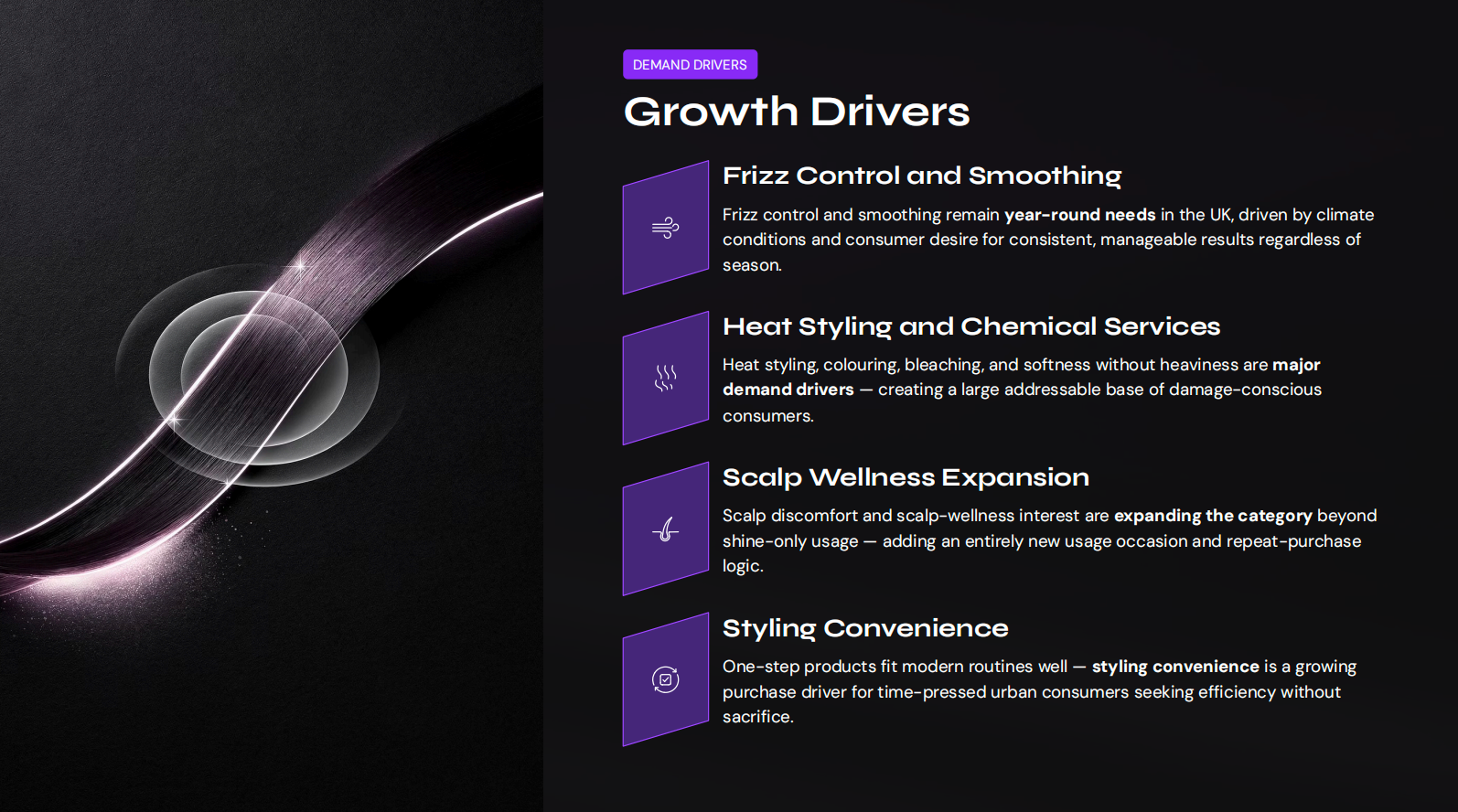
The first is frizz control. UK weather conditions make anti-frizz and smoothing products relevant across the year, not only seasonally.
The second is repair and styling damage. Regular blow-drying, hot tools, coloring, and bleaching continue to support demand for products positioned around smoothness, softness, heat styling support, and damage care.
The third is shine and finish. Many consumers want an immediate visible payoff, especially in categories where before-and-after performance is easy to show.
The fourth is scalp interest. More consumers now look for scalp comfort, dryness relief, or growth-support-adjacent positioning, but they want modern textures and credible routines rather than old-fashioned heavy oils.
The fifth is convenience. Products that combine two or three benefits in one bottle are more commercially attractive than single-benefit oils without a strong price advantage.
Consumer Segments That Matter
A useful way to understand the category is through usage groups.
The first major group is dry and frizz-prone users. They want softness, smoothing, shine, and weather resistance. This group responds strongly to language such as non-greasy, anti-frizz, glossy, silky, and smoothing.
The second is damaged, bleached, or color-treated hair users. They are drawn to repair-coded language such as bond, strength, breakage reduction, softness, split-end appearance improvement, and heat support.
The third is curly, coily, and textured hair users. They are looking for moisture retention, curl support, frizz reduction, and compatibility with layered routines.
The fourth is scalp-care users. They are interested in soothing rituals, scalp comfort, and healthier-looking hair from the root, but they need clear education and realistic benefit positioning.
The fifth is fine-hair daily users. This is one of the most commercially important audiences because they actively want shine and smoothing, but they are highly sensitive to heaviness and visible greasiness.
A strong line should not assume all hair oil consumers want the same texture or the same use pattern.
Growth Drivers
Texture and Format Expectations
Texture is one of the biggest make-or-break factors in hair oil performance.
The broadest audience usually prefers lightweight, serum-like oils that spread quickly and disappear cleanly. Medium-slip oils work well for damaged and anti-frizz positioning. Richer textures are more suitable for pre-wash, scalp rituals, and textured-hair applications.
The category rewards formulas that feel modern, not old-fashioned. Consumers want gloss without residue, softness without limpness, and performance without looking oily.
Format also matters. Pack type should reflect use occasion:
- pump bottles for daily leave-in or styling oils
- droppers for scalp or treatment-led oils
- luxe dispensers for premium shine or gifting oils
- mini sizes for travel, bundles, trial, and checkout add-ons
The strongest launches do not use one bottle style for the whole line. They use packaging to communicate function immediately.
Best Product Opportunity Areas
The most commercially attractive product opportunities in the UK hair oil market are not random. They cluster around a few high-utility segments.
Repair and styling hybrid oils
These products combine damage care, anti-frizz support, softness, and heat-styling compatibility. They have broad relevance across Amazon, salons, and DTC.
Lightweight daily anti-frizz oils
This is one of the widest-reach opportunities in the category. It suits everyday users dealing with humidity, blow-drying, flyaways, and shine needs without wanting a heavy treatment feel.
Scalp-first treatment oils
This is a strong opportunity area, but it works best when the formula feels cleaner and lighter than traditional scalp oils and the claims remain cosmetic and support-led.
Finishing and gloss oils
These products can work well when positioned around visible shine, styling finish, and smoother-looking hair rather than deep repair.
Curl-supporting oil serums
This is a more targeted but relevant niche, especially when the formula layers well with creams and leave-ins rather than feeling too rich.
Pricing Structure and Commercial Positioning
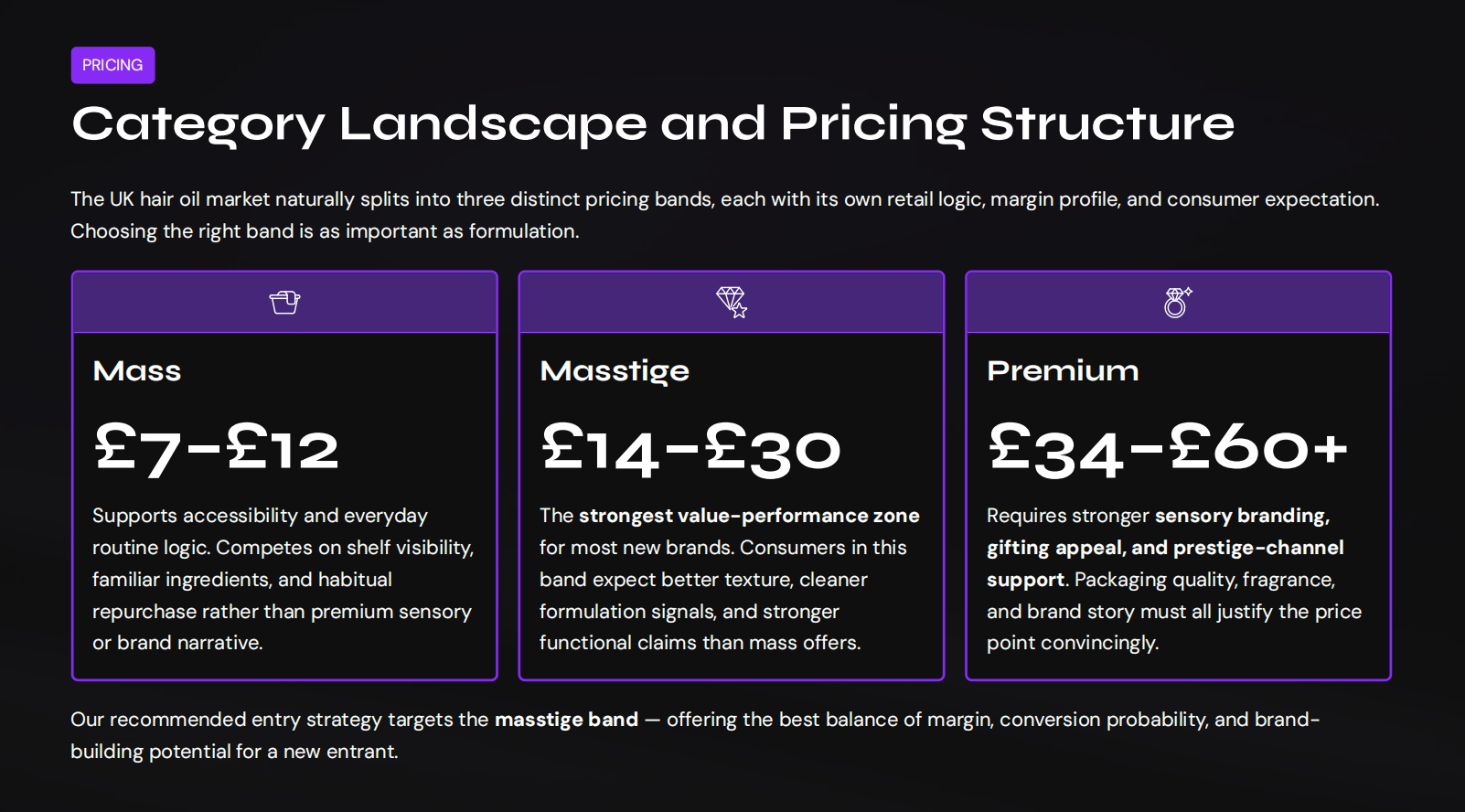
The UK hair oil market can be understood through three practical tiers.
Mass products usually sit around entry pricing and win on accessibility, broad claims, and daily routine logic.
Masstige is the most commercially attractive space for many new entrants. It offers room for better packaging, stronger formula language, and stronger margin without needing full prestige brand equity.
Premium products win when they combine sensory appeal, elegant packaging, and gifting or prestige channel relevance.
For many new brands, the strongest pricing route is:
- entry-level anti-frizz or daily shine oil in the lower masstige range
- repair hero in the mid-masstige range
- scalp or premium sensory product at a slightly higher specialist price
- mini size for acquisition and bundling
This creates a cleaner price ladder than trying to compete only on mass discounting or prestige image.
Category Landscape and Pricing Structure
Recommended SKU Architecture
For most new entrants, the most balanced first portfolio is a focused 3-SKU core with one mini support format.
Hero SKU
Bond Repair Styling Oil
This should be the broadest-reach product in the line, combining repair, shine, and frizz control with a lightweight modern feel.
Access SKU
Lightweight Daily Anti-Frizz Oil
This should be the easiest product to understand and repurchase, especially for fine to medium hair users who want daily smoothing without heaviness.
Specialist SKU
Scalp Comfort Pre-Wash Oil
This gives the line a trend-led differentiation point and supports content, education, and ritual-based positioning.
Conversion Mini
Repair Oil Mini
This works as a trial tool, travel format, bundle add-on, and lower-risk entry point for first-time buyers.
This structure creates one hero, one volume driver, one specialist story, and one acquisition tool.
Channel Strategy
A UK hair oil launch should be built around channel fit from the beginning.
For mainstream retail, the best products are broad-appeal oils with simple benefit communication, accessible pricing, and easy everyday logic. Lightweight anti-frizz oils and styling support oils perform well here.
For Amazon UK, repair-coded hero oils, comparison-driven anti-frizz products, and bundles have strong commercial potential. Packaging reliability and leak resistance matter heavily.
For TikTok Shop, visual gloss payoff, scalp rituals, and before-and-after storytelling are especially effective. Products with stronger visible transformation content tend to perform better.
For DTC, premium narrative, bundle strategy, scalp rituals, and texture education can all work well. Discovery and mini formats are also useful here.
For salon retail, repair authority, finish quality, and professional-feeling performance matter more than trend language alone.
The strongest launches match product role to channel rather than forcing every SKU into every channel at once.
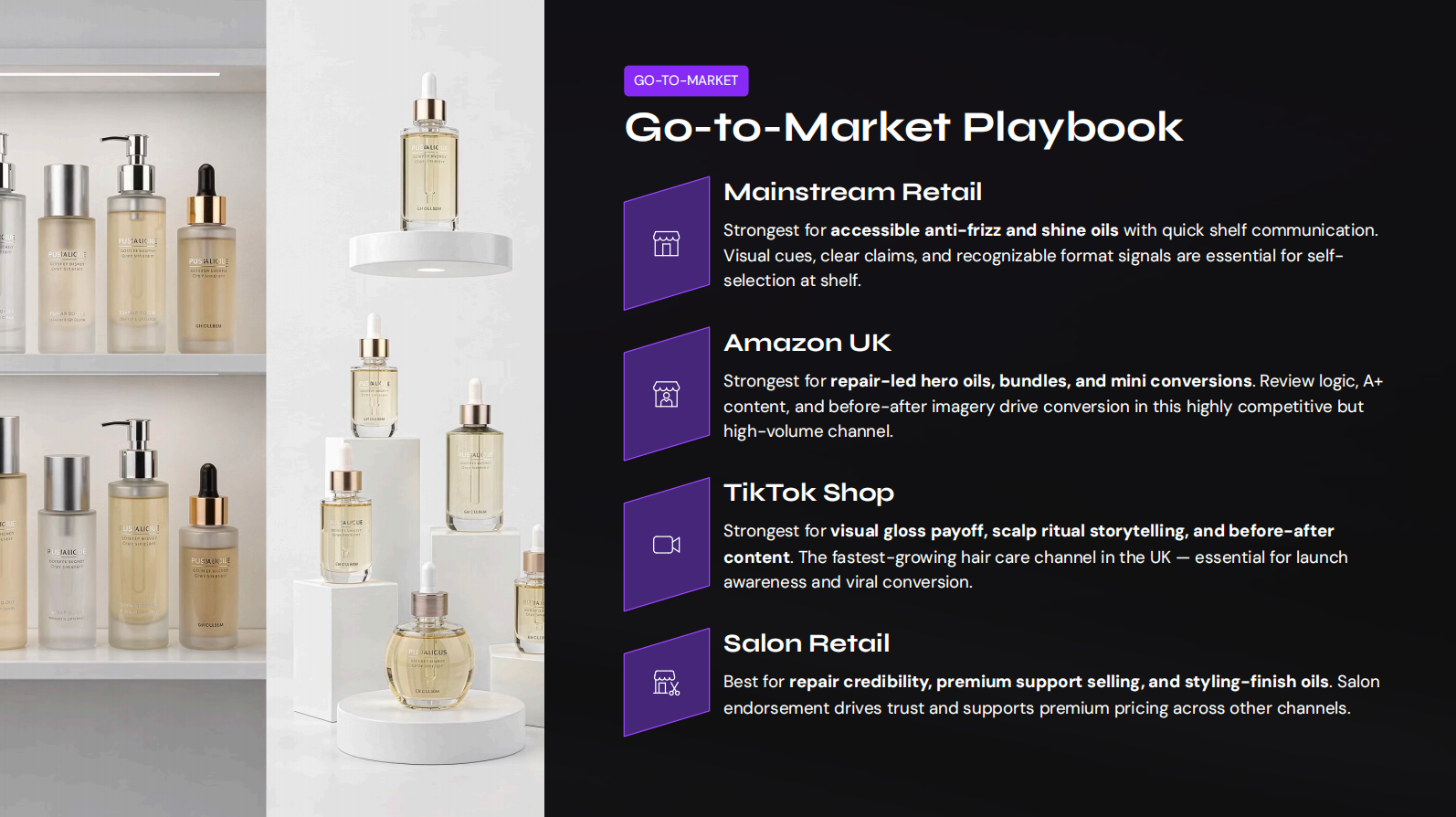
Go-to-Market Playbook
Competitive White Space
The market is active, but there is still room for new entrants.
The clearest white spaces include:
- fine-hair-safe anti-frizz oils that truly feel lightweight
- repair oils that deliver credibility below full prestige pricing
- scalp oils with a cleaner, more modern cosmetic feel
- premium oils with restrained fragrance and better gifting logic
- concise, performance-first product architecture rather than too many overlapping oils
New entrants are more likely to win by simplifying better than incumbents, not by launching more SKUs than them.
Compliance and Quality Priorities
Hair oils may look simple, but they still require disciplined compliance and packaging control.
Key areas include:
- correct cosmetic positioning
- INCI ingredient listing
- market-appropriate responsible person arrangements
- supportable claims language
- fragrance allergen review where relevant
- packaging compatibility and stability
- oxidation resistance
- closure performance and leakage control
- batch traceability and label durability
This is especially important for scalp-positioned products. Interest in hair growth and scalp wellness is strong, but careless language can create avoidable regulatory and credibility problems.
The stronger commercial route is to position scalp oils around comfort, dryness, barrier support, and healthier-feeling scalp routines unless stronger substantiation is available.
OEM and ODM Launch Planning
For OEM and ODM buyers, the biggest speed advantage comes from a clearer development brief.
A stronger brief should define:
- target market
- retail price target
- texture preference
- top benefit claims
- intended launch channel
- preferred format
- hero ingredients
- pack style
- testing expectations
- timeline
The better these inputs are defined upfront, the easier it becomes to reduce sample rounds, avoid wrong texture development, and build a more commercially realistic SKU plan.
For hair oil launches, texture validation should come before packaging decoration decisions. If the formula does not deliver the right feel, no amount of branding will rescue repeat purchase.
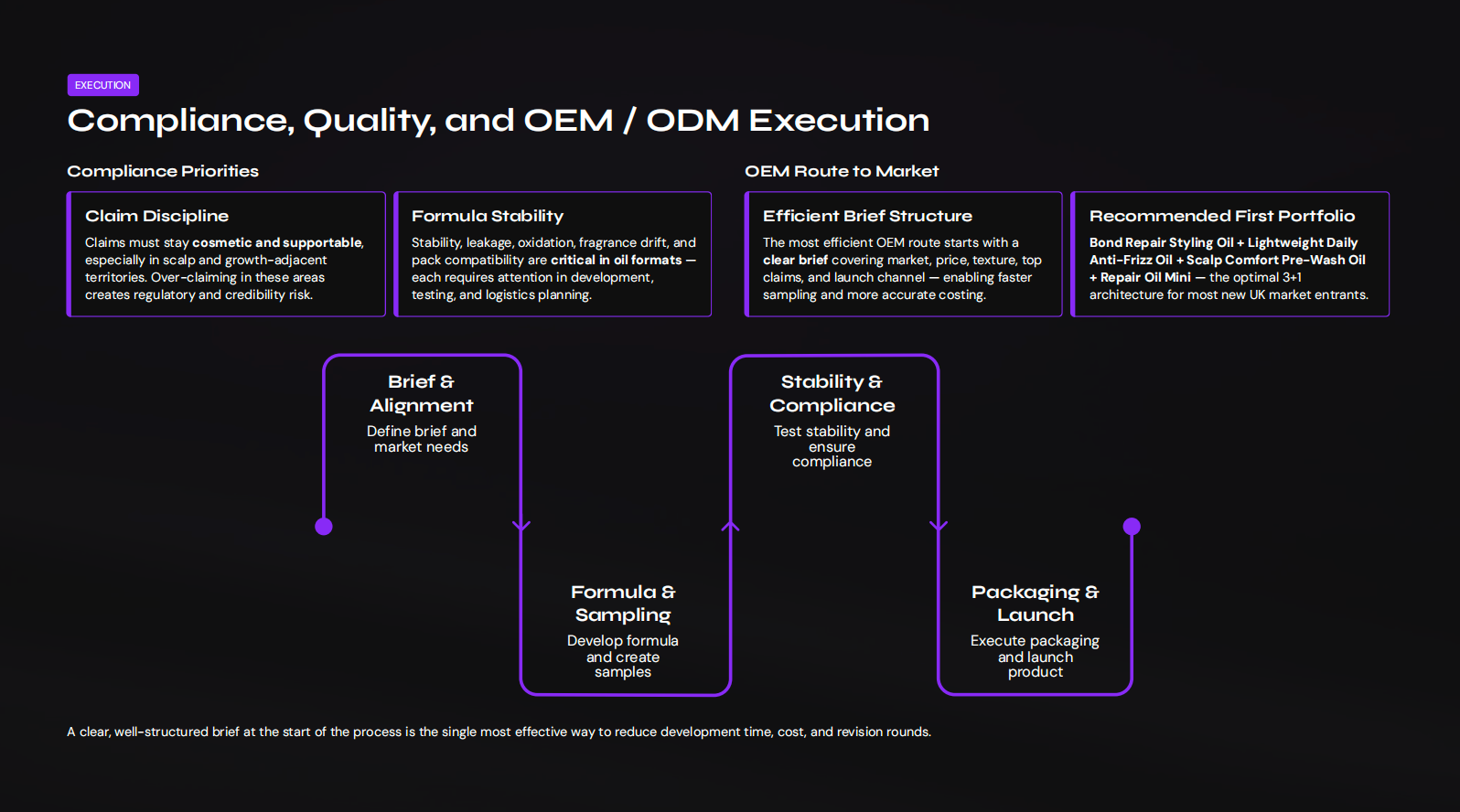
Compliance, Quality, and OEM / ODM Execution
What Brands Should Do Next
If you are planning a UK hair oil launch in 2026, the smartest next move is not to build a large range immediately.
Start by doing four things:
- choose one core claim territory
- decide which user segment you want to win first
- validate the target texture before finalizing packaging
- launch where channel and formula fit are strongest
A smaller but clearer launch architecture is more commercially effective than a broad, unfocused assortment.
Final Takeaway
The UK hair oil market in 2026 is attractive because it is built on visible, repeatable consumer needs: frizz control, shine, repair, softness, scalp comfort, and styling support.
The brands most likely to win are not the ones with the most ingredients or the most SKUs. They are the ones that create the clearest product system: a hero repair oil, a lightweight daily oil, a specialist scalp product, and a pricing structure that matches real channel demand.
If your team is evaluating a UK hair oil launch, the strongest next step is to align product role, claim territory, texture brief, pack format, and channel strategy first, then move into sampling with a much more usable commercial framework.
Download the Full Report (PDF)
Tell us your target region, product category, and the decision you’re trying to make. We’ll suggest the closest existing report—or build a tailored version.