


Executive Summary
This report explores the European hair oil market in 2026, including anti-frizz demand, scalp-care growth, product positioning, pricing logic, packaging formats, channel fit, compliance priorities, and private label launch strategy. It is designed to help beauty brands, importers, distributors, and Amazon sellers turn market insight into a more practical hair oil launch plan.
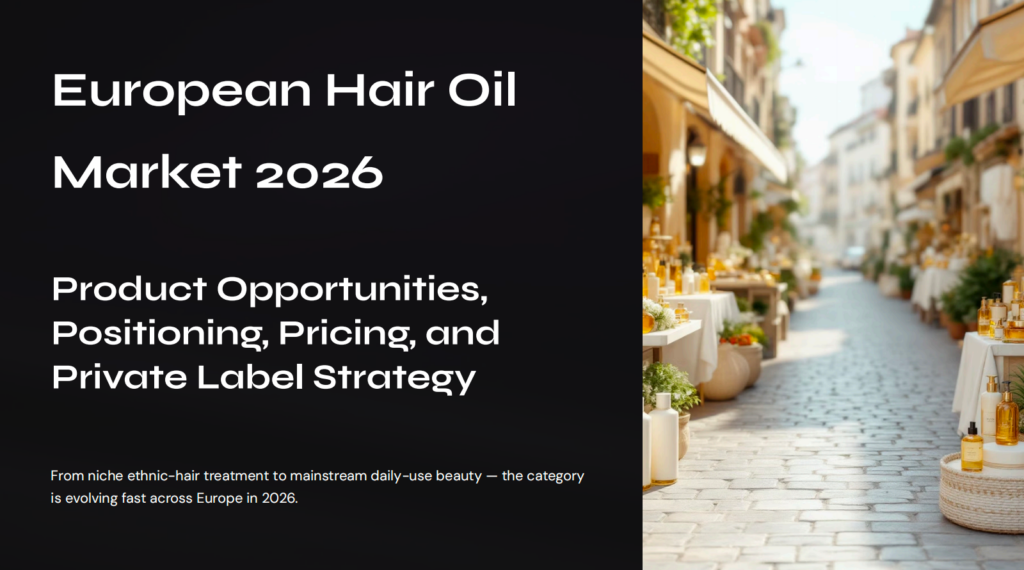
European Hair Oil Market 2026: Product Opportunities, Positioning, Pricing, and Private Label Strategy
The European hair oil market in 2026 is no longer a niche category limited to traditional oil treatments or a narrow ethnic-hair segment. It is now positioned at the intersection of anti-frizz styling, leave-in care, scalp comfort, shine enhancement, and premium daily-use beauty routines.
For beauty brands, importers, distributors, and private label buyers, this creates a more structured opportunity than in previous years. Hair oil is no longer just sold as a generic nourishing product. The strongest products are clearly positioned around a visible, everyday result: smoother ends, polished shine, softer feel, lightweight anti-frizz control, scalp comfort, or damage-support for colour-treated and heat-styled hair.
This report turns category demand into launch logic. It covers market positioning, consumer demand signals, price tiers, packaging choices, channel fit, compliance priorities, and private label execution paths for brands planning to enter or expand in the European hair oil market.
Executive Summary
Hair oil in Europe is becoming a more commercially important treatment category because it combines strong margins, premium visual cues, smaller pack sizes, and clear storytelling opportunities. At the same time, the category is evolving away from heavy, greasy, one-size-fits-all formulas.
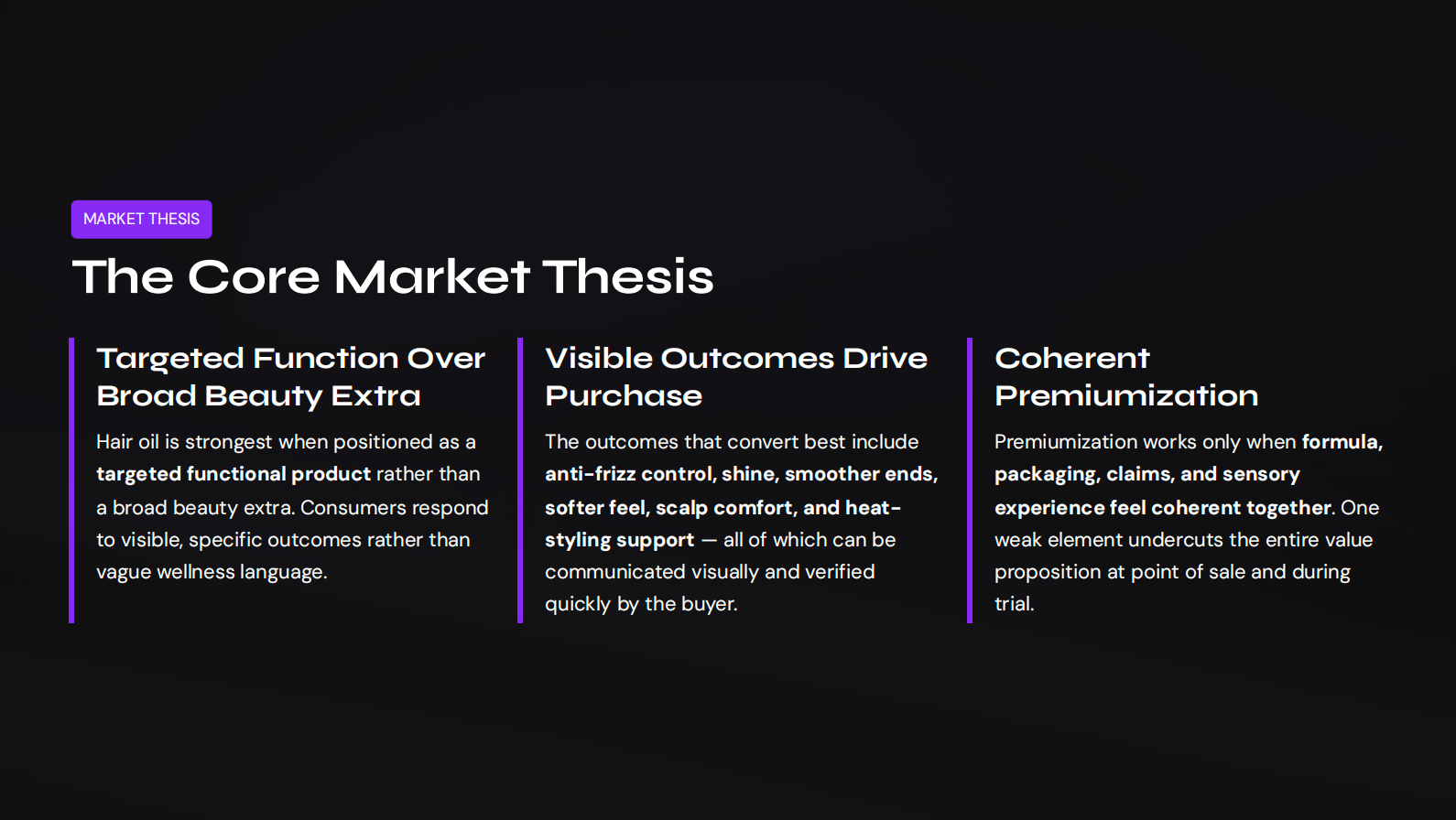
In 2026, the strongest demand is centered on lightweight, multi-benefit hair oils that fit daily use. European consumers increasingly want oils that help control frizz, soften dry ends, improve shine, and support scalp comfort without weighing hair down. Products positioned around specific use cases perform more strongly than broad “miracle oil” concepts.
For most new entrants, the best strategy is not to launch a large oil line immediately. A sharper commercial route is to launch one clear hero SKU and one problem-solution support SKU, then expand into bundles, routines, and niche formats after initial channel feedback confirms demand.
Market Opportunity Overview
Hair oil occupies a valuable space within European hair care. It sits between leave-in treatment, styling finisher, gloss serum, frizz-control product, and scalp routine support. That makes it commercially attractive because it can serve both beauty and function at the same time.
Compared with bulk categories such as shampoo, hair oil offers a different margin structure. Pack sizes are smaller, premium cues are easier to communicate, content storytelling is stronger, and before-and-after results are easier to demonstrate visually. This makes the category especially suitable for Amazon, DTC, beauty retail, and selective salon channels.
The commercial logic is strongest when hair oil is treated as a function-led treatment category rather than a broad natural-care extension. Buyers entering the market should build around specific use cases such as anti-frizz, daily shine, damage control, heat-styling support, scalp comfort, and lightweight finish.
Category Role and Market Position
What Is Driving Demand in 2026
Several category shifts are shaping the European hair oil market.
The first is clean beauty spillover. Consumers are paying closer attention to ingredient narratives and botanical familiarity, even when final purchase decisions still depend on texture, absorption, and results.
The second is scalp-care migration. Scalp wellness is moving from niche to mainstream, which makes scalp oil-serum hybrids commercially more relevant than before.
The third is multi-functionality. Buyers increasingly expect one hair oil to do more than one job, such as controlling frizz, improving softness, adding shine, supporting dry ends, and helping hair look more polished after styling.
The fourth is styling-support demand. Hair oil is increasingly competing with creams and serums as an anti-frizz and shine product, especially for daily urban use.
The fifth is premium routine culture. Consumers are building hair routines in a similar way to skincare routines, which creates space for targeted oils, add-on formats, and routine bundles.
Consumer Segments That Matter Most
The hair oil category is not one consumer group. It is driven by several distinct use cases.
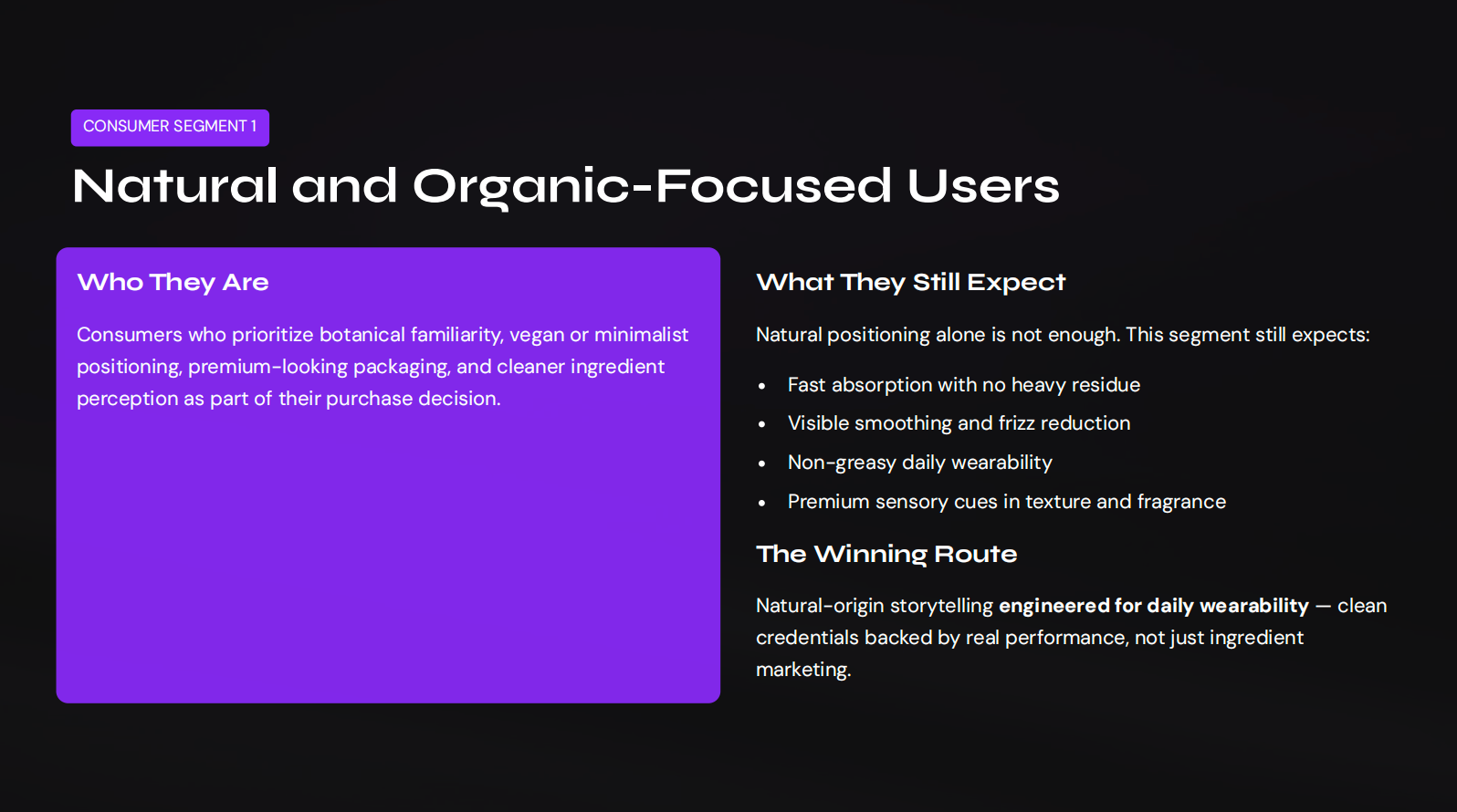
Natural and organic-leaning users
These consumers respond well to botanical storytelling, vegan positioning, minimalist claims, and elevated recyclable packaging. But natural positioning alone is not enough. They still expect non-greasy wear, controlled fragrance, visible smoothing, and fast absorption.
Damage-repair users
This is one of the strongest commercial entry points. These buyers want smoother ends, shine recovery, reduced rough feel, and support for colour-treated, bleached, or heat-styled hair. Products positioned around repair appearance, anti-breakage support, and heat styling are easier to merchandise and easier to understand.
Curly and textured hair users
This segment remains important, but it should not be addressed with the same texture logic used for fine hair. Richer textures and stronger moisture-sealing language may work here, especially when tied to softness, definition support, and frizz control.
Premium beauty buyers
These consumers buy for sensorial finish, elegant packaging, controlled fragrance, salon-like experience, and ritual value. They reject cheap-looking oils, messy claims, and unstable pack quality.
For most new launches, it is better to choose one primary buyer group first and align formula, pack, and claims to that buyer, rather than trying to serve every segment at once.
Natural and Organic-Focused Users
The Product Opportunities with the Strongest Commercial Logic
The European market is not asking for more generic “oil blends.” The strongest opportunities are more precise.
Lightweight anti-frizz daily hair oil
This is the strongest broad-entry hero SKU. It should be lightweight, non-greasy, shine-enhancing, and suitable for fine to medium hair. It works especially well in Amazon, DTC, and beauty retail.
Repair and heat-protection hair oil
This is one of the most reliable support SKUs. It is ideal for damaged, colour-treated, bleached, or heat-styled hair, and can be positioned around smoother ends, less rough feel, shine recovery, and styling support.
Scalp comfort oil-serum
This is one of the most commercially interesting differentiation routes. It bridges scalp comfort, root care, and lightweight treatment without becoming too oily for routine use.
Fine-hair volumizing light oil
This remains a major white space. Many existing oils are still too rich for fine European hair. A truly lightweight anti-frizz oil for fine hair can stand out quickly.
Fragrance-disciplined sensitive hair oil
This is a strong trust-building and compliance-conscious positioning path. Lower fragrance intensity, scalp-friendly logic, and softening claims can help it perform in DTC, Amazon, and pharmacy beauty contexts.
Gloss and finish hair oil
This is image-led and high margin, especially for premium DTC, salon, and selective retail channels. It works best when positioned around mirror-like shine, flyaway control, and silky finish.
Recommended Launch Architecture
For most private label buyers entering the category, the strongest first structure is a three-part launch architecture:
- Hero SKU: Lightweight Anti-Frizz & Shine Hair Oil
- Support SKU 1: Scalp Comfort & Root Care Oil-Serum
- Support SKU 2: Repair & Heat-Protection Hair Oil
This structure works because it covers the three most commercially useful demand zones: daily styling, scalp-focused care, and visible damage support.
A weaker launch path is starting with a broad “all hair types miracle oil.” That usually produces unclear claims, weaker differentiation, and lower repeat purchase.
A stronger path is to start with one hero daily-use oil plus one targeted problem-solution SKU, then expand into bundles, minis, and more specific formats after the first products prove traction.
Price Tiers and Packaging Logic
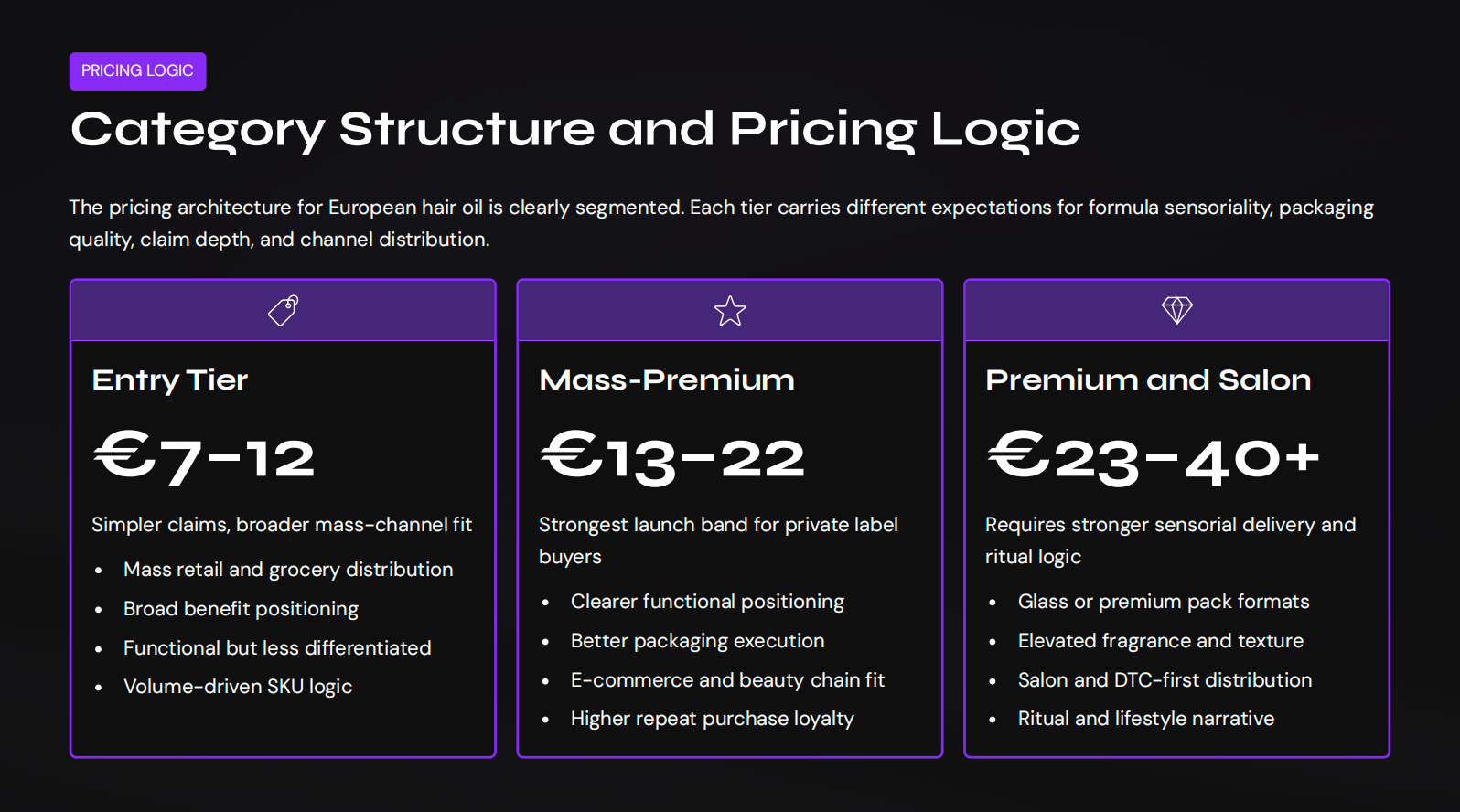
The category works across multiple pricing bands, but the best-value launch band for most private label buyers is mass-premium.
Entry tier
Usually positioned around value, simple packaging, and broader accessibility. Best for pharmacy and mass-adjacent channels.
Mass-premium tier
This is the strongest launch band for most new projects. It supports better packaging, better texture optimization, and stronger ingredient narratives without requiring prestige-level brand equity.
Premium and salon tier
This works best when the product has a refined sensorial profile, strong pack quality, and clearer ritual or professional positioning.
In terms of sizes, 50 ml is often the strongest hero format. It feels premium, practical, and commercially balanced. For scalp hybrids, 30 ml to 50 ml works well. Minis and travel sizes are useful for discovery bundles, gifting, and DTC add-ons.
For packaging, pumps are the strongest broad commercial choice for daily anti-frizz oils because they are faster and cleaner to use. Droppers work better for scalp products and premium ritual positioning, but they create more application and leakage risk.
Category Structure and Pricing Logic
Texture Strategy
Texture is one of the most important conversion factors in European hair oil.
Lightweight oils have the strongest broad-market fit because they support daily anti-frizz use, fine-to-medium hair needs, and visible shine without heaviness.
Medium-light textures work best for repair and treatment positioning, especially for coloured or heat-damaged hair.
Richer oils have a place in curl-specific, pre-wash, and overnight treatment concepts, but they are less suitable as the first hero SKU for mainstream EU channels.
For most first launches, daily wearability should be prioritized over richness.
Channel Strategy
Amazon
Amazon is best for direct problem-solution SKUs, review-driven hero products, and simple pricing logic. The strongest formats are anti-frizz daily oils, repair oils, and fine-hair light oils. Success depends on texture demonstrations, clear use instructions, before-and-after visuals, and strong review generation through repeat-worthy performance.
DTC
DTC is best for premium narratives, scalp-care education, bundles, ingredient storytelling, and niche trust-building. Scalp oil-serums, gloss oils, and fragrance-disciplined oils are especially well suited here. Routine-led landing pages, cross-sell logic, minis, and bundle strategy all matter.
Retail
Retail works best when the use case is immediately clear. Products must communicate anti-frizz, shine, colour care, or lightweight finish in seconds. Packaging clarity and price-value communication are critical.
Salon
Salon is strongest for repair oils and gloss oils. Professional recommendation, post-service retailing, and stronger sensorial finish are more important here than botanical storytelling alone.
Competitive White Space
The strongest market gaps are not in “more argan oil” or “more natural blend” products. The sharper white spaces are:
- fine-hair anti-frizz oils
- scalp comfort oil-serums
- repair plus heat-support oils
- low-fragrance or fragrance-disciplined premium oils
- polished urban finish oils
- men’s scalp and hair softening oils
These spaces are more actionable because they solve a clearer user problem and make it easier to differentiate against existing mass, salon, and natural brands.
Compliance and Product Risk Priorities
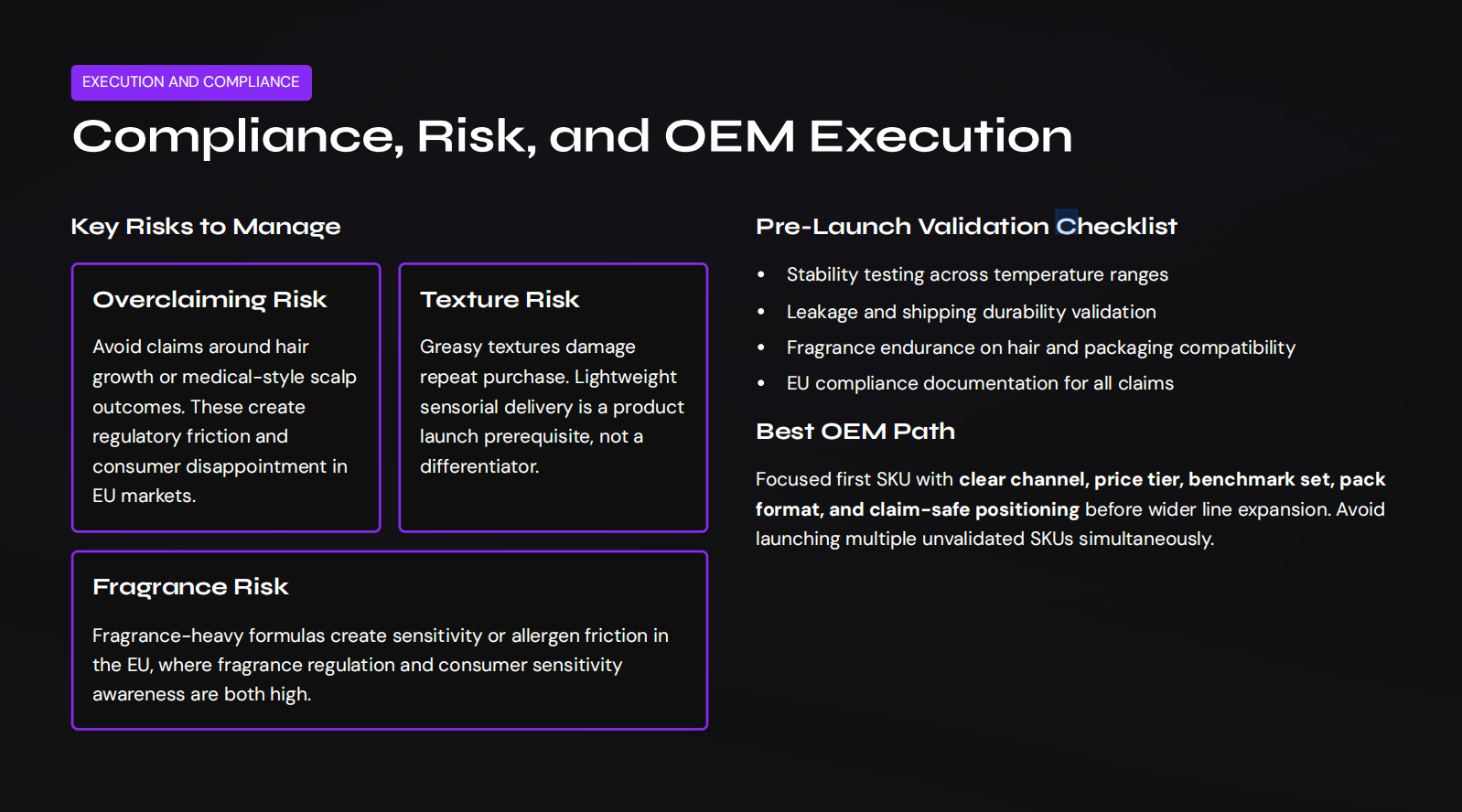
European hair oil launches need conservative, evidence-backed claims. The biggest mistakes are overclaiming around hair growth, deep repair, or medical-style scalp outcomes.
Safer and stronger cosmetic language includes:
- anti-frizz
- smoother feel
- shine boost
- softer ends
- scalp comfort
- heat-styling support
- lightweight finish
- helps reduce dry scalp feel
- helps hair feel smoother and more manageable
Buyers should also pay close attention to fragrance intensity, allergen planning, stability, oxidation risk, packaging compatibility, leakage, and market-language requirements before artwork is finalized.
A formula that looks premium but leaks, oxidizes, or causes fragrance sensitivity will quickly lose repeat purchase potential.
Compliance, Risk, and OEM Execution
Private Label and OEM Launch Strategy
For private label execution, the fastest path to a stronger result is to give the OEM partner a more specific brief.
A stronger RFQ should define:
- target market
- target channel
- target retail price
- benchmark products
- desired pack size
- texture preference
- claims priority
- fragrance preference
- launch quantity
- launch timeline
- compliance expectations
- artwork language requirements
Low MOQ projects are useful for Amazon testing, founder-led brands, and first-entry distributors. Mid-range MOQs are more suitable for multi-channel launch and stronger packaging flexibility. Scaled MOQs work best when distribution and channel volume are already clearer.
The best execution path is usually:
- finalize the first target SKU first
- choose stock or semi-custom packaging where speed matters
- align claims architecture before artwork development
- validate texture, packaging, and stability early
- build bundle logic before expansion
What Brands Should Do Next
If you are entering the European hair oil market in 2026, do not begin by building a broad oil line.
Start with:
- one clearly defined hero SKU
- one targeted support SKU
- one channel-first launch plan
- one packaging format matched to daily use
- one conservative, compliant claim structure
Then test performance through Amazon, DTC, salon, or selected retail based on your budget and route to market. Expand only after consumer response confirms which problem-solution positioning is converting best.
Ready to Turn Market Opportunities
Into Your Next Product Launch?
Final Takeaway
The European hair oil market in 2026 is commercially attractive because it sits inside multiple routines at once: styling, treatment, anti-frizz control, scalp care, and premium self-care.
The brands most likely to win are not the ones selling the broadest oil blend. They are the ones building the clearest function-led product system: a lightweight daily hero, a targeted support SKU, a texture that fits real European usage, packaging that supports repeat use, and claims that stay commercially sharp without creating compliance risk.
If your team is planning a European hair oil launch, the smartest next step is to align target user, texture profile, pack format, price band, and claims strategy first, then move into sampling with a much clearer RFQ.
Download the Full Report (PDF)
Tell us your target region, product category, and the decision you’re trying to make. We’ll suggest the closest existing report—or build a tailored version.