


Executive Summary
This report explores the Europe hair shampoo market in 2026, including scalp care trends, anti-dandruff demand, sulfate-free formulation strategy, price architecture, channel opportunities, compliance priorities, and private label launch planning. It is designed to help brands, distributors, importers, Amazon sellers, and product development teams turn market insight into a more practical shampoo launch strategy.
Europe Hair Shampoo Market 2026: Scalp Care Trends, Formulation Strategy, and Private Label Opportunities
The Europe hair shampoo market in 2026 remains commercially attractive not because shampoo is new, but because the category is being redefined around scalp health, milder cleansing, dermatological reassurance, and more credible problem-solution positioning.
For brands, distributors, importers, Amazon sellers, and product development teams, the strongest opportunities are no longer found in generic “for dry hair” or “all hair types” shampoos. The more promising routes are sharper and more commercially usable: sensitive scalp anti-dandruff, sulfate-free repair, scalp-balancing cleansing for oily roots, and low-irritation daily-use shampoos with clearer formulation logic.
This report translates those market shifts into launch strategy. It covers demand trends, price architecture, product opportunities, formulation direction, channel fit, compliance priorities, and private label execution logic for buyers entering or expanding in the European shampoo market.
Executive Summary
Europe’s shampoo market is mature in volume, but it is still open in value creation. The category is being reshaped by premiumization, targeted scalp care, ingredient-conscious positioning, and more channel-specific assortment design.
The strongest growth is not coming from basic cleansing alone. It is coming from shampoos that solve real consumer problems with more precision and lower perceived risk. Anti-dandruff remains one of the most commercially stable functional segments. Sulfate-free repair continues to gain relevance in premium and masstige channels. Sensitive scalp and dermatological positioning are increasingly important because they reduce buyer hesitation and support stronger repeat purchase.
For most private label buyers in 2026, the best first launch is not a broad range. It is a focused shampoo line built around one hero scalp SKU, one premium repair SKU, and one gentle daily-use SKU that supports pharmacy, Amazon, and specialist e-commerce expansion.
Market Opportunity Overview
The Europe hair shampoo market is a large, highly penetrated personal care category with stable household usage and broad repeat-purchase behavior. What is changing is the way value is created.
Consumers are no longer satisfied with generic claims and overly broad positioning. They are buying shampoos based on more specific need states such as dandruff with sensitivity, oily roots with dry lengths, damaged hair with color treatment, or frequent washing with low irritation tolerance.
This creates commercial space for better-defined shampoo concepts. Mass shampoo still matters, but the higher-value opportunities sit in targeted formats that feel more credible, more specialized, and more aligned with current consumer language.
For private label and OEM buyers, this is good news. It means a tighter, better-designed shampoo assortment can compete more effectively than a broad and unfocused catalog.
Market Snapshot and Growth Drivers
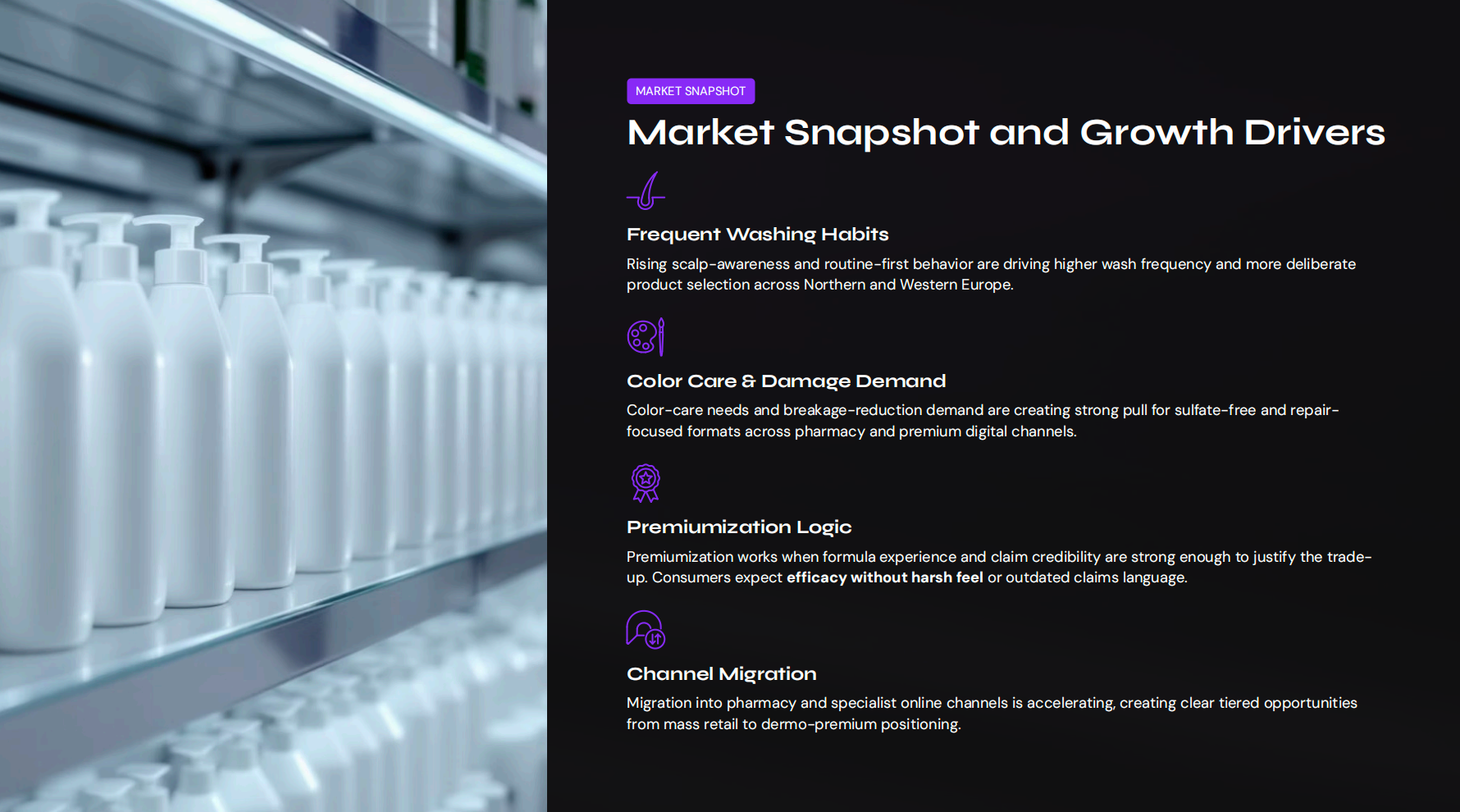
What Is Driving Demand in 2026
Several demand shifts are defining the European shampoo market.
The first is scalp-led buying. Scalp care is no longer treated as a small treatment niche. It is becoming a core way consumers evaluate shampoo quality and suitability.
The second is gentler cleansing. Sulfate-free and milder-cleansing systems are increasingly relevant, especially in color-care, premium repair, natural, and sensitive-scalp positioning.
The third is dermatological reassurance. Buyers respond well to low-irritation, scalp-comfort, sensitive-scalp, and pharmacy-style communication because it reduces perceived product risk.
The fourth is more disciplined formulation language. Consumers still care about efficacy, but they increasingly want that efficacy without harsh feel, overloaded fragrance, or exaggerated claims.
The fifth is practical sustainability. Refill and recycled-plastic concepts matter, but only when the shampoo still performs well, travels safely, and feels convenient in daily use.
Consumer Segments That Matter
The European shampoo market is splitting into clearer commercial segments.
Mass buyers
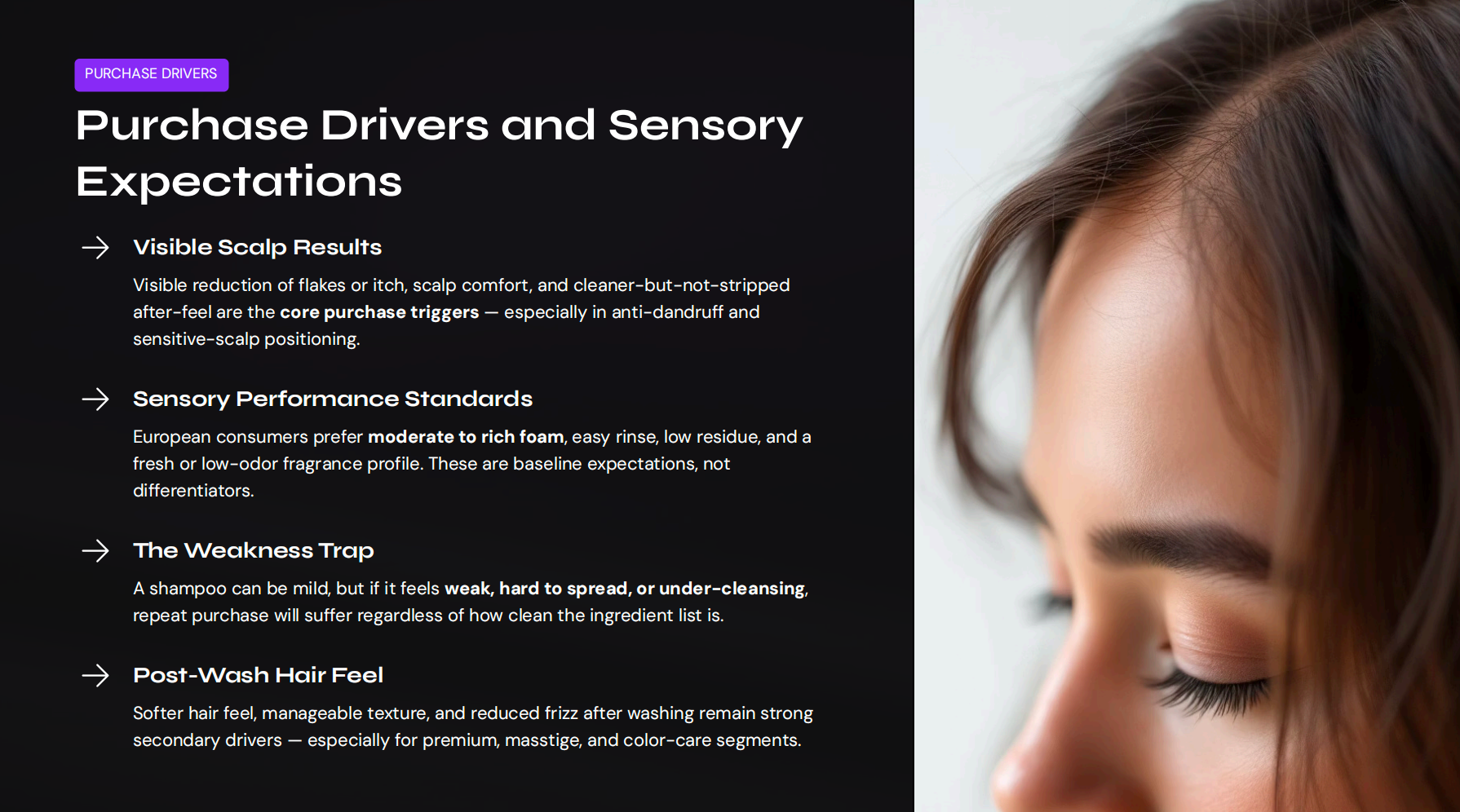
These consumers want obvious cleansing, visible value, familiar claims, and reliable wash performance. Foam, rinse feel, and immediate “clean hair” perception still matter more than advanced ingredient storytelling.
Premium and masstige buyers
These consumers want stronger sensorial quality, smoother hair feel, better-looking packaging, and more upgraded claim language. They are more open to sulfate-free, bond-style, strengthening, and color-friendly formats.
Dermocosmetic buyers
These consumers want lower-irritation risk, scalp credibility, anti-dandruff reassurance, and more serious efficacy framing. They respond especially well to sensitive scalp, oily scalp, flake control, and anti-breakage positioning.
Natural and clean buyers
These consumers want gentler cleansing, more transparent ingredient language, reduced-fragrance or softer-botanical sensorial cues, and a more modern “clean formula” identity. But they still expect acceptable foam and satisfying wash performance.
Purchase Drivers and Sensory
Expectations
The Strongest Shampoo Opportunity Zones
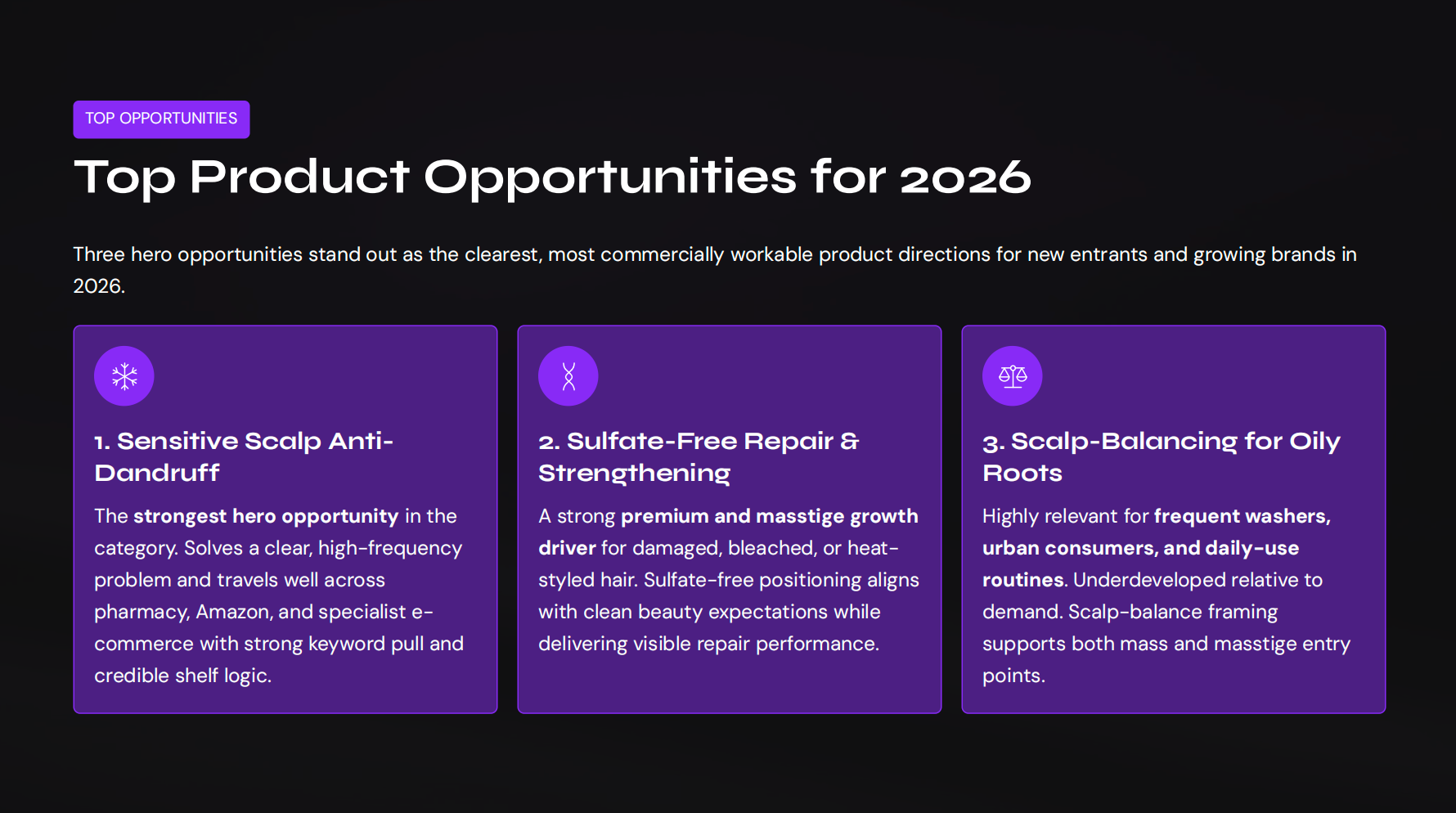
Not every shampoo direction is equally attractive in 2026. The strongest commercial opportunities are the ones that combine clear demand, repeat-purchase potential, and channel flexibility.
The most investable directions include:
- sensitive scalp anti-dandruff shampoo
- sulfate-free repair and strengthening shampoo
- scalp-balancing shampoo for oily roots
- dermatological gentle shampoo for frequent use
- moisturizing and smoothing shampoo for dry, frizz-prone hair
- color-protection shampoo with mild cleansing
- strengthening shampoo for weak hair and breakage-prone users
Among these, the most commercially useful launch route for many new entrants is a hero scalp-balancing or anti-dandruff shampoo paired with a premium sulfate-free repair formula.
Price Architecture and Size Strategy
The Europe shampoo market is highly segmented by price and channel.
A practical retail structure looks like this:
- mass shampoo at low entry price points
- masstige shampoo in the mid-price range with better formula and packaging logic
- premium shampoo with stronger sensorials and cleaner positioning
- dermo or pharmacy shampoo at higher price per 200 ml or 250 ml due to treatment framing
Typical shampoo sizes also matter strategically.
- 200 ml works well for targeted scalp care and dermocosmetic propositions
- 250 ml supports premium and specialty channels
- 300 ml is one of the strongest mainstream formats in Europe
- 400 ml and above work better in family and value channels
- refill formats are increasingly relevant but require stronger packaging discipline
For most new shampoo launches, 200 ml to 300 ml is the most practical opening range.
Channel Strategy
A shampoo launch should be designed for channel fit from the beginning.
Pharmacy and dermo
This is the strongest route for anti-dandruff, sensitive scalp, scalp-soothing, dermatological, and anti-breakage concepts. Claims must be disciplined, and packaging should look clean, credible, and functional.
Drugstore and supermarket
These channels remain important for volume, especially in anti-dandruff, moisture, family value, and mainstream repair. Price-value logic and clear shelf communication matter most here.
Amazon and e-commerce
This is one of the best channels for targeted need-state products such as sensitive scalp anti-dandruff, sulfate-free repair, oily scalp balancing, and color protection. Searchability, review performance, packaging durability, and front-of-pack readability are all critical.
Salon and professional-adjacent retail
This route works best for repair, smoothing, strengthening, and color-care propositions with higher margin potential, but it requires stronger formula credibility and brand presentation.
For many new brands, Amazon plus pharmacy-adjacent positioning offers the most commercially efficient entry path.
Formulation Strategy That Matches Market Demand
This is where many shampoo launches succeed or fail. Positioning may generate interest, but repeat purchase depends on wash performance.
A strong shampoo formula should be built around one performance promise, not one hero ingredient.
Mild-cleansing systems
These are especially suitable for:
- sensitive scalp
- sulfate-free positioning
- color protection
- daily use
- dermocosmetic lines
The challenge is that mild systems must still deliver acceptable foam, satisfying cleansing, and easy rinseability.
Stronger-cleansing systems
These are useful for:
- mainstream anti-dandruff
- oily scalp
- family use
- heavy styling residue
The risk is that they can feel harsh, drying, or irritating if not buffered properly.
Conditioning system choices
A shampoo can be positioned in several ways:
- silicone-based for strong smoothness, shine, and combability
- silicone-free polymer-based for cleaner positioning and lighter feel
- hybrid systems that balance performance and marketing acceptability
For many Europe-focused launches, hybrid conditioning systems offer the strongest commercial flexibility.
Active direction
A better formulation story usually combines cleansing logic, scalp or hair benefit logic, and sensorial delivery.
Examples include:
- anti-dandruff with a mild cleansing base and soothing support
- repair and strengthening with sulfate-free cleansing and smoother post-wash feel
- scalp balancing with fresh but non-stripping cleansing
- sensitive scalp with lower fragrance and calmer after-feel
- anti-breakage positioning built around strengthening rather than exaggerated hair-growth claims
Top Product Opportunities for 2026
Packaging Strategy
Packaging matters, but in shampoo it works best when it supports function and trust.
The most effective packaging cues in Europe include:
- clean pharmacy-style bottles for scalp and dermo lines
- minimalist premium bottles for masstige and sulfate-free repair
- recycled PET or lower-plastic messaging when practical
- refill-compatible formats for selected sustainability-led lines
- larger pump packs for family or value channels
- simplified front-of-pack messaging with one problem, one promise, and one proof cue
A shampoo package should not try to say everything. The strongest packs communicate a clear need state quickly.
Recommended SKU Strategy
For most new entrants, a 6 to 8 SKU assortment is enough. A tighter launch range is usually more effective than a large, unfocused catalog.
A practical opening assortment can include:
- one entry daily clean or daily soft shampoo
- one hero sensitive scalp anti-dandruff shampoo
- one premium sulfate-free repair and strengthening shampoo
- one scalp-balancing shampoo for oily roots
- one gentle dermatological shampoo
- one moisture and smoothing shampoo for dry hair
- one color-protect shampoo
- one strengthening shampoo for weak or breakage-prone hair
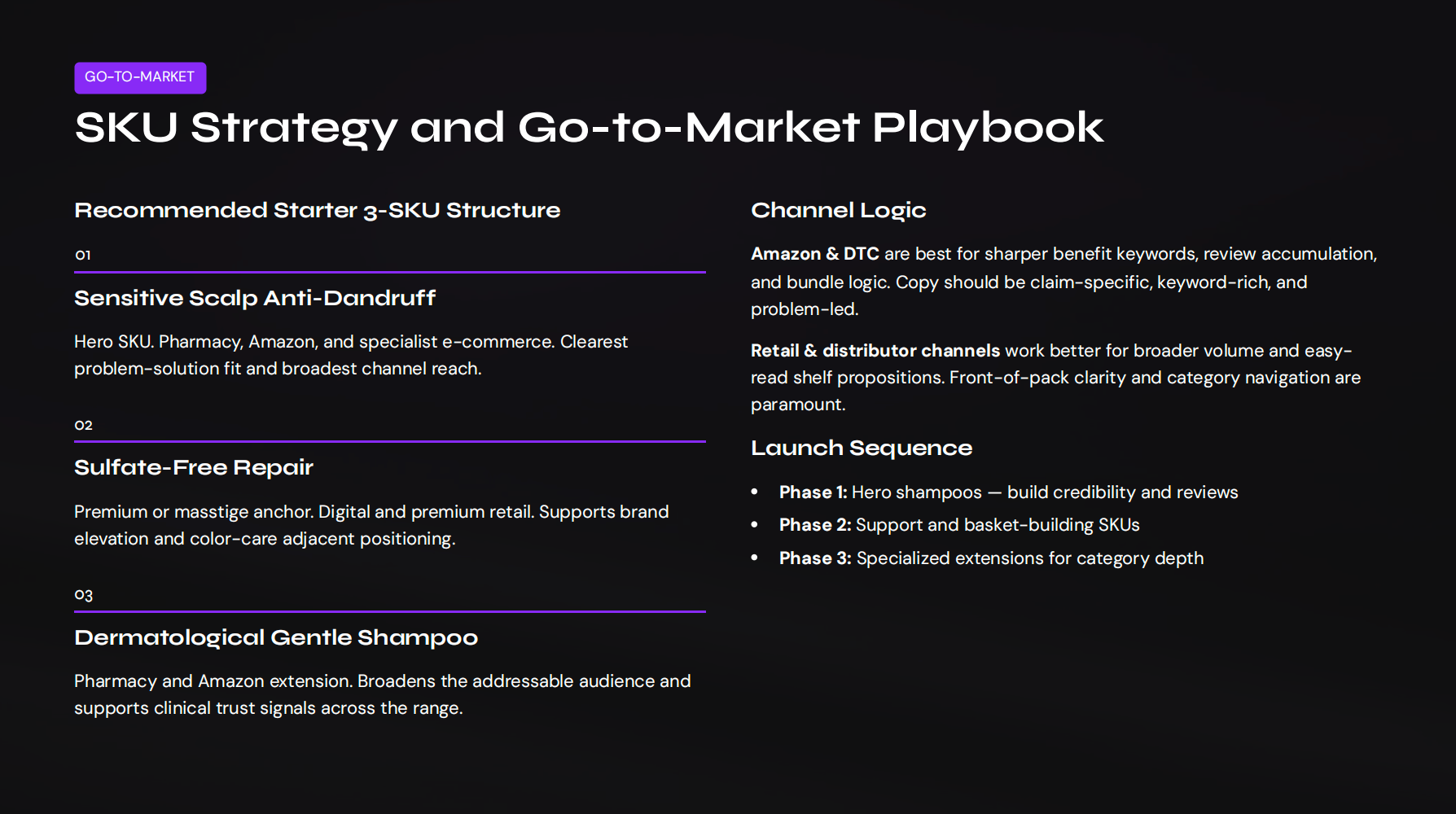
If the range needs to start smaller, the best starter trio is:
- sensitive scalp anti-dandruff
- sulfate-free repair
- dermatological gentle shampoo
This combination covers the strongest current demand zones while keeping the line commercially focused.
SKU Strategy and Go-to-Market Playbook
Claims and Compliance Priorities
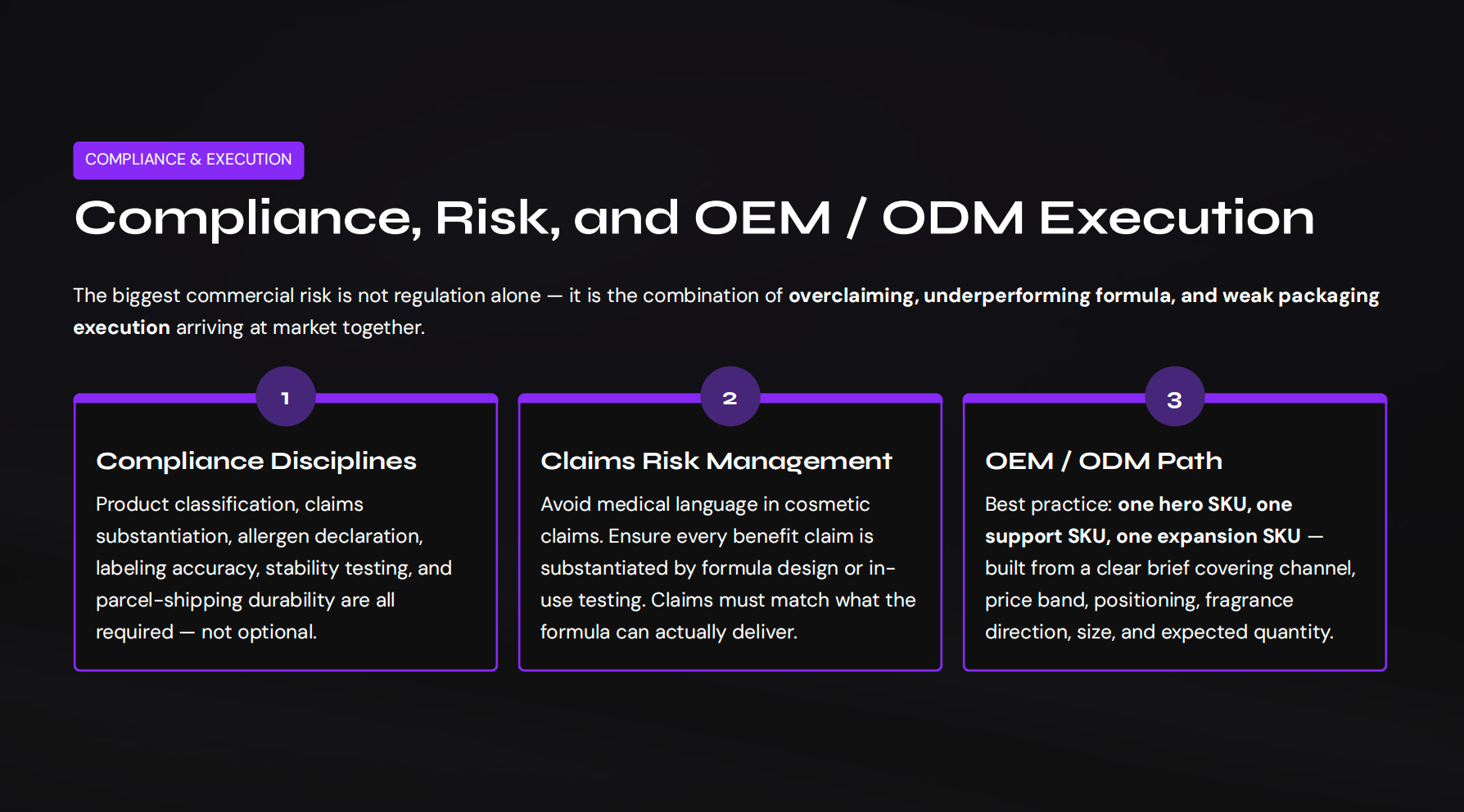
The biggest commercial mistake is often not regulation alone. It is the combination of overclaiming, weak formula delivery, and poor pack execution.
For Europe-focused shampoo launches, key priorities include:
- keeping the product within cosmetic positioning
- avoiding hair regrowth or disease-treatment claims
- substantiating anti-dandruff, repair, anti-breakage, and sensitive-scalp language
- using dermatological or clinically tested wording only when supportable
- aligning ingredient story, pack copy, and product performance
- reviewing allergen, fragrance, and packaging compatibility carefully
- validating stability, leakage, and transport performance before launch
In practical terms, the safest and most scalable claims are the ones that are sharp, credible, and easy to support.
OEM and Private Label Execution
A better OEM outcome starts with a better brief.
Before sampling, buyers should define:
- target market
- target channel
- target retail price
- shampoo positioning
- core claim priorities
- desired fragrance direction
- ingredient exclusions
- pack size and bottle style
- forecast quantity
- launch timing
For most projects, it is more effective to begin with one hero SKU, one support SKU, and one expansion SKU than to request ten different formulas at once.
A cleaner brief reduces wasted samples, speeds up quoting, and improves launch readiness.
Compliance, Risk, and OEM / ODM Execution
Final Takeaway
The Europe shampoo market in 2026 is not about launching another generic cleansing product. The strongest commercial opportunities sit in sharper, more credible, and more repeatable propositions: anti-dandruff with scalp comfort, repair without heaviness, scalp balance without harshness, and gentle daily cleansing with modern ingredient logic.
The brands most likely to win are not the ones with the loudest sustainability language or the longest ingredient list. They are the ones combining clear positioning, disciplined claims, strong wash performance, channel-fit pricing, and reliable packaging execution.
If you are evaluating a Europe-focused shampoo launch, the smartest next step is to align your need state, formula direction, price tier, and channel plan first, then build the right SKU structure from there.
Download the Full Report (PDF)
Tell us your target region, product category, and the decision you’re trying to make. We’ll suggest the closest existing report—or build a tailored version.