


Executive Summary
This report explores the EU hair treatment and hair mask market in 2026, including demand trends, formulation priorities, price architecture, white-space SKU opportunities, compliance realities, and OEM launch planning. It is designed to help brands, importers, distributors, and e-commerce sellers turn market insight into a more practical product launch strategy.
EU Hair Treatment Market 2026: Hair Mask Trends, Formulation Logic, and Private Label Opportunities
The EU hair treatment and hair mask market in 2026 is no longer defined by occasional deep-conditioning use. It is becoming a routine-based performance category shaped by targeted repair, hydration, frizz control, scalp comfort, curl support, and channel-led product positioning.
For brands, importers, distributors, and e-commerce sellers, this changes how hair masks should be developed and launched. The strongest opportunities are no longer broad “all hair types” products with generic nourishment claims. The market is rewarding clearer problem-solution positioning, more disciplined formulation logic, and packaging that supports both efficacy and trust.
This report translates category trends into launch logic. It covers market direction, consumer demand, price architecture, formulation priorities, white-space SKU concepts, compliance realities, and OEM execution pathways for brands entering or expanding in the EU hair treatment segment.
Executive Summary
The EU hair treatment and hair mask category is moving toward targeted performance care. Consumers increasingly expect products to solve visible, understandable hair needs such as damage, dryness, frizz, scalp discomfort, color stress, and weight-sensitive repair.
This creates a more commercially attractive but also more demanding market. Generic “repair and nourish” products still exist, but they are less differentiated. The stronger opportunity lies in more precise treatment concepts such as lightweight bond repair, scalp-friendly masks, fine-hair-safe treatments, curl moisture masks, and premium masstige treatment lines.
For most new entrants, the best launch architecture is not a broad SKU range. It is a focused three-SKU system:
- one hero performance mask
- one traffic-friendly mask for broader conversion
- one premium or scalp-care extension for margin and differentiation
This structure allows brands to test channels, sharpen positioning, and scale more efficiently without overcomplicating inventory or messaging.
Market Opportunity Overview
The EU hair mask market is being shaped less by simple category growth and more by premiumisation, specialized claims, and greater digital confidence in treatment-led products. Hair masks are increasingly purchased as targeted performance products rather than as interchangeable conditioners.
This matters because the category now behaves more like a treatment ladder than a single subcategory. Consumers are looking for products that match specific tensions in their routine: damage after coloring, hydration without heaviness, frizz control in humidity, softness for curls, scalp comfort, or weekly recovery from styling stress.
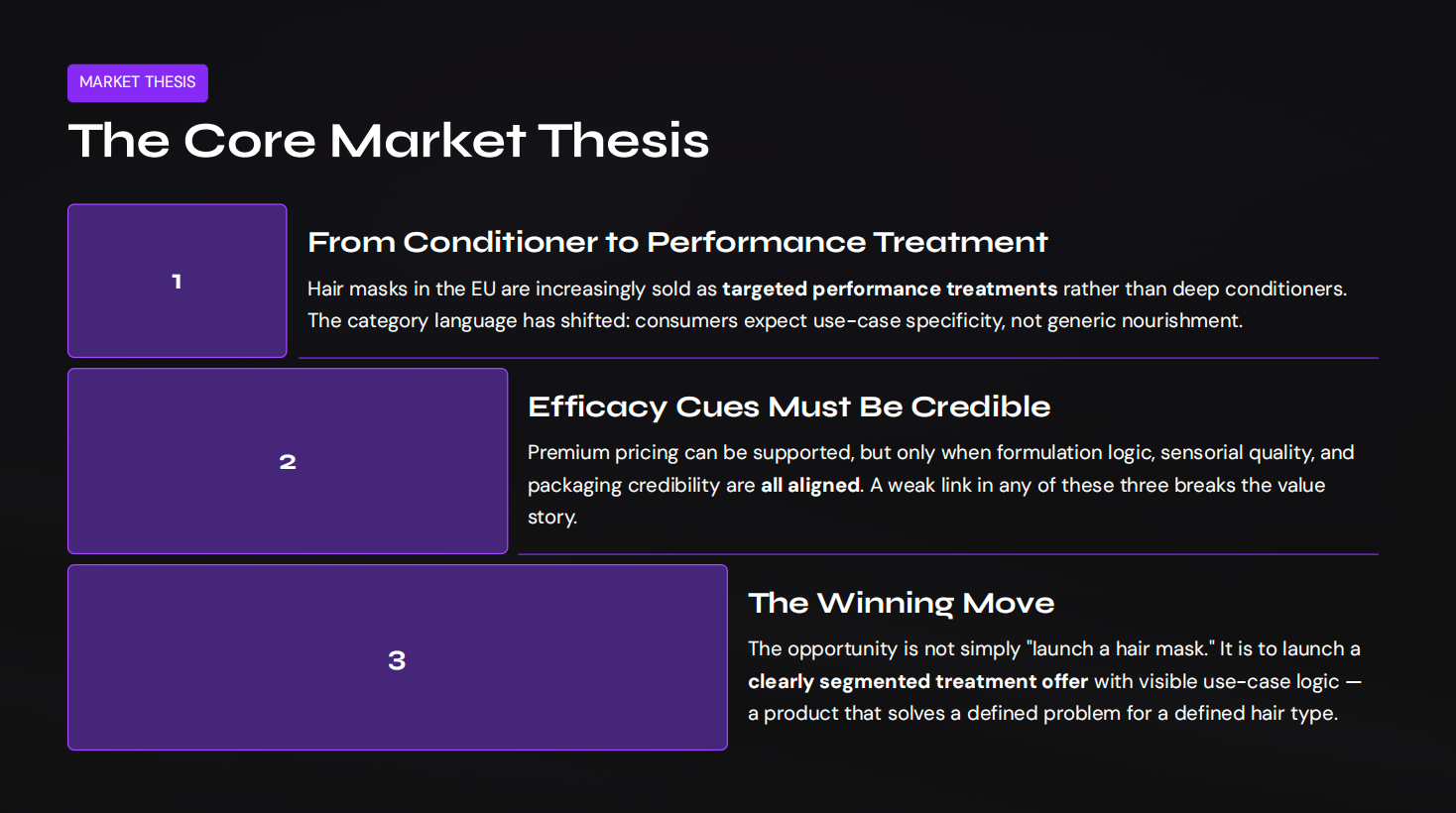
For brands entering the market, the real opportunity is not to launch one “EU hair mask.” The real opportunity is to launch one highly relevant treatment offer, prove fit, and then expand into adjacent need states.
The Core Market Thesis
What Is Driving Demand in 2026
Several category shifts are shaping the market.
The first is problem-specific treatment behavior. Consumers increasingly search for repair, hydration, anti-frizz, scalp comfort, and color-care solutions instead of vague conditioning promises.
The second is premium efficacy logic. Buyers are willing to pay more when the formula story is credible, the texture feels refined, and the claim hierarchy is easy to understand.
The third is rising digital education. E-commerce environments make it easier to explain ingredients, textures, use cases, and before-and-after value, which especially benefits treatment masks and scalp-hybrid formats.
The fourth is scalp awareness. Consumers are connecting healthy-looking hair more closely with scalp comfort, reduced buildup, and balanced routines. This is creating room for scalp-friendly masks and hybrid treatment concepts.
The fifth is texture intolerance. Many EU consumers reject heavy masks that leave hair flat, greasy, or overcoated, especially when they have fine, color-treated, or easily overloaded hair.
Consumer Demand Signals
EU consumers often evaluate hair masks with a more disciplined mindset than many markets. They are less responsive to exaggerated transformation claims and more responsive to believable efficacy, premium texture, ingredient readability, and trustworthy packaging.
The strongest need states include:
- damage repair after coloring, bleaching, or heat styling
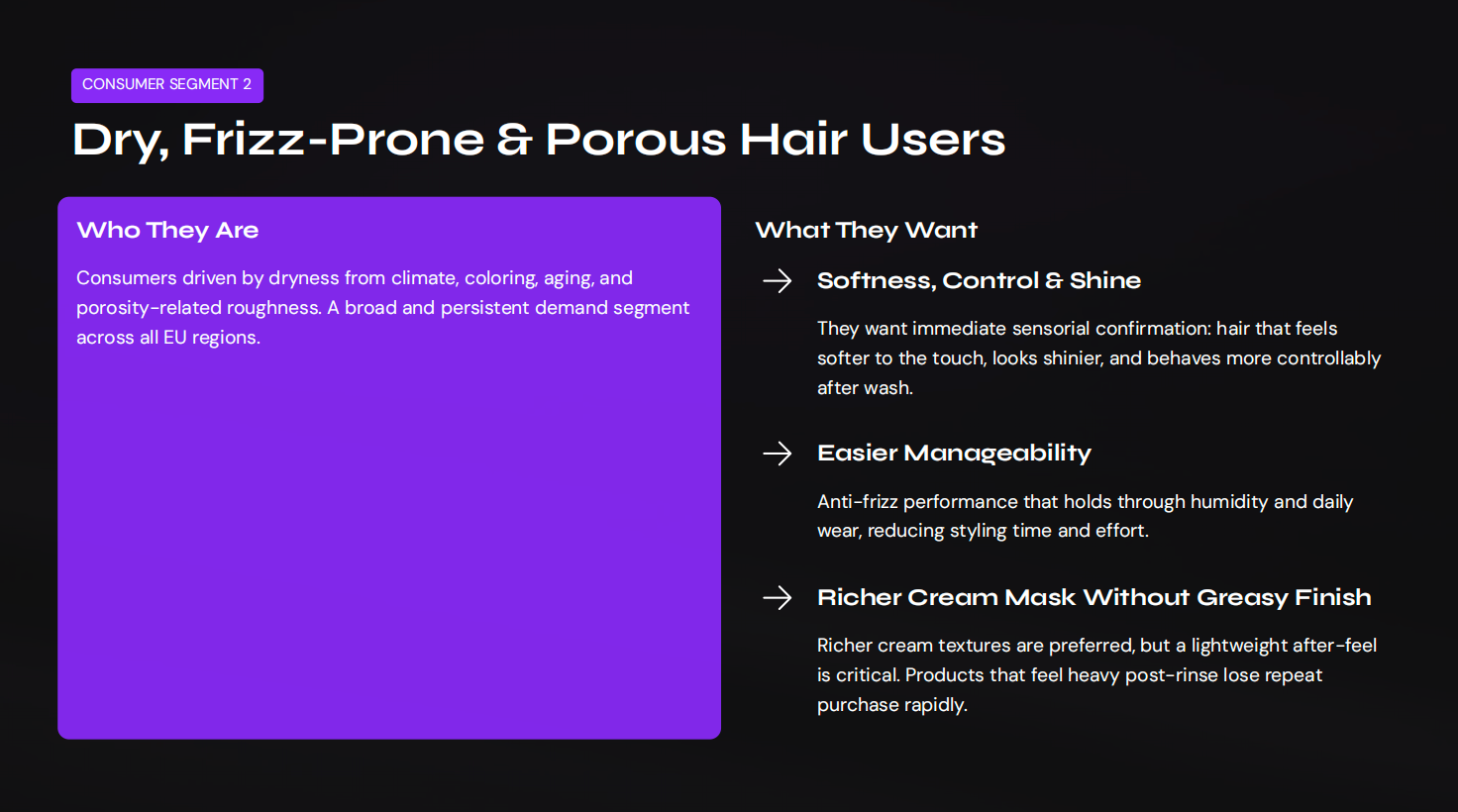
- intense hydration for dry or porous hair
- anti-frizz smoothing without oily heaviness
- curl nourishment and detangling support
- lightweight repair for fine but damaged hair
- scalp comfort and low-residue treatment
- weekly reset routines for styling stress, buildup, or hard water exposure
Consumers are also increasingly looking for formulas that feel modern rather than overloaded. That means rich but easy-rinse textures, polished but not overpowering fragrance, and visible softness without weight.
Dry, Frizz-Prone & Porous Hair Users
What Makes a Strong Hair Mask Concept in the EU
A commercially strong hair mask in the EU needs more than a fashionable ingredient list. It needs a clear performance job.
The best concepts usually combine:
- one clearly defined target user
- one strong benefit hierarchy
- one believable formula architecture
- one texture promise that matches the hair type
- one price point that fits the channel
- one packaging format that supports both trust and usability
This is why a brief such as “repair for bleached hair without heaviness” is much stronger than “argan oil hair mask.” The first defines the consumer tension. The second only names an ingredient.
Price Architecture and Format Logic
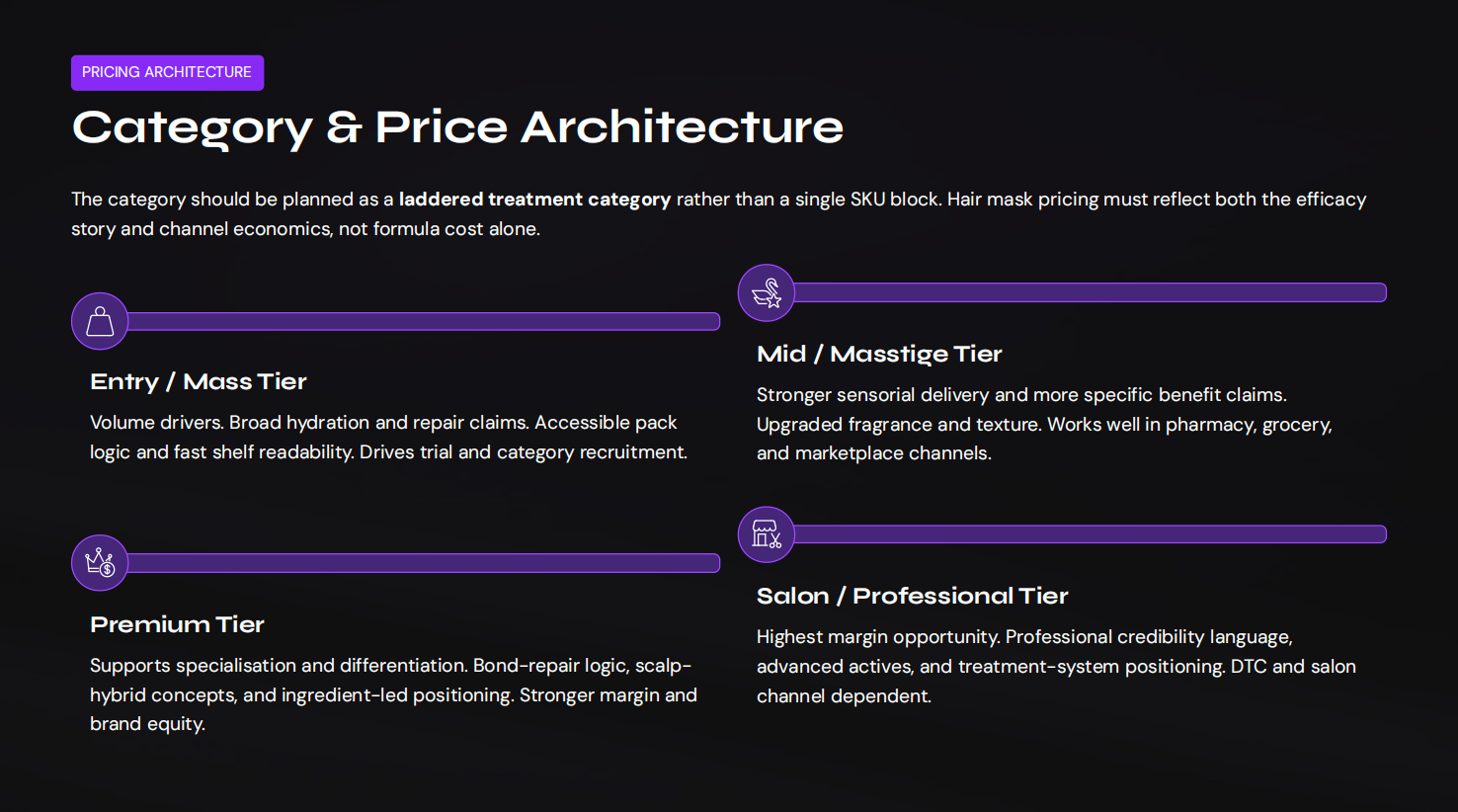
The EU hair treatment market works best when planned as a laddered category.
A practical price structure looks like this:
Entry
A value-led zone for hydration and mainstream repair, usually built around simple formulas and larger sizes.
Mass
The strongest volume zone, where focused claims and cleaner design can still work with accessible pricing.
Premium
A stronger margin zone that supports bond repair, curl care, scalp hybrids, and more advanced texture and sensory performance.
Salon-Level or Prestige Treatment
A more elevated segment that requires stronger formulation discipline, refined packaging, and clearer use-case logic.
Format also matters. The most commercially useful formats include:
- 200 ml for first-trial premium positioning
- 250 ml for balanced mainstream use
- 300 ml for broader volume play
- 400–500 ml for family or value packs
- minis or sachets for trial and bundle conversion
For many launches, 200–250 ml remains the most flexible range because it balances premium perception with usable value.
Category & Price Architecture
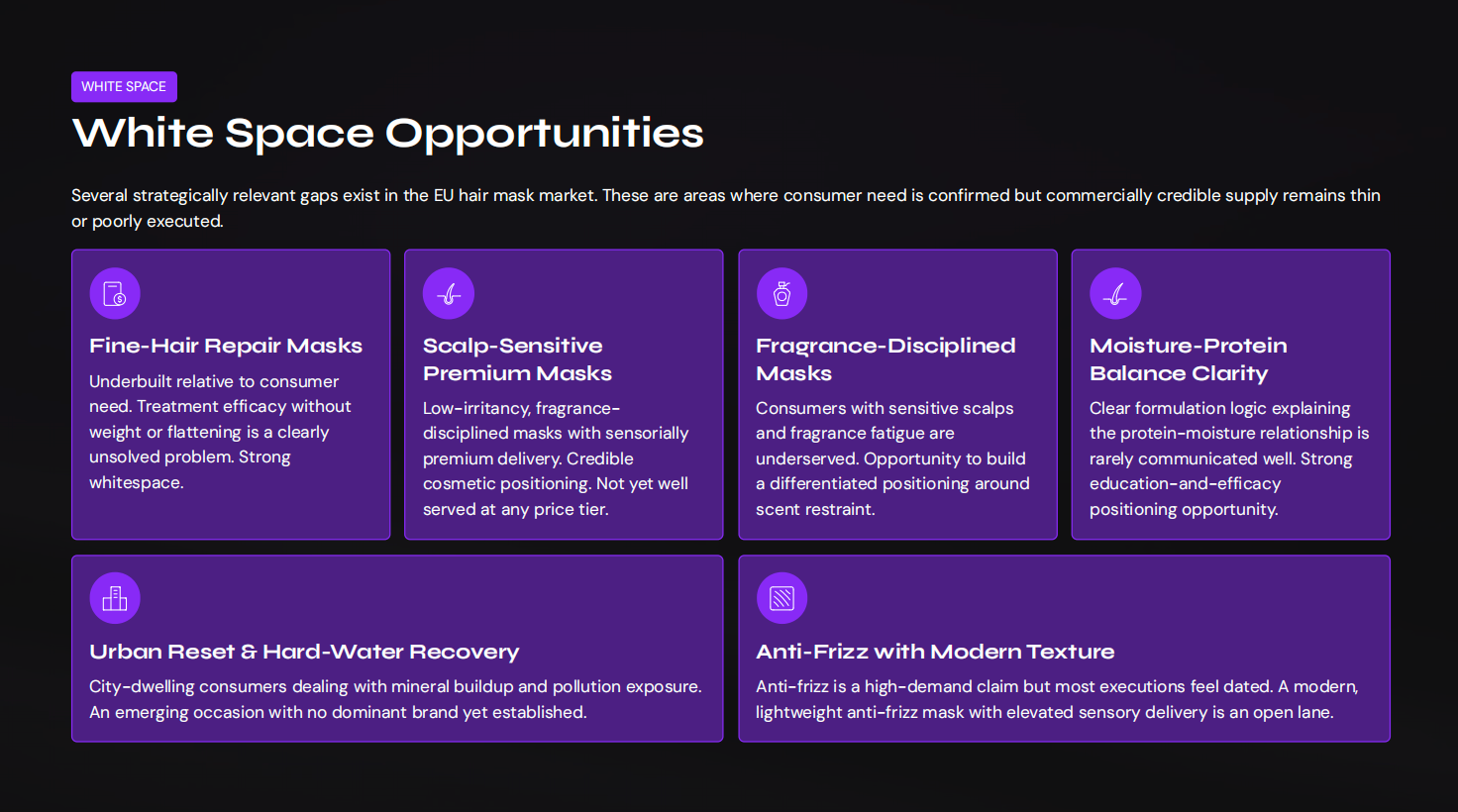
White Space Opportunities
The market is crowded, but not evenly crowded. The biggest mistake is entering with another broad “repair and nourish” tub that looks and sounds like everything else.
The stronger white-space opportunities include:
- lightweight bond repair masks for fine-to-medium damaged hair
- scalp-friendly masks with premium feel and low-residue performance
- color-care gloss masks that improve softness and surface feel
- anti-frizz masks built around modern lightweight smoothing
- curl nourishment masks with strong slip and detangling payoff
- mature-hair treatment masks for dryness, softness, and manageability
- urban-reset or hard-water-recovery weekly masks
These opportunities work because they define a specific user tension and offer a product story that is easier to understand, merchandise, and review.
White Space Opportunities
Recommended Three-SKU Launch Structure
For most brands, the best opening architecture is a three-SKU system.
Hero SKU
A high-conversion concept that defines the brand’s treatment credibility.
Recommended direction: Lightweight Bond Repair Mask
Traffic SKU
A broader-conversion product with easier entry pricing and wider appeal.
Recommended direction: Deep Moisture Rescue Mask
Profit SKU
A more differentiated, premium-margin product that faces less direct comparison.
Recommended direction: Sensitive Scalp Comfort Mask or Overnight Repair Wrap Mask
This structure gives enough depth for channel testing while keeping messaging and inventory manageable.
Formulation Trends That Matter
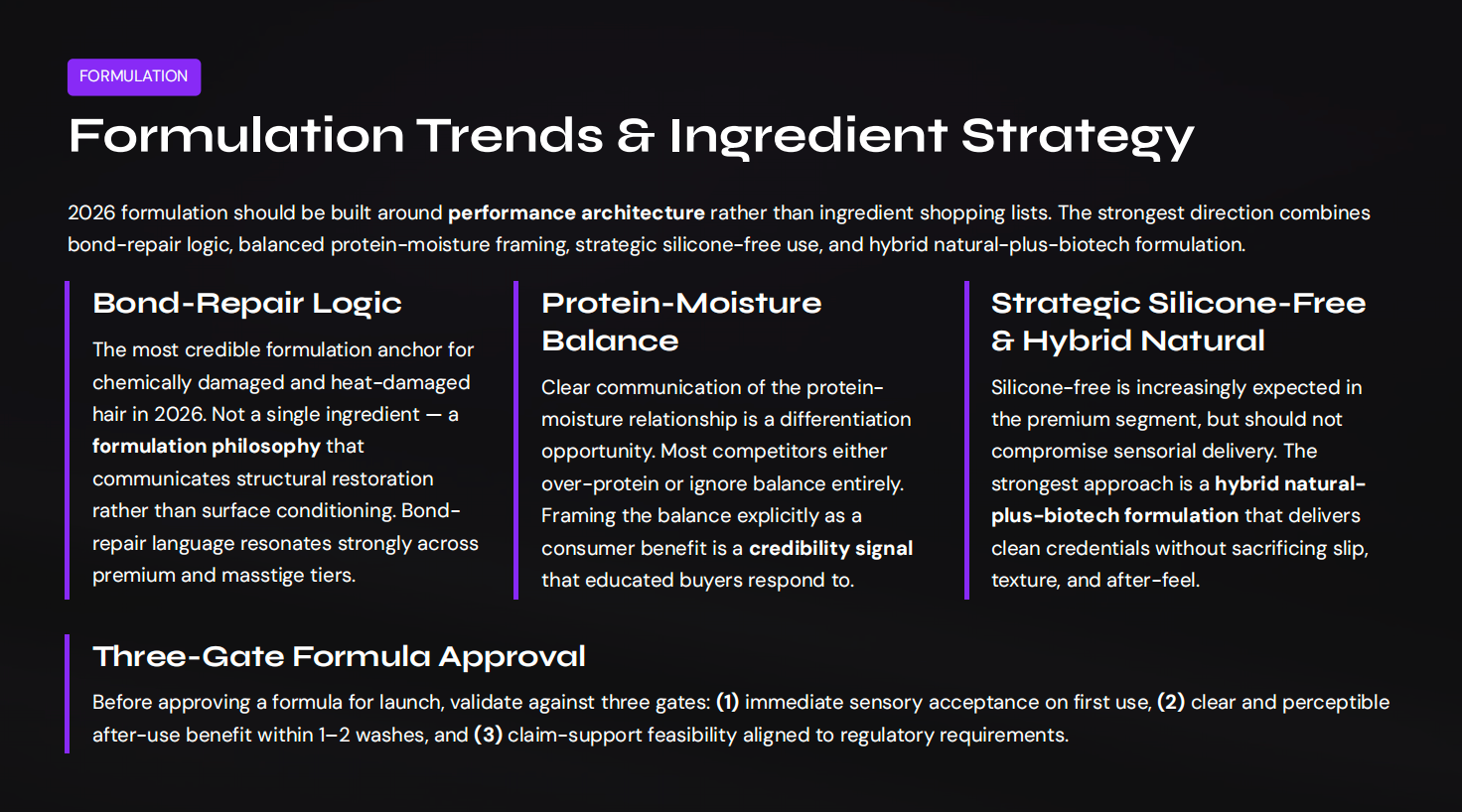
Hair mask formulation in 2026 should be built around performance architecture, not ingredient overload.
Bond Repair Systems
Bond-repair language remains commercially strong, but it must be translated into visible user outcomes such as smoother feel, less roughness, easier detangling, and reduced breakage appearance.
Moisture-Protein Balance
Consumers want strength and softness, not stiffness or flatness. A balanced repair story is usually more commercially effective than overly technical protein language or generic moisture claims.
Silicone-Free Strategy
Silicone-free can help conversion in clean and curl segments, but only if performance remains strong. Slip, combability, smooth finish, and premium touch still matter.
Hybrid Natural-Science Formulations
The strongest direction is often a blend of familiar oils or butters with modern efficacy cues such as amino acids, peptides, ceramides, or barrier-inspired lipids.
Scalp-Friendly Formulation
Scalp-care hybrids are a real opportunity, but they need disciplined viscosity, fragrance restraint, low-residue feel, and clearly cosmetic positioning.
The best formulas are approved through three filters:
- immediate sensory acceptance
- clear after-use benefit
- realistic claim-support potential
Formulation Trends & Ingredient Strategy
Packaging Strategy
Packaging in the EU hair mask segment should signal efficacy first, hygiene second, and sustainability third.
The strongest packaging choices depend on concept:
- jars for classic premium and salon-adjacent masks
- tubes for hygiene, travel, and mass-premium channels
- pumps for family-size or value formats
- minis and sachets for trial, bundles, and promotional conversion
In visual terms, understated premium design usually performs better than noisy packaging. Matte finishes, pharmacy-premium cues, minimalist prestige language, and disciplined front-of-pack hierarchy often build more trust than crowded claims and bright packaging overload.
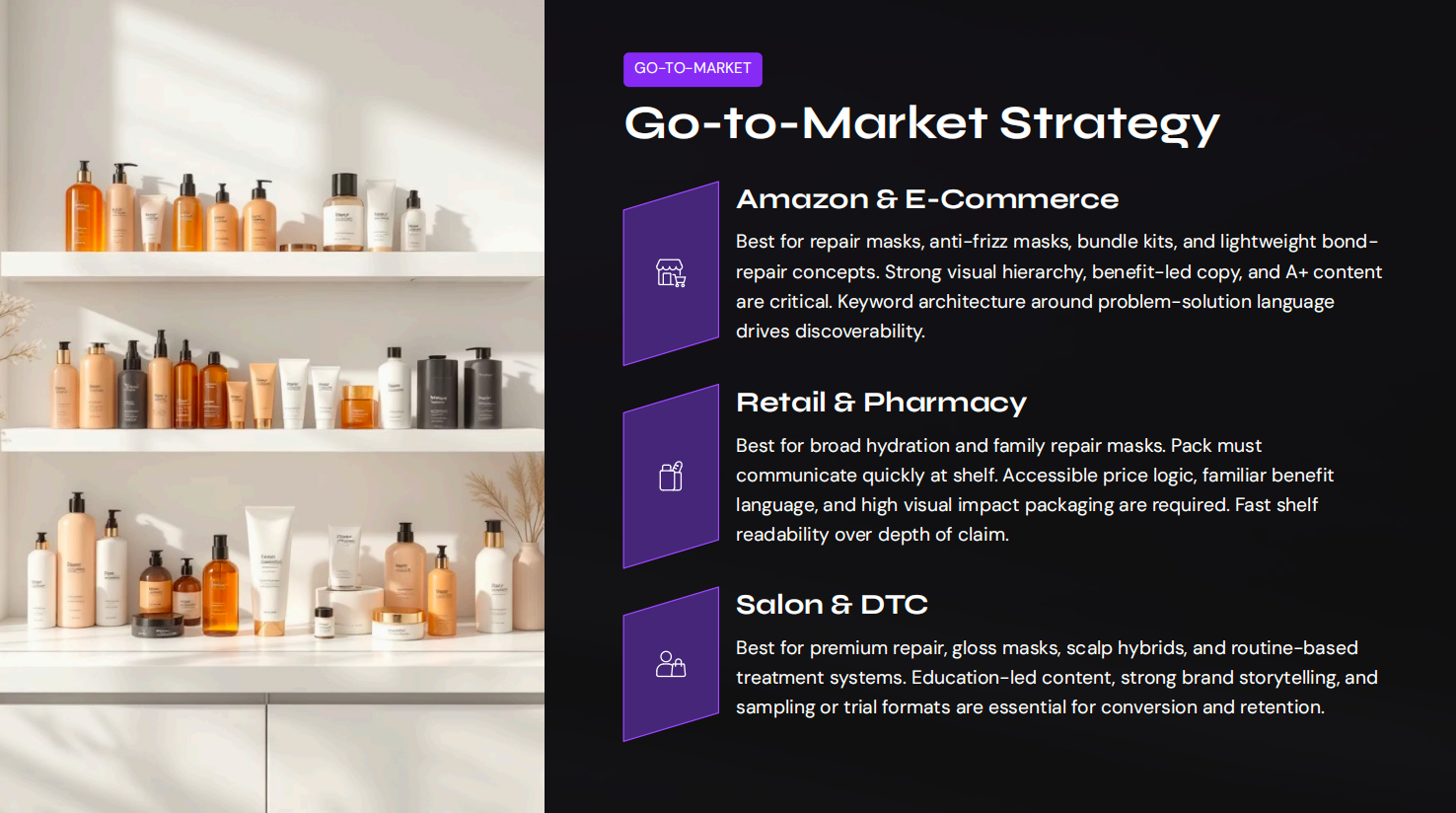
Channel Strategy
A strong EU hair mask launch should be channel-matched from the start.
Amazon
Best for repair, anti-frizz, bundles, and lightweight bond-repair concepts.
Clear titles, strong visual hierarchy, and visible problem-solution language matter most.
Retail
Best for broad hydration, mainstream repair, and family-use formats.
Quick shelf readability and easy pricing logic are critical.
Salon / Professional
Best for gloss masks, premium repair, color care, and treatment systems.
Technical credibility and premium feel matter more here.
DTC
Best for scalp hybrids, premium routine concepts, and educational treatment systems.
This channel rewards ritual storytelling, ingredient education, and bundle logic.
The strongest strategy is to match the first SKU to the channel where its logic is easiest to understand.
Go-to-Market Strategy
Compliance and Risk Priorities
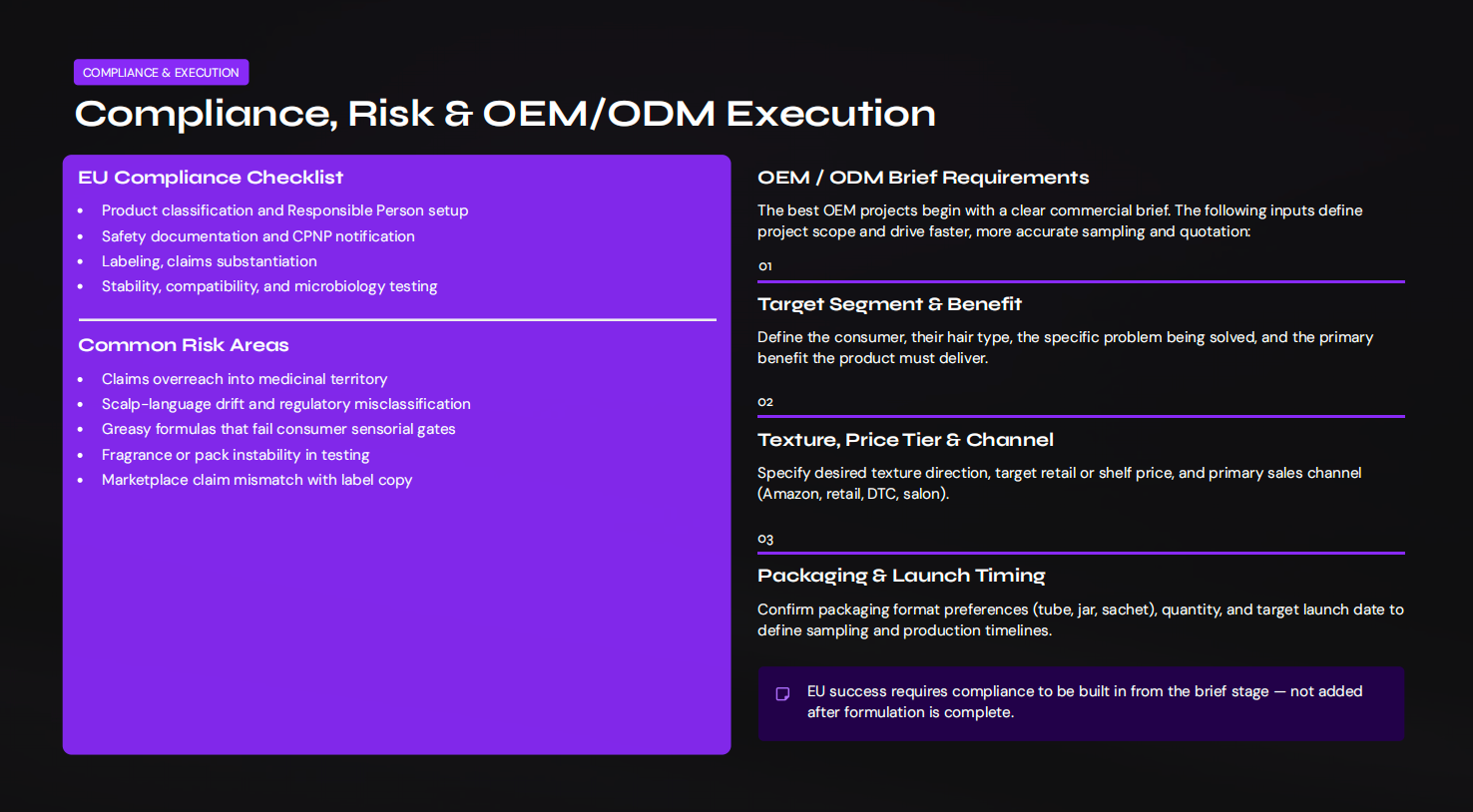
In the EU, compliance should be treated as a commercial workstream, not a final admin step.
Key priorities include:
- keeping the product clearly within cosmetic classification
- appointing an EU Responsible Person
- preparing safety documentation and product files
- completing notification before market placement
- ensuring correct INCI labeling and required pack information
- aligning claims with realistic substantiation
- validating stability, compatibility, and packaging integrity
- ensuring microbiology and preservation logic are appropriate
- avoiding stronger online claims than what the product file and label can support
Poor compliance planning often delays launch more than formulation itself. That is why packaging, claims, labels, and documentation need to be aligned early.
OEM / ODM Launch Logic
A hair mask project moves faster when the buyer arrives with a clear commercial brief.
A stronger RFQ should define:
- target market
- target segment
- key benefit
- preferred texture
- product format
- price tier
- target channel
- packaging direction
- launch timing
- formula priorities
- customization level
- expected order size
- target countries
- whether the project prioritizes speed, margin, or differentiation
The more clearly these inputs are aligned, the easier it becomes to reduce sample revisions, control landed cost, and move toward scalable production.
For many commercially useful projects, the typical path is:
- brief definition
- formula direction
- first lab sample
- refinement
- compliance preparation
- pilot
- production
The most efficient buyers choose their priority before RFQ:
- fastest launch
- lowest landed cost
- strongest differentiation
- premium brand image
Trying to optimize all four at once usually slows the project.
EU Hair Treatment
Mask Market 2026
Final Takeaway
The EU hair treatment and hair mask opportunity in 2026 is strongest where clear need-state targeting meets disciplined formulation and credible commercialization.
This category is attractive because consumers understand the treatment step, e-commerce supports education, and premiumization remains viable. But growth will not come from another generic repair tub. It will come from launching a sharper product concept with a clearer target user, a more believable formula story, better channel fit, and stronger compliance readiness.
If your team is evaluating a new hair treatment launch for the EU market, the strongest next step is to align use case, texture logic, pricing, packaging, and OEM pathway before scaling.
Download the Full Report (PDF)
Tell us your target region, product category, and the decision you’re trying to make. We’ll suggest the closest existing report—or build a tailored version.