


Executive Summary
This report explores the U.S. women’s perfume market in 2026, including demand trends, best-selling scent profiles, price architecture, discovery formats, channel fit, compliance priorities, and OEM launch planning. It is designed to help brands, distributors, product development teams, and e-commerce sellers turn market insight into a more practical fragrance launch strategy.
U.S. Women’s Perfume Market 2026: Demand Trends, Best-Selling Scent Profiles, and Launch Strategy
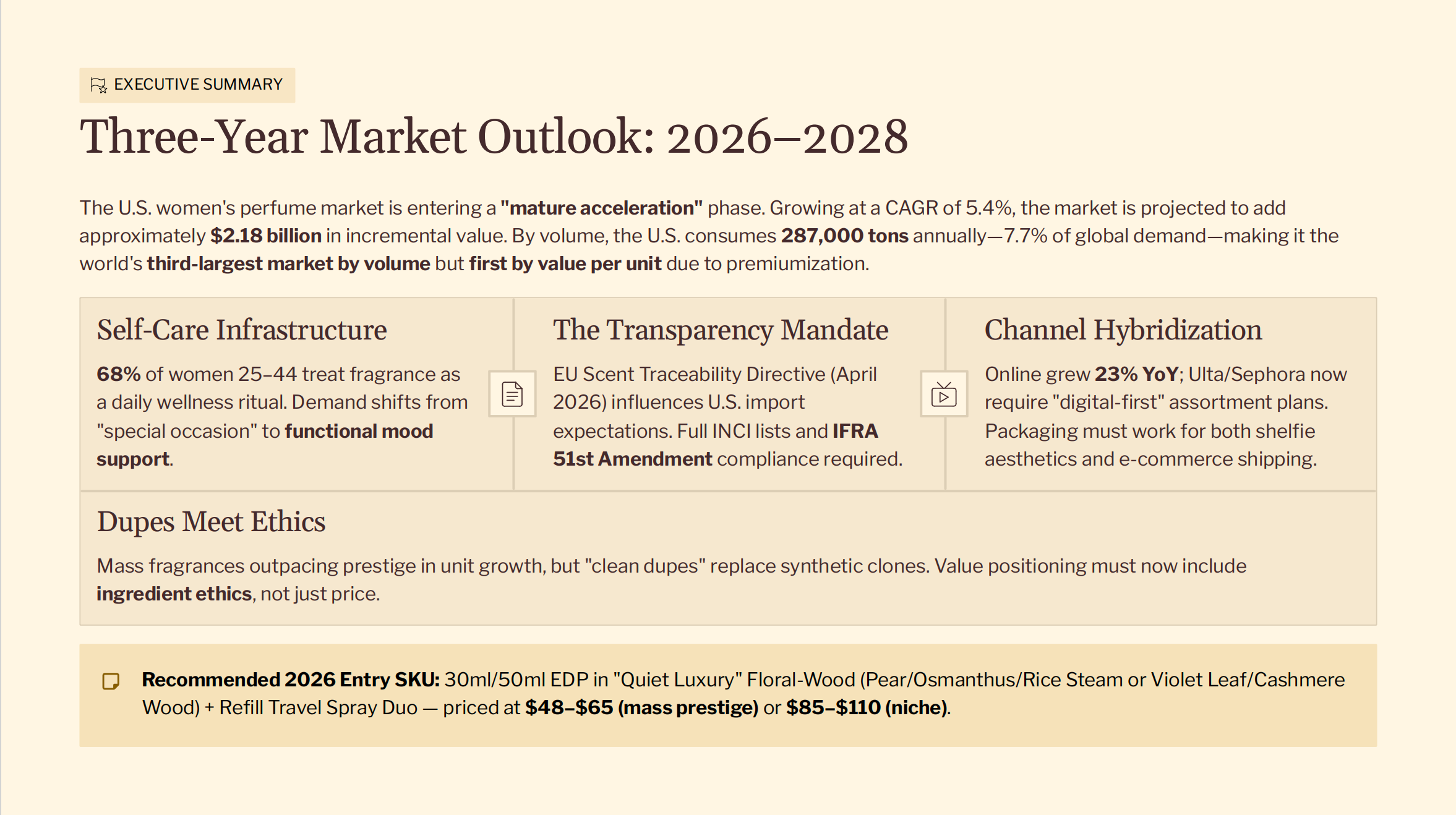
The U.S. women’s perfume market in 2026 is entering a more structured phase of growth. It is no longer driven only by occasion-based prestige purchases. Increasingly, fragrance is being bought as part of daily self-care, emotional regulation, scent layering, gifting, and identity expression.
For brands, distributors, product development teams, and e-commerce sellers, this creates a very different opportunity from the old luxury-only model. The fastest-growing part of the market is not simply the most expensive fragrance. It is the segment that combines emotional scent storytelling, clean and transparent positioning, wearable formats, and practical go-to-market execution.
This report turns market trends into launch logic. It covers demand shifts, best-selling scent profiles, price architecture, discovery and travel formats, channel requirements, compliance priorities, and OEM launch planning for brands entering or expanding in the U.S. women’s perfume category.
Executive Summary
The U.S. women’s perfume market remains one of the most commercially important fragrance categories in the world. What is changing in 2026 is not just market size, but buying behavior.
Consumers are increasingly purchasing fragrance as a daily-use product rather than a special-occasion indulgence. Mood, calm, confidence, and self-expression now influence purchase decisions alongside scent notes and brand image. This means brands can no longer rely on a beautiful bottle and a generic floral profile alone. The winning products are the ones that connect emotional relevance, format usability, and channel readiness.
For most new entrants, the most practical 2026 launch is not a broad line with too many SKUs. It is a focused assortment built around a 30ml or 50ml Eau de Parfum, supported by a travel spray, a discovery or giftable format, and a scent profile designed for repeat wear rather than one-time novelty.
Market Opportunity Overview
The U.S. women’s perfume market is large, resilient, and increasingly shaped by premiumization. At the same time, the market is not moving only toward ultra-luxury. One of the most commercially attractive spaces is the masstige band, where consumers expect a more premium scent story and better packaging, but still require accessible pricing.
This makes 2026 an especially attractive moment for structured launches. Consumers are willing to buy fragrance more often, rotate scents more frequently, and experiment with smaller formats before committing to full bottles. That shifts the opportunity away from one-size-fits-all product planning and toward a more layered portfolio strategy.
For brands entering the market, the key is not to ask whether women’s fragrance is growing. The key is to ask which scent roles, price tiers, and product formats now make the most commercial sense.
Three-Year Market Outlook: 202632028
What Is Driving Demand in 2026
Several shifts are shaping the market.
The first is the rise of fragrance as a daily ritual. Women increasingly use perfume not only for social occasions, but as part of morning routines, workday mood-setting, commute reset, post-shower freshness, and confidence-building.
The second is transparency. Ingredient ethics, clean positioning, allergen clarity, and compliance credibility now play a bigger role in purchase trust, especially in the mass prestige and DTC space.
The third is channel hybridization. A perfume today has to work in multiple environments. It needs to photograph well online, ship safely through e-commerce channels, and still look attractive on shelf in retail.
The fourth is scent fatigue. Overused profiles and generic category language are becoming less effective. Consumers are still buying florals, musks, ambers, and gourmands, but they are expecting a more specific emotional identity and a more usable everyday role.
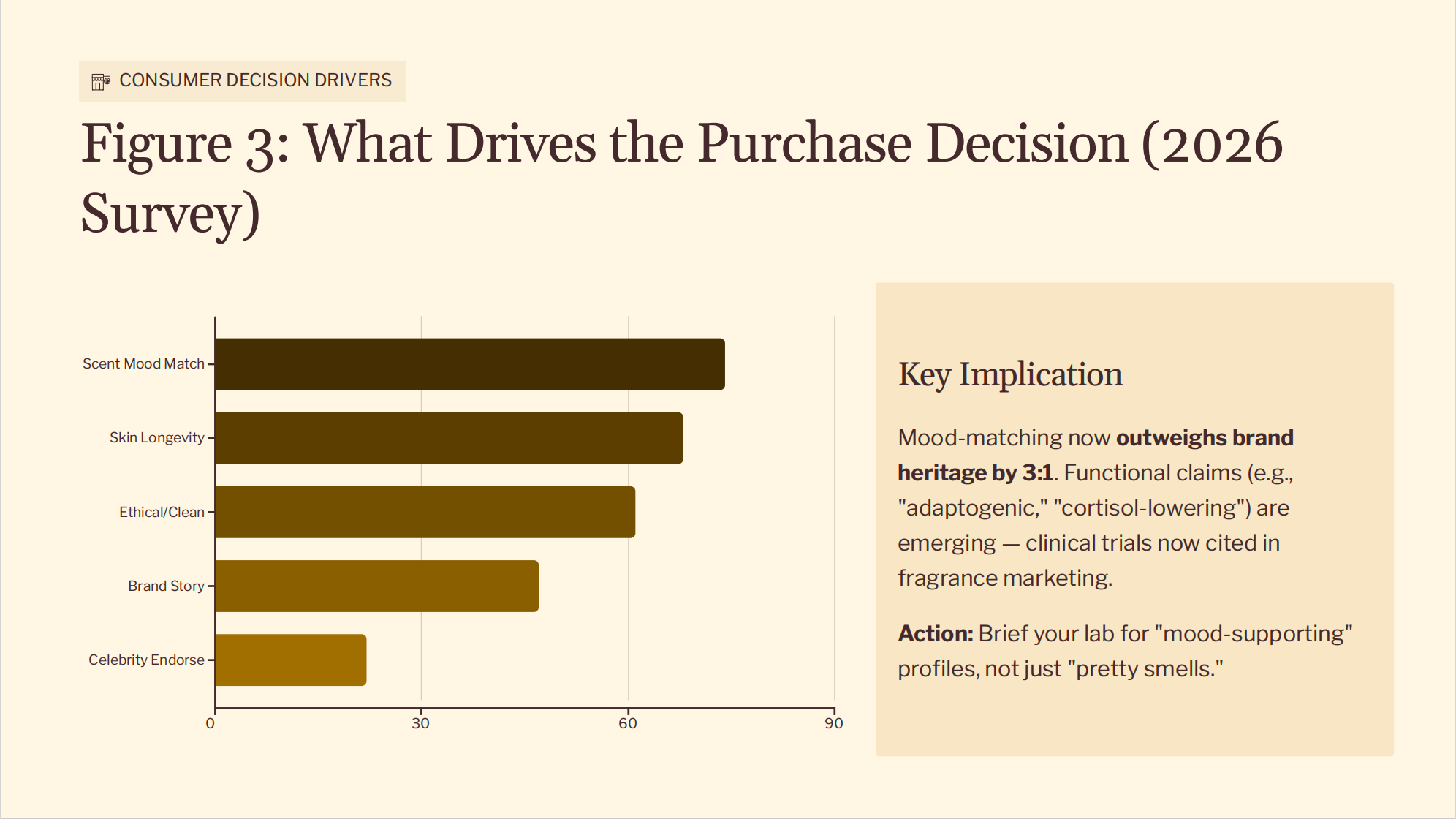
Figure 3: What Drives the Purchase Decision (2026
Survey)
Best-Selling Scent Profile Directions
The most commercially promising women’s perfume launches in 2026 are not the loudest or the most complicated. They are the ones that translate scent into a clear emotional role.
The following scent directions have the strongest market logic:
-
quiet luxury floral
-
floral-wood with soft pear, osmanthus, rice steam, or sandalwood
-
skin-scent musks and “my skin but better” profiles
-
violet leaf, cashmere wood, and cozy clean woody blends
-
tea, bergamot, and calm green freshness
-
warm amber-spice for evening or gifting
-
floral-oriental profiles built for romantic and occasion-based wear
-
clean aquatic and shower-fresh formats for everyday rotation
What matters is not only the note list. Consumers increasingly buy a fragrance because it represents calm sophistication, grounded focus, warm confidence, cozy nostalgia, or date-night mystery.
That means the product brief should define the emotional job of the scent, not just the ingredients.
The 2026 Scent Architecture Brands Should Use
Instead of launching “a floral perfume,” brands should think in scent roles.
A stronger assortment usually includes:
-
one all-day signature scent
-
one warmer or more sensual evening scent
-
one clean or post-shower freshness scent
-
one travel-friendly or layering-led format
-
one discovery path for lower-risk trial
This approach works because women’s fragrance buying is becoming more situational. Consumers are building scent wardrobes, not just repurchasing one lifelong favorite.
The stronger your assortment architecture, the easier it becomes to merchandise across DTC, Amazon, gifting, and retail.
Price Band Strategy
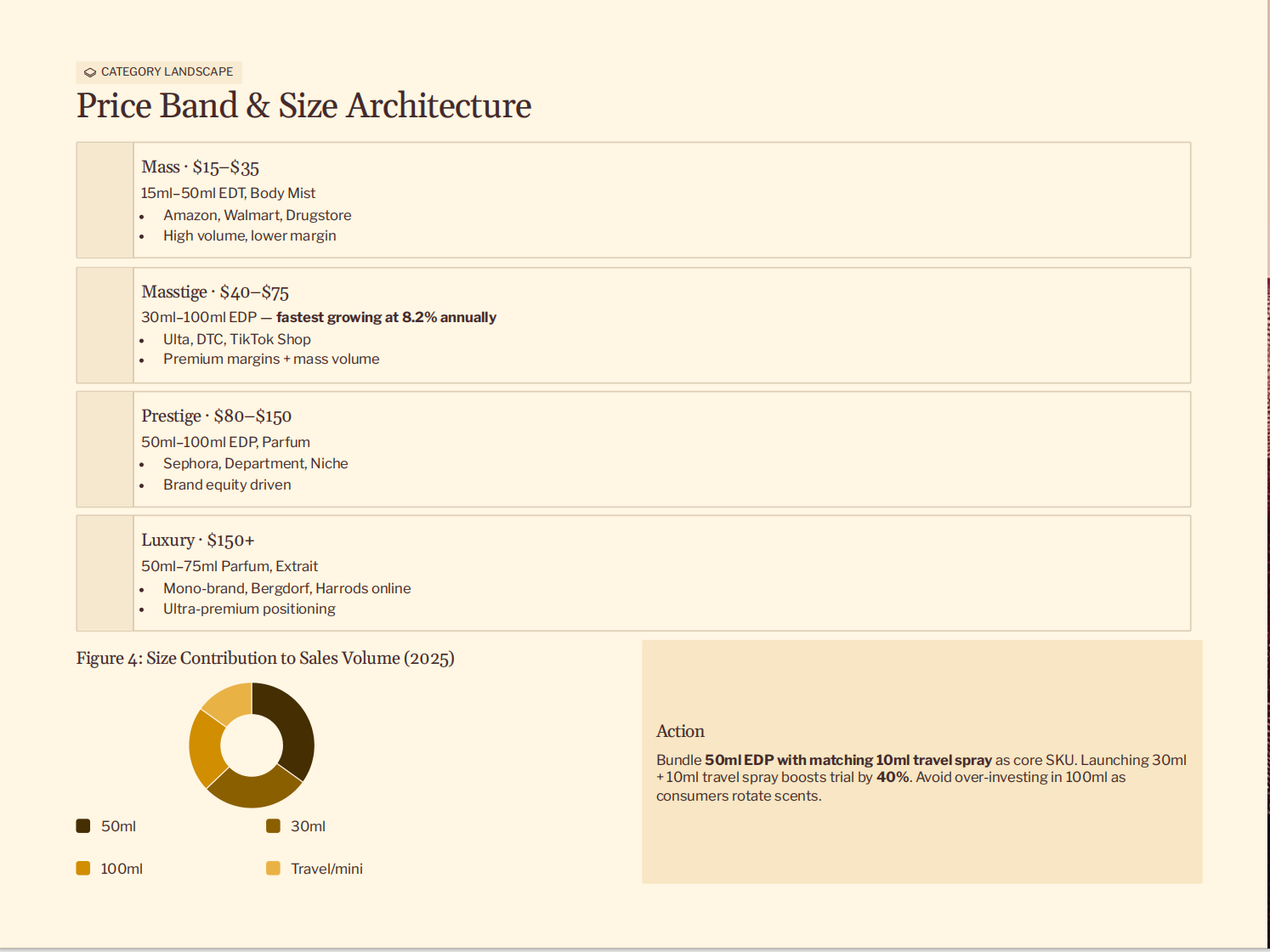
The women’s perfume market is clearly segmented, but one of the most attractive zones in 2026 is the masstige range.
Mass still matters for volume, but it is highly competitive and often price-sensitive. Prestige still matters for image and margin, but it requires stronger brand power and retail support. Masstige offers a more balanced route for many new launches because it combines premium cues with broader accessibility.
A practical pricing logic for many new brands is:
-
entry trial through travel spray or discovery set
-
core hero through 30ml or 50ml EDP
-
premium upsell through gift set, layering duo, or refill extension
This gives the line more commercial flexibility and increases the chance of repeat purchase rather than forcing every customer into a full-size first buy.
Price Band & Size Architecture
Why 30ml and 50ml Matter More Than 100ml
One of the clearest product signals in the current market is the strength of smaller and mid-size formats.
Consumers are rotating scents more often, buying for mood and season, and showing stronger interest in trial, travel, and curated discovery. That means 30ml and 50ml sizes often outperform 100ml as launch priorities because they reduce commitment while preserving premium perception.
Smaller formats help with:
-
first-purchase conversion
-
gifting suitability
-
online trial
-
discovery-led brand entry
-
lower inventory risk
-
easier bundle building
For most new launches, 30ml or 50ml should be the hero size, while travel sprays and discovery sets support acquisition and repeat behavior.
Discovery Sets, Gift Sets, and Layering Formats
The market is no longer centered only on full-bottle hero launches. Supporting formats now play a major role in conversion.
Discovery sets help reduce blind-buy risk and are particularly important for DTC and e-commerce. Travel sprays increase portability and repeat use. Layering duos can improve average order value and turn a perfume into a ritual. Holiday gift sets help move fragrance from self-purchase to gifting.
A more effective 2026 line usually includes:
-
one core EDP
-
one travel spray
-
one discovery set
-
one layering or body companion format
-
one Q4 giftable bundle
This creates multiple ways for the customer to enter the line and increases the brand’s ability to work across channels.
Channel Strategy
A women’s perfume launch should be built for channel fit from the beginning.
For Amazon, the strongest formats are often 30ml to 50ml EDPs, discovery sets, and value-led bundles. Packaging must be FBA-ready, tamper-aware, and resilient enough for transport.
For DTC, discovery kits, travel sprays, layering duos, and story-led bundles work especially well because they reduce trial risk and support email follow-up, sampling logic, and customer education.
For Ulta, Sephora, and other mass prestige environments, the product needs stronger shelf presence, better visual differentiation, and a more polished hero SKU strategy.
For department and niche channels, presentation, concentration, and giftability matter more. Refill systems, discovery kits, premium cartons, and elevated ingredient narratives can all improve sell-in quality.
The strongest launches do not force one packaging structure across every channel. They adapt the product system to the way each channel converts.
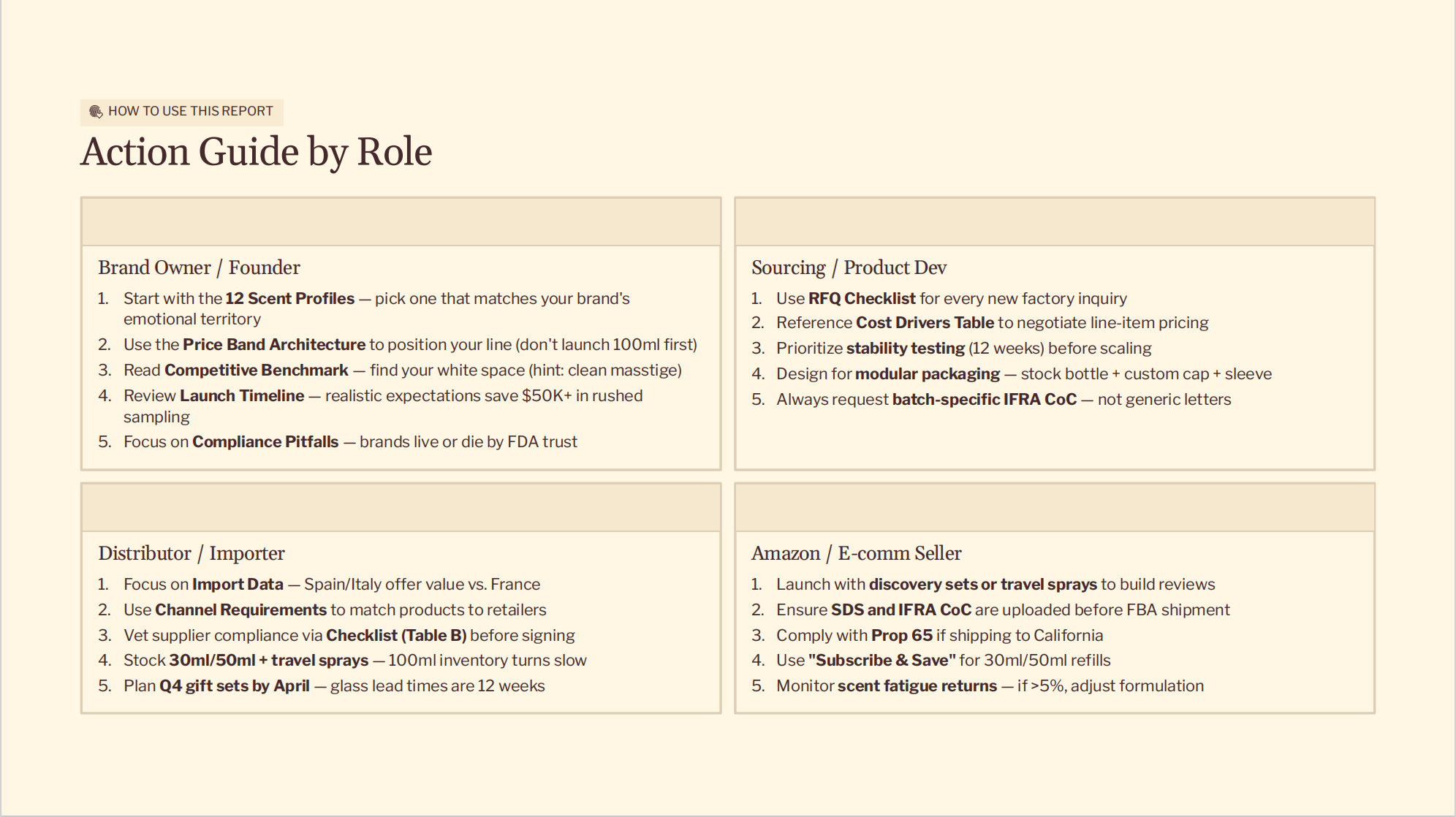
Action Guide by Roleq
Competitive White Space
The market is crowded, but there is still room for brands that combine emotional storytelling with functional transparency.
Many legacy brands still rely on flankers and heritage. Celebrity brands win attention but often lack ingredient trust and long-term differentiation. Dupes win on price but can struggle on ethics and compliance confidence. Niche brands have stronger margins but slower supply structures and less pricing flexibility.
This creates a commercially attractive white space in clean masstige women’s perfume:
-
emotionally resonant scent profile
-
modern and wearable positioning
-
transparent documentation
-
accessible premium pricing
-
modular format strategy
-
faster product development and MOQ flexibility
That is a stronger entry point than trying to out-luxury the luxury brands or out-cheap the dupe brands.
Compliance and Quality Priorities
Compliance is no longer something brands can fix after sampling. It has to be built into the product from the start.
Key priorities include:
-
allergen labeling readiness
-
batch-specific IFRA documentation
-
correct SDS classification
-
U.S. facility registration logic where needed
-
California warning review where applicable
-
packaging durability and spray performance
-
traceable batch coding
-
realistic recyclability language
-
adverse event handling preparation
For U.S. women’s perfume launches, trust and compliance are not back-office details. They directly affect importability, platform acceptance, retail readiness, and consumer confidence.
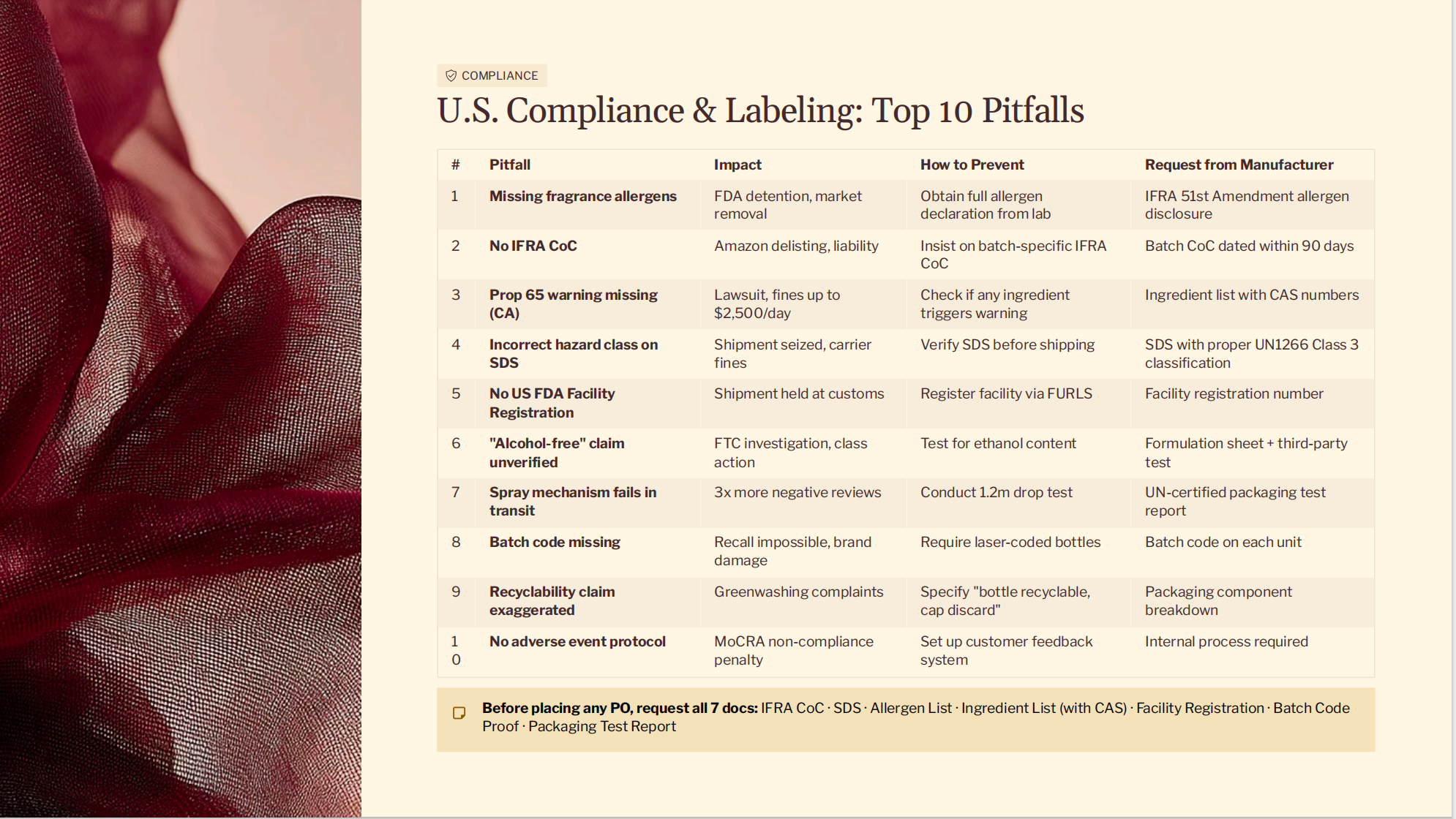
U.S. Compliance & Labeling: Top 10 Pitfalls
OEM Launch Strategy
The fastest way to reduce cost and development mistakes is to give the manufacturer a better brief.
A stronger RFQ should define:
-
target market
-
target channel
-
emotional scent direction
-
price tier
-
concentration
-
bottle size
-
packaging level
-
expected documentation
-
testing requirements
-
first order quantity
-
year-one forecast
-
launch timeline
-
shipping method
The more specific the brief, the easier it becomes to develop the right scent direction, control cost, and avoid wasted weeks on samples that miss the brand’s actual positioning.
For women’s perfume in 2026, the best OEM partners are not only filling bottles. They are helping structure the assortment, packaging route, compliance path, and commercial timing.
What Brands Should Do Next
If you are planning a U.S. women’s perfume launch, the smartest next move is not to ask for one broad “floral perfume” sample.
Instead:
-
choose a clear emotional scent territory
-
select the right price band
-
define the hero size
-
decide whether travel or discovery should be the entry point
-
align compliance documents before bulk planning
-
build a modular format system for DTC, Amazon, and retail
That approach leads to faster execution, better quoting, cleaner merchandising, and a more commercially usable assortment.
Final Takeaway
The U.S. women’s perfume market in 2026 is attractive not just because of size, but because of how consumer behavior is evolving. Women are buying perfume more frequently, for more moods, in more formats, and across more channels.
The brands most likely to win are not the ones launching the most SKUs. They are the ones building the clearest product system: a compelling scent role, a strong 30ml or 50ml hero, discovery and travel support, channel-aware packaging, and compliance-ready execution.
If your team is evaluating a new women’s fragrance launch, the strongest next step is to align scent profile, price architecture, format strategy, and OEM path first, then move into sampling with a much clearer brief.
Download the Full Report (PDF)
Tell us your target region, product category, and the decision you’re trying to make. We’ll suggest the closest existing report—or build a tailored version.