


Executive Summary
This report explores the U.S. sensual fragrance market in 2026, including market size, demand signals, scent directions, pricing architecture, compliance boundaries, and launch strategy. It is designed to help brands, importers, distributors, private label buyers, and Amazon sellers turn market insight into a more practical fragrance launch plan.
U.S. Sensual Fragrance Market 2026: Trends, Size, Pricing, and Launch Strategy
The U.S. sensual fragrance market in 2026 is not a separate regulated product class. It is a commercially meaningful fragrance positioning segment shaped by intimate scent storytelling, skin-scent appeal, date-night usage, discovery-set behavior, and social-driven conversion.
For brands, importers, distributors, private label buyers, and Amazon sellers, the real opportunity is not in using louder claims. It is in building a fragrance portfolio that feels emotionally compelling, commercially structured, and operationally compliant.
This report translates the sensual fragrance opportunity into practical launch logic. It covers market sizing, demand signals, scent directions, price tiers, channel structure, compliance boundaries, and an OEM-ready path for turning a concept into a launchable product line.
Executive Summary
The U.S. fragrance category remains attractive in 2026, and sensual positioning sits inside that larger opportunity as a high-conversion storytelling layer rather than a standalone regulated category. Premiumization, higher fragrance concentrations, travel formats, discovery sets, and social-led scent discovery are all supporting stronger entry conditions for brands that know how to frame sensuality without crossing compliance lines.
At the same time, this is not a category where aggressive wording guarantees better results. The highest-risk path is relying on unsupported biological or scientific attraction claims. The stronger path is to build a compliant sensual fragrance portfolio centered on skin-like intimacy, warm gourmand depth, gifting potential, layering logic, and channel-ready packaging.
For most operators, the best entry route is not one hero perfume alone. It is a compact portfolio built around a skin scent, a date-night gourmand, a discovery set, a travel format, and an oil or roll-on extension that can work across DTC, Amazon, gifting, and selective offline sampling.
Market Opportunity Overview
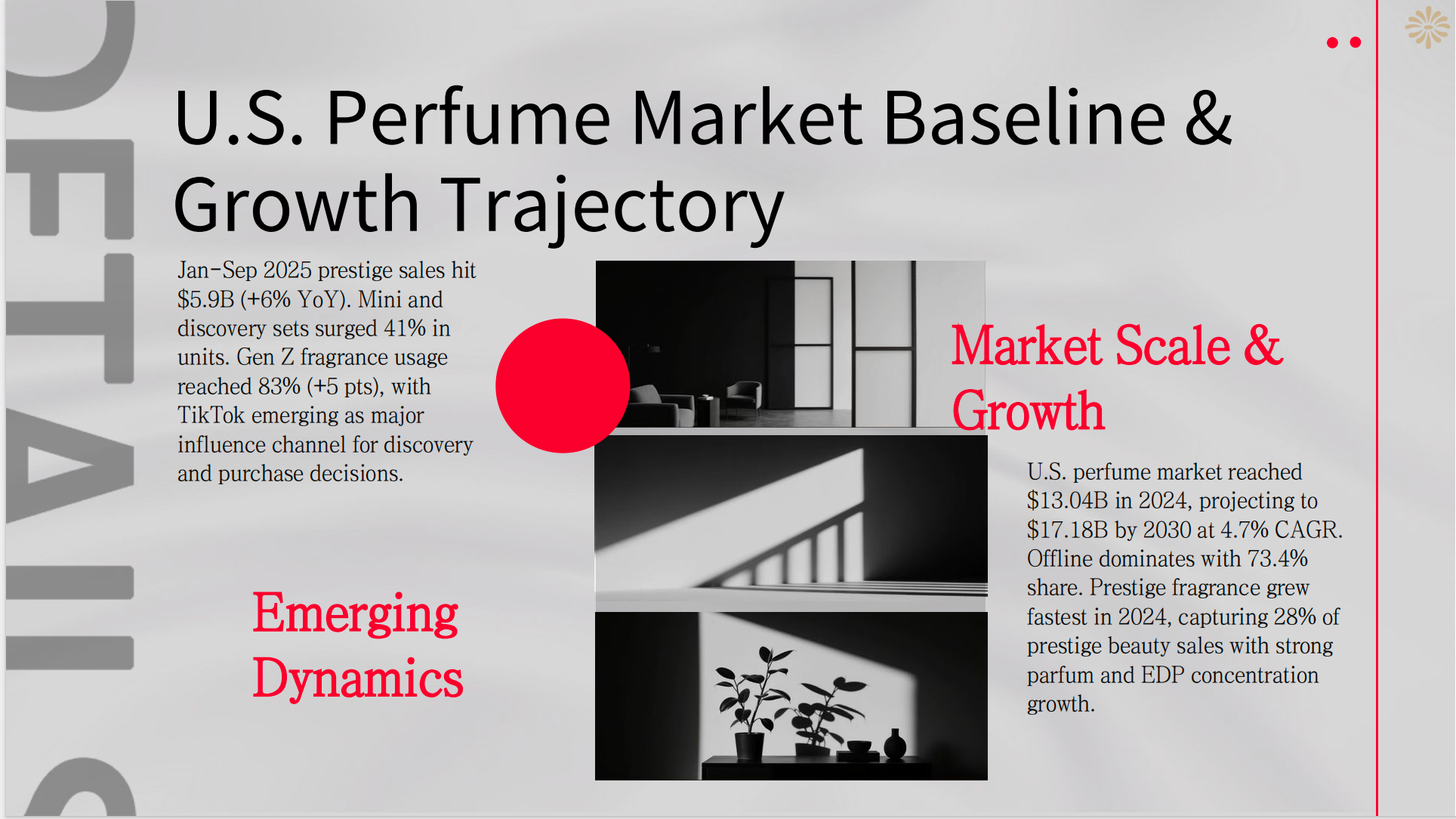
The U.S. fragrance market is large enough to support meaningful niche and sub-segment opportunities, and sensual positioning is one of the most commercially usable storytelling directions within it. In this report, sensual fragrance refers to perfumes and related fragrance formats marketed through themes such as intimate, warm, date-night, seductive, skin scent, confidence aura, or pheromone-inspired language, while remaining within mainstream fragrance and cosmetic positioning.
This matters because the consumer is not only buying scent notes. The consumer is buying a role for that scent in life: something personal, memorable, giftable, conversation-starting, and emotionally expressive. That is why sensual fragrance works best as a merchandising and portfolio strategy rather than as a single-note trend.
The most investable opportunity in 2026 is not to create an overly provocative product. It is to create a fragrance line that feels desirable, modern, socially relevant, and commercially adaptable across channels.
What Is Driving Demand
Consumer interest in sensual fragrance is being powered by a combination of emotional positioning and practical shopping behavior. Search behavior shows growing interest in adjacent themes such as pheromone perfume, gourmand fragrance, musk perfume, oil-based perfume, and discovery sets. Social platforms continue to amplify short-form scent storytelling, especially around compliments, intimacy, confidence, layering, and date-night identity.
This is important because sensual fragrance is rarely sold through technical explanation alone. It is sold through mood, scenario, packaging, and personal imagination. Consumers are responding to fragrance lines that feel like a complete ritual rather than just one bottle on a shelf.
Several demand patterns are especially relevant:
-
intimate skin-like musks and soft personal scents
-
warm gourmand profiles such as vanilla, amber, cherry, and tonka
-
pheromone-inspired roll-ons and oils positioned through confidence rather than biological certainty
-
travel sizes and discovery sets that reduce trial risk
-
gifting and seasonal positioning for romantic and holiday occasions
The market is telling brands to sell a sensual fragrance wardrobe, not just a sensual fragrance SKU.
Consumer Segments That Matter
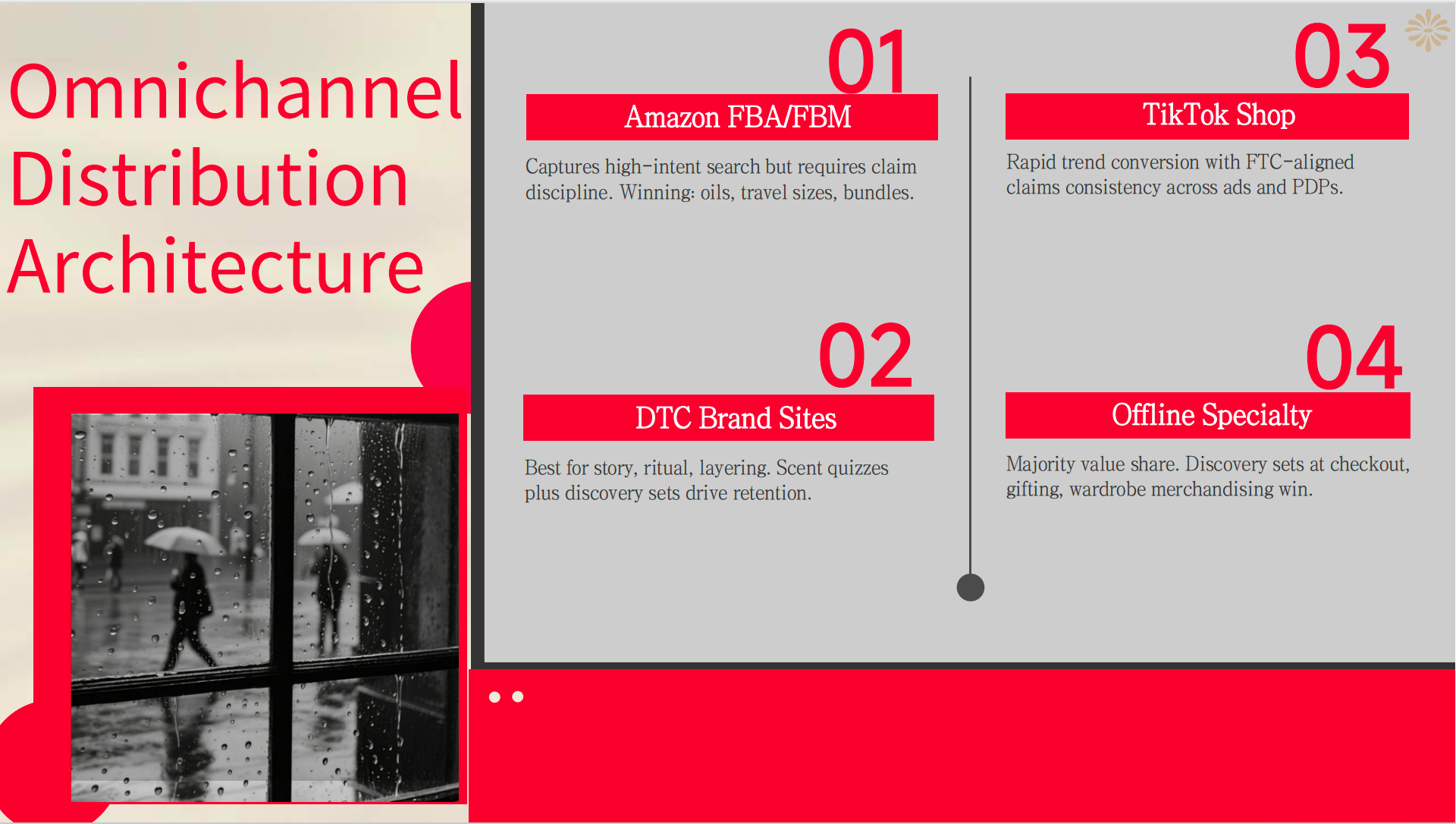
A useful way to think about the category is through four consumer mindsets.
The first is the skin-scent minimalist. This customer wants something subtle, close to the body, clean, intimate, and wearable every day. They are usually more interested in repeat use than in loud projection.
The second is the date-night gourmand buyer. This customer wants warmth, sweetness, softness, and a more memorable night-out signature. Cherry, amber, vanilla, creamy woods, and darker gourmand accents often work well here.
The third is the confidence-aura seeker. This customer is often drawn to pheromone-inspired language, body chemistry storytelling, and impulse-friendly formats such as roll-ons and travel oils. The purchase behavior here is often fast, emotional, and highly influenced by social proof.
The fourth is the scent-wardrobe builder. This customer buys by mood and occasion. They are more likely to respond to discovery sets, minis, layering systems, and multiple-SKU bundles.
A winning launch should not treat all of these consumers the same. The real advantage comes from mapping formats and messages to each usage logic.
Consumer Segments That Matter
Scent Directions with Commercial Potential
Not every sensual fragrance has to smell dark, sweet, or heavy. In fact, one of the most important takeaways for 2026 is that sensuality is broadening. It now includes not only bold date-night fragrance, but also close-to-skin intimacy, soft musk warmth, and confidence-led minimalism.
The commercially strongest directions include:
-
skin musk and clean intimacy
-
cherry and dark fruit gourmands
-
vanilla amber warmth
-
woody amber with a gender-neutral edge
-
floral-amber blends with soft sensuality
-
oil-based layering formats that deepen longevity and ritual value
For brands entering the category, the mistake is trying to define sensual fragrance too narrowly. A more effective strategy is to create a portfolio in which different scent directions represent different emotional occasions.
Product Strategy and SKU Architecture
The most practical way to enter the category is with a structured starter portfolio. Instead of launching too many scents at once, brands should build a compact assortment with clear portfolio roles.
A strong opening structure usually includes:
-
one hero skin-scent or intimate musk EDP
-
one warm gourmand or date-night EDP
-
one pheromone-inspired roll-on or oil-based add-on
-
one discovery set designed for trial and gifting
-
one travel duo or mini format for conversion and portability
-
one premium giftable bundle for seasonal campaigns
This structure works because each SKU plays a different commercial role. The full-size hero builds brand identity. The oil or roll-on captures impulse and add-on buying. The discovery set reduces blind-buy risk. Travel formats increase portability and repeat usage. Gift sets improve holiday and occasion relevance.
For OEM and private label buyers, this approach is also more manageable operationally. It makes MOQ planning, packaging reuse, and pricing architecture easier to control.
Pricing Strategy and Market Positioning
Sensual fragrance performs across multiple price bands, but not every tier behaves the same way.
At the lower end, small roll-ons and oil-based formats often work well as impulse products. These are especially useful for Amazon and social-driven purchases because they lower trial friction.
In the middle tier, 50 mL EDP products with strong emotional storytelling and premium-looking packaging offer one of the most accessible entry points for brands. This is often where the best balance exists between aspiration and conversion.
At the upper tier, niche and designer-style sensual fragrances can command significantly higher pricing, but that requires stronger packaging, stronger brand narrative, and stronger channel support.
For most new entrants, the most commercially efficient path is not to begin at the extreme premium end. It is to build a believable mid-premium price ladder with enough margin to support discovery sets, travel sizes, gifting, and repeat purchase formats.
Pricing Strategy and Market Positioning
Channel Strategy
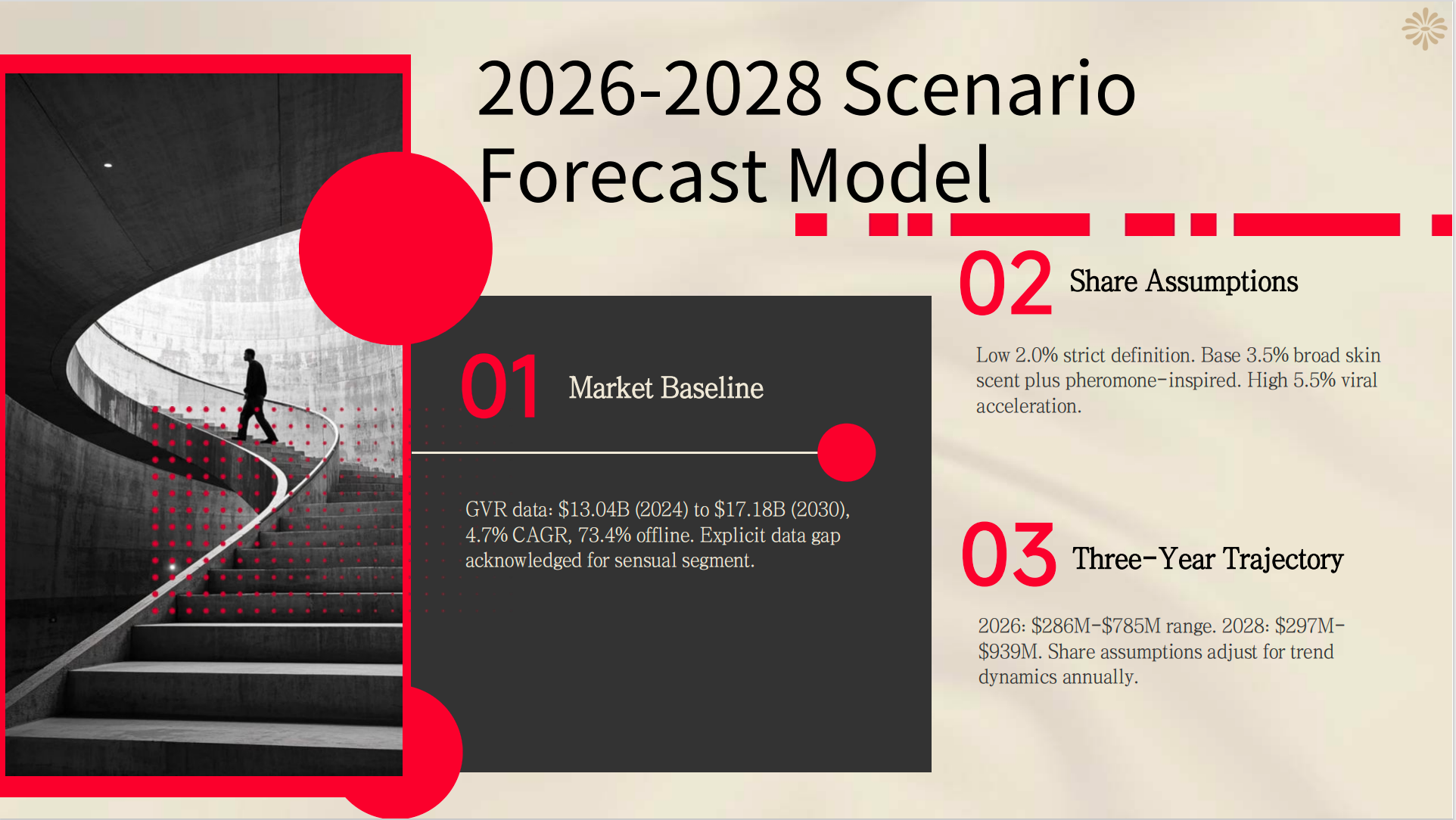
A sensual fragrance launch should be channel-native. The same product can behave very differently depending on whether it is sold on Amazon, DTC, TikTok-driven funnels, or offline retail.
Amazon is useful for capturing high-intent shoppers searching around pheromone perfume, sexy perfume, date-night fragrance, and related terms. However, the product and copy must be built carefully. Listings should rely on sensory storytelling, usage occasions, and product-format clarity rather than risky or exaggerated promises.
DTC is the best place to sell ritual, layering, and portfolio logic. Discovery sets, scent quizzes, voucher mechanics, and email flows all work especially well here because they help move the buyer from curiosity to confidence.
Offline and specialty channels still matter because fragrance remains a sampling-heavy category. Even digital-first operators benefit from real-world scent discovery moments through pop-ups, wholesale displays, gifting counters, or seasonal assortments.
The strongest channel strategy is hybrid: online creates demand, while trial formats and offline touchpoints improve conversion and repeat purchase.
Compliance and Risk Control
One of the most important realities in this segment is that sensual positioning can be commercially powerful but operationally risky if the copy goes too far. The most common problem is when marketing language implies biological, medical, hormonal, or scientifically guaranteed attraction effects.
The safer and more scalable approach is to position the product through emotional and sensory outcomes instead:
-
intimate
-
inviting
-
warm
-
close-to-skin
-
confidence-boosting
-
date-night ready
-
designed to feel personal
This allows the brand to keep the product firmly inside fragrance and cosmetic expectations without creating unnecessary claims exposure.
Beyond copy, compliance also includes labeling, ingredient presentation, documentation, safety files, platform readiness, and shipping constraints. For alcohol-based perfumes, logistics planning and packaging durability should be considered at the start, not after launch decisions are already made.
In this category, compliance is not a legal footnote. It is part of launch success.
Pricing Strategy and Market Positioning
Packaging and Merchandising
Sensual fragrance does not need to look explicit to sell well. In many cases, a more premium and restrained visual system performs better because it increases giftability and broadens channel acceptance.
Useful packaging cues include:
-
elevated typography
-
warm neutrals or deep rich tones
-
rigid boxes and structured inserts
-
tactile finishing details
-
consistent portfolio coding across day, night, and layering formats
-
discovery cards or ritual instructions inside the carton
The strongest visual route is often what can be called clean sensuality: premium, modern, intimate, and giftable without looking cheap or overly provocative.
This is especially valuable for private label and OEM buyers because it creates a line that feels retail-ready and easier to adapt across multiple markets and channels.
OEM Launch Logic
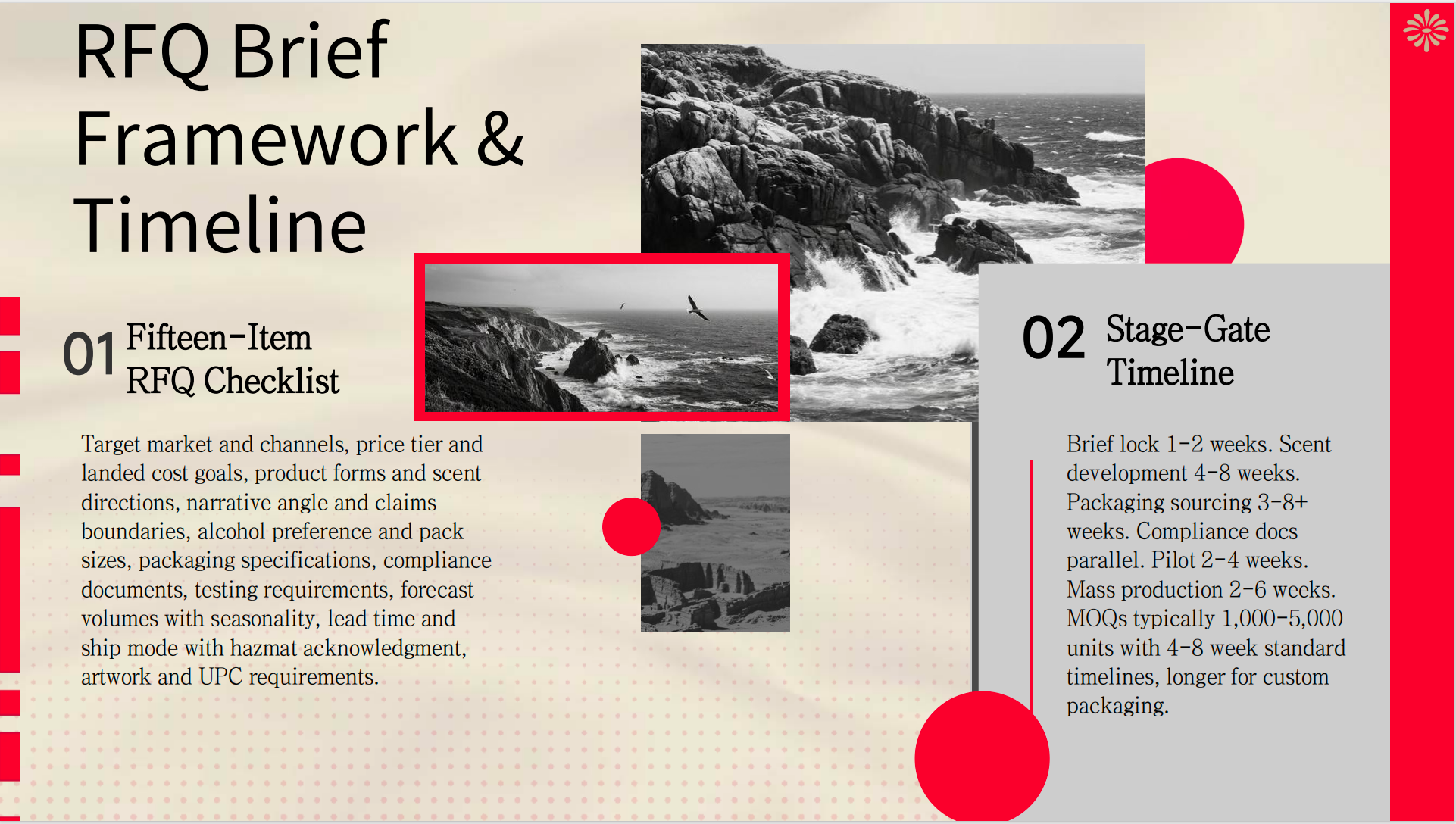
For buyers planning to move from concept to production, the fastest way to improve execution is to make the RFQ brief more specific from day one.
A stronger brief should include:
-
target market
-
target channel
-
MSRP range
-
scent direction
-
preferred product form
-
pack size plan
-
narrative angle
-
claims boundary
-
alcohol or oil preference
-
packaging expectations
-
required compliance documents
-
testing expectations
-
first order quantity
-
six-month forecast
-
shipping preference
The more clearly these decisions are aligned upfront, the easier it becomes to quote accurately, reduce unnecessary sampling rounds, and build a commercially realistic launch path.
A good supplier does not only provide fragrance filling. A good supplier helps structure the portfolio, the pack strategy, the compliance path, and the testing logic so that launch risk is reduced before the product reaches market.
Final Takeaway
The U.S. sensual fragrance market in 2026 should not be understood as a fringe niche. It is a commercially useful fragrance positioning segment that sits at the intersection of intimacy, emotion, social discovery, gifting, and portfolio merchandising.
The brands most likely to win are not the ones making the boldest claims. They are the ones building the best conversion system: a strong scent story, a disciplined SKU ladder, channel-appropriate pricing, compliant copy, discovery-led trial formats, and packaging that supports gifting and repeat purchase.
If you are evaluating a sensual fragrance launch for the U.S. market, the smartest next step is not to ask for one random sample. It is to define your price band, scent territory, channel plan, and compliance boundaries first, then build the right SKU path from there.
Download the Full Report (PDF)
Tell us your target region, product category, and the decision you’re trying to make. We’ll suggest the closest existing report—or build a tailored version.