



Executive Summary
This report explores the U.S. body mist market in 2026, including market size, demand signals, price architecture, route-to-market, compliance, and OEM execution. It is designed to help brands, importers, distributors, and Amazon sellers turn market insight into a more practical body mist launch strategy.
U.S. Body Mist Market 2026: Trends, Size, Pricing, and Launch Strategy
The U.S. body mist market in 2026 is no longer just a low-price fragrance category. It is becoming a more structured, multi-tier opportunity shaped by layering habits, reapplication behavior, affordable indulgence, and the growing normalization of scent wardrobes.
This report is designed for brands, importers, distributors, private label buyers, and Amazon sellers who want to understand where the category is growing, what pricing architecture is working, which scent directions are gaining traction, and what operational requirements matter before launch.
More importantly, this is not only a market overview. It is a practical launch guide. It connects market size and consumer demand signals with pack-size strategy, price ladders, route-to-market choices, compliance, Amazon readiness, and OEM execution planning.
Section 1
Market Opportunity Overview
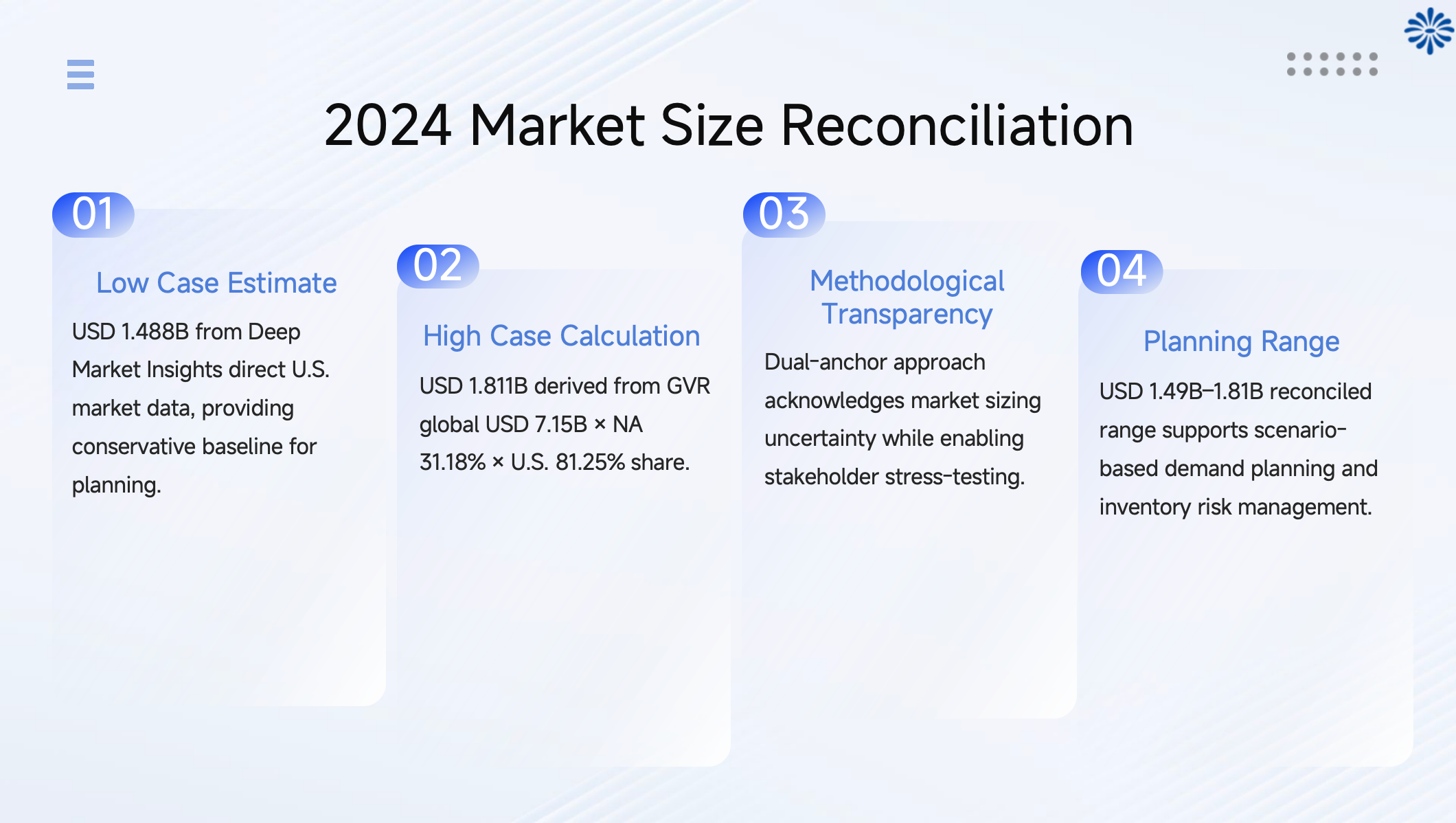
The U.S. body mist market remains commercially attractive in 2026, with the report estimating a planning range of approximately USD 1.66 billion to USD 1.98 billion. The lower-end estimate follows a direct U.S. market approach, while the higher-end estimate is built from global market data adjusted through North America and U.S. shares. This range is useful because it gives brands and buyers a more realistic planning frame instead of relying on one single forecast number.
The category is supported by multiple structural drivers. Fragrance remains resilient across channels, while body sprays and related formats are increasingly tied to layering behavior, casual daily wear, gym and commute use, and reapply-friendly fragrance routines. That makes body mist especially relevant for consumers who want scent variety without the commitment or price barrier of a traditional prestige perfume.
Section 2
Why Body Mist Is Growing
The body mist format is benefiting from a broader consumer shift toward scent wardrobes. Instead of relying on one signature fragrance only, many consumers now buy multiple scent formats for different occasions, moods, and price points. In this environment, body mist performs well because it feels lighter, easier to reapply, and more compatible with routine-based usage.
The report also highlights how layering is accelerating category relevance. Prestige body sprays grew strongly, and adjacent formats like hair fragrance also expanded, suggesting that consumers increasingly treat fragrance as a flexible system rather than a single-item purchase. This creates stronger opportunities for brands that design body mist lines as part of a portfolio rather than as one isolated SKU.
Section 3
Demand Signals and Scent Direction
One of the clearest takeaways from the report is that demand is not being driven by novelty alone. Search and market signals point to strong momentum in gourmand-related directions, especially vanilla and caramel-linked scent families. These notes can serve as commercially useful anchors when building hero SKUs or seasonal variants.
At the same time, competition is already dense. The report notes that Ulta lists 146 body mist and hair mist products, which means success depends on total execution quality, not just choosing a scent profile. Packaging feel, sprayer performance, portability, leak resistance, retail presentation, and channel readiness all shape whether a launch can stand out in a crowded field.
Section 4
Price Architecture and Where the White Space Is
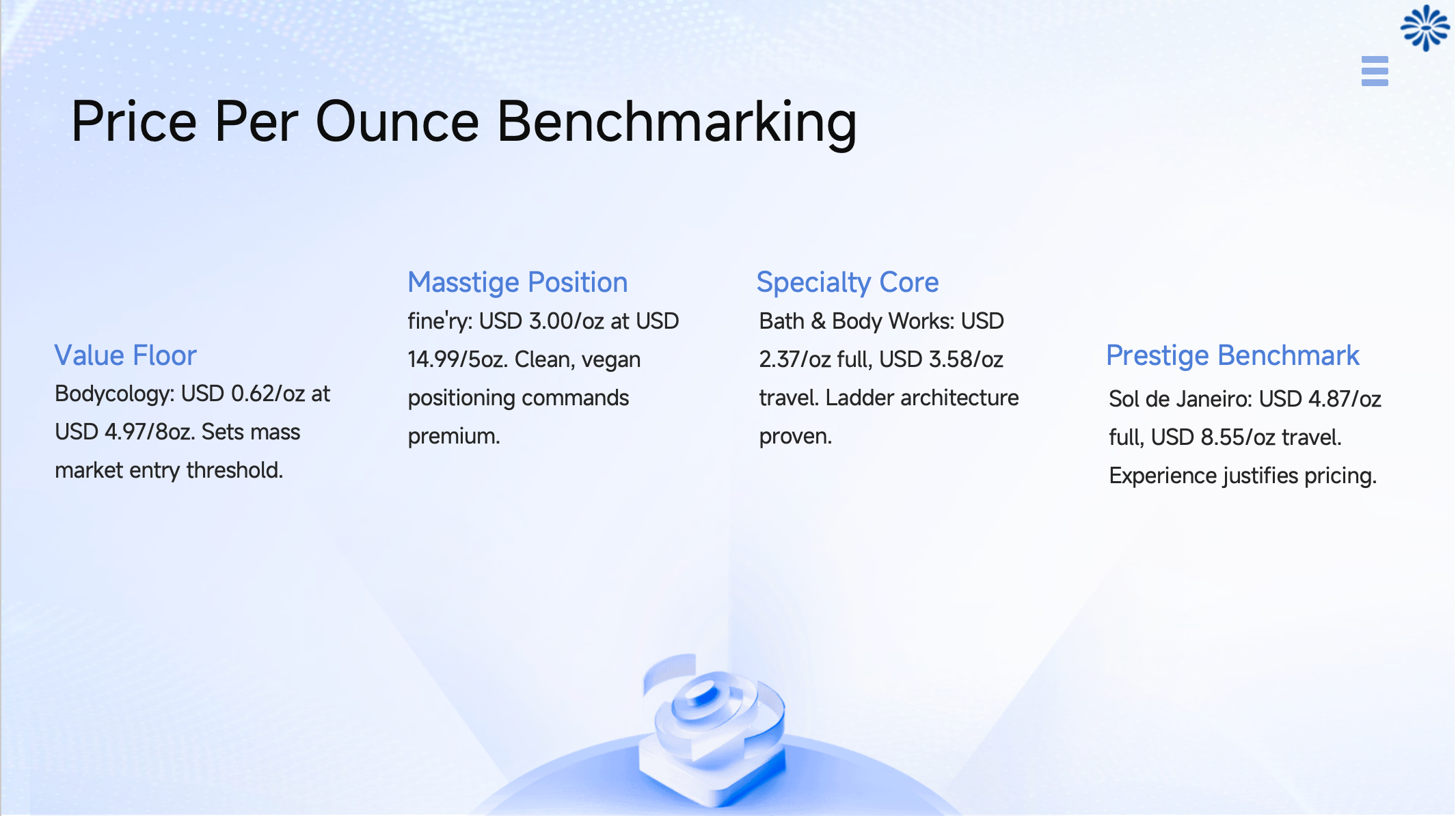
The U.S. body mist market is clearly tiered. At the value end, mass-market products define the entry threshold. Masstige brands are able to command higher pricing through cleaner positioning and stronger brand storytelling. Specialty and prestige players justify even higher per-ounce pricing through experience, packaging, and travel-size strategy.
The report suggests that one of the most investable white spaces sits between lower-priced value players and high-priced prestige brands. A premium tier around USD 17 to USD 25, paired with a good sprayer, better leak resistance, policy-safe claims, and Amazon-ready preparation, may offer a more balanced consumer value proposition. In practical terms, this means a brand can deliver an elevated experience without needing to enter the prestige price ceiling immediately.
Section 5
Pack Size Strategy and SKU Architecture
Another strong signal in the report is the importance of pack-size ladders. Full sizes around 8.0 to 8.4 oz remain highly relevant for replenishment and home use, while travel formats around 2.5 to 3.3 oz are important for trial, gifting, portability, gym bags, and commuting. These smaller sizes can also support higher per-ounce pricing when the portability value is clear.
For most new launches, the recommended architecture is not a long SKU list. It is a disciplined ladder:
-
one gourmand hero
-
one skin-musk or easy everyday base
-
one fresh or seasonal direction
-
travel and full-size options for each key scent
-
one discovery set to improve trial and gifting
-
total SKU count controlled within a manageable range
This approach helps limit MOQ inflation, reduces inventory complexity, and supports clearer merchandising across DTC, Amazon, and retail.
Section 6
Channel Strategy: Amazon, Retail, and DTC
The report makes it clear that online is no longer optional. Estimated online share is large enough that shipping durability, hazmat handling, barcode visibility, and Amazon/FBA preparation must be considered from the very beginning, not after the formula and packaging are already finalized.
For Amazon sellers, this is especially important. Alcohol-based body mist launches have to respect carrier restrictions, packaging preparation rules, and claims policing. A product that looks attractive on shelf but is not built for FBA, leak prevention, and compliant listing language can quickly create stranded inventory, takedowns, returns, or margin erosion.
For DTC brands, discovery sets and travel sizes are useful because they reduce friction in a category where customers cannot smell before buying. For retail distribution, price ladder clarity and pack architecture matter more because velocity expectations are harder and shelf competition is more direct.

Section 7
Compliance and Quality Cannot Be an Afterthought
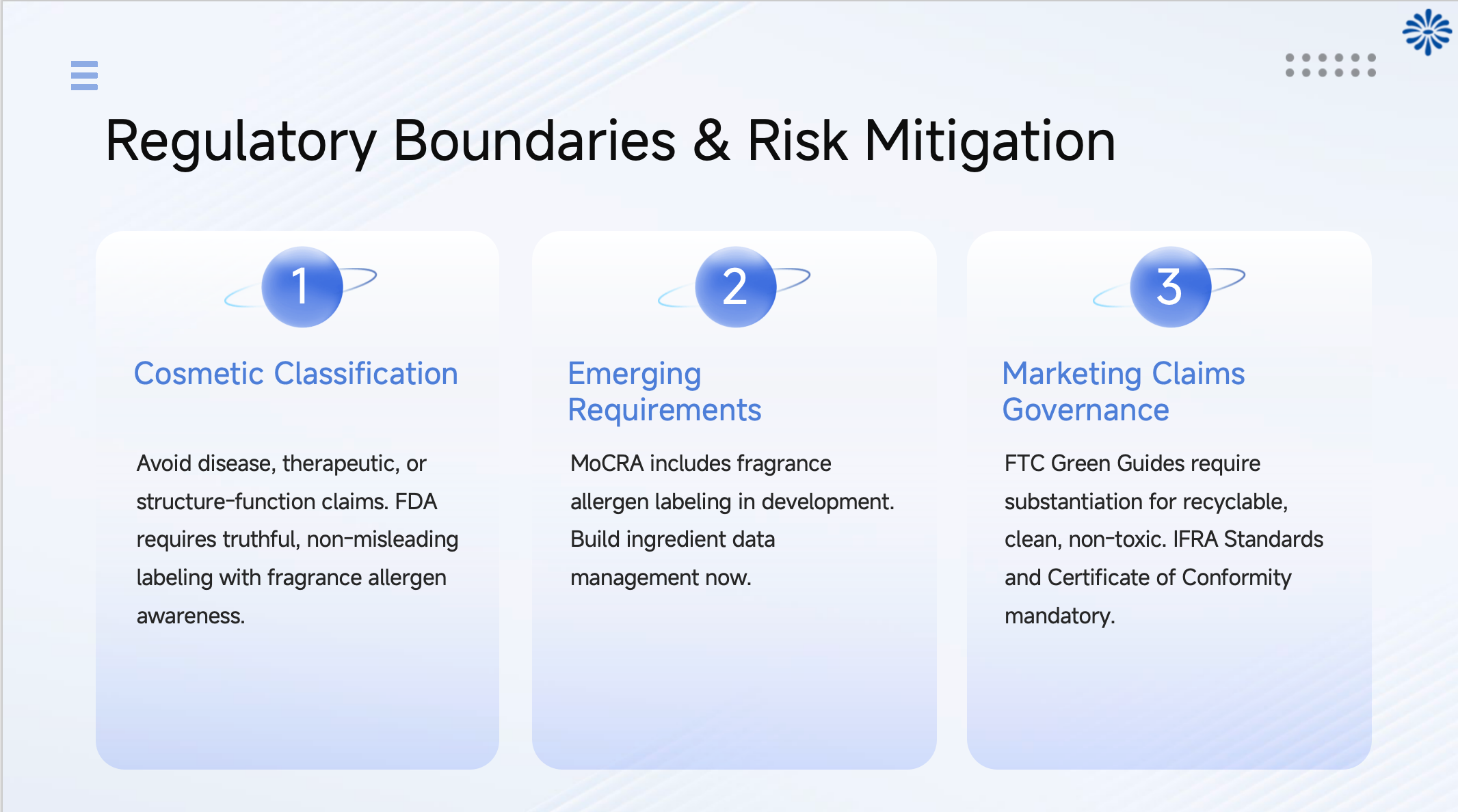
The report repeatedly shows that the biggest launch failures are often operational rather than creative. Body mist brands must manage compliant labeling, claims discipline, fragrance allergen awareness, documentation, packaging compatibility, and transport durability earlier in the development process.
This is especially true for brands targeting Amazon and broad U.S. distribution. Claims such as disease treatment, unqualified “non-toxic,” or false FDA approval references create risk. Documentation such as SDS, IFRA certificate, COA, ingredient list, label proof, and test protocols should be prepared as part of launch readiness, not as a later correction step.
Section 8
OEM Execution and What Buyers Should Prepare
The OEM section of the report is especially valuable for launch planning. It shows that the development path is gated, with formula development, packaging sourcing, pilot filling, testing, and scale-up all taking time. Total development and launch timelines commonly stretch into a multi-week process, and packaging components often create the real critical path.
A stronger RFQ should therefore include:
-
target market
-
priority channel
-
MSRP band
-
forecast volume
-
preferred scent direction
-
base preference and shipping implications
-
pack-size ladder
-
packaging expectations
-
Amazon prep readiness
-
compliance file expectations
The better these variables are defined upfront, the easier it is to recommend the right SKU strategy, pack sizes, and OEM route.
The U.S. body mist market in 2026 is attractive, but it is not easy. The category is growing because it fits modern fragrance behavior: layering, reapplication, portability, affordable indulgence, and multi-format scent wardrobes. At the same time, competition is dense and operational requirements are rising.
The brands most likely to win are not the ones that launch the most products. They are the ones that choose a clear price lane, build a disciplined SKU ladder, align scent direction with real demand signals, and design packaging, compliance, and channel readiness from day one.
If you are planning a U.S. body mist launch, the fastest next step is not simply asking for a sample. It is first aligning your target market, price point, and channel strategy, then building the right SKU path from there.
Download the Full Report (PDF)
Tell us your target region, product category, and the decision you’re trying to make. We’ll suggest the closest existing report—or build a tailored version.