


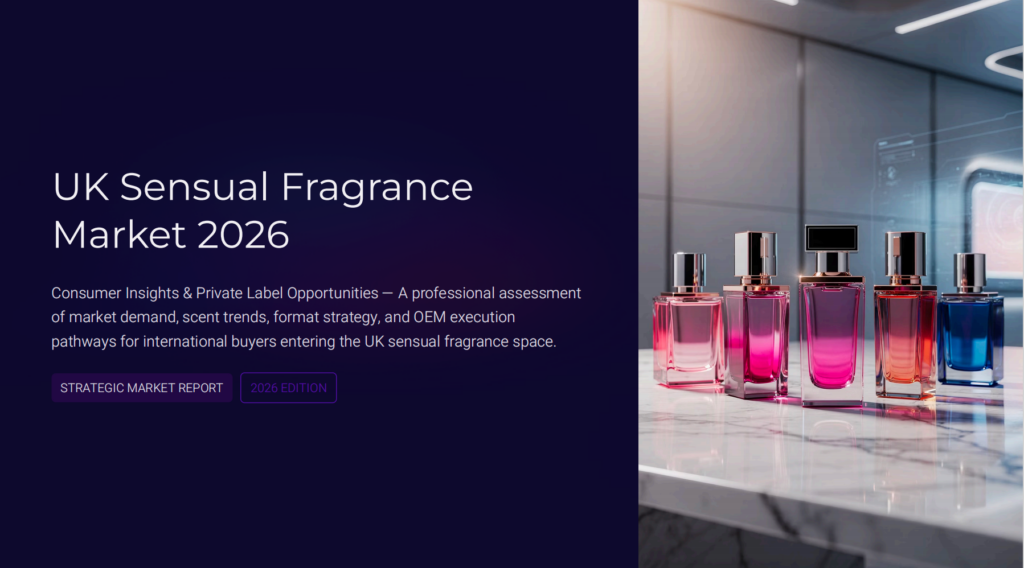
Executive Summary
This report explores the UK sensual fragrance market in 2026, including consumer trends, scent preferences, layering behavior, product format strategy, channel fit, compliance priorities, and private label launch opportunities. It is designed to help brand owners, importers, distributors, Amazon sellers, and product teams turn market insight into a more practical fragrance launch strategy.
UK Sensual Fragrance Market 2026: Consumer Insights, Layering Trends, and OEM Launch Opportunities
The UK sensual fragrance market in 2026 is commercially attractive because fragrance is no longer purchased only as a luxury accessory. It is increasingly bought as part of mood, intimacy, self-expression, gifting, and daily personal ritual.
For brands, importers, distributors, Amazon sellers, and private label buyers, this creates a more practical opportunity than the old “night-out perfume” model. Sensual fragrance in the UK is broadening beyond heavy, overtly seductive scents and moving toward skin-close musks, creamy warmth, soft gourmands, woody ambers, and wearable intimacy.
This report turns those market signals into launch logic. It covers consumer demand, scent direction, product format priorities, price positioning, channel strategy, compliance planning, and private label execution pathways for companies entering or expanding in the UK sensual fragrance category.
Executive Summary
The UK sensual fragrance market in 2026 is best understood as a modern fragrance positioning opportunity rather than a narrow “sexy perfume” niche. Consumers are buying these products not only to impress others, but to feel more confident, more polished, more emotionally aligned, and more personally expressive.
That shift matters for product development. The most commercially useful sensual fragrances are no longer only bold florientals or intense evening scents. The market is increasingly favoring skin scents, musky-clean signatures, warm vanilla-amber directions, soft woods, and layering-friendly products that feel intimate rather than loud.
For most private label and OEM buyers, the strongest entry strategy is not to launch too many full-size perfumes at once. It is to build a focused assortment around one hero sensual Eau de Parfum, one accessible supporting format such as a mist or oil, and one set-based SKU for gifting or trial.
Market Opportunity Overview
The UK fragrance category remains strategically attractive because it gives consumers an accessible form of emotional luxury. Even in a cautious spending environment, fragrance can still feel rewarding, personal, and giftable without carrying the same financial commitment as many other premium beauty purchases.
Within that broader category, sensual fragrance is commercially interesting because it sits at the intersection of intimacy, self-expression, and routine. It can work as both a self-purchase and a gifting category. It can support daily wear as well as evening use. And it offers room for different price tiers and product formats.
The key opportunity in 2026 is not simply to launch a sensual fragrance. It is to launch a sensual fragrance concept that can flex across multiple use occasions, multiple formats, and multiple channels.
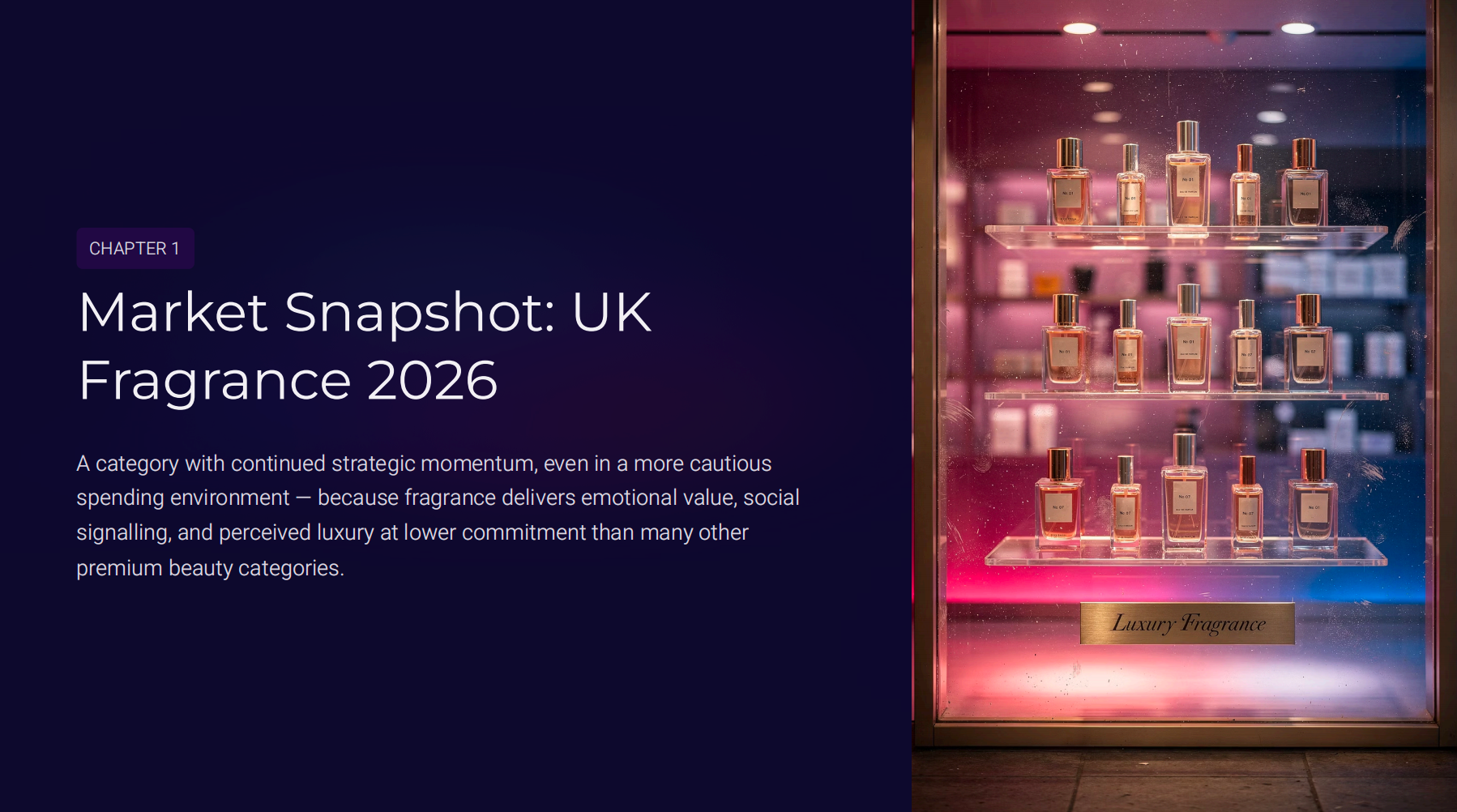
Market Snapshot: UK
Fragrance 2026
What Is Driving Demand in 2026
Several demand shifts are shaping the category.
The first is intimacy as a softer concept. Consumers are moving away from overly aggressive or loudly seductive fragrance ideas and showing more interest in close-to-skin warmth, musky softness, and emotionally resonant wearability.
The second is layering. Consumers are increasingly comfortable combining fragrance formats such as Eau de Parfum, body mist, hair perfume, perfume oil, and other supporting products. This creates stronger opportunities for brands that want to build a scent family instead of relying on one standalone SKU.
The third is format accessibility. Entry-price body sprays, mists, rollers, oils, and smaller formats are reducing trial barriers for younger consumers and allowing brands to widen the funnel before trading customers up into higher-margin products.
The fourth is gifting and seasonal buying. Sensual fragrance remains highly relevant for Valentine’s Day, party season, Q4 gifting, and self-gifting moments tied to lifestyle resets, confidence, and going-out occasions.
Consumer Demand Signals
Sensual fragrance demand in the UK is broad, but several patterns stand out clearly.
Consumers are increasingly responding to:
-
skin-close musks
-
clean sensuality
-
creamy vanilla amber warmth
-
woody musks
-
soft rose-amber blends
-
airy oud or smooth suede accents
-
darker fruit gourmands
-
intimate warm scents that feel personal rather than theatrical
This matters because buyers are not simply searching for “sexy perfume.” They are looking for a version of sensuality that feels wearable, giftable, and emotionally relevant.
The market is rewarding products that make the user feel confident, memorable, composed, or subtly attractive, rather than products built only on overt seduction language.
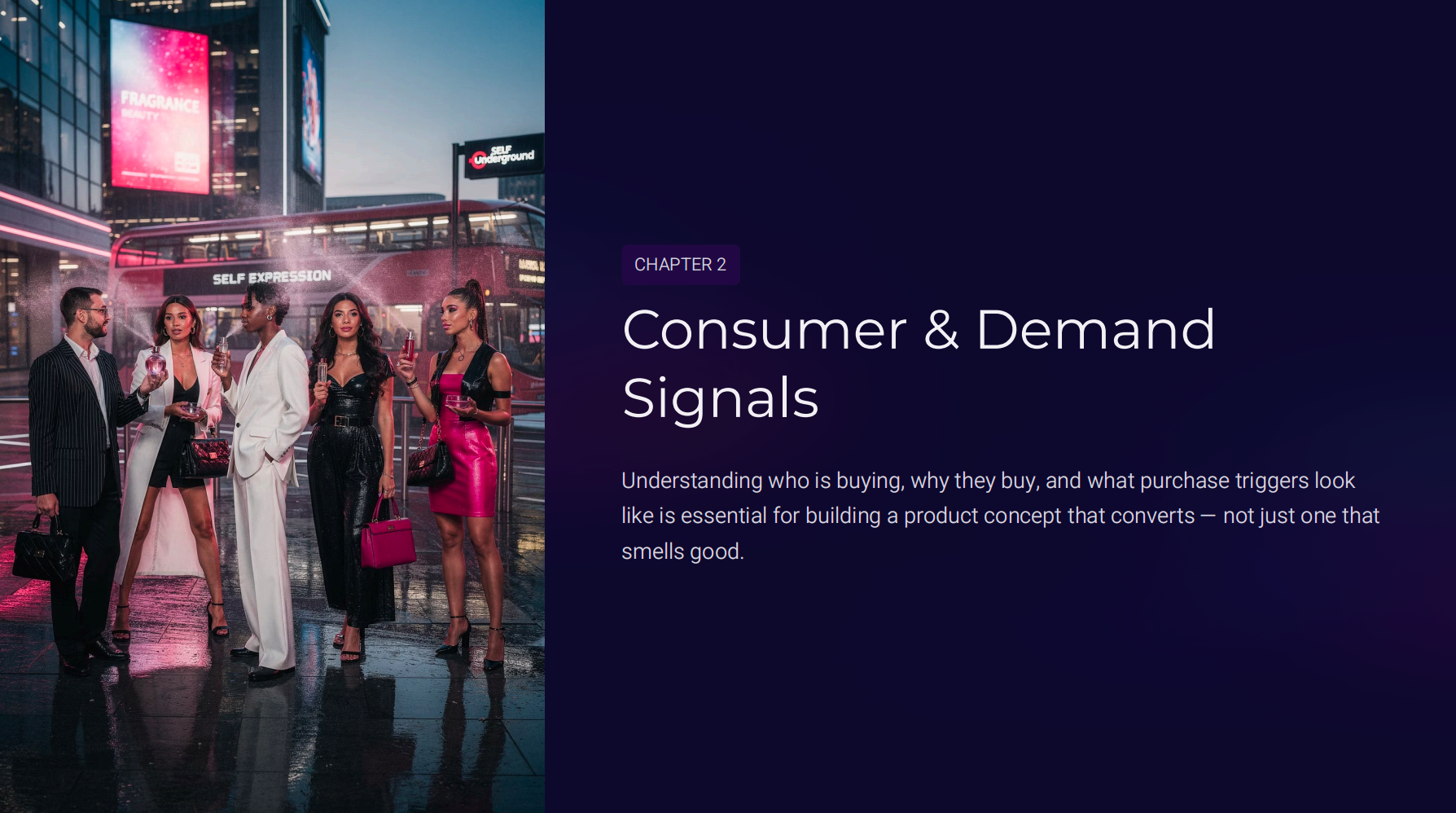
Consumer & Demand
Signals
Audience Segments That Matter
A strong UK sensual fragrance launch should not treat the audience as one single block.
Female buyers remain the broadest commercial base, especially for musky florals, soft gourmands, amber vanillas, rose-woods, and skin-close signatures. They are also a natural fit for body mist, hair perfume, gift sets, and layering extensions.
Male buyers are commercially strongest when the concept leans toward woody ambers, clean musk, soft spice, suede warmth, and close-range confidence rather than exaggerated masculinity.
Gender-fluid and gender-neutral shoppers are important for modern sensual fragrance as well, especially among younger and niche-oriented audiences. These buyers often respond well to musks, woods, incense, salted vanilla, iris, ambrox, and warm transparent compositions.
From an age perspective, Gen Z tends to respond well to affordability, trend visibility, layered routines, visually shareable packaging, and entry formats such as mists, minis, and roll-ons. Millennials are more likely to pay for signature scents, premium-feeling packaging, and longer-lasting products that feel polished and distinctive.
The Best Product Format Structure
For most new entrants, the most commercially rational launch structure is disciplined and layered.
A practical entry structure often includes:
-
one hero Eau de Parfum
-
one body mist or hair perfume
-
one portable perfume oil or roll-on
-
one set-based SKU such as a duo, trio, or discovery kit
This format ladder works because each product plays a different role. The EDP builds identity and margin. The mist or hair perfume lowers the barrier to trial. The oil or roll-on supports portability and intimacy. The set helps gifting, discovery, and basket-value growth.
This is usually a stronger commercial route than launching multiple full-size fragrances with unclear differences.
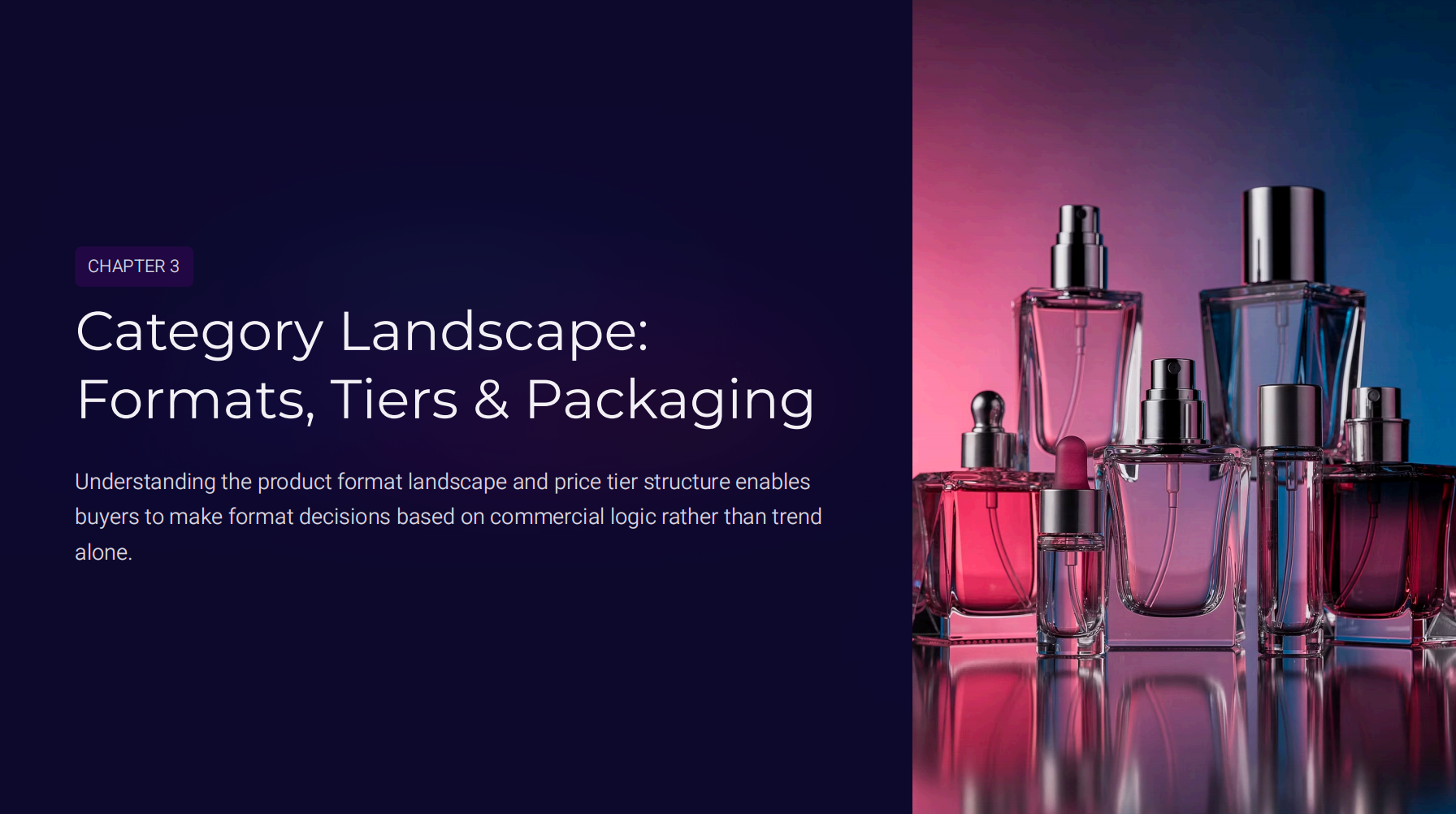
Category Landscape:
Formats, Tiers & Packaging
Scent Directions with the Strongest Potential
The most commercially usable sensual fragrance directions in the UK market for 2026 include:
-
musky-clean skin scents
-
creamy vanilla amber
-
woody musks
-
rose-amber blends
-
soft spice and suede
-
cherry or plum gourmands
-
sandalwood-ambrox intimacy profiles
-
airy oud with softness rather than heaviness
A strong scent brief should define the emotional role as clearly as the notes. The best briefs are not “make it sexy.” They are “make it intimate, memorable, skin-close, giftable, and easy to repurchase.”
Price Tier Strategy
Sensual fragrance performs across multiple price bands, but the strongest private label opportunity often sits in the affordable-premium to mid-premium range.
Entry-price formats such as mists, rollers, minis, and balms are useful for acquisition and trend testing. Mid-tier products are often the most commercially balanced because they allow better fragrance quality, better packaging, and healthier gross margin while remaining accessible. Premium positioning can work well for boutique and founder-led brands, but it requires stronger packaging, stronger scent identity, and stronger storytelling.
For many new projects, a better commercial structure is:
-
affordable entry through mist, mini, or roll-on
-
core margin through hero EDP
-
higher AOV through duo, layering set, or gift coffret
This makes the range easier to launch, easier to merchandise, and easier to scale.
Channel Strategy
The UK sensual fragrance market should be approached channel by channel.
For DTC, sensual fragrance works especially well when the brand can tell a richer story around mood, layering, confidence, and ritual. Discovery kits, guided routines, and email-led follow-up can all improve conversion.
For Amazon, the most important factors are clarity, visual quality, portability, and value communication. Highly legible SKUs, strong reviews, portable formats, and giftable bundles can perform better than overcomplicated fragrance naming and ambiguous positioning.
For retail, shelf credibility matters more. Packaging needs to feel immediately understandable, giftable, and premium enough to justify the price.
For boutique and concept store environments, design language and scent identity matter even more. A smaller but more sharply curated assortment is often better than a broad range.
The best launch structure is not to make every channel carry the same SKU mix. It is to adapt the assortment to the way each channel creates demand and conversion.
Competitive White Space
There is still room in the UK market, but not for generic “sensual perfume” launches.
The strongest whitespace opportunities include:
-
affordable-premium skin scent collections
-
layering-led sensual systems built across EDP, mist, and oil
-
gender-neutral intimacy ranges
-
giftable sensual discovery sets
-
premium-feeling hair and body extensions that still preserve scent identity
These opportunities work because they sit between entry-level accessibility and premium emotional value. They give buyers a clear reason to try, gift, or repurchase.
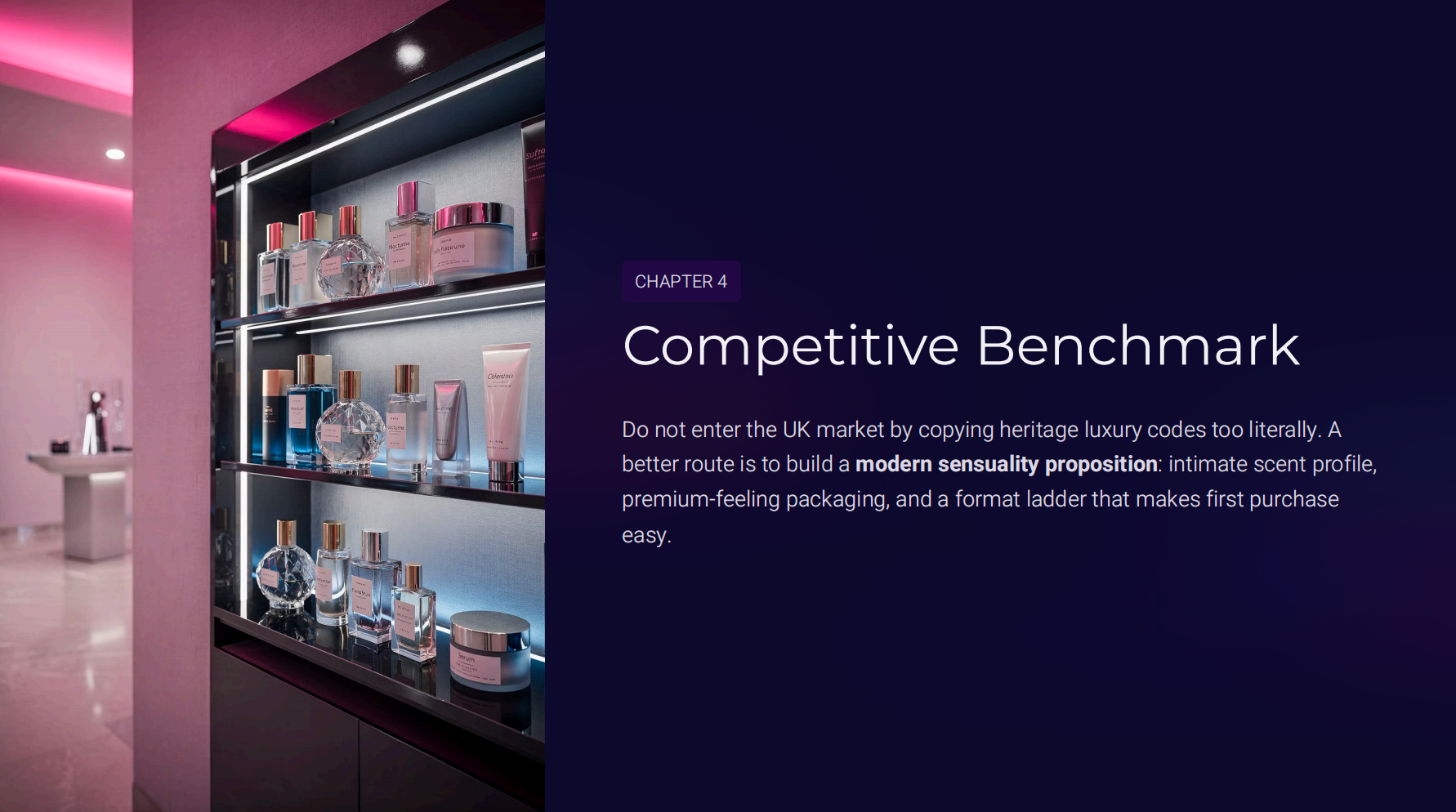
Competitive Benchmark
Compliance and Risk Priorities
Sensual fragrance can be commercially powerful, but it becomes risky when positioning drifts into explicit efficacy claims.
The safer and more scalable route is to talk about:
-
mood
-
confidence
-
self-expression
-
intimacy
-
sensorial comfort
-
personal ritual
-
warm or skin-close wearability
It is better to avoid claims that imply guaranteed attraction, arousal, or intimate enhancement.
Operationally, buyers should also pay close attention to:
-
IFRA documentation
-
allergen labeling planning
-
UK Responsible Person pathway
-
formula safety obligations
-
mist, roll-on, and oil leakage testing
-
packaging compatibility
-
claims review before artwork lock
Compliance works best when it is built into the concept stage, not treated as a final correction before launch.
OEM / Private Label Execution Plan
The strongest private label fragrance projects begin with a commercial brief, not just a scent idea.
A useful buyer brief should define:
-
target market
-
target audience
-
preferred format
-
target retail price
-
desired channel
-
scent direction
-
packaging style
-
launch timeline
-
quantity expectation
From there, the development path becomes more practical:
-
define the commercial brief
-
prioritize the hero SKU
-
build the supporting SKU ladder
-
develop 3 to 5 scent directions
-
align formula with use case and compliance pathway
-
validate packaging
-
pilot the launch assortment
-
scale based on channel feedback
This approach reduces wasted development time and improves the chances of landing on a commercially usable assortment.

OEM / Private Label
Execution Plan
Recommended Launch Structure
For most buyers entering the UK sensual fragrance market, the strongest initial structure is:
-
one hero sensual EDP
-
one accessible entry format such as mist, roll-on, or mini
-
one set-based SKU such as a duo, discovery kit, or layering trio
That combination gives a brand the best chance to support both first purchase and repeat purchase without overextending inventory or development cost.
Final Takeaway
The UK sensual fragrance market in 2026 offers strong private label potential, but not for generic “sexy perfume” launches. The real opportunity sits in intimacy, wearability, giftability, and format logic.
Consumers are responding to skin-close signatures, elevated gourmand warmth, layering-friendly rituals, and price ladders that make trial easier without making the brand feel cheap.
The strongest commercial route is to enter with a focused assortment, clear scent identity, premium-feeling packaging, disciplined compliance planning, and a SKU ladder designed for both conversion and repeat purchase.
Download the Full Report (PDF)
Tell us your target region, product category, and the decision you’re trying to make. We’ll suggest the closest existing report—or build a tailored version.