


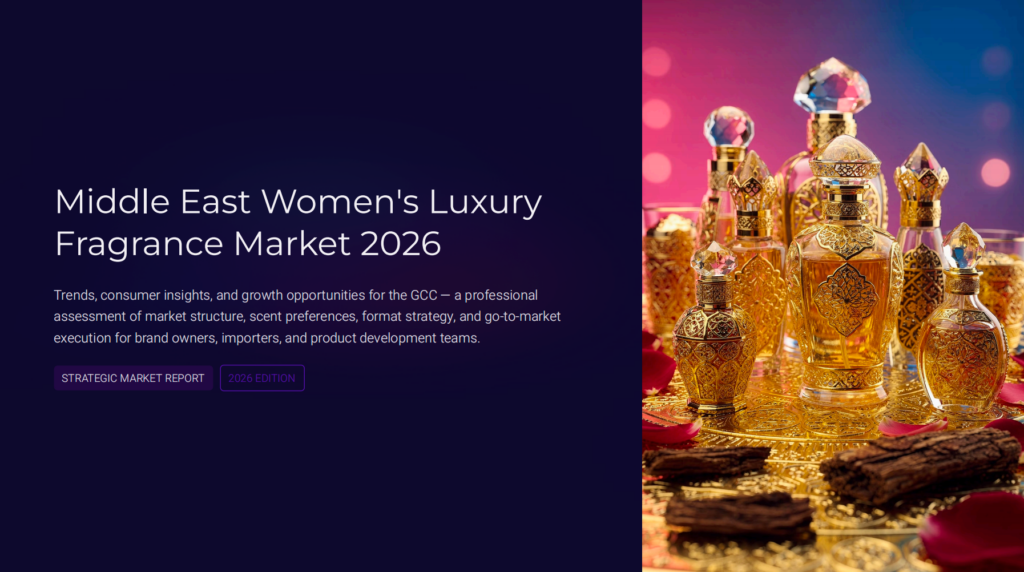
Executive Summary
This report explores the Middle East women’s luxury fragrance market in 2026, including GCC demand trends, female consumer segments, scent preferences, format strategy, pricing logic, packaging expectations, compliance considerations, and OEM launch planning. It is designed to help brands, distributors, importers, and e-commerce sellers turn market insight into a more practical luxury fragrance launch strategy.
Middle East Women’s Luxury Fragrance Market 2026: GCC Trends, Consumer Insights, and Launch Strategy
The Middle East women’s luxury fragrance market in 2026 remains one of the most commercially attractive fragrance segments, especially across the GCC. Saudi Arabia continues to represent the largest value pool, while the UAE functions as both a high-visibility retail market and a regional trend amplifier.
For brands, distributors, e-commerce sellers, and product development teams, the opportunity is not simply to launch one premium perfume. The real opportunity is to build a fragrance family that matches local luxury expectations, layering behavior, gifting demand, and format preferences.
This report translates regional market signals into practical launch logic. It covers GCC demand structure, female consumer segments, scent preferences, format strategy, pricing logic, competitive positioning, compliance considerations, and an OEM-ready route for bringing a women’s luxury fragrance line to market.
Executive Summary
The Middle East women’s luxury fragrance market is shaped by a different purchase logic from many Western markets. Consumers do not buy fragrance only for one occasion or one use moment. Instead, they increasingly build a layered fragrance wardrobe across oils, Eau de Parfum, and refresh formats.
This matters because successful launches are not built around one standalone SKU. They are built around a coordinated scent family with multiple product roles: prestige, layering, repeat purchase, and gifting.
In 2026, women’s fragrance continues to anchor category demand across the GCC. The most commercially relevant scent territories include oud floral, amber musk, white floral oriental, gourmand oriental, and softer musk-led feminine signatures. At the same time, execution quality matters as much as scent direction. Buyers expect stronger longevity, richer dry-downs, premium packaging, and gifting-ready presentation.
For most new entrants, the strongest go-to-market route is a three-format system built around one hero EDP, one perfume oil, and one body or hair mist in the same scent family.
Market Opportunity Overview
The GCC fragrance market continues to expand, and women’s fragrances hold the largest share of category demand. That makes female-focused launches structurally attractive both for new brands and for existing beauty businesses expanding their fragrance portfolios.
Saudi Arabia remains the most important value market in the region, while the UAE plays an outsized role in visibility, trend acceleration, and premium retail influence. For brands entering the region, these two markets often define the first commercial priorities.
What makes the opportunity especially attractive is that fragrance is not treated only as a beauty product. It is tied to identity, self-expression, ritual, hospitality, gifting, and social presence. This means the market rewards brands that can deliver not just a scent, but a complete luxury experience across product, packaging, and use occasion.
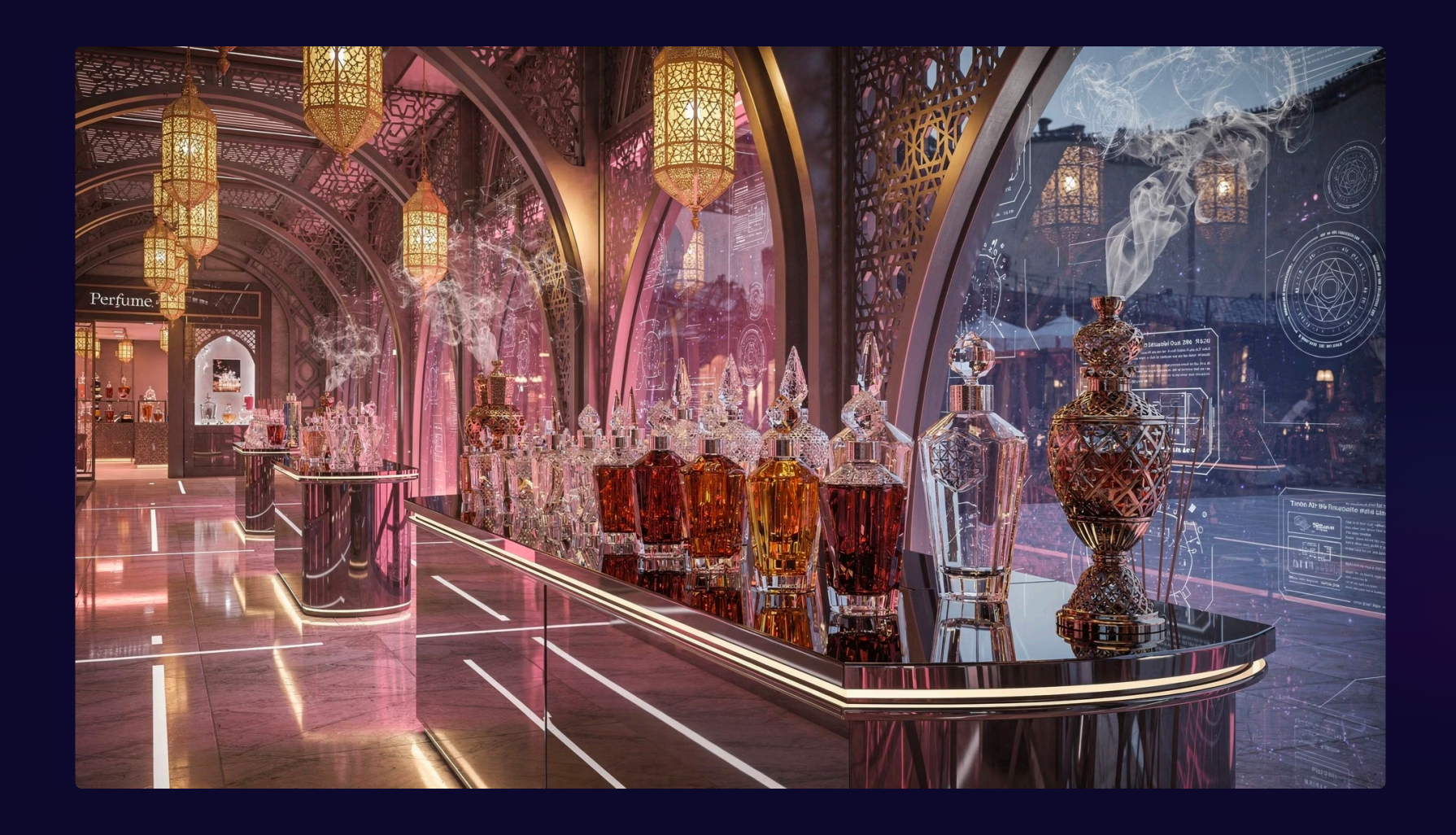
GCC Fragrance Market: Core Metrics
What Is Driving Demand
Several structural drivers shape women’s luxury fragrance demand in the Middle East.
The first is fragrance as identity. Consumers use fragrance to express femininity, taste, mood, and social presence.
The second is gifting. Ramadan, Eid, weddings, family occasions, and premium social events all support fragrance buying and increase the importance of giftable formats and elevated packaging.
The third is layering culture. Consumers increasingly combine perfume oils, EDPs, and mists to create depth, longevity, and day-to-night flexibility.
The fourth is format-based purchasing. Buyers do not always want one bottle that tries to do everything. They want different formats for different situations: intensity, refresh, intimacy, and gifting.
The fifth is luxury resilience. Even when consumers are value-conscious, fragrance remains a category where premium cues, performance, and presentation continue to justify purchase.
Core Consumer Segments
A useful launch strategy starts with recognizing that not all female luxury buyers in the GCC behave the same way.
Prestige Traditionalists
These consumers value richness, projection, cultural relevance, and classic luxury signals.
They are most likely to buy:
-
oud-inflected florals
-
amber musk compositions
-
concentrated perfume oils
-
elegant, giftable packaging
To win with this segment, brands should prioritize depth, longevity, and more ornate premium presentation.
Consumer & Demand Insights
Modern Layering Enthusiasts
These are younger, more trend-aware women who build fragrance wardrobes rather than relying on one signature product.
They are most likely to buy:
-
layerable EDPs
-
travel sprays
-
mini sizes
-
hair and body mists
-
sweeter or softer oud and gourmand blends
To win with this segment, brands should create scents that work both alone and in combination, and should support them with portable or refresh-led formats.
Gifting-Led Luxury Buyers
These consumers buy with occasions in mind: Eid, weddings, family gifting, and premium social moments.
They are most likely to buy:
-
gift sets
-
premium boxes
-
elevated bottle design
-
recognizable luxury cues
To win with this segment, brands should plan gift architecture early rather than treating packaging as a final detail.
Accessible Luxury Shoppers
These buyers are trading up from mass or mid-market fragrance but are not yet buying ultra-premium niche.
They are most likely to buy:
-
premium-looking EDPs
-
stronger fragrance performance
-
brands that feel luxurious enough online and in-store without entering very high price tiers
To win with this segment, brands should target a price zone that balances aspiration and reach.
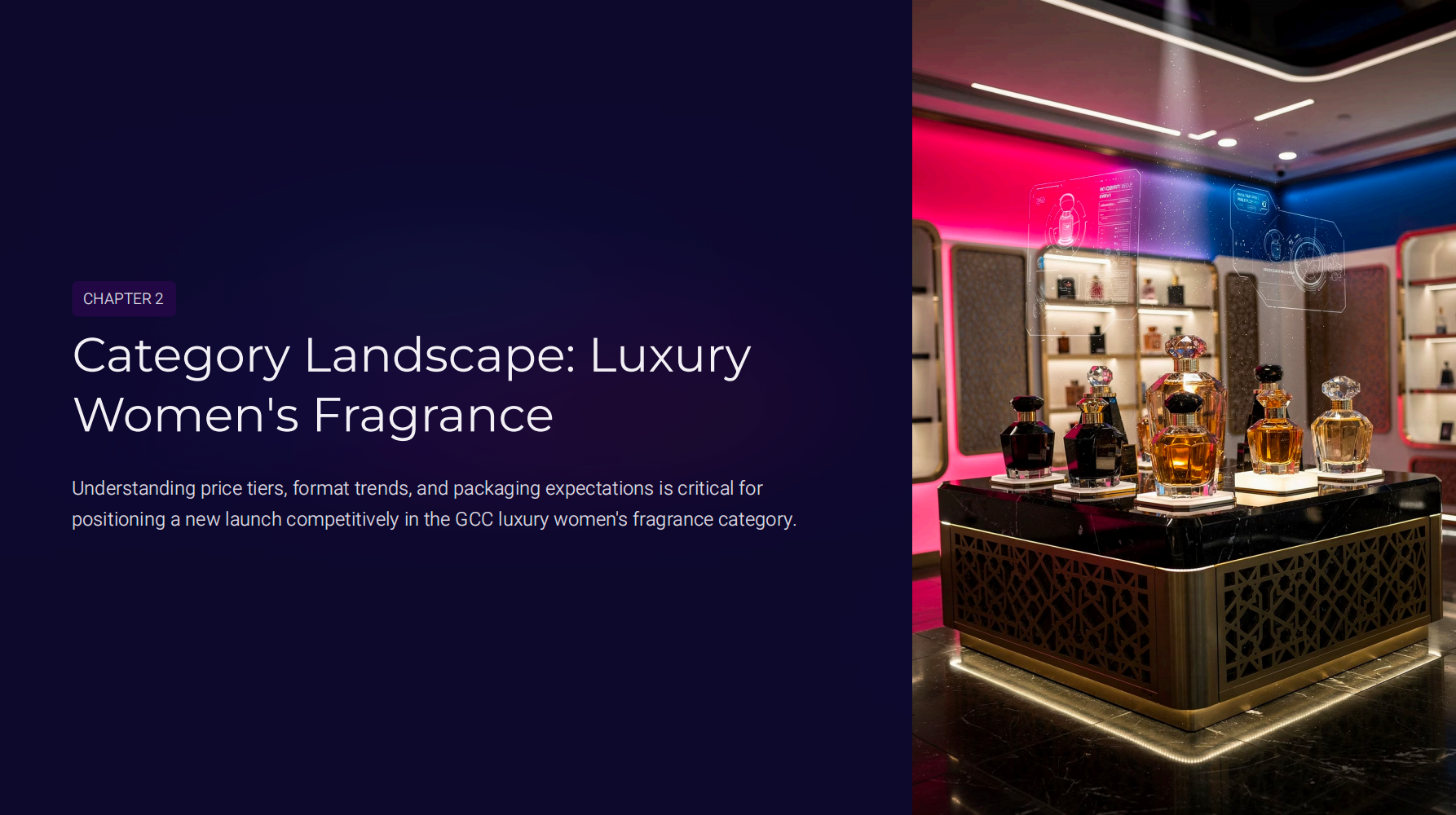
Category Landscape: Luxury
Women's Fragrance
Scent Preferences and Best-Selling Directions
The strongest women’s luxury fragrance profiles in the GCC combine familiarity with a modern feminine finish.
Commercially relevant scent territories include:
-
oud floral
-
rose oud
-
vanilla oud
-
smoky floral oud
-
amber musk
-
white floral oriental
-
gourmand oriental
-
creamy musk
-
clean sensual musk
-
milky skin scents with richer dry-down
The key is not to choose between “traditional” and “modern.” The stronger path is to modernize regional fragrance codes into more wearable, feminine, and commercially scalable compositions.
A fragrance that feels too light, too generic, or too Western-fresh without regional depth will often underperform. Even when the scent direction is soft or clean, the buyer still expects noticeable wear, a luxurious dry-down, and better persistence than mainstream Western fresh florals.
Why Format Strategy Matters
One of the clearest market realities is that the winning portfolio is format-led.
EDP
Eau de Parfum remains the core prestige format and the strongest choice for a hero SKU. It carries the brand image, supports distributor sell-in, and anchors premium pricing.
Perfume Oil
Perfume oil is highly compatible with regional fragrance culture. It supports layering, offers intimacy and longevity, and reinforces luxury credibility.
Body Mist or Hair Mist
Mists are increasingly useful for daytime refresh, younger or more accessible buyers, and higher-frequency repeat purchase. When aligned to the same scent family as the hero fragrance, they also improve basket value and layering appeal.
This is why the strongest commercial structure is not one all-purpose bottle, but a three-format fragrance system.
Recommended Product Architecture
For most brands entering the category, the strongest opening lineup is compact and coordinated.
A practical launch structure includes:
-
one hero women’s EDP in 50ml or 75ml
-
one perfume oil in 10ml or 12ml
-
one body mist or hair mist in 100ml or 120ml
-
one optional gift set or travel-size configuration
This structure works because each format supports a different role:
-
the EDP builds prestige and brand identity
-
the oil supports ritual, layering, and local relevance
-
the mist drives refresh, frequency, and entry-level conversion
-
the gift set expands gifting potential and seasonal sell-through
A better launch starts with one scent family across formats rather than many unrelated scents.
Best Starting Scent Directions
The most commercially balanced launch directions are:
-
rose + amber + musk
-
vanilla + soft oud + woods
-
white floral + amber + musk
More selective or niche directions include:
-
smoky floral bakhoor
-
saffron gourmand oud
-
milky musk skin scent with oriental dry-down
For most first launches, it is better to start with three or four SKUs built around one hero fragrance family rather than trying to launch ten products at once.
Pricing Logic and Category Positioning
The Middle East women’s luxury fragrance market can be approached through three broad tiers.
Entry premium or accessible luxury works best for:
-
first trial
-
younger buyers
-
e-commerce conversion
-
traffic-building SKUs
Mid luxury is often the strongest commercial core because it supports:
-
hero EDPs
-
perfume oils
-
gift sets
-
stronger brand credibility
-
broader premium reach
Prestige luxury is best used for:
-
gifting
-
niche halo products
-
premium line extensions
-
status-led positioning
For many new entrants, the strongest recommendation is to enter as accessible luxury with premium olfactive cues, then build prestige extensions after initial traction.
Packaging Expectations
Luxury in the GCC is defined by more than price. Packaging remains a major part of perceived value.
Expected cues include:
-
substantial bottle weight
-
premium cap design
-
metallic or rich detail accents
-
visually strong outer carton
-
gifting readiness
-
Arabic and English presentation where needed
-
strong shelf and unboxing impact
Packaging that feels flat, too clinical, or too minimalist may struggle unless the scent concept is deliberately modern niche and the price point fully supports that decision.
For women’s luxury fragrance in this region, packaging is not just branding. It is a conversion tool.
Competitive White Space
Competitive Benchmark
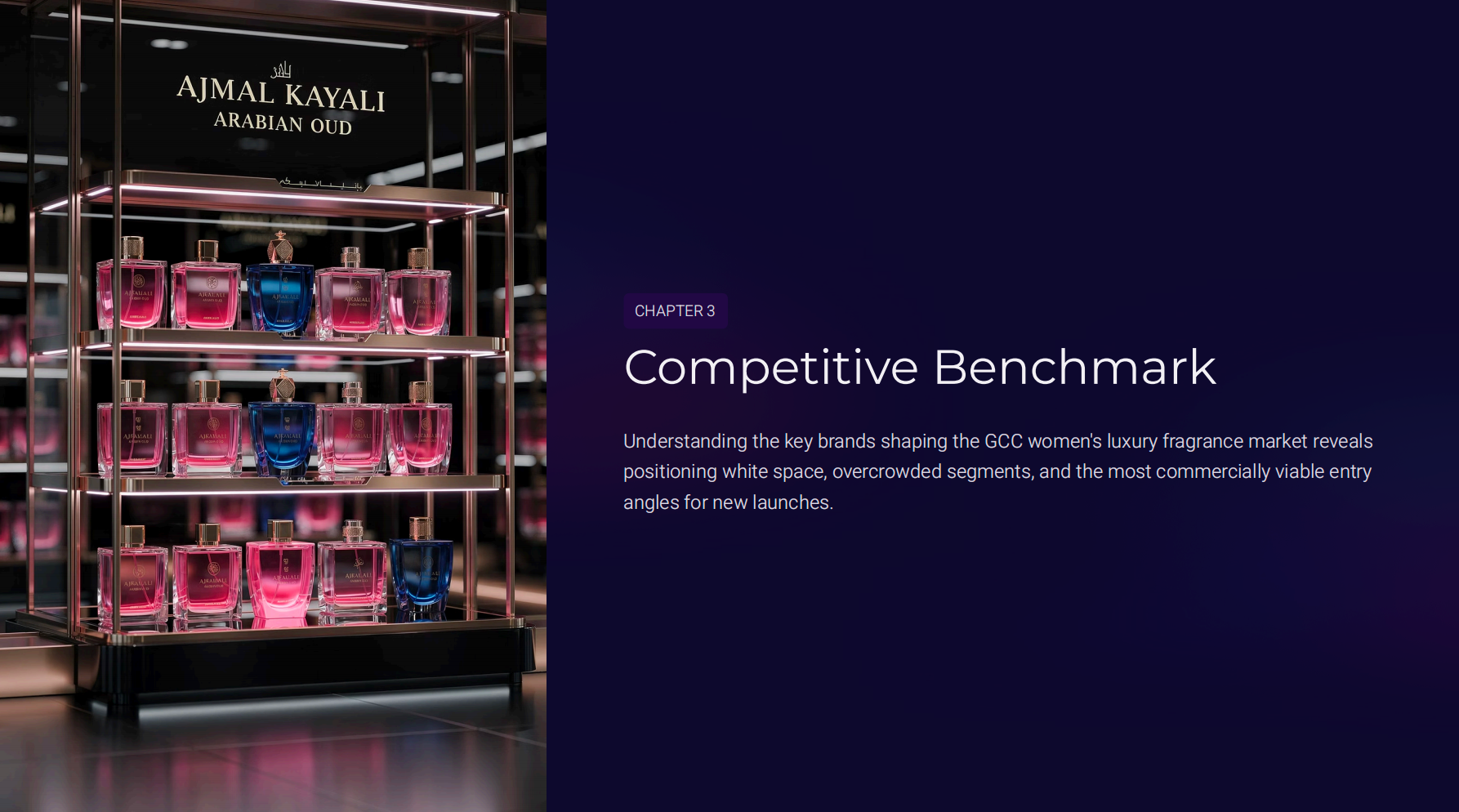
The market is active, but there are still clear product opportunities.
The strongest open spaces include:
-
modern feminine oriental body mists with true premium scent character
-
luxury perfume oils for women that feel contemporary rather than old-fashioned
-
coordinated layering systems built around one scent family
-
gift-ready accessible luxury sets
-
soft oud, milky musk, and rose-amber combinations designed for female daily wear
Overcrowded areas include:
-
generic fruity florals with weak dry-down
-
launches that feel too Western department-store style without regional relevance
-
very heavy oud executions with limited feminine refinement
-
copycat vanilla gourmands with no distinctive Middle Eastern cue
The better entry point is modern oriental femininity rather than generic floral freshness or ultra-heavy traditional oud alone.
Go-to-Market Strategy
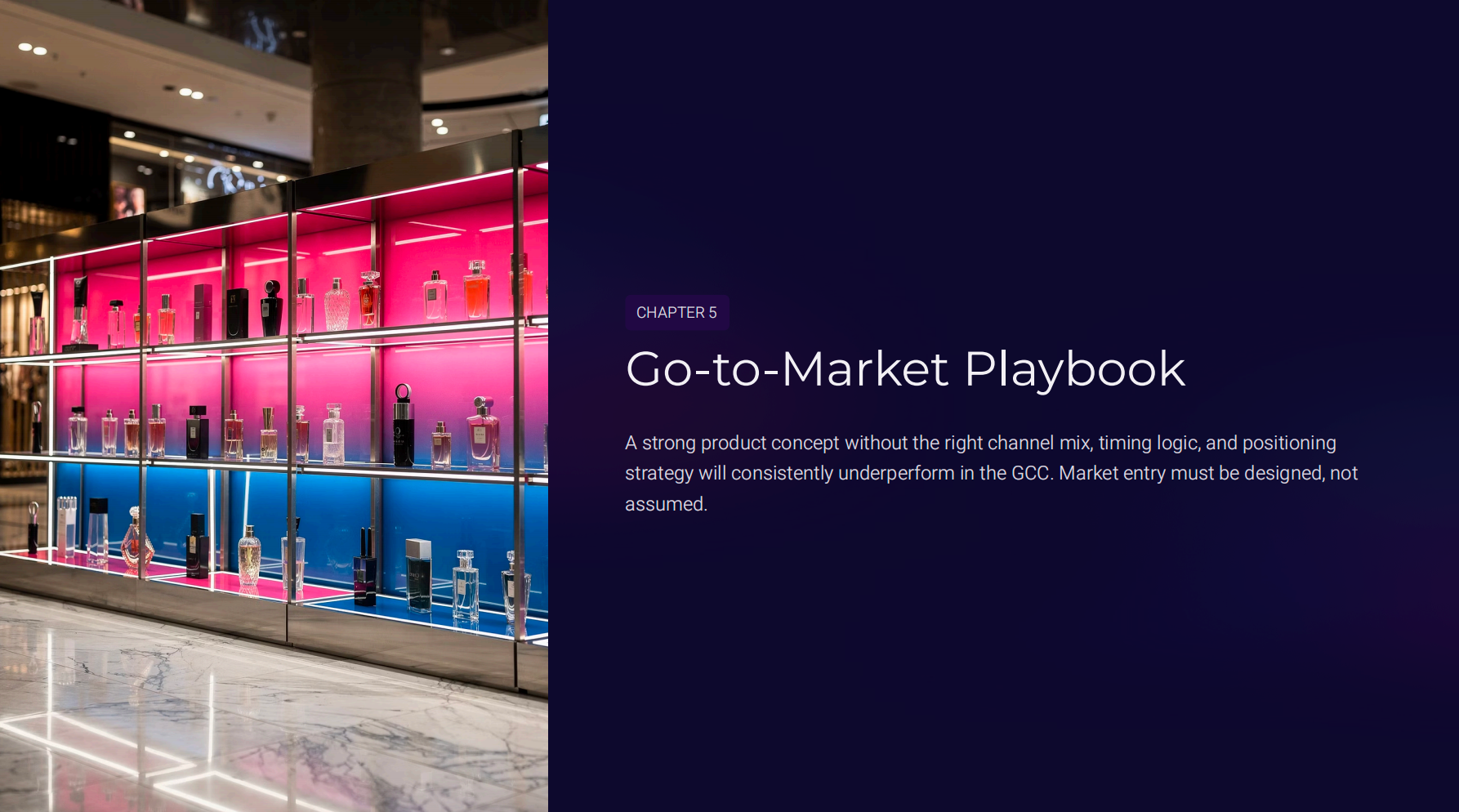
A successful launch should be channel-aware from the beginning.
Go-to-Market Playbook
Prestige Retail and Boutique
Best for:
-
hero EDPs
-
perfume oils
-
premium sets
What wins:
-
strong scent story
-
bottle quality
-
premium packaging
-
gifting readiness
-
sales support
E-commerce DTC
Best for:
-
EDPs
-
mists
-
travel formats
-
bundles
What wins:
-
clear positioning
-
layering logic
-
bundle offers
-
education around scent family and usage moments
Marketplaces and Amazon
Best for:
-
hero EDPs
-
mists
-
gift sets
What wins:
-
review strength
-
disciplined claims
-
performance clarity
-
visible value logic
Importer and Distributor Channels
Best for:
-
hero SKU plus supporting formats
What wins:
-
consistent price logic
-
localized packaging readiness
-
stable margin structure
-
clearer portfolio system
Seasonal Gifting and Corporate Sales
Best for:
-
sets
-
oils
-
premium boxes
What wins:
-
festive packaging
-
inventory planning
-
gift-ready presentation
Launch Timing Logic
The strongest commercial windows usually align with:
-
pre-Ramadan
-
Ramadan
-
Eid
-
wedding seasons
-
Q4 premium gifting periods
-
major beauty and retail trade moments in the region
The better strategy is to develop the hero SKU first, but prepare gifting and set configurations before the first demand peak arrives.
Compliance and Risk Considerations
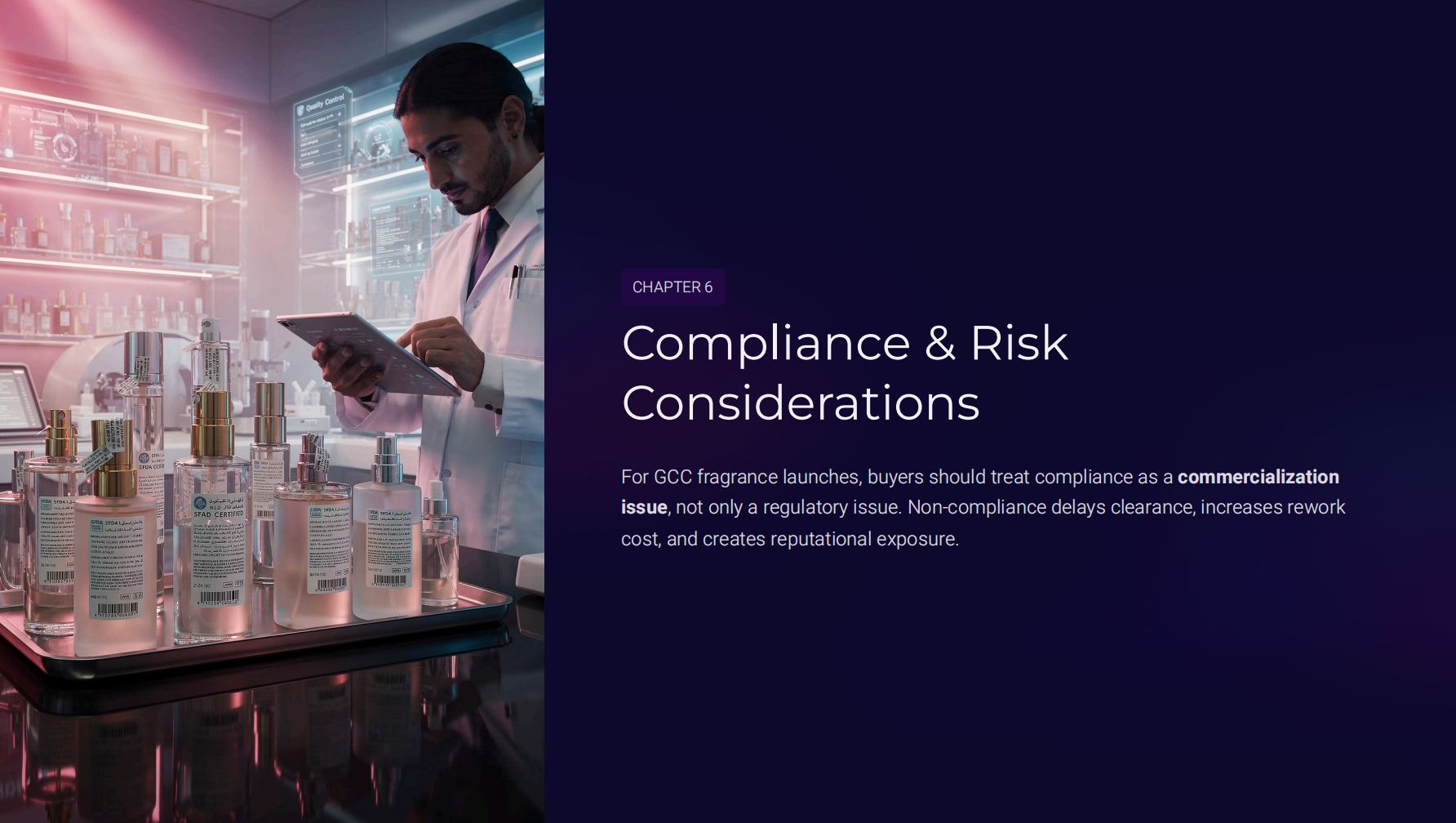
Compliance should be treated as a commercialization issue, not just a regulatory detail.
Core areas to prepare for include:
-
formula safety
-
restricted-substance control
-
IFRA-aligned fragrance development
-
ingredient and allergen management
-
Arabic labeling readiness where required
-
country-specific import and label review before shipment
For Saudi Arabia and other GCC markets, labeling should be localized correctly and reviewed before mass production. Poor Arabic adaptation, incomplete information, or incorrect claims can delay clearance and create avoidable launch friction.
Common risk areas include:
-
scent mismatch with local expectations
-
weak longevity
-
packaging that does not support luxury pricing
-
poor alignment between product, price, and channel
-
localization errors
The strongest brands benchmark against regional expectations before they finalize the formula, packaging, and MSRP.
Compliance & Risk
Considerations
OEM and ODM Execution Framework
For buyers planning to develop women’s luxury fragrance products for the GCC, the best approach is to define the commercial concept first.
A stronger development brief should include:
-
target country priorities
-
target price band
-
scent direction
-
format structure
-
channel model
-
benchmark references
-
target female consumer profile
-
desired intensity level
-
packaging mood direction
-
estimated launch quantity
-
expected compliance needs
The strongest first launch is usually not a large range. It is a disciplined test lineup:
-
one hero EDP
-
one perfume oil
-
one mist
-
one optional gift set
This structure creates the lowest-risk and highest-learning market entry.
OEM/ODM Execution
Framework
Final Takeaway
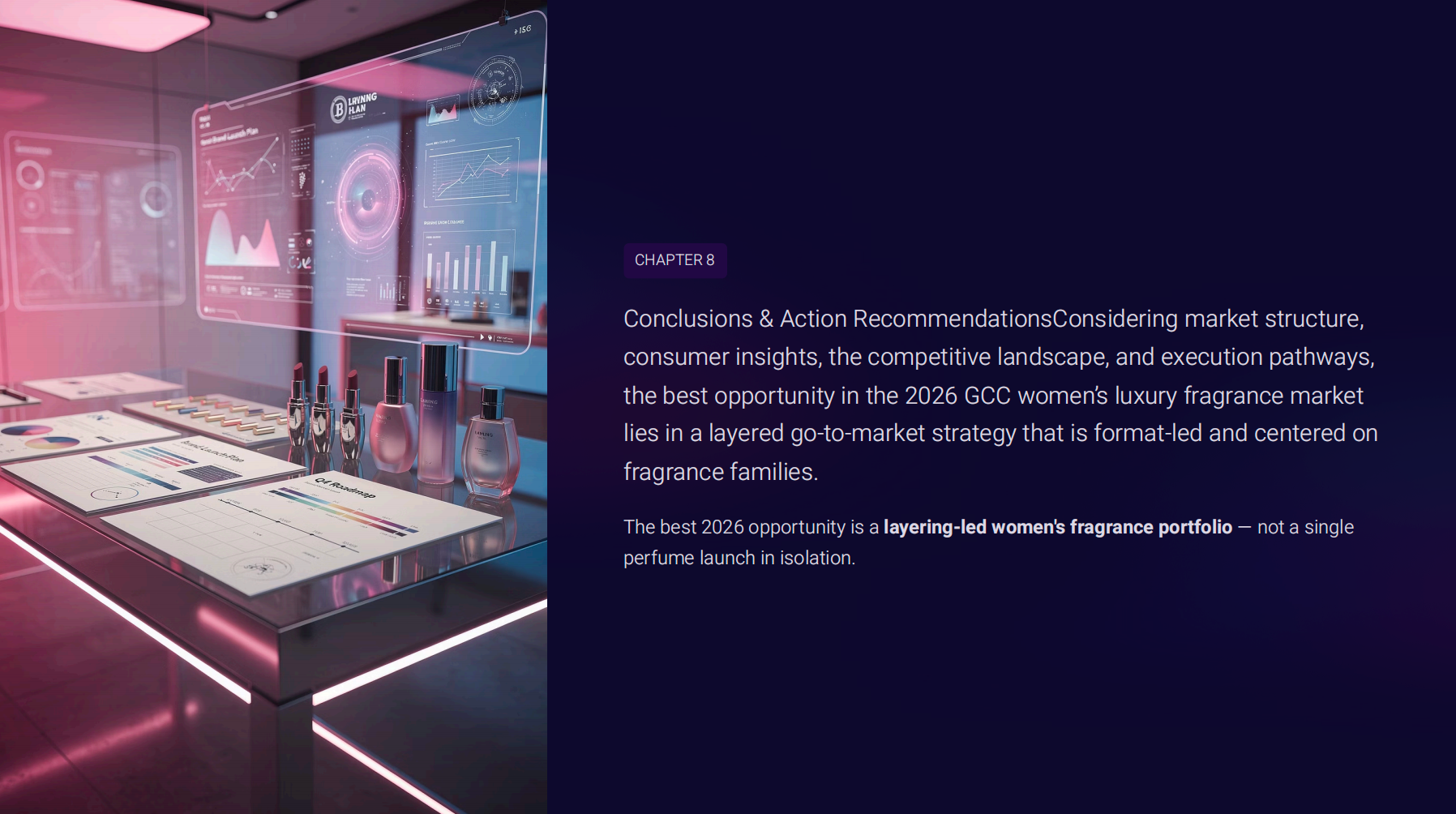
The best 2026 opportunity in the Middle East women’s luxury fragrance market is not a single luxury perfume launched in isolation. It is a layering-led fragrance portfolio built around one premium hero EDP, one perfume oil, one high-frequency mist, and one gifting configuration.
That structure best matches GCC female purchase behavior, regional luxury expectations, and practical B2B commercialization needs.
If your team is evaluating a Middle East women’s luxury fragrance launch, the strongest next step is to define your scent family, format mix, packaging direction, and price architecture first, then move into development with a much clearer market-fit plan.
Download the Full Report (PDF)
Tell us your target region, product category, and the decision you’re trying to make. We’ll suggest the closest existing report—or build a tailored version.