

Call(WhatsApp Us)
+8615360806100Email Us
cherry@laeyo.comSee the factory by live video walkthrough
Book an on-site factory visit in Guangzhou
Call(WhatsApp Us)
+8615360806100Email Us
cherry@laeyo.com广州市花都区花山镇华辉路18号
微观化妆品创意产业园E栋整栋

Radiance-boosting facial oil designed to help refine skin tone and reduce hyperpigmentation.
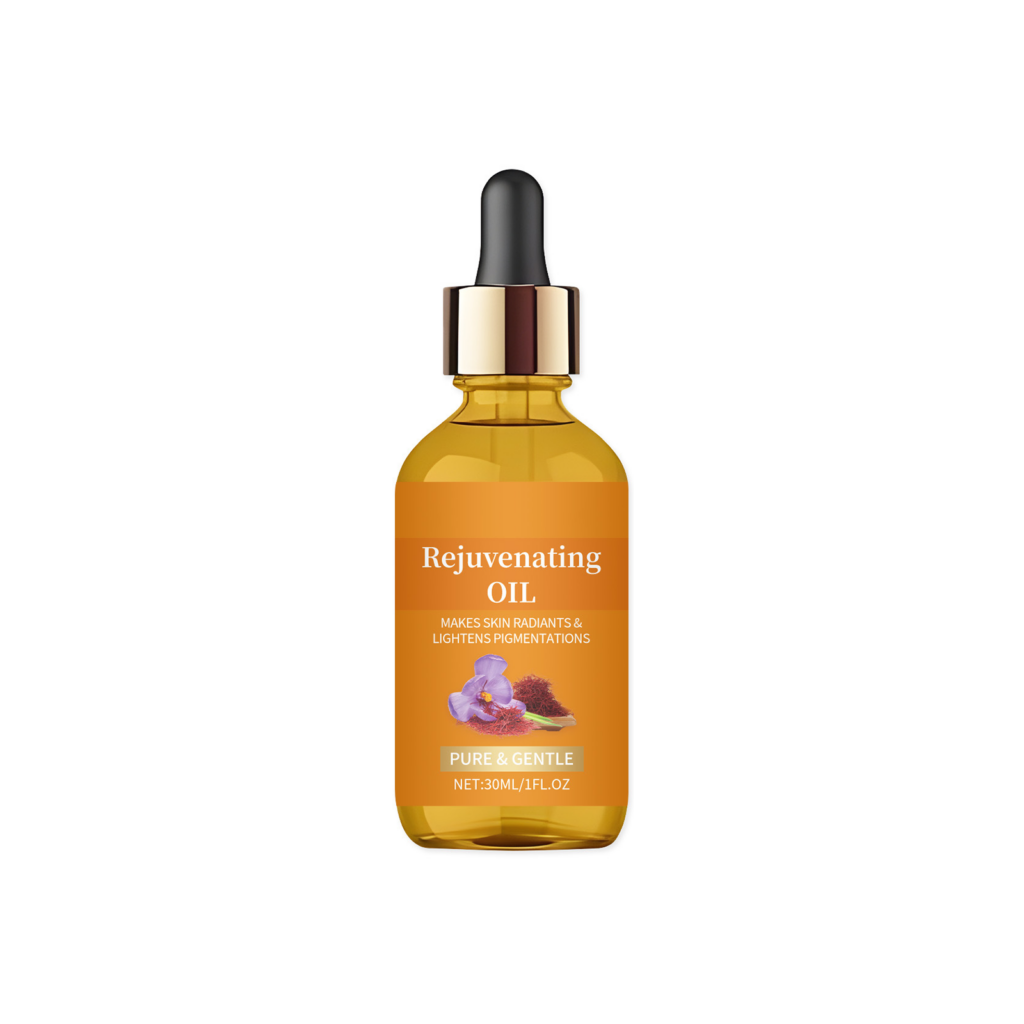
From fast sampling to iterative optimization—aligned to your market and positioning.
Stable production workflow with quality checkpoints for consistency and scale-up.
Packaging options, decoration, labeling/INCI coordination—helping you launch shelf-ready SKUs.
all skin types, dull skin, uneven tone, hyperpigmented skin
boosts radiance, refines skin tone, reduces hyperpigmentation, nourishes skin
Adults seeking luminous, balanced skin tone; suitable for most types including sensitive skin upon formulation adjustment.
In-house formula compatibility testing before bulk production.
Products tested per cosmetic standards for cleanliness and preservation efficacy.
Brightening and skin comfort tests can be arranged through third-party labs upon request.
For Saudi skincare, collect a document pack that lets your local importer/notifier file with SFDA and defend the label. Start with the full formula and INCI, allergen/fragrance disclosure and IFRA certificate if scented, plus claims substantiation. Request manufacturer name/address, GMP certificate, batch COA, SDS, and free-sale/export documents. Add microbiological, challenge, stability, high-temperature and seal-compatibility reports because Saudi heat and transport pressure expose weak packaging and preservative systems. Packaging information is part of the file: primary pack and pump/airless specs, fill volume, carton dimensions, artwork dielines, and Arabic/English label text covering brand, product name, manufacturer/importer, batch, production date, PAO, warnings, country of origin and responsible person. Your importer reviews final Arabic artwork and holds the SFDA notification, import permit and local barcode. For planning, standard skincare MOQ is often 3,000-5,000 units per SKU; custom formulas or special packs rise. Sampling usually takes 10-15 business days after formula and pack brief, with stability testing adding several weeks. Production lead time is commonly 30-45 days after approved artwork, deposit and components. We can support documentation and testing, but cannot guarantee regulatory approval.
For UAE and Saudi retail, treat the label as an engineering part, not artwork. Fix these fields before sampling: product and brand name, manufacturer or importer, batch and production date, PAO, net content, INCI, and usage warnings. Key information should appear in Arabic or Arabic-English bilingual form to support label compliance. Saudi submissions typically run through SFDA notification routes such as eCosma/GHAD with a named local importer or notifier; UAE requirements vary by emirate, so verify per market. We can support documentation and testing, but final approval sits with your local regulatory partner. Practical sequence: MOQ discussion, formulation feasibility, artwork and dieline confirmation, then sampling. Allow roughly 7-15 days for samples once formulation and label files are approved; bilingual artwork review often adds a revision round. Order printed labels only after a proof on the actual bottle passes in humid conditions, since condensation causes bubbling and edge lift on small-diameter packs. Plan pilot and production at 4-6 weeks after sample sign-off for typical skincare, longer if testing is needed. Keep Arabic font size legible at 50ml and 100ml; dense bilingual text often forces a bigger label or a carton insert. Ship air freight with pressure-safe closures and leak testing.
Any custom facial cream with water in the formula needs a preservative efficacy test (challenge test, typically ISO 11930) before EU sale. We re-test whenever the preservative system, pH, thickener, packaging (jar versus airless), or a raw material supplier changes, since each shifts microbial risk. A preservative booster can lower the main preservative load but never replaces the challenge test. Typical plan: sample development fee USD 100, international sample shipping USD 50 (USD 150 combined), samples in 7-14 days. The challenge test runs about 4-6 weeks with day 0/7/14/28 reads, so book it in parallel with stability work. Practical gates: MOQ usually starts at 1,000-3,000 units per SKU; bulk production is 25-35 days after PO plus deposit. The report plus micro and stability data feeds the CPSR and PIF your EU Responsible Person signs. We support the documentation and testing; final regulatory sign-off stays with your RP. If the cream also claims oiliness appears later, pair the challenge test with sebum measurement and a consumer diary at 4/8 hours and 2-4 weeks.
Ask for one report per formula-to-pack combination, not per bottle SKU. Page one should state fill volume, viscosity window, fill temperature, and the exact liner, closure and decoration used, so you can confirm it matches your bulk and your artwork. Then check four data blocks: mass change at 4 and 12 weeks at 40C/75%RH plus freeze-thaw; closure torque before and after cycling, with pump dose rate variance; drop and air-freight pressure simulation for leakage; and label or decoration adhesion after humid aging. For acidic, high-alcohol or high-surfactant formulas, confirm the liner and any anodized aluminium part were tested with your real bulk, not a placebo. Finally verify the paperwork: extractables and migration screening referencing EU 10/2011 and REACH SVHC, MSDS, method list, and whether the lab is third-party or internal QA. We normally run compatibility sampling in 15-20 working days on 3-5 candidate packs. MOQ stays at 3,000-5,000 units per SKU when the pack is in our existing library, and rises with custom tooling. Production after sign-off is typically 25-35 days. We can support documentation and testing; final regulatory approval remains with your responsible person.
Start with the market and formula, not a preservative name. For UK/EU leave-on skincare we screen against Annex V limits under EU 1223/2009 and the UK equivalent, then check pH, partition coefficient, packaging, and compatibility with emulsifiers and fragrance. We request supplier CoA/TDS, allergen statements, and prohibited-substance confirmations, then R&D proposes 2-3 systems. QA runs a preservative efficacy test (ISO 11930) on the final formula, not just the raw material. Preservative boosters can lower primary preservative load but never replace challenge testing. Sampling is typically 7-10 working days for lab batches after brief. MOQ guidance for leave-on is often 3,000-5,000 units per SKU, with pilot runs of 500-1,000 units. Packaging changes risk: airless pumps and jars affect contamination exposure, so we run compatibility and leakage checks. We can support CPSR-ready data, CoA, MSDS, stability and challenge reports, but final regulatory sign-off stays with your responsible person. Production lead time is about 25-35 days after PO and approved sample, plus 5-7 days for document review. Book microbial testing early; reformulation can add 2-4 weeks.
Retinol products face oxidation and skin irritation risks, which we address in OEM/ODM for UK markets. We use stabilized retinol forms (e.g., retinyl palmitate) with antioxidants like vitamin E, and package in amber or opaque airless pumps to block light and air exposure. This prevents degradation during shelf life, with viscosity checks to ensure fill consistency and prevent leakage. For irritation, we formulate with low concentrations (0.1%-0.5%) and add calming agents like panthenol, conducting patch tests during sampling to validate tolerability for diverse UK skin types. In production, MOQs start at 10,000 units per SKU, with sampling lead times of 4-6 weeks for formula approval and stability testing under accelerated conditions (40°C/75% RH). We also perform microbial hold-time tests and packaging fit checks for humidity resistance. Production lead time is 8-12 weeks post-approval, and we assist with UK compliance docs such as safety assessments and PIFs, though regulatory approval is client-led. Our experience includes managing pigment dispersion for uniform color and avoiding label bubbling in transit.
In the UK private label skincare market, minimum order quantities (MOQ) are driven by formula, packaging, and decoration. Formula MOQ typically ranges from 1000 to 5000 units, influenced by active ingredient costs and stability testing requirements. Packaging MOQ varies from 500 to 2000 units based on mold expenses for custom bottles and material supply chains. Decoration techniques like screen printing or hot stamping often require MOQs around 1000 units or more for intricate designs. Sampling timelines usually take 2-3 weeks from RFQ, and we support necessary testing such as microbial and stability checks for UK compliance, including product safety files and ingredient declarations. Lead time from order confirmation to production completion is approximately 8-12 weeks, with packaging fit and leakage tests integrated into quality control. We avoid guarantees on regulatory approval but assist with documentation and testing to streamline market entry.
For packaging, leaks from pumps or airless bottles are a top return driver in the UK, especially if seals fail during transport or storage. We control this by testing torque variance and humidity resistance pre-production. Formula pitfalls include skin irritation or separation; stability issues like color change can trigger refunds under UK consumer law. We recommend pilot batches and microbial hold-time checks. Key details: MOQs start at 5k units for custom packaging; sampling takes 3-4 weeks with stability testing; lead time is 8-12 weeks post-approval. We support UKCA documentation and batch testing, but final regulatory approval is your responsibility. For packaging, ensure drop tests and fill accuracy; for formulas, specify all ingredient claims to avoid non-compliance.