

See the factory by live video walkthrough
Book an on-site factory visit in Guangzhou


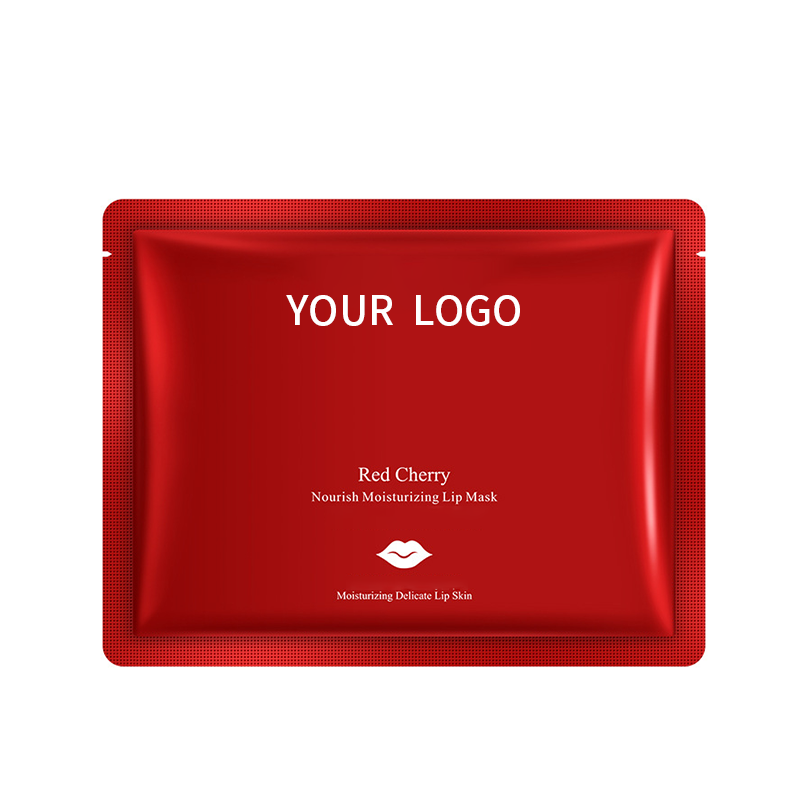
Overnight rescue lip mask with red cherry anthocyanin and dual moisture-lock system
From fast sampling to iterative optimization—aligned to your market and positioning.
Stable production workflow with quality checkpoints for consistency and scale-up.
Packaging options, decoration, labeling/INCI coordination—helping you launch shelf-ready SKUs.
chapped lips, peeling lips, dull lips, aging lips
overnight deep repair, dual moisture lock, restore cherry rosy hue, soften and plump lips
Adults seeking intensive lip care, especially with dryness or seasonal lip concerns
To ensure formula integrity during shelf life.
Verify product safety and compliance.
Assess skin compatibility and gentle use.
Recommended microbiological tests for lip care products in the Middle East include total aerobic microbial count (TAMC), total yeast and mold count (TYMC), and specific pathogen tests for Staphylococcus aureus and Pseudomonas aeruginosa. These are critical due to product use near mucous membranes, and we conduct them during sampling to verify formula stability and batch consistency. For MOQs above 5,000 units, we often batch-test to optimize costs, adding about 2-3 weeks to the sampling timeline for lab analysis and report generation. Packaging must be sealed to prevent contamination; we advise using airless pumps or tight-cap tubes, especially for humid Middle East climates. Lead time for full production, including testing, typically ranges from 8-12 weeks post-sample approval, depending on order volume and custom requirements. We provide detailed test reports and can assist with documentation for GCC or local compliance, though final regulatory approval rests with your brand. Always factor in these steps during RFQ to avoid delays and ensure a smooth launch.
Preservative efficacy testing(PET),or challenge test,is crucial for lip care products in the Middle East market if the formulation contains water or aqueous components,such as in lip glosses or balms with hydrating agents.Regulatory bodies like the GCC or Saudi FDA often require evidence of microbial stability for product registration and consumer safety.For anhydrous products like pure oil-based balms,PET may not be mandatory,but it's still recommended for risk mitigation. We can support with PET documentation and testing through our in-house lab or certified third-party partners.Concrete details include MOQ guidance of 5,000-10,000 units per SKU for cost-effective PET validation,sampling timeline of 3-4 weeks for feasibility checks,packaging considerations like tube or jar compatibility to prevent contamination,and lead time adding 2-3 weeks for testing before bulk production.Avoid delays by planning PET early in the R&D phase.
Accelerated stability testing for lip care targeting GCC markets typically uses 40°C and 75% relative humidity over 3 months to predict shelf life under real conditions. This condition assesses formula stability, color fading, and texture changes in hot, humid climates. As an OEM/ODM factory, we integrate this testing into our workflow from sampling to production, with MOQ starting at 10,000 units per SKU driven by packaging complexity and ingredient costs. Sampling timeline is 3-4 weeks, including stability checkpoints to avoid reformulation delays. Required testing includes microbial hold-time analyses, pigment dispersion checks, and leakage risk assessments for air-freight pressure changes. Packaging must be leak-proof with UV-resistant materials; we conduct fit tests to prevent label bubbling in humid seasons. Lead time from production to shipping is 8-12 weeks, with QA gates for compliance docs like test reports and COAs. We support full documentation for GCC entry, but regulatory approval depends on local authorities.
To prevent lip balm from melting, sweating, or softening in Middle East summer heat, we focus on formulation and packaging. We adjust recipes with beeswax or carnauba wax to raise melting points above 50°C, and add stabilizers like butters to reduce sweat. For packaging, we use insulated boxes with gel packs or phase-change materials, and select containers that resist deformation under heat. We conduct accelerated stability testing, simulating temperatures up to 40°C for 90 days, and perform leakage checks after thermal cycling. MOQ for custom heat-resistant formulas starts at 5,000 units, but we can offer pilot runs at 1,000 units. Sampling takes 2-3 weeks for formulation tweaks and packaging trials. We support documentation like stability reports and COAs for regional compliance. Lead time is 6-8 weeks post-approval, with options for air-conditioned shipping containers.
Begin by requesting Quality Manual, SOPs for batch manufacturing records (BMR), and recent third-party test reports for key parameters like microbial limits and heavy metals. For consistency, insist on visiting during a pilot production run. Observe the filling temperature window for balms to prevent viscosity shifts, check color matching against physical standards under D65 light, and review the microbial hold-time protocol for bulk product before filling. For batch control, examine the BMR for one completed lot. It must document raw material batch numbers, equipment cleaning logs, in-process checks (e.g., pH, viscosity), and QC release signatures. A robust system logs any deviations with corrective actions. For traceability, the factory should have a digital or manual system that links every finished carton back to its production batch, and that batch back to all raw material and packaging lots. This is critical for mock recalls. Expect them to demonstrate this traceability chain for you. Lead times factor in these audit and approval steps post-sampling.
For a cooling feel without mint irritation, synthetic coolants such as WS-23 or menthyl lactate are excellent choices as they provide a strong cooling sensation at low concentrations with minimal risk. Natural alternatives like eucalyptus or peppermint oil can be used in controlled blends, but require careful formulation to prevent sensitivity. In the Middle East market, consider heat stability and potential halal certification; we can assist with formulation adjustments and documentation. Typical MOQ for lip care products starts at 10,000 units per SKU. Sampling takes about 3 weeks from formula approval, including stability and patch testing. Packaging should be heat-resistant, such as PET tubes with secure caps to prevent leakage. Lead time from production order to shipment is 8-10 weeks, depending on customization and testing completion. We provide full support for regulatory documentation and product testing to ensure market compliance.
As a senior account manager at LAEYO Labs, I rely on specific data to offer tailored compliance advice. Since no information was provided in the knowledge source, I cannot detail the best document pack for lip balm shipments to the Middle East. Typically, for such markets, documents include Certificates of Analysis (COA), Halal certification for Islamic compliance, GCC (Gulf Cooperation Council) conformity assessments, and safety data sheets. However, without your product specifics—like MOQ (often 5,000-10,000 units for cost efficiency), sampling timeline (2-4 weeks for testing), packaging materials (e.g., tube or stick formats), and lead time for certification (4-8 weeks depending on the country)—I cannot confirm the exact pack. I recommend sharing your product formulation, target countries (e.g., UAE, Saudi Arabia), and distribution channels so I can support with documentation and testing requirements. This ensures compliance with local regulations and smooth customs clearance.
Halal compliance is essential for lip care products in the Middle East market, as they may come into contact with the mouth. Buyers, including retailers and Amazon sellers, typically demand certification to ensure adherence to Islamic dietary laws, with proof accepted from accredited Halal authorities such as JAKIM (Malaysia), GAC (Gulf Accreditation Center), or local bodies in the UAE or Saudi Arabia. These certificates verify that ingredients, manufacturing processes, and packaging are free from non-Halal substances like alcohol or animal derivatives. From a production perspective, MOQ for Halal-certified lip care often starts at 10,000 units to offset certification costs, while sampling takes 6-8 weeks to develop compliant formulas and conduct initial tests. We assist with testing for ingredient purity and microbial safety, and support documentation like Halal certificates and compliance reports, but cannot guarantee regulatory approval. Packaging must use Halal-approved materials, and lead time may extend by 3-4 weeks due to certification processing, so factor this into your launch timeline.