

See the factory by live video walkthrough
Book an on-site factory visit in Guangzhou


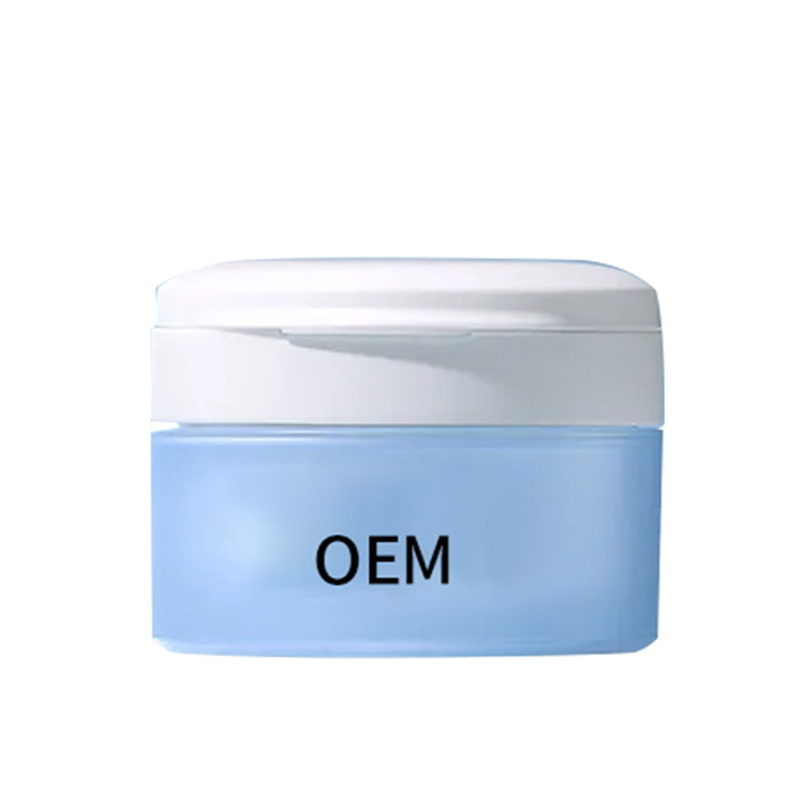
One-step solid cream makeup remover with nourishing skin repair actives
From fast sampling to iterative optimization—aligned to your market and positioning.
Stable production workflow with quality checkpoints for consistency and scale-up.
Packaging options, decoration, labeling/INCI coordination—helping you launch shelf-ready SKUs.
daily makeup removal, heavy makeup removal, sensitive skin friendly, travel friendly, quick cleansing
dissolves makeup instantly, removes impurities, repairs skin barrier, locks in moisture, leaves skin soft
Adults seeking gentle yet effective makeup removal
Ensure product free from harmful microorganisms.
Verify integrity under various storage conditions.
Evaluate skin compatibility via third-party labs.
Since the Data tag contains no information, I am unable to answer your question about choosing EU/UK-compliant preservatives for leave-on skincare products. As a senior account manager at LAEYO Labs, I typically assist brands by reviewing regulatory frameworks like EU Regulation 1223/2009 and UK cosmetic regulations, but without data, I cannot offer concrete details. In general, for such queries, we consider factors like preservative efficacy testing, ingredient restrictions, and documentation needs for compliance. However, to proceed, you would need to specify details such as your product type, target market certifications, and any preferred preservative systems. I recommend consulting official EU/UK regulatory bodies or providing more context for tailored support. This ensures alignment with safety standards and avoids non-compliance risks during production and shipping.
Retinol products face oxidation and skin irritation risks, which we address in OEM/ODM for UK markets. We use stabilized retinol forms (e.g., retinyl palmitate) with antioxidants like vitamin E, and package in amber or opaque airless pumps to block light and air exposure. This prevents degradation during shelf life, with viscosity checks to ensure fill consistency and prevent leakage. For irritation, we formulate with low concentrations (0.1%-0.5%) and add calming agents like panthenol, conducting patch tests during sampling to validate tolerability for diverse UK skin types. In production, MOQs start at 10,000 units per SKU, with sampling lead times of 4-6 weeks for formula approval and stability testing under accelerated conditions (40°C/75% RH). We also perform microbial hold-time tests and packaging fit checks for humidity resistance. Production lead time is 8-12 weeks post-approval, and we assist with UK compliance docs such as safety assessments and PIFs, though regulatory approval is client-led. Our experience includes managing pigment dispersion for uniform color and avoiding label bubbling in transit.
In the UK private label skincare market, minimum order quantities (MOQ) are driven by formula, packaging, and decoration. Formula MOQ typically ranges from 1000 to 5000 units, influenced by active ingredient costs and stability testing requirements. Packaging MOQ varies from 500 to 2000 units based on mold expenses for custom bottles and material supply chains. Decoration techniques like screen printing or hot stamping often require MOQs around 1000 units or more for intricate designs. Sampling timelines usually take 2-3 weeks from RFQ, and we support necessary testing such as microbial and stability checks for UK compliance, including product safety files and ingredient declarations. Lead time from order confirmation to production completion is approximately 8-12 weeks, with packaging fit and leakage tests integrated into quality control. We avoid guarantees on regulatory approval but assist with documentation and testing to streamline market entry.
For packaging, leaks from pumps or airless bottles are a top return driver in the UK, especially if seals fail during transport or storage. We control this by testing torque variance and humidity resistance pre-production. Formula pitfalls include skin irritation or separation; stability issues like color change can trigger refunds under UK consumer law. We recommend pilot batches and microbial hold-time checks. Key details: MOQs start at 5k units for custom packaging; sampling takes 3-4 weeks with stability testing; lead time is 8-12 weeks post-approval. We support UKCA documentation and batch testing, but final regulatory approval is your responsibility. For packaging, ensure drop tests and fill accuracy; for formulas, specify all ingredient claims to avoid non-compliance.
For skincare shipments to the UK, the optimal method to minimize leakage and temperature risk is sea freight using climate-controlled (reefer) containers. This ensures stable temperatures and is cost-effective for larger volumes, typically with an MOQ of 5000 units per SKU. Alternatively, for faster delivery, air freight can be employed with robust packaging like pressure-tested bottles and double-sealed caps to handle altitude changes, though MOQ may drop to 1000 units. We conduct pre-shipment testing including vibration and thermal cycling to validate packaging integrity under simulated transit conditions. Sampling typically takes 2-3 weeks, with courier samples provided for approval before full production. Lead time for sea freight is 4-6 weeks from production to UK port, plus customs clearance, while air freight reduces this to 1-2 weeks. We assist with all necessary documentation for UK compliance, such as UKCA marking, safety assessments, and customs invoices, ensuring a smooth import process. Our packaging is designed to prevent leakage by using materials tested for humidity and pressure variations, supported by microbial hold-time checks during storage.
To formulate an eye cream that minimizes sting and improves tolerance, we start with a focus on gentle, proven active ingredients like peptides, hyaluronic acid, and antioxidants. We avoid potential irritants such as fragrances, alcohol, and harsh preservatives, and adjust the pH to 5.5-6.0 to match skin's natural levels. This reduces the risk of adverse reactions and enhances user comfort, especially for sensitive skin areas around the eyes. Our R&D team uses advanced emulsification techniques to ensure smooth texture and stable formulations. For MOQ guidance, we typically recommend 5,000 units as a starting point, which can vary based on packaging complexity and ingredient sourcing. Sampling timelines are around 4-6 weeks from RFQ, including lab development, preliminary stability tests, and skin patch testing to assess tolerance. We conduct microbial testing, stability checks under varying conditions, and packaging compatibility tests to prevent leakage or contamination. Packaging options like vacuum pump bottles or tubes are offered to minimize air exposure and improve hygiene. For the UK market, we support all necessary documentation, including Product Information Files (PIF), safety assessments, and IFRA certificates, but do not guarantee regulatory approval. Lead time for full-scale production is 8-10 weeks post-order, covering QA audits, labeling, and compliance preparations. We prioritize clear communication to align with your launch schedule and budget constraints.
Pilling occurs when polymers like carbomers or silicones clash with niacinamide or other actives, leading to flaking upon application. In our factory, we prevent this by fine-tuning emulsification systems, adjusting pH levels, and using compatible thickeners such as xanthan gum to ensure phase stability. For UK market projects, typical MOQs start at 3000 units for standard 30ml bottles, which helps balance cost and efficiency. Sampling timelines are 3-4 weeks for initial prototypes, including compatibility and microbial hold-time checks to verify performance. We support full documentation for compliance, such as INCI lists, MSDS, and UKCA testing assistance, though final regulatory approval remains the client's responsibility. Packaging options like airless pumps or dropper bottles are recommended to minimize oxidation and leakage risks during shipping. Lead time from order to shipment is 6-8 weeks, factoring in production batches and quality assurance steps like viscosity and fill temperature controls.
UK buyers start by evaluating compliance with UK cosmetics regulations, which mandate Product Information Files (PIFs) containing safety assessments and ingredient listings. They require suppliers to demonstrate adherence to standards like UKCA marking or EU cosmetics regulation for market access. Buyers often request evidence of third-party testing, such as microbiological and stability reports, to ensure product safety over the shelf life. For QA, buyers inspect factory certifications like ISO 22716 or GMP, and in-process controls like viscosity monitoring during filling to prevent separation. Consistency is assessed through batch records showing minimal variation in key parameters, such as pH and active ingredient concentration, across production runs. Specific details include MOQ guidance starting from 3,000-5,000 units per SKU to justify testing costs, sampling timelines of 3-4 weeks for lab samples and 6-8 weeks for stability testing, and lead times of 10-12 weeks from order to shipment including packaging customization. We support buyers by providing comprehensive documentation, facilitating testing protocols, and ensuring packaging integrity checks, like leakage tests under transport conditions, without guaranteeing regulatory approval.