

See the factory by live video walkthrough
Book an on-site factory visit in Guangzhou


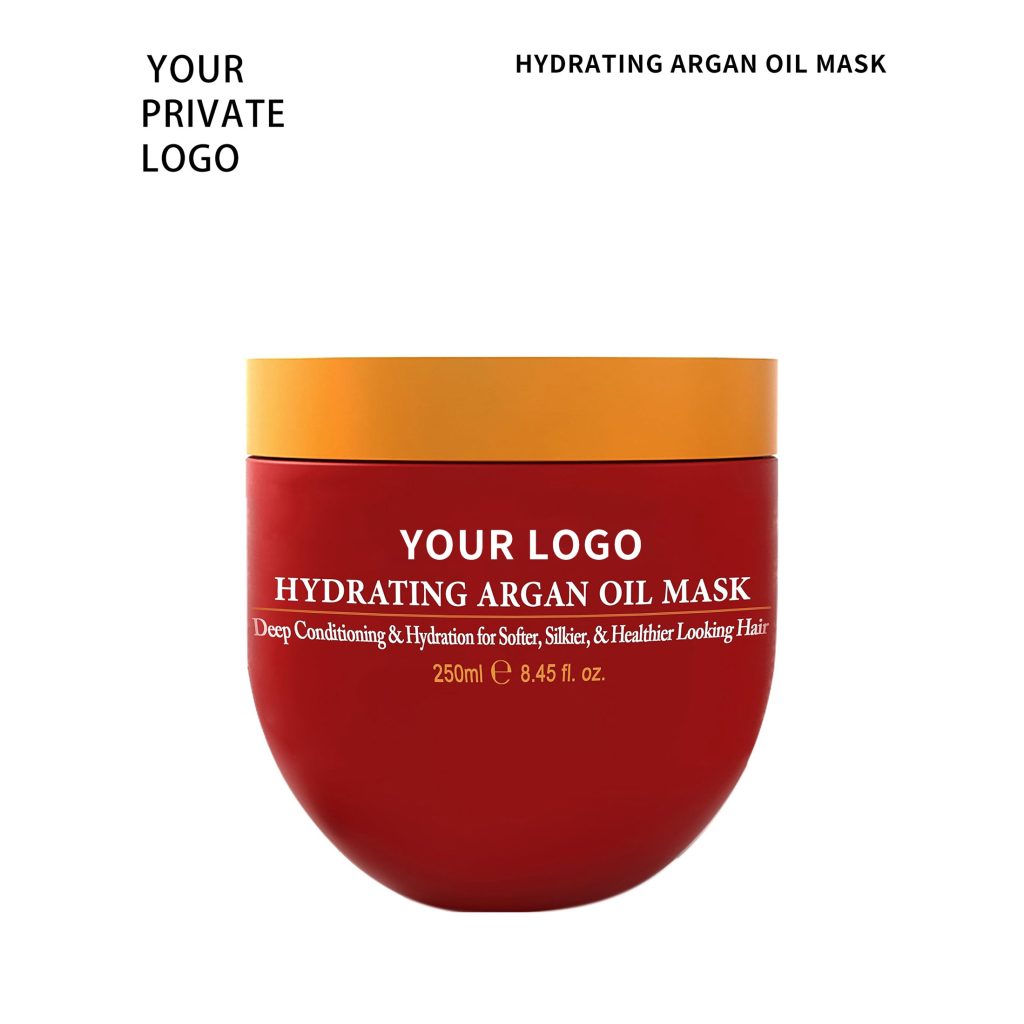
Premium Hydrating Argan Oil Hair Mask for Deep Nourishment and Repair
From fast sampling to iterative optimization—aligned to your market and positioning.
Stable production workflow with quality checkpoints for consistency and scale-up.
Packaging options, decoration, labeling/INCI coordination—helping you launch shelf-ready SKUs.
dry hair care, damaged hair repair, frizzy control, all hair types, deep hydration
restore moisture, strengthen strands, smooth and soften, reduce breakage, add healthy shine
Individuals with dry, brittle, or chemically treated hair; suitable for all hair types and genders
Ensures consistent texture and efficacy during storage.
Verifies packaging interaction with formulation.
Basic skin and scalp irritation evaluation before mass production.
To ensure batch-to-batch fragrance consistency for EU hair care orders, we implement a multi-step quality control protocol. First, we source fragrance oils only from certified suppliers who provide IFRA and REACH-compliant materials. Each fragrance batch undergoes GC-MS analysis to compare against a reference standard, ensuring chemical composition matches. This is documented in a Certificate of Analysis for each production run. For production, we standardize mixing parameters such as temperature and agitation speed to minimize variation. We also conduct sensory evaluations by trained panels to check for olfactory consistency. MOQ guidance: to maintain consistency, we recommend an MOQ of 15,000 units per SKU, which allows for optimized batch sizes and reduces cross-contamination risks. Sampling timeline includes a lab sample phase (1-2 weeks for formula development) and pre-production samples (2-3 weeks for fragrance approval). Testing involves stability studies under different conditions to ensure scent longevity. Packaging considerations include using UV-protective materials to prevent fragrance degradation during storage. Lead time from order confirmation to shipment is typically 10-12 weeks, factoring in raw material procurement, production scheduling, and mandatory QA holds for microbial and compatibility tests. We assist with documentation like Technical Information Files and support necessary testing for EU compliance, but clients must verify final regulatory status with their legal teams.
European buyers should audit raw material verification,viscosity during mixing,and microbial checks at production stages.For filling,monitor fill volume,cap torque,and leak tests to prevent defects.MOQ guidance starts at 5000 units per SKU,influencing cost.Sampling timeline takes 2-4 weeks for lab and approval samples.Essential tests include preservative efficacy,heavy metals,and stability studies for EU regulations.Packaging must be EU-compliant with proper labeling.Lead time is 8-12 weeks from order to shipment.We assist with documents like PIF and safety reports to meet regulatory requirements.
Formulating a hair mask for the EU that is rich yet rinses clean involves selecting ingredients like cationic conditioners and silicones in controlled ratios to avoid buildup. We optimize viscosity and use rinsing aids such as gentle surfactants. Key steps include stability testing, microbial checks, and performance assessments to meet EU regulations like REACH and Cosmetics Regulation (EC) No 1223/2009. As an OEM/ODM, we support with documentation such as PIF and CPSR, but cannot guarantee approval; we assist with testing and compliance. For production, MOQ typically starts at 10,000 units per SKU, driven by raw material batches. Sampling takes 4-6 weeks for formula and packaging approval, including leakage tests. Production lead time is 8-12 weeks post-approval, with QA checkpoints for fill weight, label adhesion, and packaging integrity. Provide target ingredients, claims, and packaging direction for an accurate quote.
Formulating a sulfate-free shampoo that cleans well and foams in hard water requires replacing sulfates with gentle surfactants such as sodium lauryl glucose carboxylate or glucosides, and incorporating chelating agents like EDTA to counteract mineral ions. We optimize viscosity and pH through lab trials for stability and performance. For OEM projects, MOQ typically starts at 1000 units to balance batch costs, with sampling taking 2-3 weeks for initial prototypes including foam and compatibility tests. We conduct essential testing like microbial checks, 3-month stability trials, and foam volume assessments under simulated hard water conditions. Documentation includes a Product Information File and safety assessment per EU Regulation 1223/2009, and we advise on labeling for EU markets. Packaging must be leakage-resistant, often using PET bottles with compatible pumps, and production lead time is 6-8 weeks after sample approval. We support with testing protocols and compliance guidance but recommend clients verify final regulatory approval locally.
To select preservatives for EU-compliant hair care, we first cross-reference your formula with EU Regulation (EC) No 1223/2009 Annexes, which list allowed preservatives like phenoxyethanol or potassium sorbate and their maximum concentrations. We assess compatibility with your product type, such as shampoo or conditioner, and factors like pH to avoid efficacy loss or stability issues. For sampling, which typically takes 2-3 weeks, we conduct microbial challenge tests and stability checks to validate the preservative system over the shelf life. MOQ guidance starts at 3000 units per SKU, influencing cost and production planning. We support documentation like the Product Information File (PIF) and safety assessments, but do not guarantee regulatory approval. Packaging choices, such as airless pumps, are evaluated to maintain preservative integrity. Lead time from approval to bulk production is 8-12 weeks, depending on order size and testing completion.
When targeting EU retail and e-commerce, comprehensive stability testing is essential for regulatory compliance and market acceptance. Recommended tests involve accelerated stability studies at elevated temperatures like 40°C for 3-6 months to predict shelf life, along with real-time testing under normal conditions for up to 24 months to monitor pH, viscosity, and microbial stability. At LAEYO Labs, we assist clients with this process by providing guidance on test parameters and documentation. For MOQ, hair care products often start at 5,000 units, with sampling timelines of 2-4 weeks for prototypes. Required documents include stability reports, safety assessments, and EU-compliant labeling such as INCI lists. Packaging must be validated for compatibility to prevent leakage or ingredient degradation during transit. Lead time from sampling to production typically ranges from 8-12 weeks, depending on test outcomes and reformulation needs. We support all necessary testing and documentation to help meet EU standards, but final regulatory approval rests with the brand.
European hair care markets favor subtle, natural scent directions aligned with wellness, such as citrus bursts (lemon, bergamot), herbal notes (lavender, rosemary), and delicate florals (jasmine, rose). These appeal to consumers seeking clean, eco-friendly, and therapeutic benefits, with a growing preference for hypoallergenic and vegan-friendly options. From production, incorporating these scents requires formulation to meet EU regulations, including testing for 26 recognized fragrance allergens; MOQ for custom scents can start at 500-1000 units per SKU, depending on fragrance oil sourcing and complexity. Sampling typically takes 2-3 weeks for scent matching, stability checks, and microbial hold-time validation in hair care bases like shampoos or conditioners. Packaging must prevent scent degradation—opaque bottles or airless pumps for light-sensitive formulas—and consider label compliance for allergen listings. Lead time from final approval to production is 8-12 weeks, including documentation like IFRA certificates, SDS, and any required cosmetic product safety reports. We can support with full testing and documentation for market readiness, but final regulatory approval rests with the brand; always verify claims with local experts to avoid rework.
As a senior OEM/ODM account manager at LAEYO Labs, I assist brands with products like lightweight leave-in conditioners for the EU market. However, without access to the necessary data, I cannot outline concrete operational details. Typically, formulation involves low-viscosity ingredients like amino silicones and polymers to avoid weighing hair down, with emulsification optimized for spreadability. For the EU, compliance under EC No 1223/2009 requires safety assessments, stability testing, and CPNP notification. MOQ guidance depends on packaging; for example, pump bottles may start at 10,000 units. Sampling timelines are 2-4 weeks for feasibility checks, and lead time for production is 6-8 weeks post-approval. Testing includes microbial limits and challenge tests, with documentation like CPSR. Packaging choices like airless systems affect cost and leakage risks. To proceed, share your specific requirements for a tailored quote and support on testing and docs.