

See the factory by live video walkthrough
Book an on-site factory visit in Guangzhou


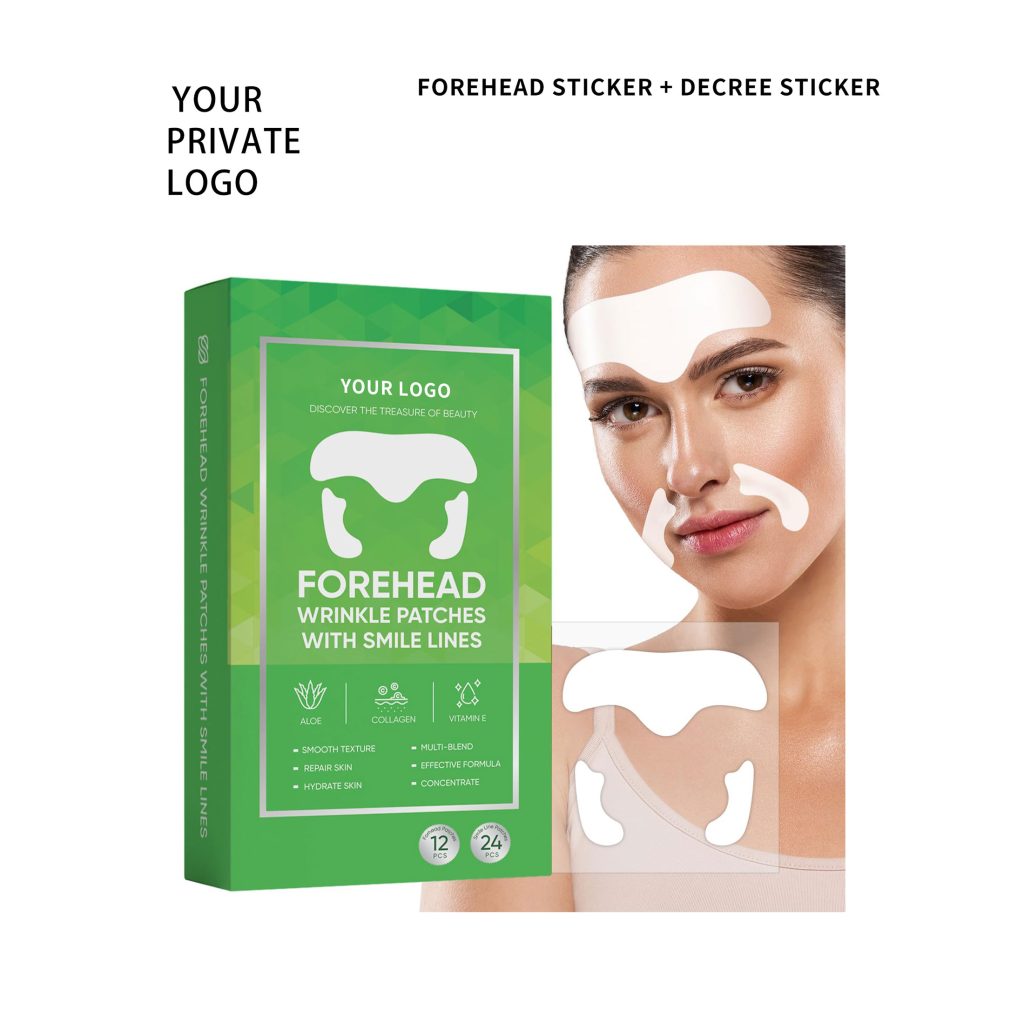
Targeted wrinkle care patches for forehead and smile lines with Aloe, Collagen, and Vitamin E
From fast sampling to iterative optimization—aligned to your market and positioning.
Stable production workflow with quality checkpoints for consistency and scale-up.
Packaging options, decoration, labeling/INCI coordination—helping you launch shelf-ready SKUs.
forehead wrinkles, smile lines, fine lines, dry skin, aging skin
hydrate skin, firm texture, nourish complexion, smooth wrinkles, rejuvenate appearance
Adults seeking non-invasive wrinkle care solutions
Ensures product maintains quality over shelf life
Confirms product safety for skin contact
Validates comfort and secure fit during use
For private label skincare shipments to the UK, a compliance-ready document pack is essential for customs clearance and regulatory adherence. It typically consists of the Cosmetic Product Safety Report (CPSR) with safety assessments, the Product Information File (PIF) containing formulation details and manufacturing data, and labels that meet UK standards, such as UKCA or CE marks and ingredient lists in English. We support clients by compiling these documents during the OEM/ODM workflow, starting from the RFQ stage. MOQ guidance: Minimum order quantities impact document preparation costs; for example, higher MOQs can amortize fixed costs like safety assessments. Sampling timeline: Expect 4-6 weeks for sampling, during which we draft preliminary compliance documents to align with product feasibility. Testing protocols: We conduct stability tests (e.g., 3-month checks for viscosity and pH), microbiological assays, and packaging compatibility tests to prevent issues like leakage. Packaging specifics: Materials must be EU/UK compliant, and labels require accurate claims and warnings. Lead time considerations: Full documentation preparation adds 2-4 weeks to production schedules, but we integrate this with R&D and QA checkpoints to minimize delays. We do not guarantee regulatory approval, but our experience ensures thorough document support for your compliance needs.
To avoid stickiness and residue, we use humectants with low molecular weight, such as hyaluronic acid fragments or pentylene glycol, in balanced ratios below 10% total. We adjust viscosity with rheology modifiers like carbomer minimally and set pH to 5.5-6.0 for skin-friendly application without tackiness. Formulations undergo initial lab checks for spreadability and dry-down time. Sampling typically takes 2-3 weeks, including stability testing at 4°C, 25°C, and 40°C over 3 months to ensure no separation or texture changes. We perform microbiological and preservative efficacy tests aligned with UK regulations, and can assist with documentation like CPSR and product information files for compliance. MOQ starts at 1000 units per SKU, influenced by packaging complexity; options include PET or glass bottles with spray pumps to prevent leakage. Lead time from approved sample to production is 8-10 weeks, with QA checkpoints for fill accuracy and label adhesion to avoid rework. We recommend transparent communication on target cost and launch dates for efficient planning.
Formulating a cleanser that is both gentle and effective for the UK market requires a targeted surfactant system. We start with a base of mild, plant-derived Alkyl Polyglucoside (APG), typically at 4-5%, which provides excellent foaming with minimal irritation. To break down waterproof makeup and mineral sunscreens, we incorporate 1-2% of a solubilizer like PEG-7 Glyceryl Cocoate. This water-soluble ester acts as a co-surfactant, emulsifying oils upon contact so they rinse away cleanly, avoiding the need for harsh sulfates. The pH is carefully buffered to match skin's natural acid mantle, around 5.5. For a typical 150ml pump bottle SKU, the MOQ starts at 5000 pieces. The sampling process includes a lab sample for formula approval, followed by a pilot batch for packaging compatibility and stability testing under ICH guidelines, which adds 25-30 days to the timeline. Full production lead time is 45-50 days after final approval. We can support the full Product Information File (PIF) compilation, including a Cosmetic Product Safety Report (CPSR) from a qualified EU assessor. Packaging-wise, we recommend airless pumps or flip-top caps from our REACH-compliant suppliers to ensure dispensing hygiene and prevent leakage during transit to the UK.
Under the UK Cosmetics Regulation (derived from EU Regulation (EC) No 1223/2009 post-Brexit), buyers must avoid or limit ingredients such as parabens (e.g., methylparaben, propylparaben), phthalates (e.g., diethyl phthalate), formaldehyde donors, and certain colorants (e.g., CI 77266). This is enforced by the UK Office for Product Safety and Standards, requiring products to have a safety assessment (CPSR) and proper labelling. As an OEM/ODM factory, we guide brands in formulating skincare with approved ingredients, ensuring compliance through documentation like SDS and PIFs, though final regulatory approval rests with the brand. For MOQ guidance, compliant formulations often start at 10,000 units per SKU to offset raw material costs for specialized ingredients. Sampling typically takes 4-6 weeks, including stability and patch tests. We assist with testing for banned substances and microbial limits, plus provide packaging that meets UK labelling rules (e.g., ingredient lists in English). Lead time for production includes 1-2 weeks extra for compliance checks, but we cannot guarantee approval—only support with the process.
Since the knowledge source provided is empty, I cannot offer specific guidance on IFRA compliance for UK skincare buyers. IFRA (International Fragrance Association) compliance is crucial for products containing fragrances in the UK market, ensuring safety and regulatory adherence. Typically, buyers need IFRA documents during product formulation, sampling, and before mass production to verify that fragrance ingredients meet safety standards. For accurate compliance, work with your OEM/ODM partner to conduct necessary testing and obtain certificates. Ensure that all documentation is prepared for customs and market entry. Without specific data, I recommend consulting IFRA's official website or regulatory experts for detailed requirements on MOQ adjustments, sampling timelines, packaging compatibility, and lead time extensions due to compliance checks.
To set shelf life and PAO for skincare in the UK, we follow stability testing protocols per UK Cosmetic Regulations, which mirror EU standards. We conduct accelerated tests over 3-6 months and real-time tests for 12-24 months to validate product integrity and determine accurate labeling. This includes microbial, pH, and viscosity checks under controlled temperature and humidity conditions, crucial for claims like 24-month shelf life or 6M PAO. Testing is done in accredited labs, and we compile data for Product Information Files (PIF) and Cosmetic Product Safety Reports (CPSR). MOQ guidance: typical skincare MOQs start at 5,000 units per SKU to amortize testing costs, but we can adjust for smaller runs with higher per-unit fees. Sampling timeline involves lab dips and pilot batches, taking 4-6 weeks, including stability test initiation. Packaging must be airtight; we use barrier materials like PET jars and conduct compatibility tests to prevent leakage or degradation. Lead time from approval to production is 10-14 weeks, factoring in testing, packaging sourcing, and QA audits. We support documentation and testing logistics, but regulatory approval remains the brand owner's responsibility, as market specifics vary.
Risky claims for skincare in the UK are those that suggest therapeutic, curative, or preventive properties for medical conditions, such as 'anti-acne' or 'heals eczema,' as they may be classified as medicinal products under the UK Medicines and Healthcare products Regulatory Agency (MHRA) or UK Cosmetics Regulations. To avoid medical claims, stick to cosmetic functions like cleansing, moisturizing, or improving appearance, and ensure all marketing and labels are reviewed for compliance with UK-specific guidelines, including post-Brexit UKCA or retained EU standards. Our factory supports this through formulation checks, where we assess ingredient lists and claim substantiation during the R&D phase, using in-house labs for stability and safety testing to provide documentation like product information files (PIFs) and safety reports. For practical execution, MOQs typically start at 5,000-10,000 units per SKU, influenced by custom formulations and packaging complexity; sampling takes 4-6 weeks from RFQ approval, including claim validation and label mock-ups. We integrate QA checkpoints such as microbial hold-time tests and viscosity controls to ensure consistency, and packaging is designed to avoid misleading imagery or text, with lead times of 8-12 weeks post-production for shipping, including compliance document preparation like certificates of analysis and UK-specific declarations.
In the UK, skincare labels require both an expiry date (the date until which the unopened product is safe and effective) and a PAO symbol (e.g., 6M for 6 months, indicating safe use after opening). This stems from retained EU Cosmetics Regulation, ensuring clarity on product shelf life and post-opening safety to prevent contamination or efficacy loss. As an OEM/ODM, we guide you through implementation: stability testing for expiry dates typically takes 3-6 months during sampling, while PAO determination adds 1-2 weeks for microbial challenge tests. MOQs often start at 10,000 units per SKU, influenced by packaging complexity and ingredient sourcing. Packaging must support PAO claims with designs like airless pumps to minimize contamination. We provide documentation support including CPSRs and UK CPNP notifications, with lead times of 8-12 weeks post-sample approval for full production, testing, and labeling. Note that while we assist with testing and docs, regulatory approval responsibility lies with your appointed person.