

See the factory by live video walkthrough
Book an on-site factory visit in Guangzhou


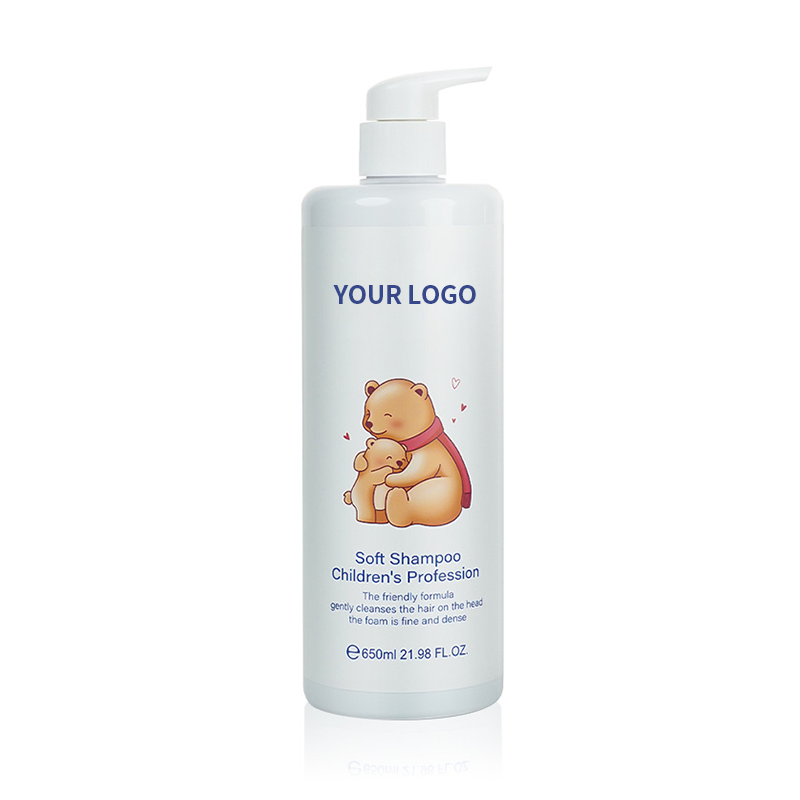
Gentle cleansing for delicate children's hair
From fast sampling to iterative optimization—aligned to your market and positioning.
Stable production workflow with quality checkpoints for consistency and scale-up.
Packaging options, decoration, labeling/INCI coordination—helping you launch shelf-ready SKUs.
children's delicate hair, daily gentle wash, suitable for sensitive scalp, mild foam cleansing
soft cleansing, fine dense foam, refreshing comfort, maintains hair softness
Infants, toddlers, and young children
Can support sensitive skin safety testing upon request
Ensures product hygiene and safety
Verifies product performance over shelf life
Start with the pump, not the bottle. For a one-handed baby lotion, specify a 200-250ml PET or PCR bottle on a 24/410 neck, then fix the pump: dose per stroke (0.5-1.0ml), travel lock, and a down-stroke a parent can press with one hand while holding the baby. Approve 3-5 pump samples from two mold families first. MOQ follows the pump and decoration, not the bottle: stock pump plus stock bottle starts near 3,000-5,000 units per SKU; custom pump color or matte finish pushes to 10,000+. Sampling runs 7-10 days for filled lab samples, 15-20 days with custom pump color, plus a 3-5 day pump cycling check (2,000+ strokes, leak and residual volume) before pilot. For the US, we support documentation and testing: heavy metal screening on the lotion and components, microbial challenge and preservative efficacy testing, 12-week accelerated stability. We supply documents; we do not guarantee regulatory approval, and label claims stay with your reviewer. Lead time after PO and approved artwork: 30-35 days on stock components, 45-55 days for custom-colored pumps. Air freight only after leak testing at simulated pressure; pumps ship with travel locks engaged, and we pull 3 cartons per lot for leak and torque checks.
Evaluate baby oil packaging as a dispenser and closure system, not just a bottle. For US e-commerce, request 3-5 bottle and dispenser pairs: disc-top, squeeze bottle, pump, or dropper as relevant. Test with your actual oil viscosity and fill temperature, because thin oils creep past threads and thick oils slow priming. Check pump torque, orifice size, squeeze force, closure torque, liner compatibility, and drop/vibration performance. Air-freight pressure changes can force oil past liners, so include transit simulation and a 24-hour inverted leak test. Sampling usually takes 10-15 business days after components arrive for a dispensing trial; full compatibility and stability review often needs 2-3 weeks. Typical custom bottle/dispenser MOQ starts near 5,000-10,000 units, while stock packs may be lower. We can support US documentation such as SDS, COA, stability summaries, and label artwork review; we do not guarantee regulatory approval. Production lead time is commonly 30-45 days after sample and artwork approval, plus component lead time. Lock the dispenser, liner, and label stock before PO to avoid rework.
Cosmetic claims for baby care, such as 'gentle cleansing' or 'softens skin,' fall under FDA cosmetic regulation, which does not require pre-market approval. Drug claims, like 'prevents or treats diaper rash' or 'antibacterial,' classify the product as an over-the-counter (OTC) drug, subject to FDA drug rules under the FD&C Act. This distinction is critical for compliance, as drug products must meet specific monograph requirements or undergo New Drug Application (NDA) processes. For OEM/ODM projects, we guide clients through claim vetting to avoid misbranding and ensure market entry. In production, formulating for drug claims often involves active ingredients like zinc oxide, which may affect MOQs due to specialized sourcing and stability testing. Sampling for drug claims typically takes 4-6 weeks longer than cosmetics, as we conduct efficacy and safety tests per FDA guidelines. Packaging must include Drug Facts labeling and may require child-resistant features, impacting lead times by 2-3 weeks. We support documentation like ingredient lists, test reports (e.g., microbiological, stability), and FDA registration assistance, but cannot guarantee regulatory approval. Lead time for drug-claim products averages 12-16 weeks from sampling to production, versus 8-10 weeks for cosmetics, due to additional QA checks for potency and purity.
For baby care products in the US market, stability testing is critical to verify product safety, efficacy, and shelf-life under various conditions. We recommend a comprehensive protocol including physical tests for separation and viscosity, chemical tests for pH and active ingredient stability, and microbial tests like preservative efficacy testing (PET) to prevent contamination. Specifically, for baby lotion, we check emulsion stability; for diaper cream, we assess barrier properties and pH; for shampoo, we evaluate foaming and irritation potential over time. This testing typically involves accelerated conditions (e.g., 40°C/75% RH for 3 months) and real-time studies (6-12 months), with detailed reports for your compliance files. Operationally, MOQs for baby care start at 10,000 units per SKU, which determines testing batch size and costs. Sampling for stability adds 4-8 weeks to the timeline, and we use pilot batches to mimic production conditions. Packaging compatibility tests are included to prevent issues like leakage or degradation in tubes or bottles. Lead time from final sample approval to production is 90-120 days with testing integrated. We support all documentation, including test reports and ingredient safety dossiers, but note that regulatory approval is your responsibility; we ensure products meet standard requirements.
Mineral sunscreens use zinc oxide or titanium dioxide to physically block UV rays, making them ideal for babies' sensitive skin due to lower irritation risk, but they can leave a white cast and be thicker. Chemical sunscreens absorb UV radiation, offering higher SPF ratings, water resistance, and a lighter texture, but may cause allergic reactions in some infants. In OEM/ODM production, MOQs typically start at 10,000 units for mineral formulas due to raw material costs, while chemical options can begin at 5,000 units, influenced by ingredient complexity. Sampling takes 4-6 weeks, including formulation tweaks, SPF testing per FDA guidelines, and stability checks for pH and viscosity. Packaging must be child-resistant with features like airless pumps to prevent leakage and ensure safety; we recommend pilot batches to test fill temperature windows and label adhesion. Lead time from RFQ to shipment is 14-20 weeks, with QA gates for microbial hold-time and pigment dispersion. We support compliance documentation, such as CPSIA reports and ingredient disclosures, for US market entry, but cannot guarantee regulatory approval—focus on thorough testing and clear labeling.
We start by selecting ingredients known for efficacy and safety in pregnancy, such as cocoa butter, almond oil, and vitamins, focusing on texture and absorption to avoid greasiness. Formulations are lab-tested for sensorial feel through viscosity control and spreadability panels, ensuring a pleasant user experience. For production, MOQ typically ranges from 3000 to 5000 units per SKU, depending on packaging like pumps or tubes. Sampling takes 4-6 weeks, involving lab samples and pilot batches with stability tests over 3 months to check for separation or microbial growth. Lead time from final approval to bulk production is 8-12 weeks, factoring in raw material sourcing and QA checks. We support with documentation like ingredient safety data and labeling guidance for FDA compliance, but regulatory approval remains the brand's responsibility. Always share your target cost, launch date, and claims to streamline the quote process.
In the U.S. market, best-selling private label mom and baby care products focus on gentle, non-toxic formulations, with high demand for items like fragrance-free baby moisturizers, diaper rash treatments with zinc oxide, and postpartum recovery balms. These products often feature organic ingredients and meet strict safety standards, appealing to parents seeking reliability. For OEM/ODM production, MOQs typically range from 500 to 2,000 units per SKU, depending on packaging complexity, with sampling taking 3-4 weeks for formula adjustments and initial testing. We support compliance documentation for FDA regulations, child-resistant packaging per ASTM standards, and testing for microbial limits and stability. Lead time from order to production is 8-12 weeks, including raw material sourcing and quality checks, and we assist with COA, MSDS, and required certifications to ensure smooth market entry.
For baby care products sold on Amazon FBA in the US, key labeling requirements include FDA-mandated ingredient disclosure in descending order, net weight, manufacturer information, and warnings like 'for external use only'. Amazon also requires scannable barcodes (FNSKU) and child-resistant packaging for items like diaper creams or lotions to prevent accidental ingestion. We handle label design integration into production, ensuring durability and alignment with compliance standards. MOQ guidance starts at 3,000-5,000 units per SKU to balance cost and efficiency. Sampling timeline is 3-4 weeks, including label proof approvals and adjustments for clarity. We support third-party testing for allergens, heavy metals, and microbial safety, providing documentation like Certificates of Analysis. Packaging must account for label adhesion to avoid peeling in transit, especially with air-freight pressure changes. Lead time from final design to shipment is 8-12 weeks, incorporating QA checks for label accuracy and regulatory readiness. We assist with all necessary docs, but recommend you verify specific Amazon FBA policies for updates.