

See the factory by live video walkthrough
Book an on-site factory visit in Guangzhou


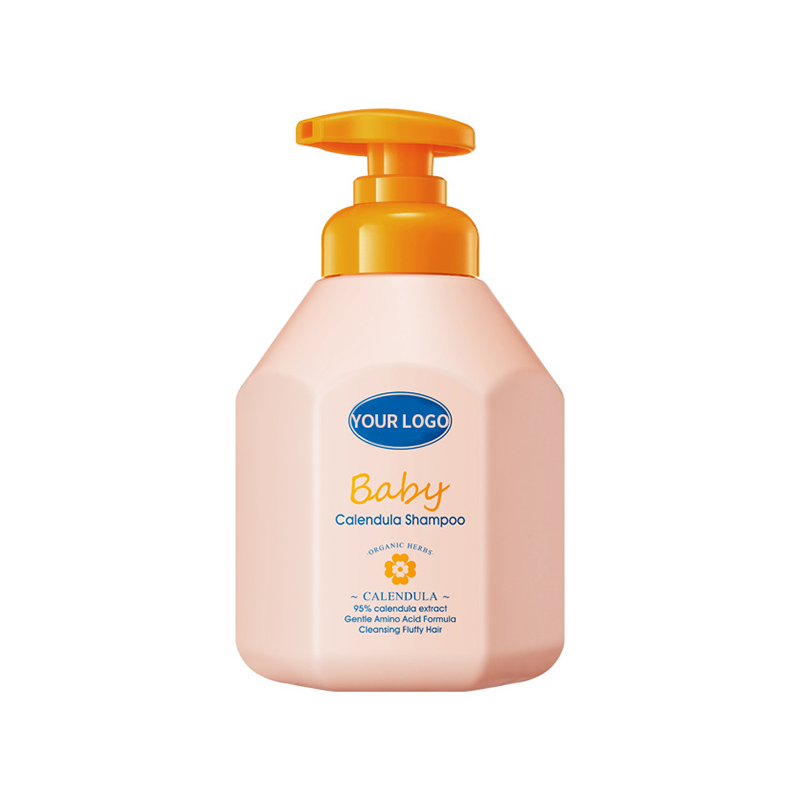
Gentle cleansing and calendula-powered comfort for baby's delicate scalp
From fast sampling to iterative optimization—aligned to your market and positioning.
Stable production workflow with quality checkpoints for consistency and scale-up.
Packaging options, decoration, labeling/INCI coordination—helping you launch shelf-ready SKUs.
baby scalp care, daily gentle wash, sensitive skin use, tear free cleansing
soothes redness and itching, calms eczema irritation, softens hair strands, nourishes delicate scalp
Newborns, infants, and toddlers
Ensures formula safety on sensitive baby skin.
Confirms hygiene and safety parameters.
Validates formula consistency over shelf life.
In baby care, 'soap-free' refers to cleansers that do not contain traditional soaps (like sodium or potassium fatty acid salts), which can be harsh and disrupt skin's natural pH. Instead, we use mild synthetic surfactants such as alkyl polyglucosides or cocamidopropyl betaine, which cleanse effectively without stripping oils, maintaining a skin-friendly pH around 5.5. This is essential for sensitive baby skin to prevent irritation and dryness. For OEM/ODM production, we start with a feasibility assessment based on your US market needs and claims. Typical MOQ ranges from 10,000 to 50,000 units per SKU, depending on packaging complexity (e.g., custom bottles or pumps) and formulation customization. Sampling takes 3-4 weeks: 2 weeks for R&D to adjust viscosity and stability, then 1-2 weeks to produce physical samples for your evaluation. We conduct rigorous testing including skin irritation tests, microbial limits, and stability checks under different temperatures. For US compliance, we assist in preparing documents like ingredient declarations, safety assessment reports, and FDA facility registration support, though final regulatory approval is your responsibility as the brand owner. Packaging options include BPA-free plastic with child-resistant caps or leak-proof pumps, chosen to prevent issues like label bubbling in humid conditions. Lead time from order to shipping is 8-12 weeks, covering production, quality audits (e.g., fill weight and torque checks), and documentation. We recommend pilot runs to validate packaging fit and avoid leakage risks during air freight, ensuring smooth scaling to full production.
In the US, 'fragrance-free' for baby care labels means the product contains no added fragrance substances, natural or synthetic. 'Unscented' indicates no perceptible scent, but it may include masking agents to cover base material odors. This is crucial for sensitive infant skin and marketing compliance, as mislabeling can lead to regulatory issues or consumer backlash. From an OEM/ODM perspective, formulating fragrance-free products requires specialized raw materials, affecting MOQ; typical MOQ starts at 10,000–20,000 units to justify batch costs. Sampling takes 4–6 weeks for prototypes, with testing for skin irritation and stability. Documentation includes FDA-compliant ingredient lists and safety assessments. Packaging must be leak-proof and child-resistant, with lead times of 8–12 weeks from pilot to production. We support with testing and docs, but final approval hinges on brand-provided claims and market-specific regulations.
Choosing fragrance for baby products in the US requires aligning with FDA guidelines and consumer demand for hypoallergenic options. Fragrance-free minimizes risk of irritation and simplifies compliance, while low-level, skin-safe fragrances can be used if supported by safety data. We advise based on your target audience and retail channel specifics. Key details: MOQ for custom fragrance blends starts at 5,000 units per SKU to justify R&D and stability testing. Sampling takes 2-3 weeks for initial submissions, with stability and compatibility tests adding 4-6 weeks. Documentation includes ingredient safety reports, IFRA certificates, and pediatric dermatology assessments if claims are made. Packaging must be tested for fragrance oil interaction to prevent leakage or degradation. Lead time from final formula approval to production is 8-10 weeks, including quality checks for pH, microbial limits, and batch consistency. We support testing and documentation, but regulatory approval remains the brand's responsibility. Consider Amazon policy and pediatrician endorsements when deciding.
Shelf life setting starts with formula assessment and stability testing. We conduct accelerated tests (e.g., 40°C/75% RH for 3-6 months) to predict real-time shelf life, typically 2-3 years for baby items, monitoring viscosity, pH, and microbial stability. Evidence includes test reports with data on physical and chemical changes, plus microbial testing to ensure safety under storage conditions. For the US market, we follow FDA OTC monographs if applicable and CTFA standards, providing documentation like Certificates of Analysis (COA) and stability reports for your compliance submissions. From a factory perspective, MOQ guidance is 10,000 units to offset testing costs effectively. Sampling timeline involves 4-6 weeks for initial samples and 8-12 additional weeks for stability batch testing. Packaging must be child-resistant for safety, affecting material selection and validation. Lead time from approval to production is 8-10 weeks, but total timeline including testing can extend to 16-20 weeks. We support all testing and documentation but do not guarantee regulatory approval; we ensure evidence is robust for your brand's use.
Dermatologist tested for baby care products indicates that a licensed dermatologist has conducted tests, typically patch tests on human subjects, to assess non-irritancy and safety for delicate skin. This is a voluntary claim in the US, not FDA-mandated, but it boosts consumer trust and must be backed by verifiable evidence. For OEM/ODM projects, we recommend planning this early to align with formulation and packaging.Required documentation includes a clinical study report from an accredited lab, signed verification from the dermatologist, ingredient safety data sheets (SDS), and compliance with FDA cosmetic labeling regulations (e.g., ingredient listing, warning statements). We can support by providing templates or connecting you with trusted testing partners. For US imports, ensure documentation includes batch-specific test results and a certificate of analysis (CoA).As your manufacturer, we integrate testing into our workflow: MOQ guidance starts at 5,000 units per SKU to justify testing costs; sampling timeline is 3-4 weeks post-RFQ, allowing for formula adjustments based on test feedback; packaging must reflect claims accurately to avoid misbranding; lead time is 8-12 weeks from production start, including microbial hold-time and QA checks. We help compile docs for customs, but final regulatory approval is your responsibility.
A thorough supplier comparison starts with compliance and auditing. For the US market, prioritize factories with a proven track record of FDA facility registration, CPSC compliance for pacifiers or brushes, and Prop 65 documentation. You must audit their raw material supplier COAs and full batch traceability system. Next, evaluate their Quality Assurance beyond final product reports. Ask for their in-line process control logs, which should include checks for viscosity (critical for lotion uniformity), pump torque consistency, 100% vacuum decay leak testing for tubes, and mandatory microbial hold-time testing before release. Finally, compare pricing with full transparency. Lower MOQs (e.g., 5k-10k units) often carry a 20-40% per-unit cost premium. Realistic lead times are 10-12 weeks from PO, including 2 weeks for stability and compatibility testing. Always request a pre-production sample run from the full production line to verify consistency in color, scent, and texture against your gold standard.
Hypoallergenic in baby care refers to formulations designed to reduce exposure to common allergens like fragrances, dyes, and harsh chemicals. This claim is not officially defined by the US FDA, but it must be backed by reliable data to avoid being misleading. Brands need evidence such as patch tests on sensitive skin or dermatologist evaluations to support hypoallergenic labeling.As an OEM/ODM, we assist by conducting necessary testing during development, with MOQs typically starting at 10,000 units to cover testing costs. Sampling timeline is 4-6 weeks for lab samples, and we recommend thorough microbial and stability testing. Packaging must use hypoallergenic materials, and we ensure documentation for FDA compliance, including ingredient safety data sheets.Production lead time is 10-14 weeks after approval, and we manage QA checkpoints to maintain consistency. We do not guarantee regulatory approval but provide full support for testing and documentation to help meet US market standards.
In the US, stretch mark products are regulated as cosmetics by the FDA, so allowed claims are cosmetic, such as 'reduces the appearance of stretch marks' or 'enhances skin hydration.' Avoid claims like 'prevents stretch marks' or 'treats scars,' which imply drug effects and require FDA approval, risking regulatory action. From our OEM/ODM workflow, typical MOQ starts at 3,000-5,000 units per SKU to optimize costs, with sampling taking 4-6 weeks for formulation stability and skin compatibility checks. We conduct testing like microbial analysis and patch tests, and ensure packaging meets US labeling laws, including INCI lists and child-safe caps if needed. Lead time from final approval to production is 8-12 weeks, depending on component sourcing. We assist with documentation such as safety reports and PIFs, but brand owners must verify claim compliance with legal experts.