
See the factory by live video walkthrough
Book an on-site factory visit in Guangzhou
Turmeric has evolved from a kitchen staple into a skincare favorite for many beauty brands. With its bright color and antioxidant properties, it often raises the question: can turmeric genuinely help in face cleansing…
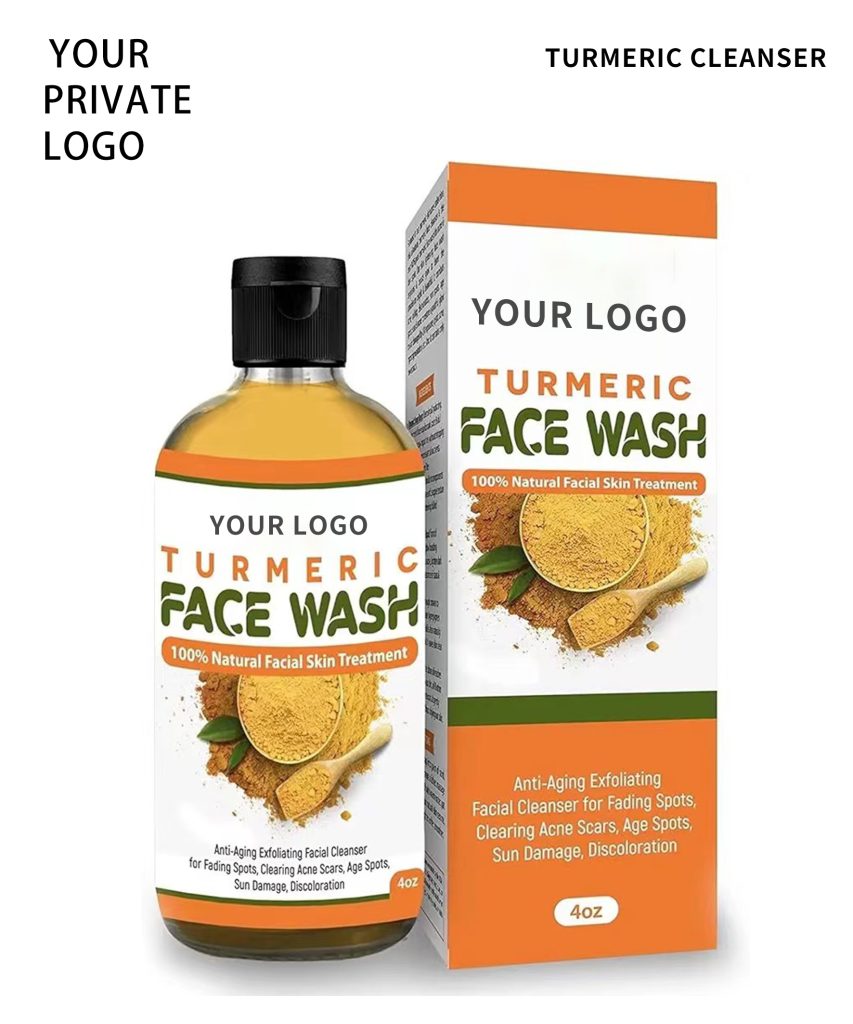
Turmeric has evolved from a kitchen staple into a skincare favorite for many beauty brands. With its bright color and antioxidant properties, it often raises the question: can turmeric genuinely help in face cleansing routines, or is it just a trend? Let’s explore its benefits, limitations, and how professional manufacturers approach turmeric-based facial cleansers.
Turmeric (Curcuma longa) contains bioactive compounds, primarily curcumin, known for antioxidant and soothing properties. Many cosmetic formulators include turmeric extracts or turmeric powder in facial cleansers for the following reasons:
While turmeric can be beneficial, it introduces formulation, sourcing, and stability challenges that procurement managers must address during product development.
| Aspect | Why It Matters | Evidence to Request |
|---|---|---|
| Extract Quality | Ensures consistent curcumin content and low heavy metal load | COA with assay data and contaminant testing |
| Formulation Stability | Maintains color and performance under light/heat storage | Accelerated stability test report (3–6 months simulation) |
| Safety Profile | Prevents unexpected irritation or staining | Dermal test summary or human patch test report |
| Label Claims | Supports marketing language like “clarifying” or “glow-boosting” | Claims substantiation file with supporting data |
Despite its natural appeal, turmeric is not suitable for every formulation or target market. Avoid it when:
Turmeric itself is not a surfactant; it does not perform cleansing in the chemical sense. Its role is complementary—supporting brightness and antioxidant protection when combined with gentle cleansing bases.
It can, depending on concentration and extract type. Professional manufacturers often encapsulate turmeric or use oil-soluble derivatives to minimize staining risk.
In standardized forms and low concentrations, turmeric is generally well-tolerated. Always request irritation test summaries (e.g., HRIPT) for confirmation.
Stability depends on emulsifier, pH, and packaging. A standard formula should show at least 12 months of stable color and odor under normal conditions if tested correctly.
Yes, though carefully. It pairs well with aloe vera or vitamin B3 (niacinamide) in water-based cleansers, but avoid unstable pH or oxidizing ingredients.
Bottom line: Turmeric can be a valuable addition to face cleansers when sourced, formulated, and tested correctly. For buyers, the key is evidence—request documentation that confirms safety, stability, and supply consistency.
With more than 20 years of experience in OEM/ODM/Private Label Cosmetics, I'd love to share valuable knowledge related to cosmetics & skincare products from a top-tier Chinese supplier's perspective.